Last one
New arrival

1:43 is the format that turns a bookshelf into a proper archive, small enough to hold an entire season or model lineage without dominating a room. This range runs from Formula 1 and DTM touring cars through vintage classics, drawing on Minichamps, IXO, Norev, Spark and AUTOart across diecast and resin.
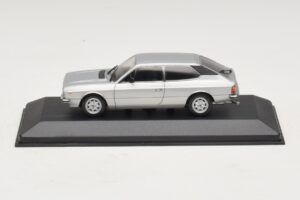
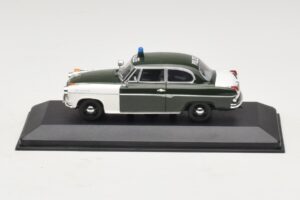
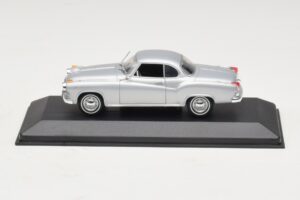

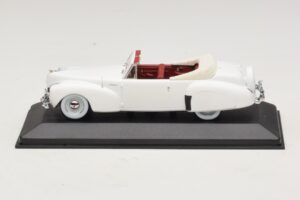
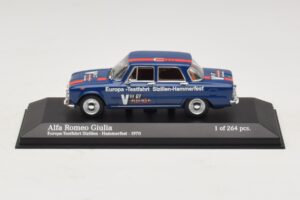
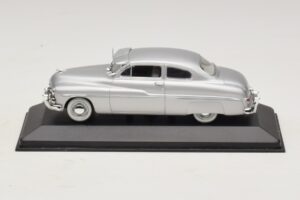

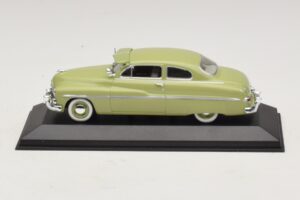
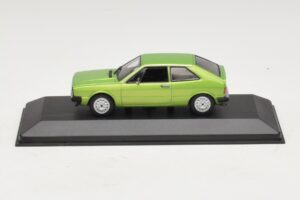


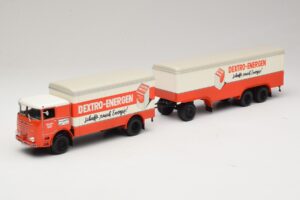






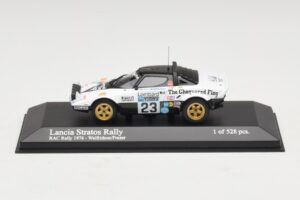


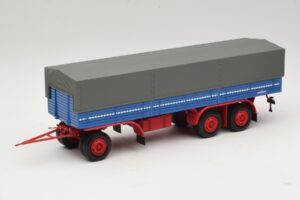

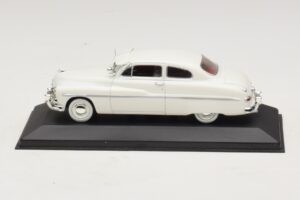
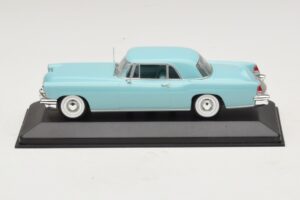
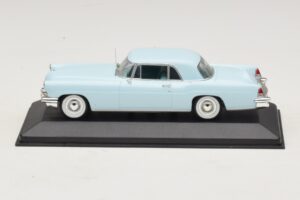

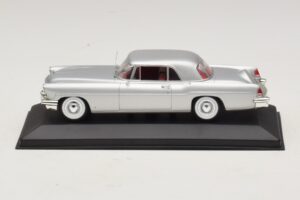
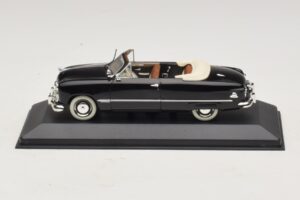


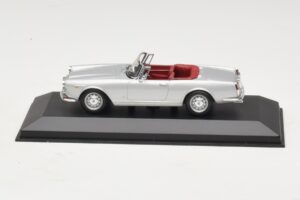




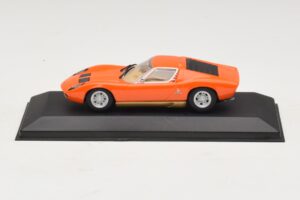


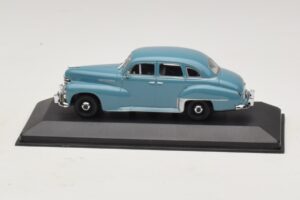


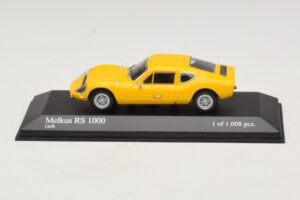


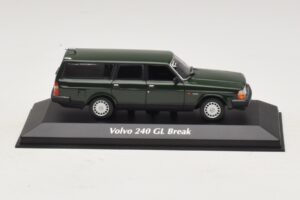

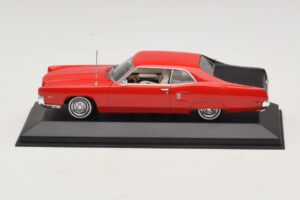
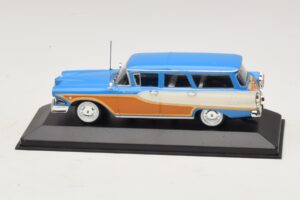
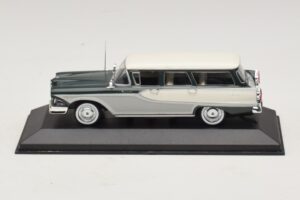


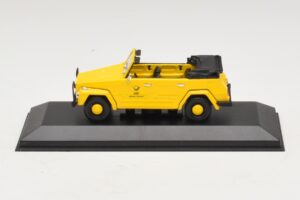



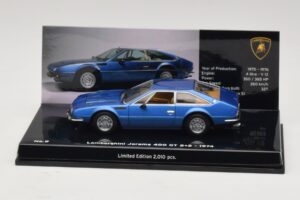
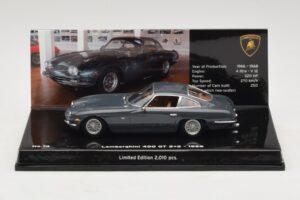


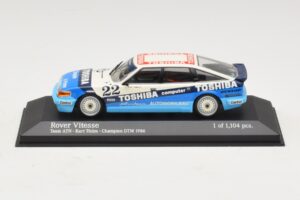
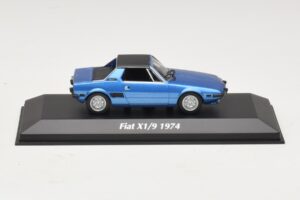

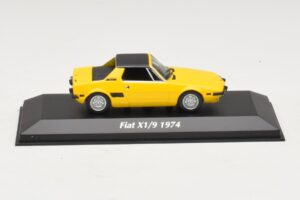

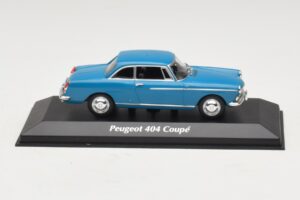


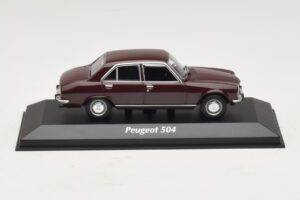


TL;DR: 1:43 scale models cover Formula 1, DTM, one-make cup and historic GT subjects, built by Minichamps, IXO, Norev, Spark and AUTOart in diecast and resin. Its compact footprint makes it the natural scale for documenting a full racing season or model lineage on a single shelf.
A 1:43 car occupies barely more room than a smartphone, which is precisely the point. Where larger scales reward inspecting one car closely, 1:43 rewards owning many, and that shift in priority defines how the format is collected, built and displayed across motorsport and road-car subjects alike.
Motorsport documentation is where 1:43 does its most distinctive work. Minichamps built its reputation on Formula 1 grids reproduced season by season, IXO covers rally and touring subjects with wide model-year coverage, Spark specialises in endurance and GT racing liveries, and Norev and AUTOart add road-car depth alongside their motorsport lines. Reading quality at this scale means checking different signals than at 1:18:
Because opening features rarely appear at this scale, the entire quality argument rests on paint, decals and casting sharpness rather than construction gimmicks.
The marque range leans heavily motorsport: Porsche, Mercedes, Audi and BMW cover DTM's German touring history, while Toyota, Ford and Opel round out a broader endurance and rally presence. Formula 1 models sit alongside one-make cup series and historic GT and GTE subjects, spanning the 1970s through the 2010s. This breadth is what makes 1:43 the natural home for a collector chasing a complete field from a single race weekend or an entire championship season, something no larger scale makes practical.
Standard shelving at close spacing comfortably holds eight to fifteen 1:43 models depending on their length, which is what makes systematic collecting genuinely achievable at this scale. Many collectors build around a single season, a driver's career, or one marque's touring-car history, filling rows methodically rather than chasing standalone hero pieces. A simple perspex case or a shallow display cabinet suits the format well, since depth matters less here than at larger scales.
Its compact footprint lets a collector assemble an entire race grid or championship season on one shelf, something impractical at larger scales. Livery accuracy and decal detail carry the quality argument rather than opening features, which suits the format's motorsport focus well.
Roughly eight to fifteen, depending on vehicle length and shelf depth. Standard spacing at this scale allows dense, organised rows, which is why comprehensive season or lineage collecting is realistic here in a way it rarely is at 1:18.
Both appear widely. Diecast suits mass-produced road and touring subjects, while resin is common for limited motorsport liveries where a small production run makes metal tooling impractical. Neither material dominates the format outright.
Formula 1, DTM touring cars, one-make cup series and historic GT racing are particularly strong at this scale, since motorsport liveries and full-season documentation are exactly what the compact format was built to support.