Used

The 1990s Super Touring era packed grids with sedans wearing full sponsor liveries and near-identical silhouettes, making livery accuracy the defining test of a good model in this category. BMW, Ford, Audi and Opel all fielded works efforts, and that manufacturer rivalry carries straight through into how this scale category is built.

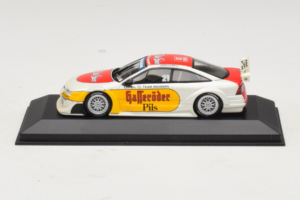
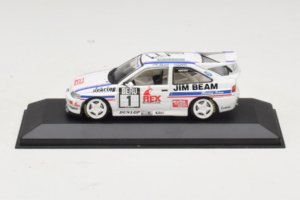
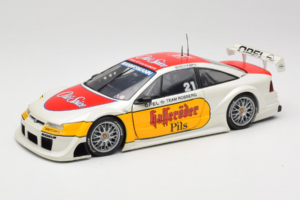
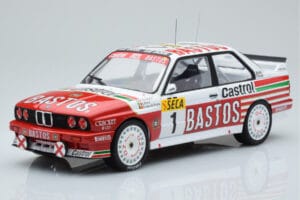
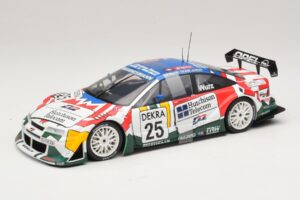

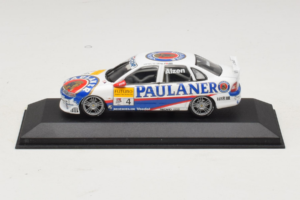

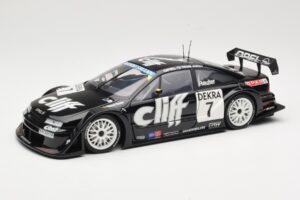
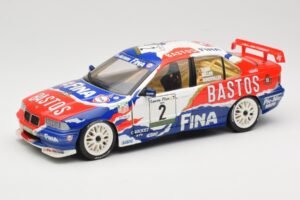
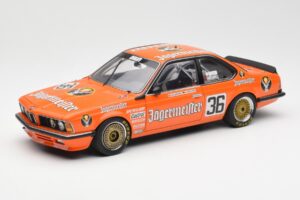
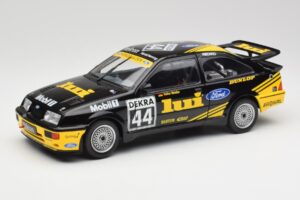
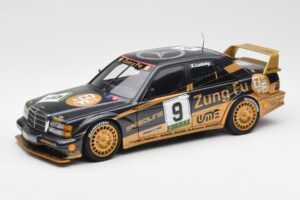
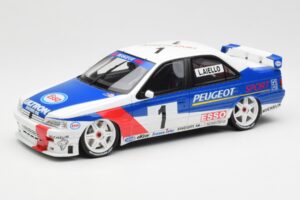
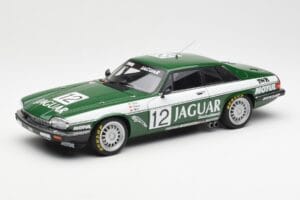
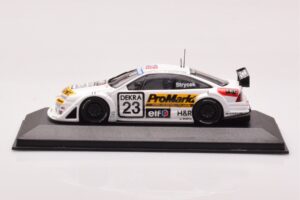
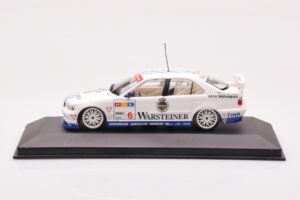
TL;DR: This category covers 1990s Super Touring era saloons from Minichamps, UT Models, AUTOart, IXO and Otto, spanning BMW, Ford, Audi, Jaguar, Mercedes, Opel and Peugeot in 1:18 and 1:43, diecast and resin, drawn mainly from the 1990s with some 1980s coverage.
90s touring car scale models document one of the closest-fought eras in circuit racing, when manufacturer touring car programmes turned road-going saloons into liveried works racers. Grids were dense with rival marques running near-identical regulations, and that manufacturer rivalry is exactly what a strong touring car collection should capture on the shelf.
Minichamps carries the deepest coverage of this era, its 1:43 and 1:18 output spanning the full spread of works BMW, Opel, Ford and Audi touring cars with the sharp sponsor-livery printing the category demands. UT Models built its early reputation on 1:18 touring car subjects and remains a recognisable name for collectors focused on this period. AUTOart and IXO add further coverage, with Otto contributing resin pieces where diecast runs stop short.
Because so many cars from this era shared a body shell, the sponsor decals and season-specific graphics are what separate a documented works car from a generic saloon casting. Sharp tampo printing on door logos and windscreen strips is the first thing worth checking on any touring car piece.
Diecast dominates the mainstream releases here, while resin fills in less common liveries or drivers that volume manufacturers never tooled. Both sit comfortably on the same shelf provided the scale is kept consistent.
BMW, Ford, Audi, Jaguar, Mercedes, Opel and Peugeot all appear across this category, reflecting how genuinely competitive the era was across multiple national championships. A collector can build a shelf around a single marque's works cars through the decade, or assemble head-to-head pairings from the same season to recreate famous on-track battles.
The Super Touring regulations of the 1990s produced some of the most technically refined saloon racing ever seen, with manufacturers pouring resources into cars that looked almost standard from the outside. That contrast between everyday saloon silhouette and full works-team livery is precisely what makes this category so visually rewarding on a shelf, and the 1980s subjects present alongside the 1990s core give useful context for how the format evolved.
1:18 gives hero pieces real shelf presence and shows livery detail clearly, while 1:43 allows a fuller season or multi-marque run in the same space. Many collectors mix both, using 1:18 for standout cars and 1:43 for breadth.
Sponsor livery accuracy is the key test. Sharp, correctly placed decals and season-specific graphics identify a genuine works subject, while a plain paint job without proper printing marks a lesser release regardless of manufacturer.
Minichamps offers the broadest coverage of works Super Touring cars across multiple marques, making it a strong starting point. UT Models and AUTOart are worth comparing too, particularly for specific 1:18 subjects from the period.
Both approaches work. A single-marque run traces one manufacturer's development through the decade, while a mixed-marque shelf recreates the genuine grid rivalry that defined Super Touring racing at its peak.