On sale:
-5%
New arrival
Pre-order

Aston Martin Vantage S Satin Xenon Grey GT Spirit 1:18
Expected 4–14 Nov 2026
Limited slots
Price:
was
£88.00
£84.00
Save £4.00
Aston Martin has built its reputation on grand touring elegance backed by genuine competition pedigree, from historic GT racing through to modern Formula 1 involvement. This range covers the marque in diecast and resin across two scales.
Save £4.00












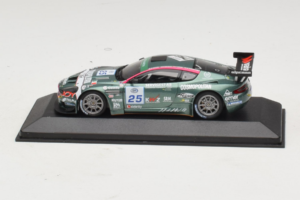



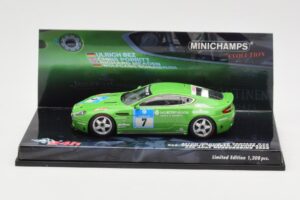













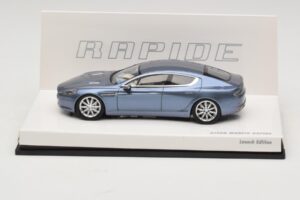


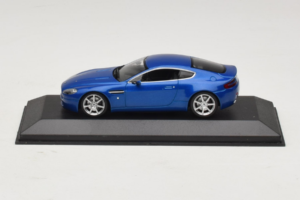
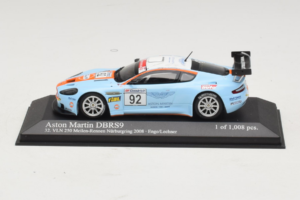

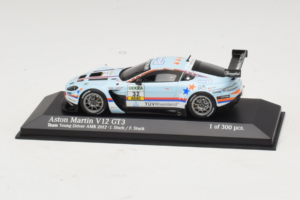
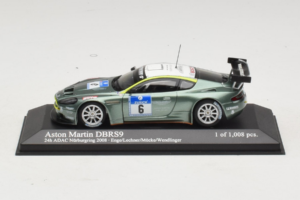

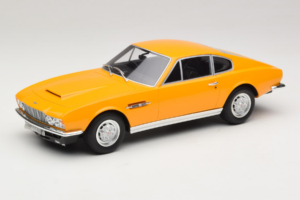
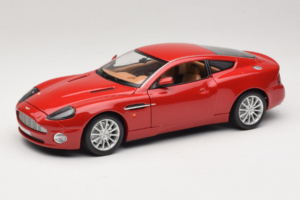


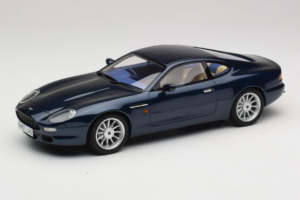

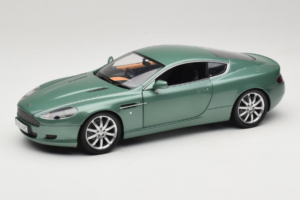


























TL;DR: Aston Martin model cars span grand tourers, GT3 and GT4 racing, hypercars and Formula 1 subjects across 1:18 and 1:43 scale. Manufacturers including GT Spirit, Minichamps, AUTOart and Cult Models cover the marque in diecast and resin from the 1960s through the 2020s.
Grand touring elegance has always defined Aston Martin, but the marque's genuine competition pedigree gives its scale models a substance beyond mere styling. From historic endurance racing through to modern GT3 customer programmes and current Formula 1 involvement, the badge carries real motorsport credibility alongside its road-car glamour.
GT Spirit's resin specialism suits the marque's grand tourers and hypercars particularly well, capturing panel lines that diecast construction often cannot match at this level of detail. Minichamps covers the marque's motorsport side including Formula 1 and GT3 racing with strong livery work, AUTOart brings composite construction to selected road-car subjects, and Cult Models applies hand-finished detail to the brand's more specialist releases. When judging an Aston Martin piece:
Because Aston Martin sits at the premium end of most manufacturers' ranges, even entry points into the marque tend to carry above-average construction quality.
The marque's historic GT and GTE endurance racing heritage established Aston Martin's competition credentials well before its return to Formula 1 in recent years, and that racing thread runs through the modern GT3 and GT4 customer programmes that keep the badge active in club and professional motorsport today. Hypercars and supercars from recent decades show the marque translating that competition focus into increasingly track-capable road cars, while historic subjects from the 1960s capture an earlier, more understated grand touring era.
Pairing a historic grand tourer with a modern GT3 racing subject shows the marque's full arc from elegant road car to serious competition machine. Given the premium positioning across most Aston Martin releases, many collectors focus on fewer, more considered pieces rather than chasing breadth, letting each model's finish quality carry the display. Resin pieces from specialist producers reward glass-cabinet display, where their sharp panel lines are shown to best effect.
A combination of grand touring elegance and genuine competition pedigree, spanning historic endurance racing through to current Formula 1 involvement, gives the marque more motorsport substance than its luxury image alone might suggest.
Both appear, with resin common among specialist producers chasing sharp panel lines on grand tourers and hypercars, while diecast covers more mainstream releases across the marque's road-car range.
Current-era Formula 1 subjects are covered by manufacturers documenting the team's recent seasons, adding a contemporary motorsport dimension alongside the marque's more historic GT racing heritage.
Grand tourers make a natural starting point given their availability and design appeal, with GT3 and Formula 1 racing subjects a logical next step once a collector wants to explore the marque's competition side.