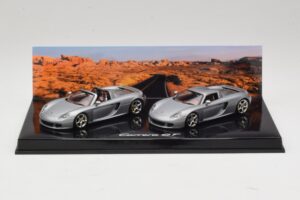
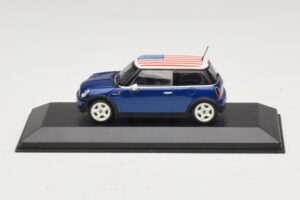
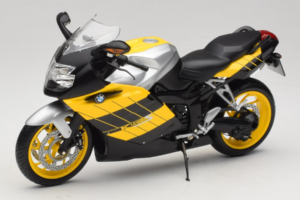
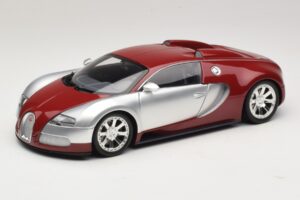
TL;DR: 2000s model cars span Formula 1, DTM, premium sports and supercar subjects from Porsche, Mercedes, BMW, Audi and Toyota. Manufacturers including Minichamps, AUTOart, Kyosho and Otto reproduce the decade across 1:43, 1:18 and 1:12 diecast and resin construction.
Formula 1 entered one of its most dominant single-team eras this decade, while manufacturers like Porsche and Ferrari refined their supercars into machines usable well beyond a race track. That combination of motorsport spectacle and genuinely everyday performance engineering gives the 2000s a collecting identity distinct from the rawer decades that preceded it.
2000s Subjects Across Manufacturer Tiers
Minichamps remains the reference for 2000s Formula 1, documenting grids season by season with strong livery accuracy, AUTOart's composite construction suits the decade's road-going supercars particularly well, and Kyosho and Otto bring their own detail-first approach to premium sports and grand touring subjects. When assessing a 2000s piece:
- Aerodynamic accuracy on Formula 1 subjects, where wing and diffuser detail defines each season
- Composite build quality on supercars, where metal-and-resin construction became more common
- DTM and one-make cup livery precision across manufacturer-backed racing programmes
- Wheel design accuracy, since this decade saw rapid stylistic turnover in performance wheels
Because Formula 1 dominates the decade's motorsport identity, season-specific livery accuracy carries particular weight when judging a model's authenticity.
Ferrari's run of championship success this decade gave Formula 1 collecting a strong central narrative, while McLaren and Williams provided the competitive counterpoint across the same seasons. On the road, Porsche and Audi refined supercar and premium sports engineering into genuinely usable daily performance, a shift reflected in grand tourer and supercar subjects from this period. Toyota's endurance racing programme and the continued strength of DTM add further motorsport depth beyond Formula 1 alone.
Collecting the 2000s
A season-by-season Formula 1 collection is one of the most structured ways to approach this decade, since Minichamps and others document grids comprehensively enough to make near-complete coverage realistic at 1:43. Road-car collectors often focus on a single manufacturer's supercar evolution across the decade instead. Because construction quality genuinely improved industry-wide during this period, even mid-tier 2000s pieces tend to display well against older stock.
Frequently Asked Questions
Why is the 2000s a strong Formula 1 collecting decade?
A dominant championship run gave the decade a clear central storyline, and manufacturers documented grids comprehensively enough that near-complete season collections remain achievable, particularly at 1:43 scale.
What changed in supercar construction during the 2000s?
Composite construction, combining metal bodies with resin or plastic detailing, became more common, allowing manufacturers to reach tighter panel tolerances on road-going supercars than pure diecast typically achieved in earlier decades.
Which manufacturer covers 2000s Formula 1 most thoroughly?
Minichamps holds the deepest reputation for season-by-season Formula 1 coverage from this decade, with strong livery accuracy across multiple teams and years within the period.
Are 2000s road cars a good collecting focus?
Yes, particularly supercars and premium sports subjects, since the decade's models remain visually contemporary while still qualifying as an established, well-documented collecting era.