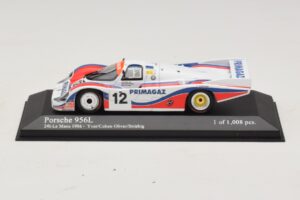
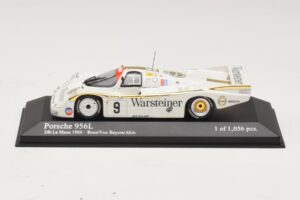
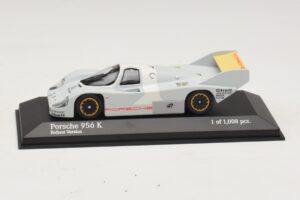
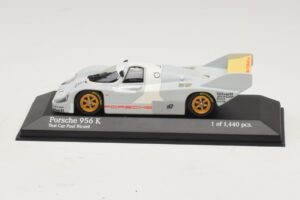
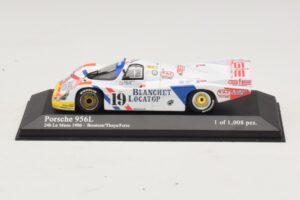
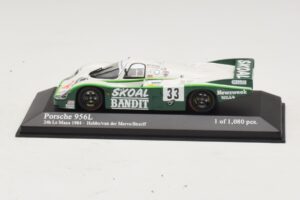
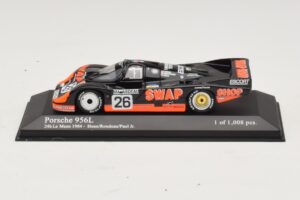
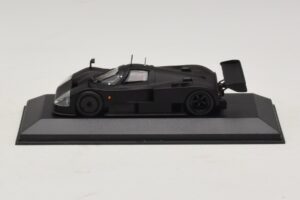
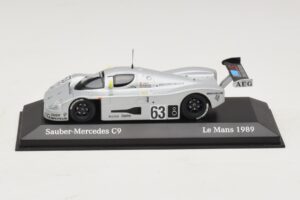
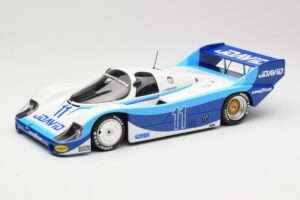
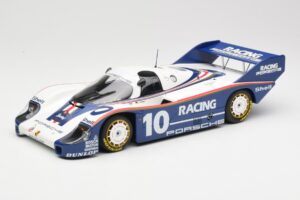
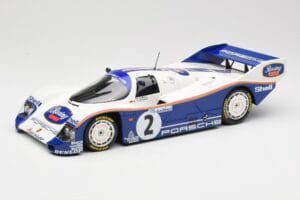
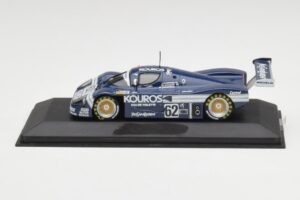
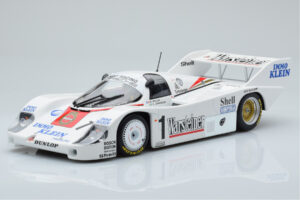
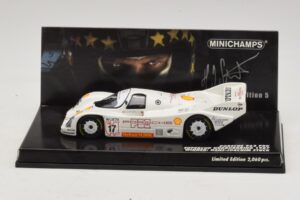
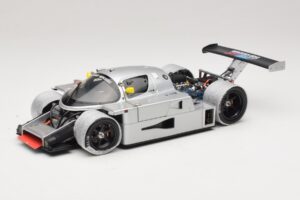

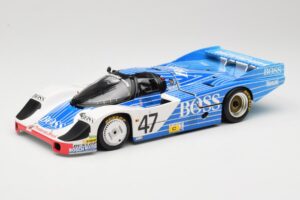

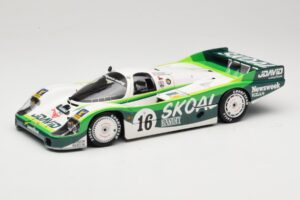
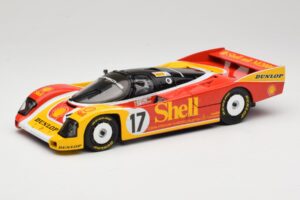
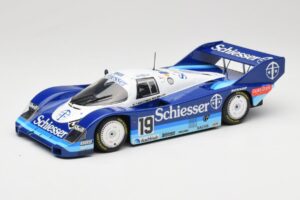
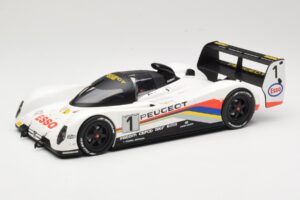
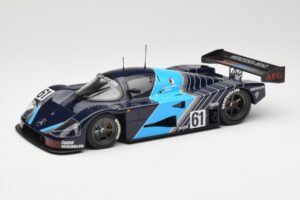

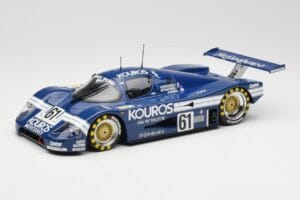
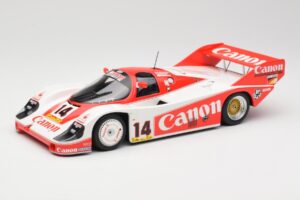
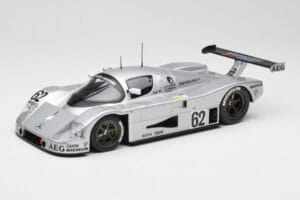
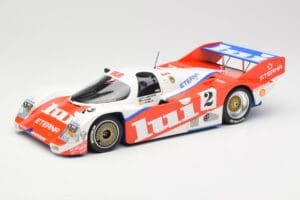
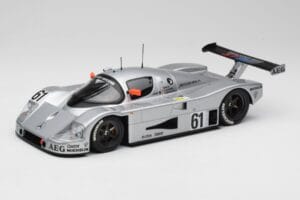
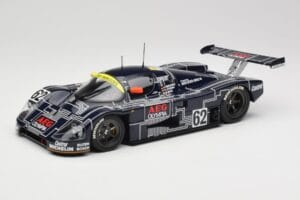
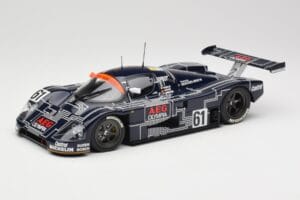
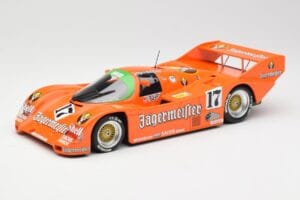
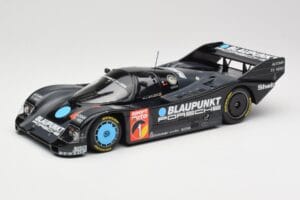
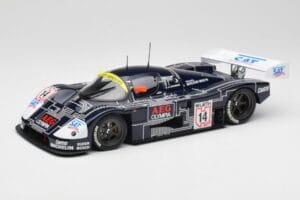
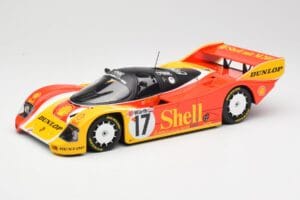
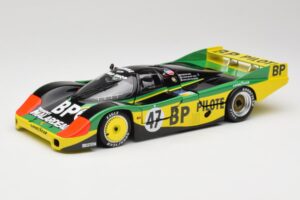
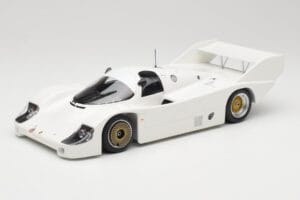
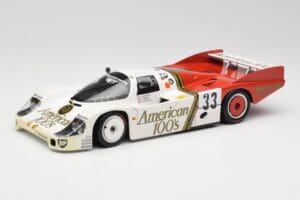
TL;DR: Group C legends scale models from Minichamps, Norev and Universal Hobbies cover Porsche, Sauber, Mercedes and Peugeot prototype racers in 1:18 and 1:43 diecast, documenting the dominant 1980s and early 1990s endurance racing era.
Group C legends scale models document one of endurance racing's most technically advanced periods, when regulations focused on fuel efficiency alongside outright speed and produced some of the fastest sports prototypes ever raced at Le Mans and beyond. Porsche's dominance defines much of this era, but Sauber and Mercedes' later factory partnership adds a compelling second chapter to the story.
Group C Legends Scale Models Across Manufacturers
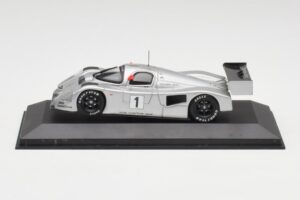
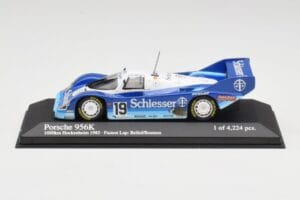
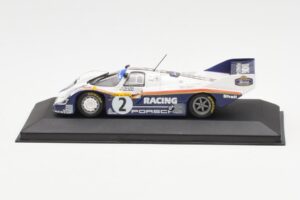
Minichamps carries substantial coverage of this era, reproducing works Porsche prototypes alongside the Sauber-Mercedes partnership cars that eventually challenged that dominance. Norev and Universal Hobbies add further depth, with Universal Hobbies' background in precision scale modelling suiting the technically complex bodywork these prototypes carried.
Porsche's Extraordinary Group C Run
Porsche's success across this era remains one of endurance racing's most dominant sustained periods, and the depth of livery variation across its Group C entries gives collectors genuine season-by-season variety within a single marque's competitive story.
Sauber, Mercedes and Peugeot's Challenge
Sauber's partnership with Mercedes, alongside Peugeot's later prototype programme, eventually broke Porsche's stranglehold on the category, giving collectors a genuine rivalry narrative to build a themed shelf around.
Collecting Group C's Technical Golden Age
This category rewards collectors interested in one of motorsport's most technically sophisticated prototype eras.
- Porsche dominance: multiple seasons of works prototype liveries.
- The Sauber-Mercedes challenge: a genuine rivalry narrative for a themed shelf.
- Peugeot's late-era prototypes: the final chapter of the Group C story.
A Compact but Rich Competitive Era
Group C racing existed primarily through the 1980s into the early 1990s, a relatively compact window that nonetheless produced remarkable technical variety and genuine manufacturer rivalry. That finite timeframe makes building a comprehensive Group C shelf a realistic long-term goal, unlike endurance categories spanning many more decades of competition.
Frequently Asked Questions
Why did Porsche dominate Group C racing so completely?
Porsche's sustained technical development and factory commitment through the 1980s produced one of endurance racing's most dominant runs, with its prototypes proving consistently faster and more reliable than early rivals across multiple consecutive seasons.
Which manufacturer offers the best Group C coverage?
Minichamps provides the broadest coverage across Porsche, Sauber-Mercedes and other Group C entries, with Norev and Universal Hobbies worth comparing for specific liveries or technical detail preferences.
How did Sauber and Mercedes eventually challenge Porsche?
Sauber's technical partnership with Mercedes produced increasingly competitive prototypes through the late 1980s, eventually breaking Porsche's sustained dominance and giving collectors a genuine rivalry narrative to trace across seasons.
How long did the Group C era last?
Group C racing ran primarily through the 1980s into the early 1990s, a relatively compact but technically rich competitive window that makes a comprehensive collection a realistic achievable goal.