On sale:
-6%
New arrival
Pre-order

Koenigsegg Agera RS Draco Red GT Spirit 1:18
Expected 04-14.11.2026
Slots available
Price:
was
£89.00
£84.00
Save £5.00
The 2010s standardised GT3 racing into a global phenomenon while hybrid power redefined the hypercar. This range spans Porsche, Mercedes, BMW and McLaren across two scales, in diecast, resin and composite construction.
Save £5.00

Save £7.50






































































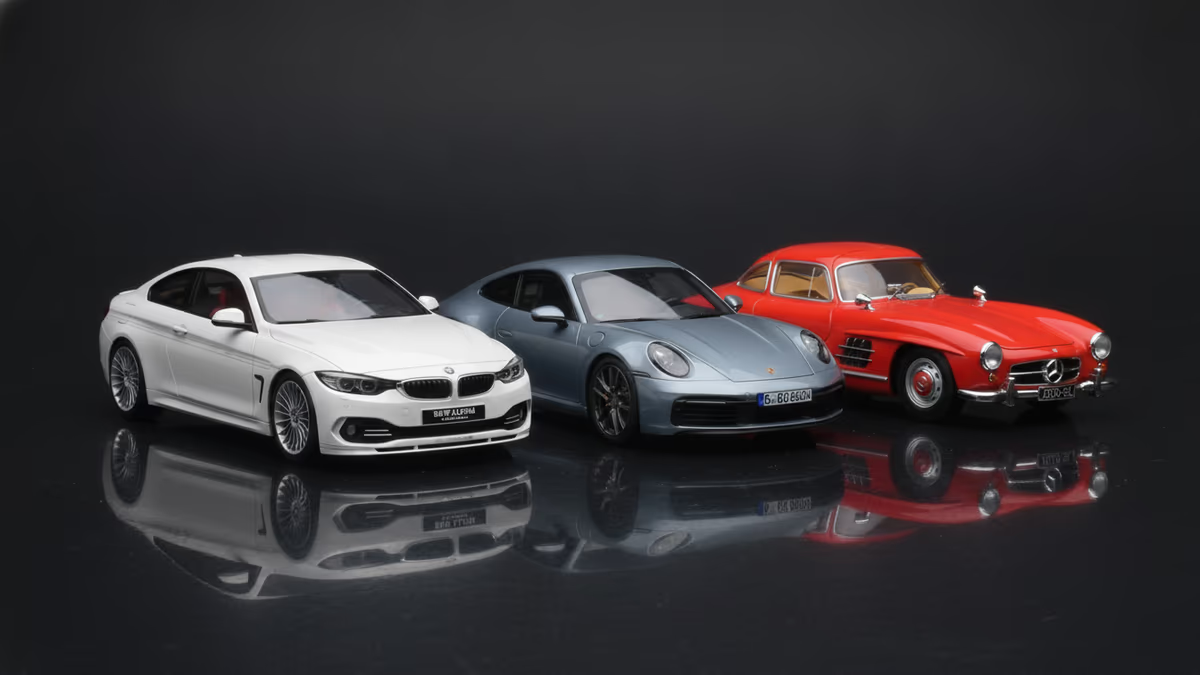
TL;DR: 2010s model cars span GT3 and GT4 racing, Formula 1, supercars and hypercars from Porsche, Mercedes, BMW, Audi and McLaren. Manufacturers including Minichamps, GT Spirit, Norev and AUTOart reproduce the decade in 1:18 and 1:43 diecast, resin and composite construction.
Customer racing found its most standardised form this decade through GT3 regulations, giving privateer teams genuine access to factory-built race cars for the first time at real scale. Alongside that, hybrid powertrains pushed the hypercar into new territory, and both threads give 2010s collecting a distinctly technical, performance-driven character.
GT Spirit's resin specialism suits the decade's tuner and modified performance culture particularly well, Minichamps and Otto document GT3 grids and Formula 1 seasons with strong livery accuracy, and AUTOart's composite construction continues to serve the decade's hypercar subjects at a premium finish level. When judging a 2010s piece:
Because GT3 racing standardised so many teams around similar base chassis, correct manufacturer and team livery becomes the main way models are distinguished from one another.
Porsche and Audi's factory GT3 programmes gave privateer racing genuine manufacturer backing this decade, while McLaren's return to road-going supercars and the arrival of hybrid hypercars from established performance marques pushed engineering ambition further than the previous decade managed. Red Bull Racing's Formula 1 success added another strong motorsport thread, and tuner specials continued the modification culture that took hold in the 1990s and 2000s.
GT3 racing offers one of the most structured collecting paths in this decade, since teams and liveries are well documented and manufacturers cover multiple seasons in depth. Hypercar collectors typically focus on flagship subjects from a small number of marques rather than chasing breadth, given how few true hypercars each manufacturer released. Composite-built pieces at the upper tier reward closer inspection than diecast alone typically allows.
GT3 is a customer racing category using factory-built cars available to privateer teams, standardised enough that manufacturers document multiple seasons and teams in depth, making structured, comprehensive collecting genuinely achievable.
Hybrid powertrains and complex active aerodynamics define the decade's hypercars, and models from this era often reproduce intricate bodywork detail that earlier, simpler supercar shapes did not require.
Neither is universally better; composite construction typically achieves tighter panel tolerances for detailed hypercars, while diecast remains durable and often more affordable, so the right choice depends on the collector's display priorities.
GT3 racing carries forward from earlier endurance and touring car traditions, while hypercar and tuner subjects continue threads that began in the 1990s and 2000s, giving the 2010s strong continuity with recent collecting history.