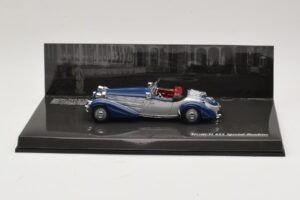
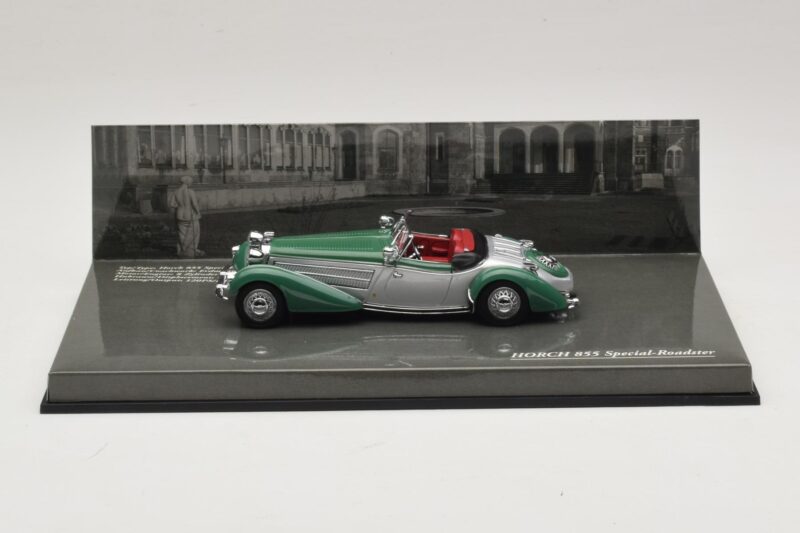
Horch 855 Special Roadster Silver Green Minichamps 1:43
1
/
5
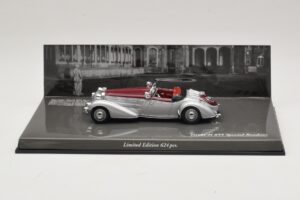
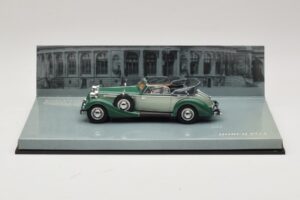
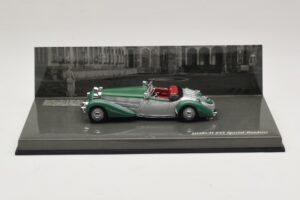
Minichamps' 1:43 diecast reproduces the Horch 855 Special Roadster in Silver Green, one of Auto Union's most prestigious pre-war luxury cars. The sealed, one-piece body holds a single continuous shutline along its flowing wings and cutaway doors, with chrome-effect trim on the headlamps and wire wheels. A rare, elegant piece for collectors building a serious pre-war German lineup, and a realistic alternative to an original that virtually never surfaces for sale.
1 / 5
[{"index":0,"id":"1664610","thumb":"https:\/\/models118.co.uk\/wp-content\/uploads\/2026\/09\/horch-855-special-roadster-silver-green-minichamps-1-43-436014205-1-1-300x200.jpg","medium":"https:\/\/models118.co.uk\/wp-content\/uploads\/2026\/09\/horch-855-special-roadster-silver-green-minichamps-1-43-436014205-1-1-800x533.jpg","full":"https:\/\/models118.co.uk\/wp-content\/uploads\/2026\/09\/horch-855-special-roadster-silver-green-minichamps-1-43-436014205-1-1.jpg","srcset":"https:\/\/models118.co.uk\/wp-content\/uploads\/2026\/09\/horch-855-special-roadster-silver-green-minichamps-1-43-436014205-1-1-800x533.jpg 800w, https:\/\/models118.co.uk\/wp-content\/uploads\/2026\/09\/horch-855-special-roadster-silver-green-minichamps-1-43-436014205-1-1-300x200.jpg 300w, https:\/\/models118.co.uk\/wp-content\/uploads\/2026\/09\/horch-855-special-roadster-silver-green-minichamps-1-43-436014205-1-1-64x43.jpg 64w, https:\/\/models118.co.uk\/wp-content\/uploads\/2026\/09\/horch-855-special-roadster-silver-green-minichamps-1-43-436014205-1-1-480x320.jpg 480w, https:\/\/models118.co.uk\/wp-content\/uploads\/2026\/09\/horch-855-special-roadster-silver-green-minichamps-1-43-436014205-1-1.jpg 1800w","sizes":"(max-width: 1023px) 400px, 640px","srcsetAvif":"https:\/\/models118.co.uk\/wp-content\/uploads\/2026\/09\/horch-855-special-roadster-silver-green-minichamps-1-43-436014205-1-1-800x533.jpg.avif 800w, https:\/\/models118.co.uk\/wp-content\/uploads\/2026\/09\/horch-855-special-roadster-silver-green-minichamps-1-43-436014205-1-1-300x200.jpg.avif 300w, https:\/\/models118.co.uk\/wp-content\/uploads\/2026\/09\/horch-855-special-roadster-silver-green-minichamps-1-43-436014205-1-1-64x43.jpg.avif 64w, https:\/\/models118.co.uk\/wp-content\/uploads\/2026\/09\/horch-855-special-roadster-silver-green-minichamps-1-43-436014205-1-1-480x320.jpg.avif 480w, https:\/\/models118.co.uk\/wp-content\/uploads\/2026\/09\/horch-855-special-roadster-silver-green-minichamps-1-43-436014205-1-1.jpg.avif 1800w","srcsetWebp":"https:\/\/models118.co.uk\/wp-content\/uploads\/2026\/09\/horch-855-special-roadster-silver-green-minichamps-1-43-436014205-1-1-800x533.jpg.webp 800w, https:\/\/models118.co.uk\/wp-content\/uploads\/2026\/09\/horch-855-special-roadster-silver-green-minichamps-1-43-436014205-1-1-300x200.jpg.webp 300w, https:\/\/models118.co.uk\/wp-content\/uploads\/2026\/09\/horch-855-special-roadster-silver-green-minichamps-1-43-436014205-1-1-64x43.jpg.webp 64w, https:\/\/models118.co.uk\/wp-content\/uploads\/2026\/09\/horch-855-special-roadster-silver-green-minichamps-1-43-436014205-1-1-480x320.jpg.webp 480w, https:\/\/models118.co.uk\/wp-content\/uploads\/2026\/09\/horch-855-special-roadster-silver-green-minichamps-1-43-436014205-1-1.jpg.webp 1800w","alt":"Horch 855 Special Roadster Silver Green Minichamps 1:43 436014205 Diecast"},{"index":1,"id":1664612,"thumb":"https:\/\/models118.co.uk\/wp-content\/uploads\/2026\/09\/horch-855-special-roadster-silver-green-minichamps-1-43-436014205-1-300x200.jpg","medium":"https:\/\/models118.co.uk\/wp-content\/uploads\/2026\/09\/horch-855-special-roadster-silver-green-minichamps-1-43-436014205-1-800x533.jpg","full":"https:\/\/models118.co.uk\/wp-content\/uploads\/2026\/09\/horch-855-special-roadster-silver-green-minichamps-1-43-436014205-1.jpg","srcset":"https:\/\/models118.co.uk\/wp-content\/uploads\/2026\/09\/horch-855-special-roadster-silver-green-minichamps-1-43-436014205-1-800x533.jpg 800w, https:\/\/models118.co.uk\/wp-content\/uploads\/2026\/09\/horch-855-special-roadster-silver-green-minichamps-1-43-436014205-1-300x200.jpg 300w, https:\/\/models118.co.uk\/wp-content\/uploads\/2026\/09\/horch-855-special-roadster-silver-green-minichamps-1-43-436014205-1-64x43.jpg 64w, https:\/\/models118.co.uk\/wp-content\/uploads\/2026\/09\/horch-855-special-roadster-silver-green-minichamps-1-43-436014205-1.jpg 1800w","sizes":"(max-width: 1023px) 400px, 640px","srcsetAvif":"https:\/\/models118.co.uk\/wp-content\/uploads\/2026\/09\/horch-855-special-roadster-silver-green-minichamps-1-43-436014205-1-800x533.jpg.avif 800w, https:\/\/models118.co.uk\/wp-content\/uploads\/2026\/09\/horch-855-special-roadster-silver-green-minichamps-1-43-436014205-1-300x200.jpg.avif 300w, https:\/\/models118.co.uk\/wp-content\/uploads\/2026\/09\/horch-855-special-roadster-silver-green-minichamps-1-43-436014205-1-64x43.jpg.avif 64w, https:\/\/models118.co.uk\/wp-content\/uploads\/2026\/09\/horch-855-special-roadster-silver-green-minichamps-1-43-436014205-1.jpg.avif 1800w","srcsetWebp":"https:\/\/models118.co.uk\/wp-content\/uploads\/2026\/09\/horch-855-special-roadster-silver-green-minichamps-1-43-436014205-1-800x533.jpg.webp 800w, https:\/\/models118.co.uk\/wp-content\/uploads\/2026\/09\/horch-855-special-roadster-silver-green-minichamps-1-43-436014205-1-300x200.jpg.webp 300w, https:\/\/models118.co.uk\/wp-content\/uploads\/2026\/09\/horch-855-special-roadster-silver-green-minichamps-1-43-436014205-1-64x43.jpg.webp 64w, https:\/\/models118.co.uk\/wp-content\/uploads\/2026\/09\/horch-855-special-roadster-silver-green-minichamps-1-43-436014205-1.jpg.webp 1800w","alt":"Horch 855 Special Roadster Silver Green Minichamps 1:43 436014205 Diecast \u2014 photo 2 of 5"},{"index":2,"id":1664614,"thumb":"https:\/\/models118.co.uk\/wp-content\/uploads\/2026\/09\/horch-855-special-roadster-silver-green-minichamps-1-43-436014205-2-300x200.jpg","medium":"https:\/\/models118.co.uk\/wp-content\/uploads\/2026\/09\/horch-855-special-roadster-silver-green-minichamps-1-43-436014205-2-800x533.jpg","full":"https:\/\/models118.co.uk\/wp-content\/uploads\/2026\/09\/horch-855-special-roadster-silver-green-minichamps-1-43-436014205-2.jpg","srcset":"https:\/\/models118.co.uk\/wp-content\/uploads\/2026\/09\/horch-855-special-roadster-silver-green-minichamps-1-43-436014205-2-800x533.jpg 800w, https:\/\/models118.co.uk\/wp-content\/uploads\/2026\/09\/horch-855-special-roadster-silver-green-minichamps-1-43-436014205-2-300x200.jpg 300w, https:\/\/models118.co.uk\/wp-content\/uploads\/2026\/09\/horch-855-special-roadster-silver-green-minichamps-1-43-436014205-2-64x43.jpg 64w, https:\/\/models118.co.uk\/wp-content\/uploads\/2026\/09\/horch-855-special-roadster-silver-green-minichamps-1-43-436014205-2.jpg 1800w","sizes":"(max-width: 1023px) 400px, 640px","srcsetAvif":"https:\/\/models118.co.uk\/wp-content\/uploads\/2026\/09\/horch-855-special-roadster-silver-green-minichamps-1-43-436014205-2-800x533.jpg.avif 800w, https:\/\/models118.co.uk\/wp-content\/uploads\/2026\/09\/horch-855-special-roadster-silver-green-minichamps-1-43-436014205-2-300x200.jpg.avif 300w, https:\/\/models118.co.uk\/wp-content\/uploads\/2026\/09\/horch-855-special-roadster-silver-green-minichamps-1-43-436014205-2-64x43.jpg.avif 64w, https:\/\/models118.co.uk\/wp-content\/uploads\/2026\/09\/horch-855-special-roadster-silver-green-minichamps-1-43-436014205-2.jpg.avif 1800w","srcsetWebp":"https:\/\/models118.co.uk\/wp-content\/uploads\/2026\/09\/horch-855-special-roadster-silver-green-minichamps-1-43-436014205-2-800x533.jpg.webp 800w, https:\/\/models118.co.uk\/wp-content\/uploads\/2026\/09\/horch-855-special-roadster-silver-green-minichamps-1-43-436014205-2-300x200.jpg.webp 300w, https:\/\/models118.co.uk\/wp-content\/uploads\/2026\/09\/horch-855-special-roadster-silver-green-minichamps-1-43-436014205-2-64x43.jpg.webp 64w, https:\/\/models118.co.uk\/wp-content\/uploads\/2026\/09\/horch-855-special-roadster-silver-green-minichamps-1-43-436014205-2.jpg.webp 1800w","alt":"Horch 855 Special Roadster Silver Green Minichamps 1:43 436014205 Diecast \u2014 photo 3 of 5"},{"index":3,"id":1664616,"thumb":"https:\/\/models118.co.uk\/wp-content\/uploads\/2026\/09\/horch-855-special-roadster-silver-green-minichamps-1-43-436014205-3-300x200.jpg","medium":"https:\/\/models118.co.uk\/wp-content\/uploads\/2026\/09\/horch-855-special-roadster-silver-green-minichamps-1-43-436014205-3-800x533.jpg","full":"https:\/\/models118.co.uk\/wp-content\/uploads\/2026\/09\/horch-855-special-roadster-silver-green-minichamps-1-43-436014205-3.jpg","srcset":"https:\/\/models118.co.uk\/wp-content\/uploads\/2026\/09\/horch-855-special-roadster-silver-green-minichamps-1-43-436014205-3-800x533.jpg 800w, https:\/\/models118.co.uk\/wp-content\/uploads\/2026\/09\/horch-855-special-roadster-silver-green-minichamps-1-43-436014205-3-300x200.jpg 300w, https:\/\/models118.co.uk\/wp-content\/uploads\/2026\/09\/horch-855-special-roadster-silver-green-minichamps-1-43-436014205-3-64x43.jpg 64w, https:\/\/models118.co.uk\/wp-content\/uploads\/2026\/09\/horch-855-special-roadster-silver-green-minichamps-1-43-436014205-3.jpg 1800w","sizes":"(max-width: 1023px) 400px, 640px","srcsetAvif":"https:\/\/models118.co.uk\/wp-content\/uploads\/2026\/09\/horch-855-special-roadster-silver-green-minichamps-1-43-436014205-3-800x533.jpg.avif 800w, https:\/\/models118.co.uk\/wp-content\/uploads\/2026\/09\/horch-855-special-roadster-silver-green-minichamps-1-43-436014205-3-300x200.jpg.avif 300w, https:\/\/models118.co.uk\/wp-content\/uploads\/2026\/09\/horch-855-special-roadster-silver-green-minichamps-1-43-436014205-3-64x43.jpg.avif 64w, https:\/\/models118.co.uk\/wp-content\/uploads\/2026\/09\/horch-855-special-roadster-silver-green-minichamps-1-43-436014205-3.jpg.avif 1800w","srcsetWebp":"https:\/\/models118.co.uk\/wp-content\/uploads\/2026\/09\/horch-855-special-roadster-silver-green-minichamps-1-43-436014205-3-800x533.jpg.webp 800w, https:\/\/models118.co.uk\/wp-content\/uploads\/2026\/09\/horch-855-special-roadster-silver-green-minichamps-1-43-436014205-3-300x200.jpg.webp 300w, https:\/\/models118.co.uk\/wp-content\/uploads\/2026\/09\/horch-855-special-roadster-silver-green-minichamps-1-43-436014205-3-64x43.jpg.webp 64w, https:\/\/models118.co.uk\/wp-content\/uploads\/2026\/09\/horch-855-special-roadster-silver-green-minichamps-1-43-436014205-3.jpg.webp 1800w","alt":"Horch 855 Special Roadster Silver Green Minichamps 1:43 436014205 Diecast \u2014 photo 4 of 5"},{"index":4,"id":1664617,"thumb":"https:\/\/models118.co.uk\/wp-content\/uploads\/2026\/09\/horch-855-special-roadster-silver-green-minichamps-1-43-436014205-4-300x200.jpg","medium":"https:\/\/models118.co.uk\/wp-content\/uploads\/2026\/09\/horch-855-special-roadster-silver-green-minichamps-1-43-436014205-4-800x533.jpg","full":"https:\/\/models118.co.uk\/wp-content\/uploads\/2026\/09\/horch-855-special-roadster-silver-green-minichamps-1-43-436014205-4.jpg","srcset":"https:\/\/models118.co.uk\/wp-content\/uploads\/2026\/09\/horch-855-special-roadster-silver-green-minichamps-1-43-436014205-4-800x533.jpg 800w, https:\/\/models118.co.uk\/wp-content\/uploads\/2026\/09\/horch-855-special-roadster-silver-green-minichamps-1-43-436014205-4-300x200.jpg 300w, https:\/\/models118.co.uk\/wp-content\/uploads\/2026\/09\/horch-855-special-roadster-silver-green-minichamps-1-43-436014205-4-64x43.jpg 64w, https:\/\/models118.co.uk\/wp-content\/uploads\/2026\/09\/horch-855-special-roadster-silver-green-minichamps-1-43-436014205-4.jpg 1800w","sizes":"(max-width: 1023px) 400px, 640px","srcsetAvif":"https:\/\/models118.co.uk\/wp-content\/uploads\/2026\/09\/horch-855-special-roadster-silver-green-minichamps-1-43-436014205-4-800x533.jpg.avif 800w, https:\/\/models118.co.uk\/wp-content\/uploads\/2026\/09\/horch-855-special-roadster-silver-green-minichamps-1-43-436014205-4-300x200.jpg.avif 300w, https:\/\/models118.co.uk\/wp-content\/uploads\/2026\/09\/horch-855-special-roadster-silver-green-minichamps-1-43-436014205-4-64x43.jpg.avif 64w, https:\/\/models118.co.uk\/wp-content\/uploads\/2026\/09\/horch-855-special-roadster-silver-green-minichamps-1-43-436014205-4.jpg.avif 1800w","srcsetWebp":"https:\/\/models118.co.uk\/wp-content\/uploads\/2026\/09\/horch-855-special-roadster-silver-green-minichamps-1-43-436014205-4-800x533.jpg.webp 800w, https:\/\/models118.co.uk\/wp-content\/uploads\/2026\/09\/horch-855-special-roadster-silver-green-minichamps-1-43-436014205-4-300x200.jpg.webp 300w, https:\/\/models118.co.uk\/wp-content\/uploads\/2026\/09\/horch-855-special-roadster-silver-green-minichamps-1-43-436014205-4-64x43.jpg.webp 64w, https:\/\/models118.co.uk\/wp-content\/uploads\/2026\/09\/horch-855-special-roadster-silver-green-minichamps-1-43-436014205-4.jpg.webp 1800w","alt":"Horch 855 Special Roadster Silver Green Minichamps 1:43 436014205 Diecast \u2014 photo 5 of 5"}]
Horch 855 Special Roadster Silver Green Minichamps 1:43
Current price:
£116.00
Only 3 units left
Estimated delivery: 11–16 Nov 2026
Delivery from £11.00
Tracked & insured
5% off your first order — create a free account
Specifications
- Car Brand
- Horch
- Model Manufacturer
- Minichamps
- Scale
- 1:43
- Material
- Diecast
- Model Condition
- New Model
- SKU
- 436014205
- Year
- 1938
- Era
- Pre-War
- Body Type
- Convertible
- Vehicle Class
- Vintage Classics
- Openable Parts
- No
- Packaging Condition
- New
- Model Type
- Street Models
- EAN / GTIN
- 4012138096264
Genuine articles
Sourced from manufacturers
5-layer carton
Foam-filled interior
Hassle-free returns
14-day no-quibble returns
Secure payment
Bank-level encryption
About the Horch 855 Special Roadster Silver Green Minichamps 1:43
TL;DR: Minichamps' 1:43 Horch 855 Special Roadster reproduces one of Auto Union's flagship luxury cars from the late 1930s, its flowing open-top bodywork cast in diecast with a sealed, one-piece shell. Silver Green paintwork and long, low pre-war proportions make this a standout Vintage Classics piece.
Horch built the most expensive cars in pre-war Germany, and the 855 Special Roadster sat at the very top of that range. Under the flowing bonnet, one of Auto Union's straight-eight engines powered a body designed to be seen at Baden-Baden or on the autobahn, not tucked away in a garage.
Minichamps' Diecast Take on a Coachbuilt Silhouette
Sealed Body, Continuous Shutlines
On a car defined by flowing, coachbuilt lines, a sealed body works in the model's favour. The Special Roadster's long doors and low scuttle line trace as one uninterrupted crease from front wing to tail, with none of the gap widening a hinge would demand at this scale. Minichamps casts the wings, running boards, and folded hood in one diecast shell, so the profile that made this Horch so photographed in period brochures survives intact. Zinc alloy gives the piece real heft off the shelf, a density that settles the model rather than letting it feel like a toy. At 1:43, that weight matters more than it might at 1:18, since there is less material to carry it.
Silver Green Paint and Chrome Detail
Silver Green is an unusual choice against the black and dark maroon liveries most 1930s luxury cars wear in miniature, and it suits the car's elegant, understated status. The paint sits with real depth over the metal shell, catching light differently along the crown of the wing than in the door's flatter panel; that variation is what separates a considered diecast finish from a flat single-tone spray. Chrome-effect trim picks out the headlamp bodies, the split windscreen frame, and the wire wheels, each kept crisp rather than blurred into the body colour. The wheels themselves carry defined spokes, a detail pre-war subjects live or die by, since bare, thin wheels are exactly where cheaper tooling cuts corners.
Auto Union's Halo Marque in the Late 1930s
The Straight-Eight Flagship
Horch built its reputation on refined straight-eight engines and coachbuilt bodywork aimed at Germany's wealthiest buyers, positioning the marque above Mercedes-Benz in prestige even if it never matched that rival's sales volume. By 1938, Horch operated inside the Auto Union combine alongside Audi, DKW, and Wanderer, the four interlocked rings that eventually became Audi's own badge. The 855 chassis carried some of the most extravagant bodywork the factory offered that decade, and the Special Roadster variant, with its low scuttle, cutaway doors, and sweeping front wings, was built in genuinely small numbers even by Horch's already exclusive standards, reserved for buyers who wanted their car noticed at Baden-Baden's spa season rather than simply driven.
A Marque That Did Not Survive the War
Horch's story ended abruptly. Car production stopped as Germany's factories turned to the war effort, and the marque never resumed building automobiles once peace returned in 1945; the Auto Union name and its four-rings badge survived the collapse, but the badge migrated onto what eventually became Audi. That abrupt ending makes surviving 855 Special Roadsters scarce and, when they do surface, extraordinarily expensive at auction. It also gives a carefully detailed 1:43 diecast replica genuine value: for most collectors, this is the practical, realistic way to own a Horch at all, rather than a consolation prize for skipping the original.
Where This Horch Sits on a Pre-War Shelf
A Focal Point for a 1930s Lineup
A Horch like this earns its place alongside other Vintage Classics from the same Minichamps range rather than beside modern supercars; the era is the organising theme, not the marque. Pre-war luxury cars reward being grouped by decade and by coachbuilder style, since the contrast between a Horch's flowing wings and a smaller, boxier saloon from the same years tells its own story on a shelf. At 1:43, several of these cars fit comfortably on a single display tier, which makes building a coherent 1930s lineup realistic in typical cabinet space, unlike a run of 1:18 flagships that would demand far more room. For buyers assembling a pre-war German collection, a Horch of this quality sits near the top of what is realistically available in diecast.
Same marque, same scale
Last one
Used
Last one
Last one
Collectors also bought
Browse all 1:43
Used
Last one
Used

Last one
Used
Used
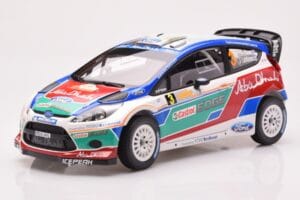
Ford Fiesta RS WRC Ford Abu Dhabi #3 M. Hirvonen / J. Lehtinen Winner Rally Australia 2011 Minichamps 1:18
Only 2 left
Price:
£103.00
Last one
Used
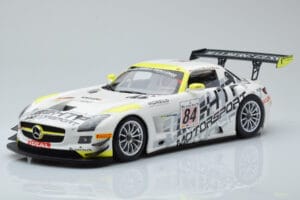
Mercedes SLS AMG GT3 HTP Motorsport Persson #84 B. Schneider / M. Buhk / M. Gotz Winners 24 Hours of Spa-Francorchamps 2013 Minichamps 1:18
Only 1 left
Price:
£92.00
Last one

BMW M6 GT3 Rowe Racing #98 A. Graf / R. Westbrook / N. Catsburg / N. Paltalla 24 Hours of Nurburgring 2016 Minichamps 1:18
Only 1 left
Price:
£141.00
Used
Last one
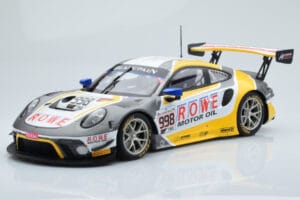
Porsche 911 GT3 R Rowe Racing #998 F. Makowiecki / A. Pilet / N. Tandy 2nd Place 24 Hours of Spa-Francorchamps 2019 Minichamps 1:18
Only 1 left
Price:
£91.00
Recently viewed
{"id":1662730,"name":"Horch 855 Special Roadster Silver Green Minichamps 1:43","price":"£<\/span>116.00<\/bdi><\/span>","image":"https:\/\/models118.co.uk\/wp-content\/uploads\/2026\/09\/horch-855-special-roadster-silver-green-minichamps-1-43-436014205-1-1-400x400.jpg","permalink":"https:\/\/models118.co.uk\/horch-855-special-roadster-silver-green-minichamps-1-43-436014205\/","brand":"Horch"}