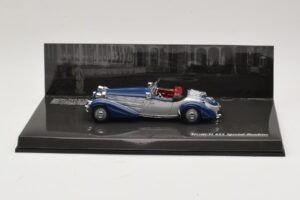
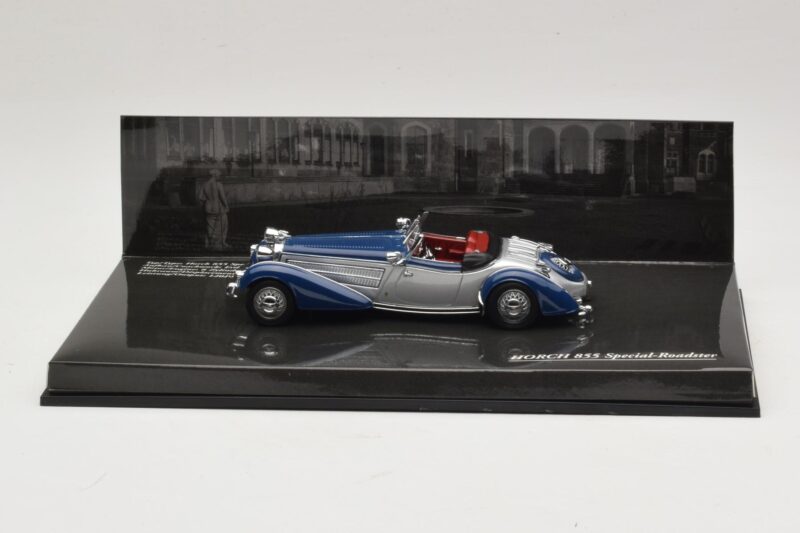
Horch 855 Special Roadster Silver Blue No Outside Box Minichamps 1:43
1
/
4
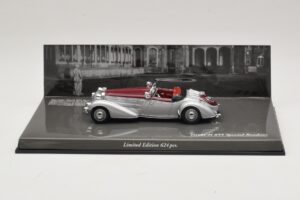
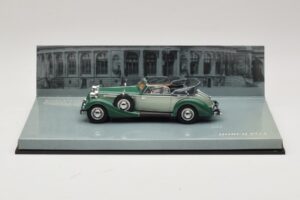
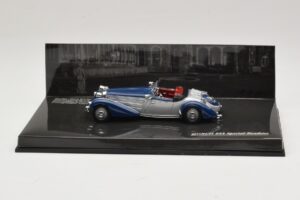
Minichamps' 1:43 diecast Horch 855 Special Roadster reproduces the 1938 pre-war flagship in silver blue, its sealed one-piece body carrying the coachwork lines that made Horch Auto Union's most prestigious marque. This particular listing arrives without its outer presentation box, the model itself unaffected, making it a straightforward, honestly priced way into pre-war German luxury motoring.
1 / 4
[{"index":0,"id":"1664630","thumb":"https:\/\/models118.co.uk\/wp-content\/uploads\/2026\/09\/horch-855-special-roadster-silver-blue-minichamps-1-43-436014202-o1-1-1-300x200.jpg","medium":"https:\/\/models118.co.uk\/wp-content\/uploads\/2026\/09\/horch-855-special-roadster-silver-blue-minichamps-1-43-436014202-o1-1-1-800x533.jpg","full":"https:\/\/models118.co.uk\/wp-content\/uploads\/2026\/09\/horch-855-special-roadster-silver-blue-minichamps-1-43-436014202-o1-1-1.jpg","srcset":"https:\/\/models118.co.uk\/wp-content\/uploads\/2026\/09\/horch-855-special-roadster-silver-blue-minichamps-1-43-436014202-o1-1-1-800x533.jpg 800w, https:\/\/models118.co.uk\/wp-content\/uploads\/2026\/09\/horch-855-special-roadster-silver-blue-minichamps-1-43-436014202-o1-1-1-300x200.jpg 300w, https:\/\/models118.co.uk\/wp-content\/uploads\/2026\/09\/horch-855-special-roadster-silver-blue-minichamps-1-43-436014202-o1-1-1-64x43.jpg 64w, https:\/\/models118.co.uk\/wp-content\/uploads\/2026\/09\/horch-855-special-roadster-silver-blue-minichamps-1-43-436014202-o1-1-1-480x320.jpg 480w, https:\/\/models118.co.uk\/wp-content\/uploads\/2026\/09\/horch-855-special-roadster-silver-blue-minichamps-1-43-436014202-o1-1-1.jpg 1800w","sizes":"(max-width: 1023px) 400px, 640px","srcsetAvif":"https:\/\/models118.co.uk\/wp-content\/uploads\/2026\/09\/horch-855-special-roadster-silver-blue-minichamps-1-43-436014202-o1-1-1-800x533.jpg.avif 800w, https:\/\/models118.co.uk\/wp-content\/uploads\/2026\/09\/horch-855-special-roadster-silver-blue-minichamps-1-43-436014202-o1-1-1-300x200.jpg.avif 300w, https:\/\/models118.co.uk\/wp-content\/uploads\/2026\/09\/horch-855-special-roadster-silver-blue-minichamps-1-43-436014202-o1-1-1-64x43.jpg.avif 64w, https:\/\/models118.co.uk\/wp-content\/uploads\/2026\/09\/horch-855-special-roadster-silver-blue-minichamps-1-43-436014202-o1-1-1-480x320.jpg.avif 480w, https:\/\/models118.co.uk\/wp-content\/uploads\/2026\/09\/horch-855-special-roadster-silver-blue-minichamps-1-43-436014202-o1-1-1.jpg.avif 1800w","srcsetWebp":"https:\/\/models118.co.uk\/wp-content\/uploads\/2026\/09\/horch-855-special-roadster-silver-blue-minichamps-1-43-436014202-o1-1-1-800x533.jpg.webp 800w, https:\/\/models118.co.uk\/wp-content\/uploads\/2026\/09\/horch-855-special-roadster-silver-blue-minichamps-1-43-436014202-o1-1-1-300x200.jpg.webp 300w, https:\/\/models118.co.uk\/wp-content\/uploads\/2026\/09\/horch-855-special-roadster-silver-blue-minichamps-1-43-436014202-o1-1-1-64x43.jpg.webp 64w, https:\/\/models118.co.uk\/wp-content\/uploads\/2026\/09\/horch-855-special-roadster-silver-blue-minichamps-1-43-436014202-o1-1-1-480x320.jpg.webp 480w, https:\/\/models118.co.uk\/wp-content\/uploads\/2026\/09\/horch-855-special-roadster-silver-blue-minichamps-1-43-436014202-o1-1-1.jpg.webp 1800w","alt":"Horch 855 Special Roadster Silver Blue No Outside Box Minichamps 1:43 436014202-O1 Diecast"},{"index":1,"id":1664632,"thumb":"https:\/\/models118.co.uk\/wp-content\/uploads\/2026\/09\/horch-855-special-roadster-silver-blue-minichamps-1-43-436014202-o1-1-300x200.jpg","medium":"https:\/\/models118.co.uk\/wp-content\/uploads\/2026\/09\/horch-855-special-roadster-silver-blue-minichamps-1-43-436014202-o1-1-800x533.jpg","full":"https:\/\/models118.co.uk\/wp-content\/uploads\/2026\/09\/horch-855-special-roadster-silver-blue-minichamps-1-43-436014202-o1-1.jpg","srcset":"https:\/\/models118.co.uk\/wp-content\/uploads\/2026\/09\/horch-855-special-roadster-silver-blue-minichamps-1-43-436014202-o1-1-800x533.jpg 800w, https:\/\/models118.co.uk\/wp-content\/uploads\/2026\/09\/horch-855-special-roadster-silver-blue-minichamps-1-43-436014202-o1-1-300x200.jpg 300w, https:\/\/models118.co.uk\/wp-content\/uploads\/2026\/09\/horch-855-special-roadster-silver-blue-minichamps-1-43-436014202-o1-1-64x43.jpg 64w, https:\/\/models118.co.uk\/wp-content\/uploads\/2026\/09\/horch-855-special-roadster-silver-blue-minichamps-1-43-436014202-o1-1.jpg 1800w","sizes":"(max-width: 1023px) 400px, 640px","srcsetAvif":"https:\/\/models118.co.uk\/wp-content\/uploads\/2026\/09\/horch-855-special-roadster-silver-blue-minichamps-1-43-436014202-o1-1-800x533.jpg.avif 800w, https:\/\/models118.co.uk\/wp-content\/uploads\/2026\/09\/horch-855-special-roadster-silver-blue-minichamps-1-43-436014202-o1-1-300x200.jpg.avif 300w, https:\/\/models118.co.uk\/wp-content\/uploads\/2026\/09\/horch-855-special-roadster-silver-blue-minichamps-1-43-436014202-o1-1-64x43.jpg.avif 64w, https:\/\/models118.co.uk\/wp-content\/uploads\/2026\/09\/horch-855-special-roadster-silver-blue-minichamps-1-43-436014202-o1-1.jpg.avif 1800w","srcsetWebp":"https:\/\/models118.co.uk\/wp-content\/uploads\/2026\/09\/horch-855-special-roadster-silver-blue-minichamps-1-43-436014202-o1-1-800x533.jpg.webp 800w, https:\/\/models118.co.uk\/wp-content\/uploads\/2026\/09\/horch-855-special-roadster-silver-blue-minichamps-1-43-436014202-o1-1-300x200.jpg.webp 300w, https:\/\/models118.co.uk\/wp-content\/uploads\/2026\/09\/horch-855-special-roadster-silver-blue-minichamps-1-43-436014202-o1-1-64x43.jpg.webp 64w, https:\/\/models118.co.uk\/wp-content\/uploads\/2026\/09\/horch-855-special-roadster-silver-blue-minichamps-1-43-436014202-o1-1.jpg.webp 1800w","alt":"Horch 855 Special Roadster Silver Blue No Outside Box Minichamps 1:43 436014202-O1 Diecast \u2014 photo 2 of 4"},{"index":2,"id":1664634,"thumb":"https:\/\/models118.co.uk\/wp-content\/uploads\/2026\/09\/horch-855-special-roadster-silver-blue-minichamps-1-43-436014202-o1-2-300x200.jpg","medium":"https:\/\/models118.co.uk\/wp-content\/uploads\/2026\/09\/horch-855-special-roadster-silver-blue-minichamps-1-43-436014202-o1-2-800x533.jpg","full":"https:\/\/models118.co.uk\/wp-content\/uploads\/2026\/09\/horch-855-special-roadster-silver-blue-minichamps-1-43-436014202-o1-2.jpg","srcset":"https:\/\/models118.co.uk\/wp-content\/uploads\/2026\/09\/horch-855-special-roadster-silver-blue-minichamps-1-43-436014202-o1-2-800x533.jpg 800w, https:\/\/models118.co.uk\/wp-content\/uploads\/2026\/09\/horch-855-special-roadster-silver-blue-minichamps-1-43-436014202-o1-2-300x200.jpg 300w, https:\/\/models118.co.uk\/wp-content\/uploads\/2026\/09\/horch-855-special-roadster-silver-blue-minichamps-1-43-436014202-o1-2-64x43.jpg 64w, https:\/\/models118.co.uk\/wp-content\/uploads\/2026\/09\/horch-855-special-roadster-silver-blue-minichamps-1-43-436014202-o1-2.jpg 1800w","sizes":"(max-width: 1023px) 400px, 640px","srcsetAvif":"https:\/\/models118.co.uk\/wp-content\/uploads\/2026\/09\/horch-855-special-roadster-silver-blue-minichamps-1-43-436014202-o1-2-800x533.jpg.avif 800w, https:\/\/models118.co.uk\/wp-content\/uploads\/2026\/09\/horch-855-special-roadster-silver-blue-minichamps-1-43-436014202-o1-2-300x200.jpg.avif 300w, https:\/\/models118.co.uk\/wp-content\/uploads\/2026\/09\/horch-855-special-roadster-silver-blue-minichamps-1-43-436014202-o1-2-64x43.jpg.avif 64w, https:\/\/models118.co.uk\/wp-content\/uploads\/2026\/09\/horch-855-special-roadster-silver-blue-minichamps-1-43-436014202-o1-2.jpg.avif 1800w","srcsetWebp":"https:\/\/models118.co.uk\/wp-content\/uploads\/2026\/09\/horch-855-special-roadster-silver-blue-minichamps-1-43-436014202-o1-2-800x533.jpg.webp 800w, https:\/\/models118.co.uk\/wp-content\/uploads\/2026\/09\/horch-855-special-roadster-silver-blue-minichamps-1-43-436014202-o1-2-300x200.jpg.webp 300w, https:\/\/models118.co.uk\/wp-content\/uploads\/2026\/09\/horch-855-special-roadster-silver-blue-minichamps-1-43-436014202-o1-2-64x43.jpg.webp 64w, https:\/\/models118.co.uk\/wp-content\/uploads\/2026\/09\/horch-855-special-roadster-silver-blue-minichamps-1-43-436014202-o1-2.jpg.webp 1800w","alt":"Horch 855 Special Roadster Silver Blue No Outside Box Minichamps 1:43 436014202-O1 Diecast \u2014 photo 3 of 4"},{"index":3,"id":1664636,"thumb":"https:\/\/models118.co.uk\/wp-content\/uploads\/2026\/09\/horch-855-special-roadster-silver-blue-minichamps-1-43-436014202-o1-3-300x200.jpg","medium":"https:\/\/models118.co.uk\/wp-content\/uploads\/2026\/09\/horch-855-special-roadster-silver-blue-minichamps-1-43-436014202-o1-3-800x533.jpg","full":"https:\/\/models118.co.uk\/wp-content\/uploads\/2026\/09\/horch-855-special-roadster-silver-blue-minichamps-1-43-436014202-o1-3.jpg","srcset":"https:\/\/models118.co.uk\/wp-content\/uploads\/2026\/09\/horch-855-special-roadster-silver-blue-minichamps-1-43-436014202-o1-3-800x533.jpg 800w, https:\/\/models118.co.uk\/wp-content\/uploads\/2026\/09\/horch-855-special-roadster-silver-blue-minichamps-1-43-436014202-o1-3-300x200.jpg 300w, https:\/\/models118.co.uk\/wp-content\/uploads\/2026\/09\/horch-855-special-roadster-silver-blue-minichamps-1-43-436014202-o1-3-64x43.jpg 64w, https:\/\/models118.co.uk\/wp-content\/uploads\/2026\/09\/horch-855-special-roadster-silver-blue-minichamps-1-43-436014202-o1-3.jpg 1800w","sizes":"(max-width: 1023px) 400px, 640px","srcsetAvif":"https:\/\/models118.co.uk\/wp-content\/uploads\/2026\/09\/horch-855-special-roadster-silver-blue-minichamps-1-43-436014202-o1-3-800x533.jpg.avif 800w, https:\/\/models118.co.uk\/wp-content\/uploads\/2026\/09\/horch-855-special-roadster-silver-blue-minichamps-1-43-436014202-o1-3-300x200.jpg.avif 300w, https:\/\/models118.co.uk\/wp-content\/uploads\/2026\/09\/horch-855-special-roadster-silver-blue-minichamps-1-43-436014202-o1-3-64x43.jpg.avif 64w, https:\/\/models118.co.uk\/wp-content\/uploads\/2026\/09\/horch-855-special-roadster-silver-blue-minichamps-1-43-436014202-o1-3.jpg.avif 1800w","srcsetWebp":"https:\/\/models118.co.uk\/wp-content\/uploads\/2026\/09\/horch-855-special-roadster-silver-blue-minichamps-1-43-436014202-o1-3-800x533.jpg.webp 800w, https:\/\/models118.co.uk\/wp-content\/uploads\/2026\/09\/horch-855-special-roadster-silver-blue-minichamps-1-43-436014202-o1-3-300x200.jpg.webp 300w, https:\/\/models118.co.uk\/wp-content\/uploads\/2026\/09\/horch-855-special-roadster-silver-blue-minichamps-1-43-436014202-o1-3-64x43.jpg.webp 64w, https:\/\/models118.co.uk\/wp-content\/uploads\/2026\/09\/horch-855-special-roadster-silver-blue-minichamps-1-43-436014202-o1-3.jpg.webp 1800w","alt":"Horch 855 Special Roadster Silver Blue No Outside Box Minichamps 1:43 436014202-O1 Diecast \u2014 photo 4 of 4"}]
Horch 855 Special Roadster Silver Blue No Outside Box Minichamps 1:43
Current price:
£79.00
Last one in stock
Estimated delivery: 11–16 Nov 2026
Delivery from £11.00
Tracked & insured
5% off your first order — create a free account
Specifications
- Car Brand
- Horch
- Model Manufacturer
- Minichamps
- Scale
- 1:43
- Material
- Diecast
- Model Condition
- Used Model
- SKU
- 436014202-O1
- Year
- 1938
- Era
- Pre-War
- Body Type
- Convertible
- Vehicle Class
- Vintage Classics
- Openable Parts
- No
- Packaging Condition
- Traces of Storage
- Model Type
- Street Models
- EAN / GTIN
- —
Genuine articles
5-layer carton
Foam-filled interior
Hassle-free returns
14-day no-quibble returns
Secure payment
Bank-level encryption
About the Horch 855 Special Roadster Silver Blue No Outside Box Minichamps 1:43
TL;DR: Minichamps' 1:43 diecast reproduces the 1938 Horch 855 Special Roadster in silver blue, a sealed one-piece body with pre-war coachwork detailing and long, flowing wings. This listing ships without its outer presentation box, the model itself unaffected, an honest way into Horch's Auto Union-era luxury.
Before the war split German motoring history in two, Horch stood alongside Mercedes and Maybach as the country's ultimate luxury marque, and the 855 Special Roadster was its most glamorous statement. Minichamps casts that flagship in 1:43 diecast, silver blue over long, sweeping wings, though this particular example arrives without the outer box it left the factory in.
Minichamps' Diecast Coachwork and the Silver Blue Finish
Pre-war coachwork depended on long, flowing surfaces rather than the creased panels of later decades, and cast resin's usual advantage, sharper compound curves, matters less here because a well-tooled diecast shell can hold those sweeping wings and the long, low bonnet just as convincingly at this scale. Minichamps' zinc alloy body gives the 855 real weight for its size, and that heft suits a car whose original was itself a substantial, imposing machine rather than a lightweight sports roadster. The silver blue paint sits on a hard metal shell, so the colour reads with genuine depth under a display lamp, catching the long horizontal lines of the wings and running boards the way period photographs show the real car doing. Chrome trim around the headlamps, the split windscreen and the elegant waistline moulding is picked out cleanly from the body colour, work that matters enormously on a subject defined almost entirely by surface elegance rather than aggressive stance. Because the body is sealed, with no doors or bonnet designed to open, the shut lines run as fine, continuous grooves rather than wider practical gaps, letting the coachwork's long, unbroken surfaces read exactly as a coachbuilder intended. That treatment suits a formal pre-war roadster built to be admired at a distance far better than an articulated body ever could, and it keeps the model's silhouette honest to the original's proportions rather than compromising them for a party trick most buyers would only use once.
Horch and the Golden Age of Auto Union Luxury
Horch built its reputation in Zwickau as Germany's most prestigious motor manufacturer through the 1920s and 1930s, producing large, straight-eight-powered cars aimed squarely at industrialists, aristocrats and heads of state rather than ordinary buyers. In 1932, Horch became one of four founding brands within Auto Union, alongside Audi, DKW and Wanderer, the alliance whose four interlocking rings still form Audi's badge today, though Horch itself kept its own separate identity as the group's flagship marque throughout the 1930s. The 855 Special Roadster, introduced late in the decade, represented Horch at its most extravagant: a five-litre straight-eight engine, coachbuilt open bodywork, and a length and presence that placed it firmly alongside contemporary Mercedes 540K and Maybach models as one of the era's genuine automotive statements. Production numbers were always small, reserved for buyers who wanted to be seen arriving rather than simply transported, and the model has become correspondingly scarce and valued among pre-war specialists today. The Second World War ended Horch's independent existence entirely; Zwickau fell within the postwar Soviet zone, the marque was not revived, and its engineering legacy survives largely through the Auto Union lineage that eventually became modern Audi. A well-detailed 1:43 replica is, for most collectors, the only realistic way to study that lost flagship's proportions and detailing up close, since surviving originals rarely leave museum collections or serious private hands.
Buying Without the Outer Box
This particular Horch 855 is sold without its outer presentation box, a straightforward point worth stating plainly rather than glossing over. The model inside is identical to a boxed example: the same diecast body, the same silver blue finish, the same level of detail throughout. What is missing is the printed outer sleeve most collectors keep purely for storage and resale value rather than display. For anyone assembling a working shelf of pre-war luxury cars rather than a sealed investment collection, that missing box changes very little day to day, and it makes an already scarce subject more accessible to buy. Collectors who care primarily about original packaging and certificate completeness should factor that in before purchasing; those who simply want Horch's flagship roadster on their shelf get exactly the same model for less concern about the box.
Same marque, same scale
Last one
Last one
Collectors also bought
Browse all 1:43
Used
Last one
Used
Last one
Used
Used
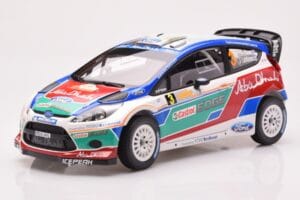
Ford Fiesta RS WRC Ford Abu Dhabi #3 M. Hirvonen / J. Lehtinen Winner Rally Australia 2011 Minichamps 1:18
Only 2 left
Price:
£103.00
Last one
Used
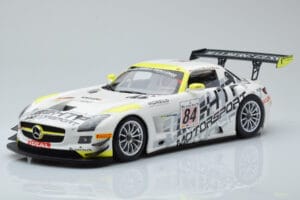
Mercedes SLS AMG GT3 HTP Motorsport Persson #84 B. Schneider / M. Buhk / M. Gotz Winners 24 Hours of Spa-Francorchamps 2013 Minichamps 1:18
Only 1 left
Price:
£92.00
Last one
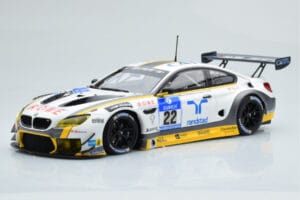
BMW M6 GT3 Rowe Racing #98 A. Graf / R. Westbrook / N. Catsburg / N. Paltalla 24 Hours of Nurburgring 2016 Minichamps 1:18
Only 1 left
Price:
£141.00
Used
Last one
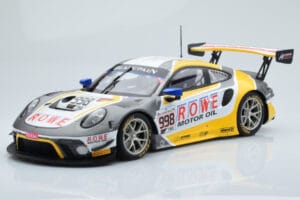
Porsche 911 GT3 R Rowe Racing #998 F. Makowiecki / A. Pilet / N. Tandy 2nd Place 24 Hours of Spa-Francorchamps 2019 Minichamps 1:18
Only 1 left
Price:
£91.00
Recently viewed
{"id":1662721,"name":"Horch 855 Special Roadster Silver Blue No Outside Box Minichamps 1:43","price":"£<\/span>79.00<\/bdi><\/span>","image":"https:\/\/models118.co.uk\/wp-content\/uploads\/2026\/09\/horch-855-special-roadster-silver-blue-minichamps-1-43-436014202-o1-1-1-400x400.jpg","permalink":"https:\/\/models118.co.uk\/horch-855-special-roadster-silver-blue-minichamps-1-43-436014202-o1\/","brand":"Horch"}