Used
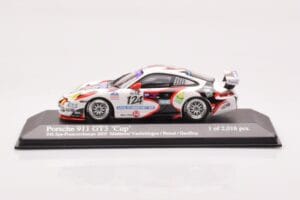
Porsche 911 997 GT3 Cup #124 Mattheus / Geoffroy / Vanbellingen / Fumal 24 Hours of Spa 2005 Minichamps 1:43
Only 3 left
Price:
£29.00
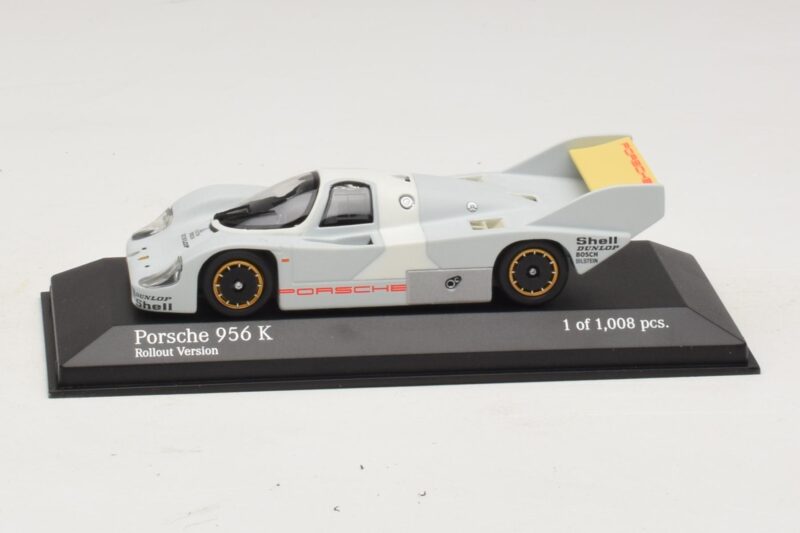
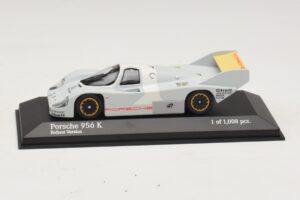
TL;DR: Minichamps' 1:43 diecast Porsche 956K reproduces the car's 1982 rollout livery, the plain factory colours worn during initial testing before any sponsor graphics were applied. A rare chance to display the pure shape of Porsche's ground-effect Group C prototype without a single decal competing for attention.
Most 956 models on the market wear full race livery, so a rollout version stands apart immediately. Before any sponsor deal was painted on, Porsche tested the car in its raw factory colours, and this model preserves exactly that moment, the shape of the design speaking for itself rather than sharing space with sponsor artwork.
Porsche introduced the 956 for the 1982 season as its answer to the new Group C regulations, and it became the first Porsche prototype built around full underbody tunnels and ground-effect aerodynamics rather than relying purely on wings for downforce. The K designation on this car points to its short-tail, or Kurzheck, configuration, set up with reduced rear bodywork and revised aerodynamic balance for circuits that reward cornering grip over the raw top speed a long-tail Le Mans specification would chase. That distinction between short and long tail setups was a genuine engineering choice teams made race by race, not a cosmetic variation, and it shaped how the 956 was actually raced through the early 1980s.
Because most 956 diecasts reproduce a specific race entry, complete with sponsor colours and a race number, a rollout version offers something different: the chance to study Porsche's shape decisions without any livery competing for attention. Every line the model shows, from the tunnel-fed sidepods to the low nose, is a genuine design feature rather than something obscured by graphics. For collectors who already own liveried 956 or 962 models, a rollout version works as a companion piece, showing where the design started before teams and sponsors put their own colours on top of it.
With no opening doors, engine cover or bonnet, this 956K is a single sealed casting, and on a livery-free subject that construction actually raises the bar rather than lowering it. There is no sponsor artwork to draw the eye away from panel lines, so every shut line, seam and body join has to be genuinely clean on its own terms. Minichamps holds that discipline well here: the tunnel-fed sidepod openings and the low nose section keep crisp, consistent edges, and the join between body sections reads as intentional design rather than a manufacturing compromise.
Zinc alloy gives the casting real weight in the hand, a density that helps the wide rear deck and low nose keep their shape without any warping over time on a shelf. Paint quality carries more weight than usual here too, since the factory finish has nothing else on the bodywork to distract from it; any unevenness in the base coat would be immediately obvious. Minichamps' finish holds a consistent, even gloss across the whole shell, letting the model's proportions and stance do the talking rather than any applied graphics. That restraint is exactly what a rollout subject should reward.
This rollout 956K works best as a complement to a fuller Group C display rather than a standalone purchase, sitting alongside liveried 956 and 962 models to show the design lineage underneath the sponsor colours. At 1:43, several prototypes fit comfortably on one shelf, letting a collector trace how a single chassis concept carried Porsche through most of the 1980s. The trade-off is honest: without a race number or sponsor story attached, this is a subject for collectors who value design and engineering context over race history. For that specific audience, though, it is a genuinely distinctive addition.
Save £14.00