Used
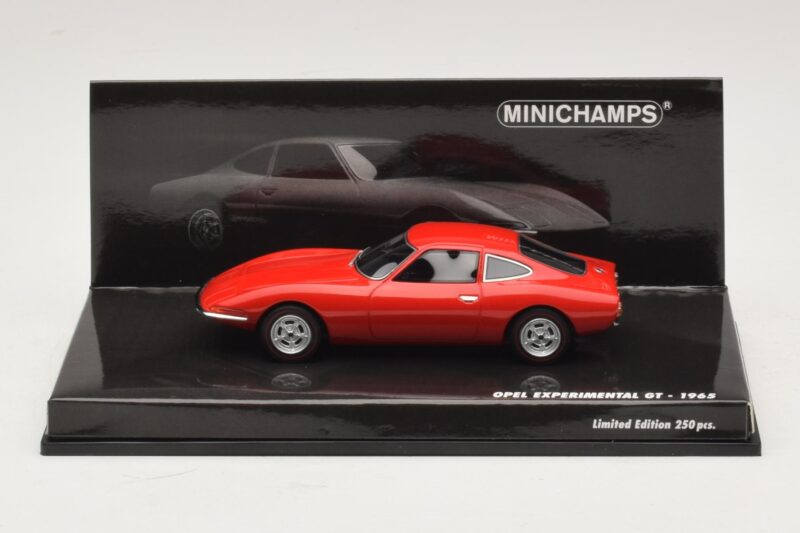
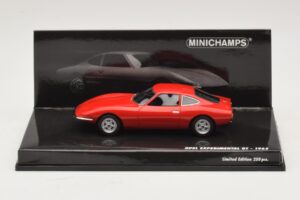
TL;DR: Minichamps' 1:43 Opel Experimental GT reproduces the 1965 concept car that directly previewed the production Opel GT three years later, its swept, Corvette-influenced silhouette cast as a sealed diecast shell in Red. A design study that became a genuine road car almost unchanged.
Concept cars rarely survive contact with a production line intact, but the Experimental GT was the exception. Shown at the 1965 Frankfurt motor show, its long bonnet, pop-up headlamps, and short tail translated almost directly into the production Opel GT that arrived three years later, a car enthusiasts still nickname the 'baby Corvette' for good reason.
Concept cars are often built with non-functional or sealed panels in the first place, since a show stand has no need for opening doors, and this casting reflects that honestly: the body reads as one continuous, swept shape from the long, tapering bonnet back to the short, cut-off tail. Minichamps keeps that profile clean, with the pop-up headlamp housings sitting flush into the bonnet line rather than proud of it, and the low, wide stance holding correctly close to the wheel rather than sitting high on generic tooling. That fidelity to a sealed show-car body is part of what makes this casting an honest miniature rather than a simplified guess at a car most buyers never saw in person.
Red is an obvious choice for a concept car built to turn heads on a motor show stand, and the paint here carries the kind of even, glossy depth that a show car's actual finish would have demanded. The long bonnet gives that colour plenty of unbroken surface to show off, and the model holds its gloss consistently from the front wing to the rear haunch without any patchiness. Chrome-effect trim around the headlamp surrounds and the front air intake stays crisp rather than dissolving into the red body colour. Even the badge script on the nose stays legible at this scale, a small detail that rewards a close look rather than only a shelf glance.
Opel operated as General Motors's German subsidiary through this period, which meant design ideas circulated between Detroit and Rüsselsheim more freely than at most independent manufacturers. The Experimental GT's long bonnet, short tail, and hidden headlamps echoed cues GM was exploring on the Chevrolet Corvette at the same time, close enough that the resemblance was never accidental, and it gave the concept an unusually confident, cohesive shape for a design study. That transatlantic design exchange is a large part of why the GT looked more like an American sports car than a typical mid-1960s European coupe, a distinction that still surprises people unfamiliar with Opel's GM ownership.
What made the Experimental GT genuinely significant was how little changed on the road to production. Where most concept cars get diluted by cost and engineering compromise before reaching showrooms, the Opel GT that launched in 1968 kept the swept profile, the pop-up headlamps, and much of the show car's presence, becoming a genuinely affordable two-seat sports coupe rather than a watered-down imitation of its own concept. That rare consistency between concept and showroom car is precisely why the Experimental GT still gets discussed on its own merits rather than as a footnote to the production model it spawned.
Concept and show cars occupy a different niche from production-model diecast, appealing specifically to collectors interested in design history rather than raw performance or racing pedigree. Displayed next to a production Opel GT, this Experimental GT tells a genuinely rare story: a concept that predicted its own production car almost exactly, rather than one abandoned or radically reworked before launch. That makes it a strong pairing piece for anyone building a design-focused shelf around European coupes of the 1960s, and a reasonably priced way to add a concept-car story that most manufacturers never get to tell so cleanly. Few subjects offer that clean a link between show stand and showroom, which is worth weighing against its otherwise modest shelf presence.