Used
VAT included
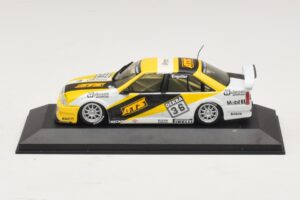
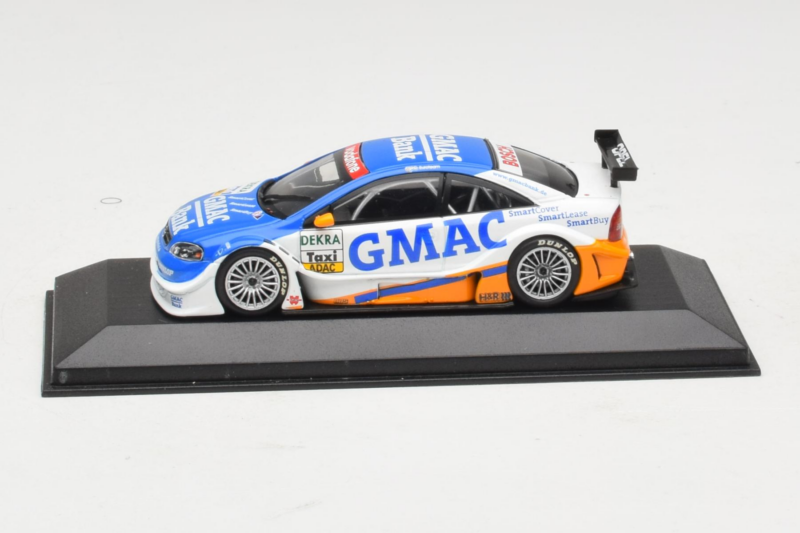
TL;DR: Minichamps' 1:43 diecast Opel Astra V8 Coupe reproduces a 2004 DTM Race Taxi in GMAC Bank OPC Euroteam livery, one of the two-seater cars used to give paying fans a hot lap alongside a professional driver. A distinctive supporting subject rather than a headline competition car.
DTM's Race Taxi concept let spectators experience genuine touring car speed as passengers, using cars built to full competition specification but adapted with a second seat, and this Astra V8 Coupe represents exactly that fan-facing side of the championship.
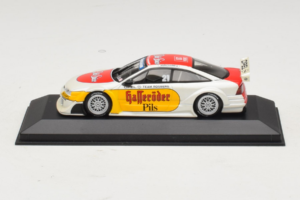
Underneath the passenger-friendly branding, a DTM Race Taxi shared the same aggressive aerodynamics and V8 power as the championship's full competition cars, wide fenders, a substantial rear wing, and minimal road-going comfort. Minichamps' 1:43 build reflects that seriousness, with the Astra V8 Coupe's flared bodywork and race livery captured just as sharply as it would be on a standard competition entry. The GMAC Bank OPC Euroteam branding is applied through clean tampo printing, and the model's compact roughly 10cm footprint suits the DTM era's dense, closely-matched grid of similarly liveried cars.
Most DTM diecast reproduces the championship's actual race weekend entries, so a Race Taxi offers something genuinely different: a car built for fan engagement rather than points, yet no less serious in its engineering. Displayed alongside standard OPC Euroteam competition cars from the same era, it adds context about how the championship actually connected with its audience, a detail easily lost if a collection focuses purely on race results and championship standings.