Used
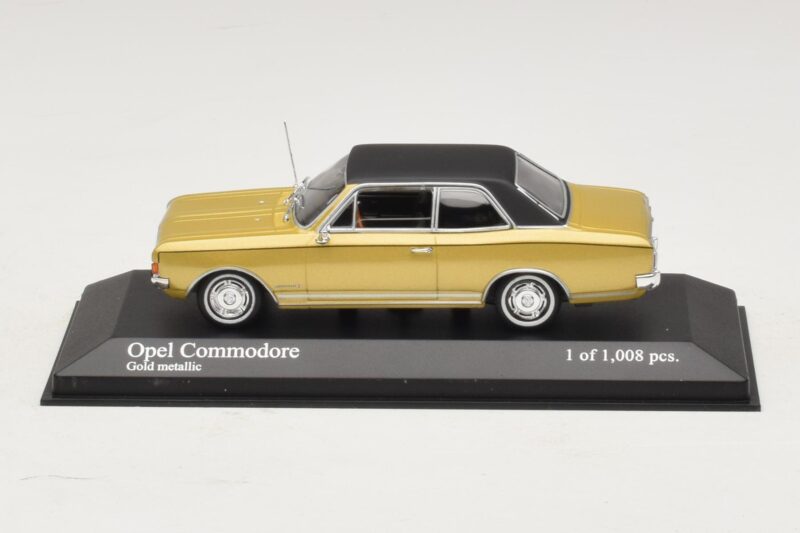
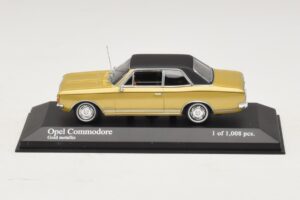
TL;DR: Minichamps' 1:43 Opel Commodore A is a sealed-body zinc alloy diecast finished in gold metallic, reproducing the six-cylinder saloon Opel pitched above the Rekord from 1966. Built as a genuine rival to Ford's Taunus 20M, it suits collectors building a 1960s German executive lineup rather than seeking opening doors.
Opel needed a car above the Rekord to compete for buyers who wanted six-cylinder refinement without stepping up to a full luxury saloon, and the Commodore A filled that gap from 1966. This Minichamps casting captures the saloon body in a deep gold metallic that period Opels genuinely wore, a colour choice that suits the car's slightly grander ambitions.
The gold metallic finish carries real depth under direct light, with a fine flake that separates this colour clearly from a flat, single-tone gold that cheaper castings sometimes substitute. Zinc alloy gives the model honest heft for its size, noticeably denser than a plastic promotional piece, and that mass helps the Commodore's long bonnet and formal roofline sit with real presence rather than looking hollow. Under a display lamp the flake reads almost bronze toward the sills and lighter across the roof, exactly the kind of subtlety a considered display lamp rewards. The body is a single sealed casting, so the waistline crease and door shut lines are moulded in as fine, continuous grooves rather than working hinges, keeping every line consistent from the front wing to the boot.
Minichamps built its reputation partly on covering saloons that other manufacturers overlooked in favour of sports cars and racing liveries, and a Commodore A sits squarely in that tradition. The chrome trim around the grille and window surrounds is picked out cleanly rather than left as bare plastic silver, the glazing sits flush in its apertures, and the wheels carry the correct period hub-cap styling rather than a generic pattern borrowed from another era. That restraint matches how understated the real car looked against its flashier six-cylinder rivals. None of this is flashy work, but it is exactly the attention a mid-century executive saloon needs to read correctly at a glance.
Where the Rekord relied on four-cylinder engines for most of its range, the Commodore A introduced six-cylinder options that gave Opel a genuine step up in refinement and outright pace without moving into the territory of the flagship Diplomat. That positioning made the Commodore the sensible choice for a buyer who wanted more car than a Rekord without paying for a car they did not need, a middle-ground strategy German manufacturers pursued carefully through the 1960s. Minichamps' saloon body captures the longer bonnet that six-cylinder installation demanded compared with the four-cylinder Rekord it shared showroom floor space with.
Ford Germany answered with the Taunus 20M, its own six-cylinder step above the mainstream Taunus range, and the two cars fought for exactly the same buyer through the mid-1960s. Displaying a Commodore A alongside a period Taunus tells that competitive story honestly, two German manufacturers each building a car to bridge the gap between family transport and true luxury motoring. Both cars aged into respected classics for very similar reasons. For a collector building a themed shelf around 1960s German executive saloons, this rivalry is more instructive than either car viewed alone.
A Commodore A works best positioned among period rivals rather than standing alone, since its whole appeal rests on comparison: against the Rekord below it, the Diplomat above it, and the Taunus 20M competing from outside the Opel range entirely. At 1:43, several such saloons fit along one shelf without demanding the display footprint a 1:18 lineup would need, letting a collector trace how German manufacturers structured their ranges rather than collecting one hero car. The gold metallic finish here reads as a genuinely period-correct choice, and the sealed body's consistent panel lines will hold that impression for as long as the model sits on display.