{"ajaxurl":"https:\/\/models118.co.uk\/wp-admin\/admin-ajax.php?lang=en_GB","nonce":"8688bd9d48","homeUrl":"https:\/\/models118.co.uk\/","shopUrl":"https:\/\/models118.co.uk\/shop\/","cartUrl":"https:\/\/models118.co.uk\/cart-en-gb\/","checkoutUrl":"https:\/\/models118.co.uk\/checkout\/","skipCart":true,"collectionLimit":12,"i18n":{"addedToCart":"Added to basket","addToWishlist":"Add to wishlist","addedToWishlist":"Added to wishlist","removeFromWishlist":"Remove from wishlist","removedFromWishlist":"Removed from wishlist","undo":"Undo","error":"Something went wrong","loading":"Loading...","outOfStock":"Out of stock","viewCart":"View basket","proceedToCheckout":"Proceed to checkout","addedToCollection":"Added to your collection","reserved":"Added to your collection","soldOut":"Sold out","invalidEmail":"Please enter a valid email address","connectionError":"Connection error. Please try again.","tocToggle":"On this page","close":"Close","inCartTooltip":"Already in your basket \u2013 open your basket to check out","loginToSave":"Sign in to save this model","waitlistNotify":"Notify me","waitlistOnList":"On the waiting list \u2713","waitlistJoined":"You're on the waiting list. We'll email you the moment this model is available again.","waitlistRemoved":"Done \u2014 you're off the waiting list for this model.","waitlistRateLimit":"Too many attempts \u2014 please try again shortly","waitlistTurnstile":"We couldn't complete the check \u2014 please try again","waitlistError":"Sorry, something went wrong. Please try again in a moment."},"wishlist":{"loggedIn":false,"loginUrl":"https:\/\/models118.co.uk\/my-account\/","addAction":"models118_wishlist_add","removeAction":"models118_wishlist_remove"},"waitlist":{"loggedIn":false,"subscribeAction":"models118_waitlist_subscribe","toggleAction":"models118_waitlist_toggle","stateAction":"models118_waitlist_state"},"stats":{"models":2418,"brands":213,"manufacturers":128,"collectors":10000},"product":{"id":1657279,"sku":"180964325","condition":"used","availability":"in_stock","name":"Opel Calibra V6 4x4 #25 A. Wurz Opel Team Joest ITC 1996 UT Models 1:18","brand":"Opel","manufacturer":"UT Models","scale":"1:18","material":"Diecast","price":121,"regularPrice":121,"isOnSale":false,"savingsAmount":0,"stockQty":1,"stockStatus":"very_low","isDiscontinued":false,"image":"https:\/\/models118.co.uk\/wp-content\/uploads\/2026\/08\/opel-calibra-v6-4x4-25-a-wurz-opel-team-joest-itc-1996-ut-models-1-18-180964325-1-1-300x200.jpg","permalink":"https:\/\/models118.co.uk\/opel-calibra-v6-4x4-25-a-wurz-opel-team-joest-itc-1996-ut-models-1-18-180964325\/"}}
Cookies on Models118
We use cookies to remember your preferences, understand how the shop is used and show you models and offers that suit your interests. What you allow is up to you, and you can change it at any time.
Always active
The technical storage or access is strictly necessary for the legitimate purpose of enabling the use of a specific service explicitly requested by the subscriber or user, or for the sole purpose of carrying out the transmission of a communication over an electronic communications network.
The technical storage or access is necessary for the legitimate purpose of storing preferences that are not requested by the subscriber or user.
The technical storage or access that is used exclusively for statistical purposes.
The technical storage or access is required to create user profiles to send advertising, or to track the user on a website or across several websites for similar marketing purposes.
Opel Calibra V6 4x4 #25 A. Wurz Opel Team Joest ITC 1996 UT Models 1:18
1/6
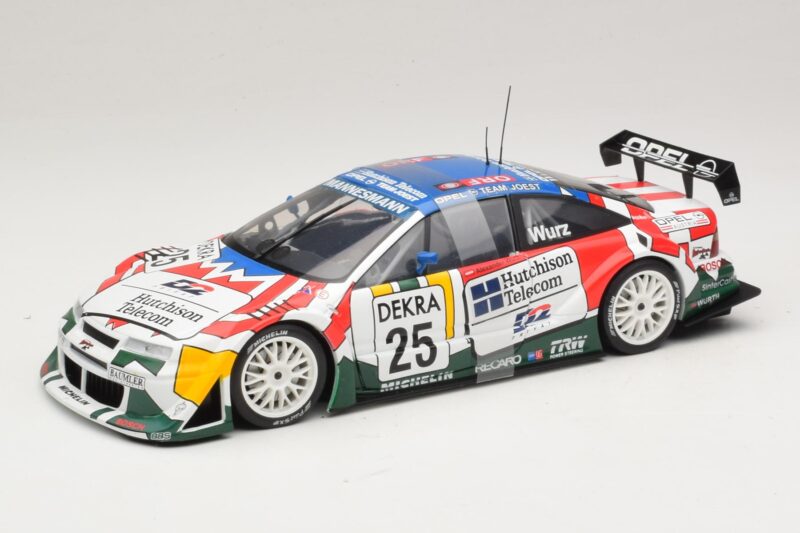
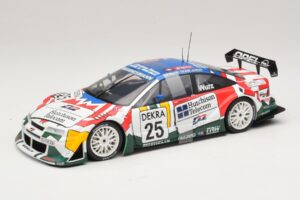
UT Models' 1:18 diecast Opel Calibra V6 4x4 reproduces the #25 Opel Team Joest entry from the 1996 ITC season, the car driven in period by Alexander Wurz before his move to Formula 1. The zinc alloy body includes opening panels, correctly researched sponsor livery, and the wide arches and deep splitter that mark this out as a genuine homologated racer rather than a road-going Calibra coupe. A considered addition for any 1990s touring car shelf, and a niche most other manufacturers left unbuilt.
1 / 6
[{"index":0,"id":"1659226","thumb":"https:\/\/models118.co.uk\/wp-content\/uploads\/2026\/08\/opel-calibra-v6-4x4-25-a-wurz-opel-team-joest-itc-1996-ut-models-1-18-180964325-1-1-300x200.jpg","medium":"https:\/\/models118.co.uk\/wp-content\/uploads\/2026\/08\/opel-calibra-v6-4x4-25-a-wurz-opel-team-joest-itc-1996-ut-models-1-18-180964325-1-1-800x533.jpg","full":"https:\/\/models118.co.uk\/wp-content\/uploads\/2026\/08\/opel-calibra-v6-4x4-25-a-wurz-opel-team-joest-itc-1996-ut-models-1-18-180964325-1-1.jpg","srcset":"https:\/\/models118.co.uk\/wp-content\/uploads\/2026\/08\/opel-calibra-v6-4x4-25-a-wurz-opel-team-joest-itc-1996-ut-models-1-18-180964325-1-1-800x533.jpg 800w, https:\/\/models118.co.uk\/wp-content\/uploads\/2026\/08\/opel-calibra-v6-4x4-25-a-wurz-opel-team-joest-itc-1996-ut-models-1-18-180964325-1-1-300x200.jpg 300w, https:\/\/models118.co.uk\/wp-content\/uploads\/2026\/08\/opel-calibra-v6-4x4-25-a-wurz-opel-team-joest-itc-1996-ut-models-1-18-180964325-1-1-64x43.jpg 64w, https:\/\/models118.co.uk\/wp-content\/uploads\/2026\/08\/opel-calibra-v6-4x4-25-a-wurz-opel-team-joest-itc-1996-ut-models-1-18-180964325-1-1.jpg 1800w","sizes":"(max-width: 1023px) 400px, 640px","srcsetAvif":"https:\/\/models118.co.uk\/wp-content\/uploads\/2026\/08\/opel-calibra-v6-4x4-25-a-wurz-opel-team-joest-itc-1996-ut-models-1-18-180964325-1-1-800x533.jpg.avif 800w, https:\/\/models118.co.uk\/wp-content\/uploads\/2026\/08\/opel-calibra-v6-4x4-25-a-wurz-opel-team-joest-itc-1996-ut-models-1-18-180964325-1-1-300x200.jpg.avif 300w, https:\/\/models118.co.uk\/wp-content\/uploads\/2026\/08\/opel-calibra-v6-4x4-25-a-wurz-opel-team-joest-itc-1996-ut-models-1-18-180964325-1-1-64x43.jpg.avif 64w, https:\/\/models118.co.uk\/wp-content\/uploads\/2026\/08\/opel-calibra-v6-4x4-25-a-wurz-opel-team-joest-itc-1996-ut-models-1-18-180964325-1-1.jpg.avif 1800w","srcsetWebp":"https:\/\/models118.co.uk\/wp-content\/uploads\/2026\/08\/opel-calibra-v6-4x4-25-a-wurz-opel-team-joest-itc-1996-ut-models-1-18-180964325-1-1-800x533.jpg.webp 800w, https:\/\/models118.co.uk\/wp-content\/uploads\/2026\/08\/opel-calibra-v6-4x4-25-a-wurz-opel-team-joest-itc-1996-ut-models-1-18-180964325-1-1-300x200.jpg.webp 300w, https:\/\/models118.co.uk\/wp-content\/uploads\/2026\/08\/opel-calibra-v6-4x4-25-a-wurz-opel-team-joest-itc-1996-ut-models-1-18-180964325-1-1-64x43.jpg.webp 64w, https:\/\/models118.co.uk\/wp-content\/uploads\/2026\/08\/opel-calibra-v6-4x4-25-a-wurz-opel-team-joest-itc-1996-ut-models-1-18-180964325-1-1.jpg.webp 1800w","alt":"Opel Calibra V6 4x4 #25 A. Wurz Opel Team Joest ITC 1996 UT Models 1:18 180964325 Diecast"},{"index":1,"id":1659228,"thumb":"https:\/\/models118.co.uk\/wp-content\/uploads\/2026\/08\/opel-calibra-v6-4x4-25-a-wurz-opel-team-joest-itc-1996-ut-models-1-18-180964325-1-300x200.jpg","medium":"https:\/\/models118.co.uk\/wp-content\/uploads\/2026\/08\/opel-calibra-v6-4x4-25-a-wurz-opel-team-joest-itc-1996-ut-models-1-18-180964325-1-800x533.jpg","full":"https:\/\/models118.co.uk\/wp-content\/uploads\/2026\/08\/opel-calibra-v6-4x4-25-a-wurz-opel-team-joest-itc-1996-ut-models-1-18-180964325-1.jpg","srcset":"https:\/\/models118.co.uk\/wp-content\/uploads\/2026\/08\/opel-calibra-v6-4x4-25-a-wurz-opel-team-joest-itc-1996-ut-models-1-18-180964325-1-800x533.jpg 800w, https:\/\/models118.co.uk\/wp-content\/uploads\/2026\/08\/opel-calibra-v6-4x4-25-a-wurz-opel-team-joest-itc-1996-ut-models-1-18-180964325-1-300x200.jpg 300w, https:\/\/models118.co.uk\/wp-content\/uploads\/2026\/08\/opel-calibra-v6-4x4-25-a-wurz-opel-team-joest-itc-1996-ut-models-1-18-180964325-1-64x43.jpg 64w, https:\/\/models118.co.uk\/wp-content\/uploads\/2026\/08\/opel-calibra-v6-4x4-25-a-wurz-opel-team-joest-itc-1996-ut-models-1-18-180964325-1.jpg 1800w","sizes":"(max-width: 1023px) 400px, 640px","srcsetAvif":"https:\/\/models118.co.uk\/wp-content\/uploads\/2026\/08\/opel-calibra-v6-4x4-25-a-wurz-opel-team-joest-itc-1996-ut-models-1-18-180964325-1-800x533.jpg.avif 800w, https:\/\/models118.co.uk\/wp-content\/uploads\/2026\/08\/opel-calibra-v6-4x4-25-a-wurz-opel-team-joest-itc-1996-ut-models-1-18-180964325-1-300x200.jpg.avif 300w, https:\/\/models118.co.uk\/wp-content\/uploads\/2026\/08\/opel-calibra-v6-4x4-25-a-wurz-opel-team-joest-itc-1996-ut-models-1-18-180964325-1-64x43.jpg.avif 64w, https:\/\/models118.co.uk\/wp-content\/uploads\/2026\/08\/opel-calibra-v6-4x4-25-a-wurz-opel-team-joest-itc-1996-ut-models-1-18-180964325-1.jpg.avif 1800w","srcsetWebp":"https:\/\/models118.co.uk\/wp-content\/uploads\/2026\/08\/opel-calibra-v6-4x4-25-a-wurz-opel-team-joest-itc-1996-ut-models-1-18-180964325-1-800x533.jpg.webp 800w, https:\/\/models118.co.uk\/wp-content\/uploads\/2026\/08\/opel-calibra-v6-4x4-25-a-wurz-opel-team-joest-itc-1996-ut-models-1-18-180964325-1-300x200.jpg.webp 300w, https:\/\/models118.co.uk\/wp-content\/uploads\/2026\/08\/opel-calibra-v6-4x4-25-a-wurz-opel-team-joest-itc-1996-ut-models-1-18-180964325-1-64x43.jpg.webp 64w, https:\/\/models118.co.uk\/wp-content\/uploads\/2026\/08\/opel-calibra-v6-4x4-25-a-wurz-opel-team-joest-itc-1996-ut-models-1-18-180964325-1.jpg.webp 1800w","alt":"Opel Calibra V6 4x4 #25 A. Wurz Opel Team Joest ITC 1996 UT Models 1:18 180964325 Diecast \u2014 photo 2 of 6"},{"index":2,"id":1659230,"thumb":"https:\/\/models118.co.uk\/wp-content\/uploads\/2026\/08\/opel-calibra-v6-4x4-25-a-wurz-opel-team-joest-itc-1996-ut-models-1-18-180964325-2-300x200.jpg","medium":"https:\/\/models118.co.uk\/wp-content\/uploads\/2026\/08\/opel-calibra-v6-4x4-25-a-wurz-opel-team-joest-itc-1996-ut-models-1-18-180964325-2-800x533.jpg","full":"https:\/\/models118.co.uk\/wp-content\/uploads\/2026\/08\/opel-calibra-v6-4x4-25-a-wurz-opel-team-joest-itc-1996-ut-models-1-18-180964325-2.jpg","srcset":"https:\/\/models118.co.uk\/wp-content\/uploads\/2026\/08\/opel-calibra-v6-4x4-25-a-wurz-opel-team-joest-itc-1996-ut-models-1-18-180964325-2-800x533.jpg 800w, https:\/\/models118.co.uk\/wp-content\/uploads\/2026\/08\/opel-calibra-v6-4x4-25-a-wurz-opel-team-joest-itc-1996-ut-models-1-18-180964325-2-300x200.jpg 300w, https:\/\/models118.co.uk\/wp-content\/uploads\/2026\/08\/opel-calibra-v6-4x4-25-a-wurz-opel-team-joest-itc-1996-ut-models-1-18-180964325-2-64x43.jpg 64w, https:\/\/models118.co.uk\/wp-content\/uploads\/2026\/08\/opel-calibra-v6-4x4-25-a-wurz-opel-team-joest-itc-1996-ut-models-1-18-180964325-2.jpg 1800w","sizes":"(max-width: 1023px) 400px, 640px","srcsetAvif":"https:\/\/models118.co.uk\/wp-content\/uploads\/2026\/08\/opel-calibra-v6-4x4-25-a-wurz-opel-team-joest-itc-1996-ut-models-1-18-180964325-2-800x533.jpg.avif 800w, https:\/\/models118.co.uk\/wp-content\/uploads\/2026\/08\/opel-calibra-v6-4x4-25-a-wurz-opel-team-joest-itc-1996-ut-models-1-18-180964325-2-300x200.jpg.avif 300w, https:\/\/models118.co.uk\/wp-content\/uploads\/2026\/08\/opel-calibra-v6-4x4-25-a-wurz-opel-team-joest-itc-1996-ut-models-1-18-180964325-2-64x43.jpg.avif 64w, https:\/\/models118.co.uk\/wp-content\/uploads\/2026\/08\/opel-calibra-v6-4x4-25-a-wurz-opel-team-joest-itc-1996-ut-models-1-18-180964325-2.jpg.avif 1800w","srcsetWebp":"https:\/\/models118.co.uk\/wp-content\/uploads\/2026\/08\/opel-calibra-v6-4x4-25-a-wurz-opel-team-joest-itc-1996-ut-models-1-18-180964325-2-800x533.jpg.webp 800w, https:\/\/models118.co.uk\/wp-content\/uploads\/2026\/08\/opel-calibra-v6-4x4-25-a-wurz-opel-team-joest-itc-1996-ut-models-1-18-180964325-2-300x200.jpg.webp 300w, https:\/\/models118.co.uk\/wp-content\/uploads\/2026\/08\/opel-calibra-v6-4x4-25-a-wurz-opel-team-joest-itc-1996-ut-models-1-18-180964325-2-64x43.jpg.webp 64w, https:\/\/models118.co.uk\/wp-content\/uploads\/2026\/08\/opel-calibra-v6-4x4-25-a-wurz-opel-team-joest-itc-1996-ut-models-1-18-180964325-2.jpg.webp 1800w","alt":"Opel Calibra V6 4x4 #25 A. Wurz Opel Team Joest ITC 1996 UT Models 1:18 180964325 Diecast \u2014 photo 3 of 6"},{"index":3,"id":1659232,"thumb":"https:\/\/models118.co.uk\/wp-content\/uploads\/2026\/08\/opel-calibra-v6-4x4-25-a-wurz-opel-team-joest-itc-1996-ut-models-1-18-180964325-3-300x200.jpg","medium":"https:\/\/models118.co.uk\/wp-content\/uploads\/2026\/08\/opel-calibra-v6-4x4-25-a-wurz-opel-team-joest-itc-1996-ut-models-1-18-180964325-3-800x533.jpg","full":"https:\/\/models118.co.uk\/wp-content\/uploads\/2026\/08\/opel-calibra-v6-4x4-25-a-wurz-opel-team-joest-itc-1996-ut-models-1-18-180964325-3.jpg","srcset":"https:\/\/models118.co.uk\/wp-content\/uploads\/2026\/08\/opel-calibra-v6-4x4-25-a-wurz-opel-team-joest-itc-1996-ut-models-1-18-180964325-3-800x533.jpg 800w, https:\/\/models118.co.uk\/wp-content\/uploads\/2026\/08\/opel-calibra-v6-4x4-25-a-wurz-opel-team-joest-itc-1996-ut-models-1-18-180964325-3-300x200.jpg 300w, https:\/\/models118.co.uk\/wp-content\/uploads\/2026\/08\/opel-calibra-v6-4x4-25-a-wurz-opel-team-joest-itc-1996-ut-models-1-18-180964325-3-64x43.jpg 64w, https:\/\/models118.co.uk\/wp-content\/uploads\/2026\/08\/opel-calibra-v6-4x4-25-a-wurz-opel-team-joest-itc-1996-ut-models-1-18-180964325-3.jpg 1800w","sizes":"(max-width: 1023px) 400px, 640px","srcsetAvif":"https:\/\/models118.co.uk\/wp-content\/uploads\/2026\/08\/opel-calibra-v6-4x4-25-a-wurz-opel-team-joest-itc-1996-ut-models-1-18-180964325-3-800x533.jpg.avif 800w, https:\/\/models118.co.uk\/wp-content\/uploads\/2026\/08\/opel-calibra-v6-4x4-25-a-wurz-opel-team-joest-itc-1996-ut-models-1-18-180964325-3-300x200.jpg.avif 300w, https:\/\/models118.co.uk\/wp-content\/uploads\/2026\/08\/opel-calibra-v6-4x4-25-a-wurz-opel-team-joest-itc-1996-ut-models-1-18-180964325-3-64x43.jpg.avif 64w, https:\/\/models118.co.uk\/wp-content\/uploads\/2026\/08\/opel-calibra-v6-4x4-25-a-wurz-opel-team-joest-itc-1996-ut-models-1-18-180964325-3.jpg.avif 1800w","srcsetWebp":"https:\/\/models118.co.uk\/wp-content\/uploads\/2026\/08\/opel-calibra-v6-4x4-25-a-wurz-opel-team-joest-itc-1996-ut-models-1-18-180964325-3-800x533.jpg.webp 800w, https:\/\/models118.co.uk\/wp-content\/uploads\/2026\/08\/opel-calibra-v6-4x4-25-a-wurz-opel-team-joest-itc-1996-ut-models-1-18-180964325-3-300x200.jpg.webp 300w, https:\/\/models118.co.uk\/wp-content\/uploads\/2026\/08\/opel-calibra-v6-4x4-25-a-wurz-opel-team-joest-itc-1996-ut-models-1-18-180964325-3-64x43.jpg.webp 64w, https:\/\/models118.co.uk\/wp-content\/uploads\/2026\/08\/opel-calibra-v6-4x4-25-a-wurz-opel-team-joest-itc-1996-ut-models-1-18-180964325-3.jpg.webp 1800w","alt":"Opel Calibra V6 4x4 #25 A. Wurz Opel Team Joest ITC 1996 UT Models 1:18 180964325 Diecast \u2014 photo 4 of 6"},{"index":4,"id":1659234,"thumb":"https:\/\/models118.co.uk\/wp-content\/uploads\/2026\/08\/opel-calibra-v6-4x4-25-a-wurz-opel-team-joest-itc-1996-ut-models-1-18-180964325-4-300x200.jpg","medium":"https:\/\/models118.co.uk\/wp-content\/uploads\/2026\/08\/opel-calibra-v6-4x4-25-a-wurz-opel-team-joest-itc-1996-ut-models-1-18-180964325-4-800x533.jpg","full":"https:\/\/models118.co.uk\/wp-content\/uploads\/2026\/08\/opel-calibra-v6-4x4-25-a-wurz-opel-team-joest-itc-1996-ut-models-1-18-180964325-4.jpg","srcset":"https:\/\/models118.co.uk\/wp-content\/uploads\/2026\/08\/opel-calibra-v6-4x4-25-a-wurz-opel-team-joest-itc-1996-ut-models-1-18-180964325-4-800x533.jpg 800w, https:\/\/models118.co.uk\/wp-content\/uploads\/2026\/08\/opel-calibra-v6-4x4-25-a-wurz-opel-team-joest-itc-1996-ut-models-1-18-180964325-4-300x200.jpg 300w, https:\/\/models118.co.uk\/wp-content\/uploads\/2026\/08\/opel-calibra-v6-4x4-25-a-wurz-opel-team-joest-itc-1996-ut-models-1-18-180964325-4-64x43.jpg 64w, https:\/\/models118.co.uk\/wp-content\/uploads\/2026\/08\/opel-calibra-v6-4x4-25-a-wurz-opel-team-joest-itc-1996-ut-models-1-18-180964325-4.jpg 1800w","sizes":"(max-width: 1023px) 400px, 640px","srcsetAvif":"https:\/\/models118.co.uk\/wp-content\/uploads\/2026\/08\/opel-calibra-v6-4x4-25-a-wurz-opel-team-joest-itc-1996-ut-models-1-18-180964325-4-800x533.jpg.avif 800w, https:\/\/models118.co.uk\/wp-content\/uploads\/2026\/08\/opel-calibra-v6-4x4-25-a-wurz-opel-team-joest-itc-1996-ut-models-1-18-180964325-4-300x200.jpg.avif 300w, https:\/\/models118.co.uk\/wp-content\/uploads\/2026\/08\/opel-calibra-v6-4x4-25-a-wurz-opel-team-joest-itc-1996-ut-models-1-18-180964325-4-64x43.jpg.avif 64w, https:\/\/models118.co.uk\/wp-content\/uploads\/2026\/08\/opel-calibra-v6-4x4-25-a-wurz-opel-team-joest-itc-1996-ut-models-1-18-180964325-4.jpg.avif 1800w","srcsetWebp":"https:\/\/models118.co.uk\/wp-content\/uploads\/2026\/08\/opel-calibra-v6-4x4-25-a-wurz-opel-team-joest-itc-1996-ut-models-1-18-180964325-4-800x533.jpg.webp 800w, https:\/\/models118.co.uk\/wp-content\/uploads\/2026\/08\/opel-calibra-v6-4x4-25-a-wurz-opel-team-joest-itc-1996-ut-models-1-18-180964325-4-300x200.jpg.webp 300w, https:\/\/models118.co.uk\/wp-content\/uploads\/2026\/08\/opel-calibra-v6-4x4-25-a-wurz-opel-team-joest-itc-1996-ut-models-1-18-180964325-4-64x43.jpg.webp 64w, https:\/\/models118.co.uk\/wp-content\/uploads\/2026\/08\/opel-calibra-v6-4x4-25-a-wurz-opel-team-joest-itc-1996-ut-models-1-18-180964325-4.jpg.webp 1800w","alt":"Opel Calibra V6 4x4 #25 A. Wurz Opel Team Joest ITC 1996 UT Models 1:18 180964325 Diecast \u2014 photo 5 of 6"},{"index":5,"id":1659236,"thumb":"https:\/\/models118.co.uk\/wp-content\/uploads\/2026\/08\/opel-calibra-v6-4x4-25-a-wurz-opel-team-joest-itc-1996-ut-models-1-18-180964325-5-300x200.jpg","medium":"https:\/\/models118.co.uk\/wp-content\/uploads\/2026\/08\/opel-calibra-v6-4x4-25-a-wurz-opel-team-joest-itc-1996-ut-models-1-18-180964325-5-800x533.jpg","full":"https:\/\/models118.co.uk\/wp-content\/uploads\/2026\/08\/opel-calibra-v6-4x4-25-a-wurz-opel-team-joest-itc-1996-ut-models-1-18-180964325-5.jpg","srcset":"https:\/\/models118.co.uk\/wp-content\/uploads\/2026\/08\/opel-calibra-v6-4x4-25-a-wurz-opel-team-joest-itc-1996-ut-models-1-18-180964325-5-800x533.jpg 800w, https:\/\/models118.co.uk\/wp-content\/uploads\/2026\/08\/opel-calibra-v6-4x4-25-a-wurz-opel-team-joest-itc-1996-ut-models-1-18-180964325-5-300x200.jpg 300w, https:\/\/models118.co.uk\/wp-content\/uploads\/2026\/08\/opel-calibra-v6-4x4-25-a-wurz-opel-team-joest-itc-1996-ut-models-1-18-180964325-5-64x43.jpg 64w, https:\/\/models118.co.uk\/wp-content\/uploads\/2026\/08\/opel-calibra-v6-4x4-25-a-wurz-opel-team-joest-itc-1996-ut-models-1-18-180964325-5.jpg 1800w","sizes":"(max-width: 1023px) 400px, 640px","srcsetAvif":"https:\/\/models118.co.uk\/wp-content\/uploads\/2026\/08\/opel-calibra-v6-4x4-25-a-wurz-opel-team-joest-itc-1996-ut-models-1-18-180964325-5-800x533.jpg.avif 800w, https:\/\/models118.co.uk\/wp-content\/uploads\/2026\/08\/opel-calibra-v6-4x4-25-a-wurz-opel-team-joest-itc-1996-ut-models-1-18-180964325-5-300x200.jpg.avif 300w, https:\/\/models118.co.uk\/wp-content\/uploads\/2026\/08\/opel-calibra-v6-4x4-25-a-wurz-opel-team-joest-itc-1996-ut-models-1-18-180964325-5-64x43.jpg.avif 64w, https:\/\/models118.co.uk\/wp-content\/uploads\/2026\/08\/opel-calibra-v6-4x4-25-a-wurz-opel-team-joest-itc-1996-ut-models-1-18-180964325-5.jpg.avif 1800w","srcsetWebp":"https:\/\/models118.co.uk\/wp-content\/uploads\/2026\/08\/opel-calibra-v6-4x4-25-a-wurz-opel-team-joest-itc-1996-ut-models-1-18-180964325-5-800x533.jpg.webp 800w, https:\/\/models118.co.uk\/wp-content\/uploads\/2026\/08\/opel-calibra-v6-4x4-25-a-wurz-opel-team-joest-itc-1996-ut-models-1-18-180964325-5-300x200.jpg.webp 300w, https:\/\/models118.co.uk\/wp-content\/uploads\/2026\/08\/opel-calibra-v6-4x4-25-a-wurz-opel-team-joest-itc-1996-ut-models-1-18-180964325-5-64x43.jpg.webp 64w, https:\/\/models118.co.uk\/wp-content\/uploads\/2026\/08\/opel-calibra-v6-4x4-25-a-wurz-opel-team-joest-itc-1996-ut-models-1-18-180964325-5.jpg.webp 1800w","alt":"Opel Calibra V6 4x4 #25 A. Wurz Opel Team Joest ITC 1996 UT Models 1:18 180964325 Diecast \u2014 photo 6 of 6"}]
Opel Calibra V6 4x4 #25 A. Wurz Opel Team Joest ITC 1996 UT Models 1:18
About the Opel Calibra V6 4x4 #25 A. Wurz Opel Team Joest ITC 1996 UT Models 1:18
TL;DR: UT Models' 1:18 diecast reproduces the #25 Opel Calibra V6 4x4 raced by Opel Team Joest in the 1996 ITC season, driven in period by a young Alexander Wurz. The zinc alloy body carries opening panels, full sponsor livery, and touring car proportions true to the works entry.
British touring car fans of the 1990s remember the ITC as the series where national saloon car racing went genuinely international, and the Opel Calibra V6 4x4 was one of its defining shapes. Wurz's Opel Team Joest livery brings works-team graphics and a four-wheel-drive touring car homologated purely for competition, not the road.
Opel Team Joest and the 1996 ITC Season
The 1996 ITC Grid and Opel's Works Entry
The International Touring Car Championship ran only a handful of seasons before folding under its own cost, but 1996 still stands as one of the most technically extreme grids assembled for production-based racing. Opel entered the Calibra V6 4x4 through Team Joest, the outfit better known for its Le Mans prototypes, pairing a 2.5-litre V6 with four-wheel drive and bodywork bearing only a passing resemblance to the road car's panels underneath. The Calibra's silhouette, closer to a coupe than the saloon body most rivals wore, gives this casting a distinct shape on any touring car shelf.
Alexander Wurz Behind the Wheel
Alexander Wurz drove for the squad in this period, a season sitting just before his move into Formula 1 with Benetton, and the #25 car carried full Opel works colours rather than a customer entry's simplified scheme. UT Models chose a genuinely difficult subject: ITC cars ran wide arches, deep splitters and roof-mounted aerials that have to read correctly at 1:18 for the livery to convince. Reaching for a niche subject like this, rather than a more familiar DTM Mercedes, is what made UT Models a reference point for serious touring car collectors.
UT Models' Diecast Approach to 1990s Touring Cars
Zinc Alloy Weight and Opening Panels
UT Models built its reputation in the 1990s on exactly this kind of subject, European touring cars and homologation specials that larger diecast houses often skipped. The Calibra is cast in zinc alloy, and the weight in the hand is the first thing that separates it from a toy-grade equivalent. That mass carries through into panel fit: the body opens on hinges sturdy enough to survive repeated handling at a model fair, one panel settling firmly wherever it's placed rather than drooping under its own weight, which matters once a piece has passed through several collections.
Livery Application at 1:18 Scale
Racing liveries are unforgiving in a way a solid road-car colour never is: sponsor decals must sit flat over compound curves, follow arch lines precisely, and stay legible at scale without looking like a printed sheet dropped onto the body. Metal construction gives the base a flatness that plastic alternatives from the same era rarely match, which matters when a livery depends on straight sponsor lettering along the sills. Nearly three decades on, this touring car output has become a specific niche within 1990s diecast collecting.
Livery Detail and the #25 Calibra's Racing Identity
Reading a 1990s touring car livery correctly means checking sponsor placement against period photography rather than assuming a generic Opel scheme will do. The #25 car's graphics identify it as the Team Joest entry rather than a factory-run sister car, exactly the kind of detail separating a well-researched diecast from a repainted shell with the wrong number applied. The V6 4x4 designation on the flanks refers to genuine mechanical specification, not a marketing badge: this generation of ITC regulations permitted four-wheel drive and forced manufacturers into exotic engineering to stay competitive, which is why the Calibra shares almost nothing beneath the skin with the coupe sold in Vauxhall and Opel showrooms. The casting keeps the wide front splitter, deep rear wing, and extended arches marking this out as a homologated racer rather than a lightly modified road car. The body opens cleanly, revealing enough of the cabin's roll cage suggestion to remind a buyer this was built for competition first.
Where This Calibra Fits a Touring Car Collection
This Calibra rewards a buyer already assembling a 1990s touring car shelf rather than someone shopping for a single showpiece. Set alongside period Alfa Romeo 155s or Mercedes C-Class entries from the same ITC grid, it fills a gap most manufacturers left empty, since the Opel entry rarely gets the same attention as its German and Italian rivals. At roughly 21 centimetres in 1:18, it sits comfortably within a standard cabinet row, and the zinc body holds its shape and colour well over years of display. The connection to Alexander Wurz's early career adds a genuine talking point for anyone building a display around drivers who later reached Formula 1.
Create a free account and claim 10% off your first order — from hundreds of collectible 1:18, 1:43 and 1:12 models by Porsche, Mercedes-Benz, BMW and more.
{"id":1657279,"name":"Opel Calibra V6 4x4 #25 A. Wurz Opel Team Joest ITC 1996 UT Models 1:18","price":"£<\/span>121.00<\/bdi><\/span>","image":"https:\/\/models118.co.uk\/wp-content\/uploads\/2026\/08\/opel-calibra-v6-4x4-25-a-wurz-opel-team-joest-itc-1996-ut-models-1-18-180964325-1-1-400x400.jpg","permalink":"https:\/\/models118.co.uk\/opel-calibra-v6-4x4-25-a-wurz-opel-team-joest-itc-1996-ut-models-1-18-180964325\/","brand":"Opel"}