On sale:
-5%
New arrival
Pre-order

Volkswagen Beetle Brunswick Blue Otto 1:12
Expected 21-31.10.2026
Only 4 left!
Discount ends in: 00d 00h 00m
Price:
was
£146.67
£139.17
Save £7.50
Resin gives a scale model its sharpest possible surface: no opening panels, no hinge clearance, just a factory-finished body cast and painted as one piece. This collection covers resin work from GT Spirit, Otto, Minichamps, BoS Models and Spark, spanning tuner specials, Formula One and premium sports cars.
Save £7.50

Save £5.00

Save £7.50

Save £5.00

Save £5.00

Save £5.00

Save £5.00

Save £7.50

Save £7.50

Save £5.00

Save £5.00


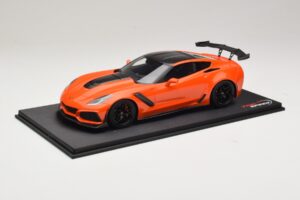







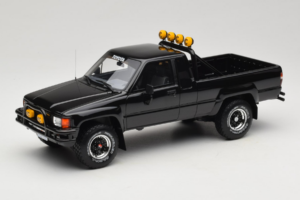














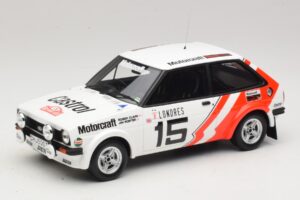



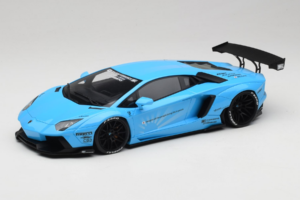

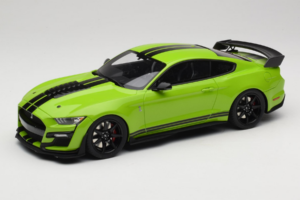
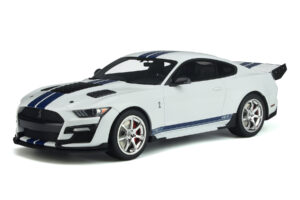


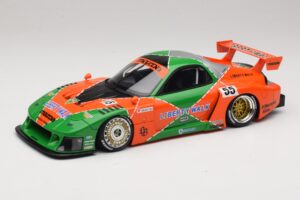


























TL;DR: Resin scale models in this collection cover Porsche, BMW, Mercedes, Audi, Ford, Ferrari, Renault and Volkswagen across 1:18, 1:12 and 1:43, produced by GT Spirit, Otto, Minichamps, BoS Models and Spark. The material trades opening features for the sharpest possible panel lines.
Resin scale models occupy a specific place in the collecting landscape: a factory-finished, fully painted body cast as a single sealed shell rather than an assembly of opening panels. That sealed construction is a genuine strength, not a compromise, and it explains why resin dominates the small-batch and limited-run corners of the hobby.
A diecast body needs clearance around every hinge, which widens the shut lines around doors, bonnets and boots. Resin has no such requirement, since nothing opens, so the panel gaps stay tight and the surface reads as a single continuous shape under close inspection. The trade-off is durability: resin is lighter and more prone to chipping on impact than cast metal, so handling and storage matter more than they do with a diecast model.
GT Spirit and Otto both work extensively in resin at the upper-mid to investment tier, favouring tuner specials, JDM-adjacent builds and performance derivatives that rarely receive diecast treatment. Minichamps applies resin selectively across its motorsport and road car ranges where surface precision outweighs the need for opening features. BoS Models and Spark round out the field with smaller-batch coverage of premium sports and classic subjects, often reaching marques that volume diecast overlooks entirely.
1:18 remains the format where resin's surface advantage is most visible, with enough size for shut lines and paint depth to register clearly. 1:43 resin serves collectors building comprehensive marque or era coverage where cost per model matters more than maximum detail, while 1:12 resin exists mainly for hero subjects that demand a larger canvas.
Because resin cannot be opened, a resin-led display leans on exterior presentation: lighting angle, paint colour and stance do the work that engine bay detail does on a diecast shelf. Dust settles into fine surface detail readily, so a glass-fronted cabinet suits resin better than open shelving, and pieces should be handled by the base rather than the bodywork given the material's relative fragility.
Resin production typically runs in smaller batches with more hand finishing per piece, which shows up in tighter panel lines and deeper paint. The smaller run size and manual labour, rather than the raw material itself, generally account for the higher price point.
Handle resin more carefully than diecast. It is lighter and more brittle, so a drop is more likely to chip the paint or crack a thin section such as a mirror or splitter. Lifting by the base rather than the body reduces that risk considerably.
Almost never. Sealed construction is the defining trait of resin at this tier, and the sharper panel lines that collectors value come directly from that lack of hinges and clearance gaps.
1:18 offers the clearest view of what resin does well, with enough surface area for the tight panel work and paint depth to stand out. It remains the most popular starting scale for collectors moving from diecast to resin.