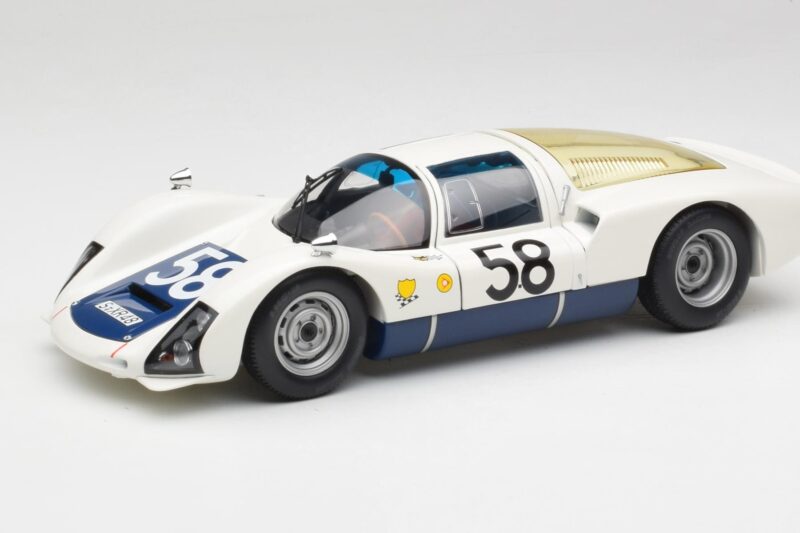
Porsche 906K #58 G. Klass / R. Stommelen 24 Hours of Le Mans 1966 Minichamps 1:18
Sold out
1
/
8
Minichamps' 1:18 diecast Porsche 906K reproduces the short-tail sports prototype Gerhard Klass shared with Rolf Stommelen at the 1966 24 Hours of Le Mans, race number 58. Porsche fielded both short-tail and long-tail 906s at Le Mans that year, and this Kurzheck version shows the more compact configuration in factory livery. A strong companion piece for collectors tracking Stommelen's career before his later Porsche 917 and Formula 1 outings.
1 / 8
[{"index":0,"id":"581201","thumb":"https:\/\/models118.co.uk\/wp-content\/uploads\/2026\/06\/porsche-906k-n58-gklass-rstommelen-24h-le-mans-1966-minichamps-1-18-300x200.jpg","medium":"https:\/\/models118.co.uk\/wp-content\/uploads\/2026\/06\/porsche-906k-n58-gklass-rstommelen-24h-le-mans-1966-minichamps-1-18-800x533.jpg","full":"https:\/\/models118.co.uk\/wp-content\/uploads\/2026\/06\/porsche-906k-n58-gklass-rstommelen-24h-le-mans-1966-minichamps-1-18.jpg","srcset":"https:\/\/models118.co.uk\/wp-content\/uploads\/2026\/06\/porsche-906k-n58-gklass-rstommelen-24h-le-mans-1966-minichamps-1-18-800x533.jpg 800w, https:\/\/models118.co.uk\/wp-content\/uploads\/2026\/06\/porsche-906k-n58-gklass-rstommelen-24h-le-mans-1966-minichamps-1-18-64x43.jpg 64w, https:\/\/models118.co.uk\/wp-content\/uploads\/2026\/06\/porsche-906k-n58-gklass-rstommelen-24h-le-mans-1966-minichamps-1-18-300x200.jpg 300w, https:\/\/models118.co.uk\/wp-content\/uploads\/2026\/06\/porsche-906k-n58-gklass-rstommelen-24h-le-mans-1966-minichamps-1-18.jpg 1800w","sizes":"(max-width: 1023px) 400px, 640px","srcsetAvif":"https:\/\/models118.co.uk\/wp-content\/uploads\/2026\/06\/porsche-906k-n58-gklass-rstommelen-24h-le-mans-1966-minichamps-1-18-800x533.jpg.avif 800w, https:\/\/models118.co.uk\/wp-content\/uploads\/2026\/06\/porsche-906k-n58-gklass-rstommelen-24h-le-mans-1966-minichamps-1-18-64x43.jpg.avif 64w, https:\/\/models118.co.uk\/wp-content\/uploads\/2026\/06\/porsche-906k-n58-gklass-rstommelen-24h-le-mans-1966-minichamps-1-18-300x200.jpg.avif 300w, https:\/\/models118.co.uk\/wp-content\/uploads\/2026\/06\/porsche-906k-n58-gklass-rstommelen-24h-le-mans-1966-minichamps-1-18.jpg.avif 1800w","srcsetWebp":"https:\/\/models118.co.uk\/wp-content\/uploads\/2026\/06\/porsche-906k-n58-gklass-rstommelen-24h-le-mans-1966-minichamps-1-18-800x533.jpg.webp 800w, https:\/\/models118.co.uk\/wp-content\/uploads\/2026\/06\/porsche-906k-n58-gklass-rstommelen-24h-le-mans-1966-minichamps-1-18-64x43.jpg.webp 64w, https:\/\/models118.co.uk\/wp-content\/uploads\/2026\/06\/porsche-906k-n58-gklass-rstommelen-24h-le-mans-1966-minichamps-1-18-300x200.jpg.webp 300w, https:\/\/models118.co.uk\/wp-content\/uploads\/2026\/06\/porsche-906k-n58-gklass-rstommelen-24h-le-mans-1966-minichamps-1-18.jpg.webp 1800w","alt":"Porsche 906K #58 G. Klass \/ R. Stommelen 24 Hours of Le Mans 1966 Minichamps 1:18 100666158 Diecast"},{"index":1,"id":581332,"thumb":"https:\/\/models118.co.uk\/wp-content\/uploads\/2026\/06\/porsche-906k-n58-gklass-rstommelen-24h-le-mans-1966-minichamps-1-18-1-300x200.jpg","medium":"https:\/\/models118.co.uk\/wp-content\/uploads\/2026\/06\/porsche-906k-n58-gklass-rstommelen-24h-le-mans-1966-minichamps-1-18-1-800x533.jpg","full":"https:\/\/models118.co.uk\/wp-content\/uploads\/2026\/06\/porsche-906k-n58-gklass-rstommelen-24h-le-mans-1966-minichamps-1-18-1.jpg","srcset":"https:\/\/models118.co.uk\/wp-content\/uploads\/2026\/06\/porsche-906k-n58-gklass-rstommelen-24h-le-mans-1966-minichamps-1-18-1-800x533.jpg 800w, https:\/\/models118.co.uk\/wp-content\/uploads\/2026\/06\/porsche-906k-n58-gklass-rstommelen-24h-le-mans-1966-minichamps-1-18-1-64x43.jpg 64w, https:\/\/models118.co.uk\/wp-content\/uploads\/2026\/06\/porsche-906k-n58-gklass-rstommelen-24h-le-mans-1966-minichamps-1-18-1-300x200.jpg 300w, https:\/\/models118.co.uk\/wp-content\/uploads\/2026\/06\/porsche-906k-n58-gklass-rstommelen-24h-le-mans-1966-minichamps-1-18-1.jpg 1800w","sizes":"(max-width: 1023px) 400px, 640px","srcsetAvif":"https:\/\/models118.co.uk\/wp-content\/uploads\/2026\/06\/porsche-906k-n58-gklass-rstommelen-24h-le-mans-1966-minichamps-1-18-1-800x533.jpg.avif 800w, https:\/\/models118.co.uk\/wp-content\/uploads\/2026\/06\/porsche-906k-n58-gklass-rstommelen-24h-le-mans-1966-minichamps-1-18-1-64x43.jpg.avif 64w, https:\/\/models118.co.uk\/wp-content\/uploads\/2026\/06\/porsche-906k-n58-gklass-rstommelen-24h-le-mans-1966-minichamps-1-18-1-300x200.jpg.avif 300w, https:\/\/models118.co.uk\/wp-content\/uploads\/2026\/06\/porsche-906k-n58-gklass-rstommelen-24h-le-mans-1966-minichamps-1-18-1.jpg.avif 1800w","srcsetWebp":"https:\/\/models118.co.uk\/wp-content\/uploads\/2026\/06\/porsche-906k-n58-gklass-rstommelen-24h-le-mans-1966-minichamps-1-18-1-800x533.jpg.webp 800w, https:\/\/models118.co.uk\/wp-content\/uploads\/2026\/06\/porsche-906k-n58-gklass-rstommelen-24h-le-mans-1966-minichamps-1-18-1-64x43.jpg.webp 64w, https:\/\/models118.co.uk\/wp-content\/uploads\/2026\/06\/porsche-906k-n58-gklass-rstommelen-24h-le-mans-1966-minichamps-1-18-1-300x200.jpg.webp 300w, https:\/\/models118.co.uk\/wp-content\/uploads\/2026\/06\/porsche-906k-n58-gklass-rstommelen-24h-le-mans-1966-minichamps-1-18-1.jpg.webp 1800w","alt":"Porsche 906K #58 G. Klass \/ R. Stommelen 24 Hours of Le Mans 1966 Minichamps 1:18 100666158 Diecast \u2014 photo 2 of 8"},{"index":2,"id":581444,"thumb":"https:\/\/models118.co.uk\/wp-content\/uploads\/2026\/06\/porsche-906k-n58-gklass-rstommelen-24h-le-mans-1966-minichamps-1-18-2-300x200.jpg","medium":"https:\/\/models118.co.uk\/wp-content\/uploads\/2026\/06\/porsche-906k-n58-gklass-rstommelen-24h-le-mans-1966-minichamps-1-18-2-800x533.jpg","full":"https:\/\/models118.co.uk\/wp-content\/uploads\/2026\/06\/porsche-906k-n58-gklass-rstommelen-24h-le-mans-1966-minichamps-1-18-2.jpg","srcset":"https:\/\/models118.co.uk\/wp-content\/uploads\/2026\/06\/porsche-906k-n58-gklass-rstommelen-24h-le-mans-1966-minichamps-1-18-2-800x533.jpg 800w, https:\/\/models118.co.uk\/wp-content\/uploads\/2026\/06\/porsche-906k-n58-gklass-rstommelen-24h-le-mans-1966-minichamps-1-18-2-64x43.jpg 64w, https:\/\/models118.co.uk\/wp-content\/uploads\/2026\/06\/porsche-906k-n58-gklass-rstommelen-24h-le-mans-1966-minichamps-1-18-2-300x200.jpg 300w, https:\/\/models118.co.uk\/wp-content\/uploads\/2026\/06\/porsche-906k-n58-gklass-rstommelen-24h-le-mans-1966-minichamps-1-18-2.jpg 1800w","sizes":"(max-width: 1023px) 400px, 640px","srcsetAvif":"https:\/\/models118.co.uk\/wp-content\/uploads\/2026\/06\/porsche-906k-n58-gklass-rstommelen-24h-le-mans-1966-minichamps-1-18-2-800x533.jpg.avif 800w, https:\/\/models118.co.uk\/wp-content\/uploads\/2026\/06\/porsche-906k-n58-gklass-rstommelen-24h-le-mans-1966-minichamps-1-18-2-64x43.jpg.avif 64w, https:\/\/models118.co.uk\/wp-content\/uploads\/2026\/06\/porsche-906k-n58-gklass-rstommelen-24h-le-mans-1966-minichamps-1-18-2-300x200.jpg.avif 300w, https:\/\/models118.co.uk\/wp-content\/uploads\/2026\/06\/porsche-906k-n58-gklass-rstommelen-24h-le-mans-1966-minichamps-1-18-2.jpg.avif 1800w","srcsetWebp":"https:\/\/models118.co.uk\/wp-content\/uploads\/2026\/06\/porsche-906k-n58-gklass-rstommelen-24h-le-mans-1966-minichamps-1-18-2-800x533.jpg.webp 800w, https:\/\/models118.co.uk\/wp-content\/uploads\/2026\/06\/porsche-906k-n58-gklass-rstommelen-24h-le-mans-1966-minichamps-1-18-2-64x43.jpg.webp 64w, https:\/\/models118.co.uk\/wp-content\/uploads\/2026\/06\/porsche-906k-n58-gklass-rstommelen-24h-le-mans-1966-minichamps-1-18-2-300x200.jpg.webp 300w, https:\/\/models118.co.uk\/wp-content\/uploads\/2026\/06\/porsche-906k-n58-gklass-rstommelen-24h-le-mans-1966-minichamps-1-18-2.jpg.webp 1800w","alt":"Porsche 906K #58 G. Klass \/ R. Stommelen 24 Hours of Le Mans 1966 Minichamps 1:18 100666158 Diecast \u2014 photo 3 of 8"},{"index":3,"id":581570,"thumb":"https:\/\/models118.co.uk\/wp-content\/uploads\/2026\/06\/porsche-906k-n58-gklass-rstommelen-24h-le-mans-1966-minichamps-1-18-3-300x200.jpg","medium":"https:\/\/models118.co.uk\/wp-content\/uploads\/2026\/06\/porsche-906k-n58-gklass-rstommelen-24h-le-mans-1966-minichamps-1-18-3-800x533.jpg","full":"https:\/\/models118.co.uk\/wp-content\/uploads\/2026\/06\/porsche-906k-n58-gklass-rstommelen-24h-le-mans-1966-minichamps-1-18-3.jpg","srcset":"https:\/\/models118.co.uk\/wp-content\/uploads\/2026\/06\/porsche-906k-n58-gklass-rstommelen-24h-le-mans-1966-minichamps-1-18-3-800x533.jpg 800w, https:\/\/models118.co.uk\/wp-content\/uploads\/2026\/06\/porsche-906k-n58-gklass-rstommelen-24h-le-mans-1966-minichamps-1-18-3-64x43.jpg 64w, https:\/\/models118.co.uk\/wp-content\/uploads\/2026\/06\/porsche-906k-n58-gklass-rstommelen-24h-le-mans-1966-minichamps-1-18-3-300x200.jpg 300w, https:\/\/models118.co.uk\/wp-content\/uploads\/2026\/06\/porsche-906k-n58-gklass-rstommelen-24h-le-mans-1966-minichamps-1-18-3.jpg 1800w","sizes":"(max-width: 1023px) 400px, 640px","srcsetAvif":"https:\/\/models118.co.uk\/wp-content\/uploads\/2026\/06\/porsche-906k-n58-gklass-rstommelen-24h-le-mans-1966-minichamps-1-18-3-800x533.jpg.avif 800w, https:\/\/models118.co.uk\/wp-content\/uploads\/2026\/06\/porsche-906k-n58-gklass-rstommelen-24h-le-mans-1966-minichamps-1-18-3-64x43.jpg.avif 64w, https:\/\/models118.co.uk\/wp-content\/uploads\/2026\/06\/porsche-906k-n58-gklass-rstommelen-24h-le-mans-1966-minichamps-1-18-3-300x200.jpg.avif 300w, https:\/\/models118.co.uk\/wp-content\/uploads\/2026\/06\/porsche-906k-n58-gklass-rstommelen-24h-le-mans-1966-minichamps-1-18-3.jpg.avif 1800w","srcsetWebp":"https:\/\/models118.co.uk\/wp-content\/uploads\/2026\/06\/porsche-906k-n58-gklass-rstommelen-24h-le-mans-1966-minichamps-1-18-3-800x533.jpg.webp 800w, https:\/\/models118.co.uk\/wp-content\/uploads\/2026\/06\/porsche-906k-n58-gklass-rstommelen-24h-le-mans-1966-minichamps-1-18-3-64x43.jpg.webp 64w, https:\/\/models118.co.uk\/wp-content\/uploads\/2026\/06\/porsche-906k-n58-gklass-rstommelen-24h-le-mans-1966-minichamps-1-18-3-300x200.jpg.webp 300w, https:\/\/models118.co.uk\/wp-content\/uploads\/2026\/06\/porsche-906k-n58-gklass-rstommelen-24h-le-mans-1966-minichamps-1-18-3.jpg.webp 1800w","alt":"Porsche 906K #58 G. Klass \/ R. Stommelen 24 Hours of Le Mans 1966 Minichamps 1:18 100666158 Diecast \u2014 photo 4 of 8"},{"index":4,"id":581689,"thumb":"https:\/\/models118.co.uk\/wp-content\/uploads\/2026\/06\/porsche-906k-n58-gklass-rstommelen-24h-le-mans-1966-minichamps-1-18-4-300x200.jpg","medium":"https:\/\/models118.co.uk\/wp-content\/uploads\/2026\/06\/porsche-906k-n58-gklass-rstommelen-24h-le-mans-1966-minichamps-1-18-4-800x533.jpg","full":"https:\/\/models118.co.uk\/wp-content\/uploads\/2026\/06\/porsche-906k-n58-gklass-rstommelen-24h-le-mans-1966-minichamps-1-18-4.jpg","srcset":"https:\/\/models118.co.uk\/wp-content\/uploads\/2026\/06\/porsche-906k-n58-gklass-rstommelen-24h-le-mans-1966-minichamps-1-18-4-800x533.jpg 800w, https:\/\/models118.co.uk\/wp-content\/uploads\/2026\/06\/porsche-906k-n58-gklass-rstommelen-24h-le-mans-1966-minichamps-1-18-4-64x43.jpg 64w, https:\/\/models118.co.uk\/wp-content\/uploads\/2026\/06\/porsche-906k-n58-gklass-rstommelen-24h-le-mans-1966-minichamps-1-18-4-300x200.jpg 300w, https:\/\/models118.co.uk\/wp-content\/uploads\/2026\/06\/porsche-906k-n58-gklass-rstommelen-24h-le-mans-1966-minichamps-1-18-4.jpg 1800w","sizes":"(max-width: 1023px) 400px, 640px","srcsetAvif":"https:\/\/models118.co.uk\/wp-content\/uploads\/2026\/06\/porsche-906k-n58-gklass-rstommelen-24h-le-mans-1966-minichamps-1-18-4-800x533.jpg.avif 800w, https:\/\/models118.co.uk\/wp-content\/uploads\/2026\/06\/porsche-906k-n58-gklass-rstommelen-24h-le-mans-1966-minichamps-1-18-4-64x43.jpg.avif 64w, https:\/\/models118.co.uk\/wp-content\/uploads\/2026\/06\/porsche-906k-n58-gklass-rstommelen-24h-le-mans-1966-minichamps-1-18-4-300x200.jpg.avif 300w, https:\/\/models118.co.uk\/wp-content\/uploads\/2026\/06\/porsche-906k-n58-gklass-rstommelen-24h-le-mans-1966-minichamps-1-18-4.jpg.avif 1800w","srcsetWebp":"https:\/\/models118.co.uk\/wp-content\/uploads\/2026\/06\/porsche-906k-n58-gklass-rstommelen-24h-le-mans-1966-minichamps-1-18-4-800x533.jpg.webp 800w, https:\/\/models118.co.uk\/wp-content\/uploads\/2026\/06\/porsche-906k-n58-gklass-rstommelen-24h-le-mans-1966-minichamps-1-18-4-64x43.jpg.webp 64w, https:\/\/models118.co.uk\/wp-content\/uploads\/2026\/06\/porsche-906k-n58-gklass-rstommelen-24h-le-mans-1966-minichamps-1-18-4-300x200.jpg.webp 300w, https:\/\/models118.co.uk\/wp-content\/uploads\/2026\/06\/porsche-906k-n58-gklass-rstommelen-24h-le-mans-1966-minichamps-1-18-4.jpg.webp 1800w","alt":"Porsche 906K #58 G. Klass \/ R. Stommelen 24 Hours of Le Mans 1966 Minichamps 1:18 100666158 Diecast \u2014 photo 5 of 8"},{"index":5,"id":581811,"thumb":"https:\/\/models118.co.uk\/wp-content\/uploads\/2026\/06\/porsche-906k-n58-gklass-rstommelen-24h-le-mans-1966-minichamps-1-18-5-300x200.jpg","medium":"https:\/\/models118.co.uk\/wp-content\/uploads\/2026\/06\/porsche-906k-n58-gklass-rstommelen-24h-le-mans-1966-minichamps-1-18-5-800x533.jpg","full":"https:\/\/models118.co.uk\/wp-content\/uploads\/2026\/06\/porsche-906k-n58-gklass-rstommelen-24h-le-mans-1966-minichamps-1-18-5.jpg","srcset":"https:\/\/models118.co.uk\/wp-content\/uploads\/2026\/06\/porsche-906k-n58-gklass-rstommelen-24h-le-mans-1966-minichamps-1-18-5-800x533.jpg 800w, https:\/\/models118.co.uk\/wp-content\/uploads\/2026\/06\/porsche-906k-n58-gklass-rstommelen-24h-le-mans-1966-minichamps-1-18-5-64x43.jpg 64w, https:\/\/models118.co.uk\/wp-content\/uploads\/2026\/06\/porsche-906k-n58-gklass-rstommelen-24h-le-mans-1966-minichamps-1-18-5-300x200.jpg 300w, https:\/\/models118.co.uk\/wp-content\/uploads\/2026\/06\/porsche-906k-n58-gklass-rstommelen-24h-le-mans-1966-minichamps-1-18-5.jpg 1800w","sizes":"(max-width: 1023px) 400px, 640px","srcsetAvif":"https:\/\/models118.co.uk\/wp-content\/uploads\/2026\/06\/porsche-906k-n58-gklass-rstommelen-24h-le-mans-1966-minichamps-1-18-5-800x533.jpg.avif 800w, https:\/\/models118.co.uk\/wp-content\/uploads\/2026\/06\/porsche-906k-n58-gklass-rstommelen-24h-le-mans-1966-minichamps-1-18-5-64x43.jpg.avif 64w, https:\/\/models118.co.uk\/wp-content\/uploads\/2026\/06\/porsche-906k-n58-gklass-rstommelen-24h-le-mans-1966-minichamps-1-18-5-300x200.jpg.avif 300w, https:\/\/models118.co.uk\/wp-content\/uploads\/2026\/06\/porsche-906k-n58-gklass-rstommelen-24h-le-mans-1966-minichamps-1-18-5.jpg.avif 1800w","srcsetWebp":"https:\/\/models118.co.uk\/wp-content\/uploads\/2026\/06\/porsche-906k-n58-gklass-rstommelen-24h-le-mans-1966-minichamps-1-18-5-800x533.jpg.webp 800w, https:\/\/models118.co.uk\/wp-content\/uploads\/2026\/06\/porsche-906k-n58-gklass-rstommelen-24h-le-mans-1966-minichamps-1-18-5-64x43.jpg.webp 64w, https:\/\/models118.co.uk\/wp-content\/uploads\/2026\/06\/porsche-906k-n58-gklass-rstommelen-24h-le-mans-1966-minichamps-1-18-5-300x200.jpg.webp 300w, https:\/\/models118.co.uk\/wp-content\/uploads\/2026\/06\/porsche-906k-n58-gklass-rstommelen-24h-le-mans-1966-minichamps-1-18-5.jpg.webp 1800w","alt":"Porsche 906K #58 G. Klass \/ R. Stommelen 24 Hours of Le Mans 1966 Minichamps 1:18 100666158 Diecast \u2014 photo 6 of 8"},{"index":6,"id":581944,"thumb":"https:\/\/models118.co.uk\/wp-content\/uploads\/2026\/06\/porsche-906k-n58-gklass-rstommelen-24h-le-mans-1966-minichamps-1-18-6-300x200.jpg","medium":"https:\/\/models118.co.uk\/wp-content\/uploads\/2026\/06\/porsche-906k-n58-gklass-rstommelen-24h-le-mans-1966-minichamps-1-18-6-800x533.jpg","full":"https:\/\/models118.co.uk\/wp-content\/uploads\/2026\/06\/porsche-906k-n58-gklass-rstommelen-24h-le-mans-1966-minichamps-1-18-6.jpg","srcset":"https:\/\/models118.co.uk\/wp-content\/uploads\/2026\/06\/porsche-906k-n58-gklass-rstommelen-24h-le-mans-1966-minichamps-1-18-6-800x533.jpg 800w, https:\/\/models118.co.uk\/wp-content\/uploads\/2026\/06\/porsche-906k-n58-gklass-rstommelen-24h-le-mans-1966-minichamps-1-18-6-64x43.jpg 64w, https:\/\/models118.co.uk\/wp-content\/uploads\/2026\/06\/porsche-906k-n58-gklass-rstommelen-24h-le-mans-1966-minichamps-1-18-6-300x200.jpg 300w, https:\/\/models118.co.uk\/wp-content\/uploads\/2026\/06\/porsche-906k-n58-gklass-rstommelen-24h-le-mans-1966-minichamps-1-18-6.jpg 1800w","sizes":"(max-width: 1023px) 400px, 640px","srcsetAvif":"https:\/\/models118.co.uk\/wp-content\/uploads\/2026\/06\/porsche-906k-n58-gklass-rstommelen-24h-le-mans-1966-minichamps-1-18-6-800x533.jpg.avif 800w, https:\/\/models118.co.uk\/wp-content\/uploads\/2026\/06\/porsche-906k-n58-gklass-rstommelen-24h-le-mans-1966-minichamps-1-18-6-64x43.jpg.avif 64w, https:\/\/models118.co.uk\/wp-content\/uploads\/2026\/06\/porsche-906k-n58-gklass-rstommelen-24h-le-mans-1966-minichamps-1-18-6-300x200.jpg.avif 300w, https:\/\/models118.co.uk\/wp-content\/uploads\/2026\/06\/porsche-906k-n58-gklass-rstommelen-24h-le-mans-1966-minichamps-1-18-6.jpg.avif 1800w","srcsetWebp":"https:\/\/models118.co.uk\/wp-content\/uploads\/2026\/06\/porsche-906k-n58-gklass-rstommelen-24h-le-mans-1966-minichamps-1-18-6-800x533.jpg.webp 800w, https:\/\/models118.co.uk\/wp-content\/uploads\/2026\/06\/porsche-906k-n58-gklass-rstommelen-24h-le-mans-1966-minichamps-1-18-6-64x43.jpg.webp 64w, https:\/\/models118.co.uk\/wp-content\/uploads\/2026\/06\/porsche-906k-n58-gklass-rstommelen-24h-le-mans-1966-minichamps-1-18-6-300x200.jpg.webp 300w, https:\/\/models118.co.uk\/wp-content\/uploads\/2026\/06\/porsche-906k-n58-gklass-rstommelen-24h-le-mans-1966-minichamps-1-18-6.jpg.webp 1800w","alt":"Porsche 906K #58 G. Klass \/ R. Stommelen 24 Hours of Le Mans 1966 Minichamps 1:18 100666158 Diecast \u2014 photo 7 of 8"},{"index":7,"id":582077,"thumb":"https:\/\/models118.co.uk\/wp-content\/uploads\/2026\/06\/porsche-906k-n58-gklass-rstommelen-24h-le-mans-1966-minichamps-1-18-7-300x200.jpg","medium":"https:\/\/models118.co.uk\/wp-content\/uploads\/2026\/06\/porsche-906k-n58-gklass-rstommelen-24h-le-mans-1966-minichamps-1-18-7-800x533.jpg","full":"https:\/\/models118.co.uk\/wp-content\/uploads\/2026\/06\/porsche-906k-n58-gklass-rstommelen-24h-le-mans-1966-minichamps-1-18-7.jpg","srcset":"https:\/\/models118.co.uk\/wp-content\/uploads\/2026\/06\/porsche-906k-n58-gklass-rstommelen-24h-le-mans-1966-minichamps-1-18-7-800x533.jpg 800w, https:\/\/models118.co.uk\/wp-content\/uploads\/2026\/06\/porsche-906k-n58-gklass-rstommelen-24h-le-mans-1966-minichamps-1-18-7-64x43.jpg 64w, https:\/\/models118.co.uk\/wp-content\/uploads\/2026\/06\/porsche-906k-n58-gklass-rstommelen-24h-le-mans-1966-minichamps-1-18-7-300x200.jpg 300w, https:\/\/models118.co.uk\/wp-content\/uploads\/2026\/06\/porsche-906k-n58-gklass-rstommelen-24h-le-mans-1966-minichamps-1-18-7.jpg 1800w","sizes":"(max-width: 1023px) 400px, 640px","srcsetAvif":"https:\/\/models118.co.uk\/wp-content\/uploads\/2026\/06\/porsche-906k-n58-gklass-rstommelen-24h-le-mans-1966-minichamps-1-18-7-800x533.jpg.avif 800w, https:\/\/models118.co.uk\/wp-content\/uploads\/2026\/06\/porsche-906k-n58-gklass-rstommelen-24h-le-mans-1966-minichamps-1-18-7-64x43.jpg.avif 64w, https:\/\/models118.co.uk\/wp-content\/uploads\/2026\/06\/porsche-906k-n58-gklass-rstommelen-24h-le-mans-1966-minichamps-1-18-7-300x200.jpg.avif 300w, https:\/\/models118.co.uk\/wp-content\/uploads\/2026\/06\/porsche-906k-n58-gklass-rstommelen-24h-le-mans-1966-minichamps-1-18-7.jpg.avif 1800w","srcsetWebp":"https:\/\/models118.co.uk\/wp-content\/uploads\/2026\/06\/porsche-906k-n58-gklass-rstommelen-24h-le-mans-1966-minichamps-1-18-7-800x533.jpg.webp 800w, https:\/\/models118.co.uk\/wp-content\/uploads\/2026\/06\/porsche-906k-n58-gklass-rstommelen-24h-le-mans-1966-minichamps-1-18-7-64x43.jpg.webp 64w, https:\/\/models118.co.uk\/wp-content\/uploads\/2026\/06\/porsche-906k-n58-gklass-rstommelen-24h-le-mans-1966-minichamps-1-18-7-300x200.jpg.webp 300w, https:\/\/models118.co.uk\/wp-content\/uploads\/2026\/06\/porsche-906k-n58-gklass-rstommelen-24h-le-mans-1966-minichamps-1-18-7.jpg.webp 1800w","alt":"Porsche 906K #58 G. Klass \/ R. Stommelen 24 Hours of Le Mans 1966 Minichamps 1:18 100666158 Diecast \u2014 photo 8 of 8"}]
Porsche 906K #58 G. Klass / R. Stommelen 24 Hours of Le Mans 1966 Minichamps 1:18
Current price:
£160.83
Out of production
This model is currently sold out. Enter your email and we'll let you know when it's back in stock.
Specifications
- Car Brand
- Porsche
- Model Manufacturer
- Minichamps
- Scale
- 1:18
- Material
- Diecast
- Model Condition
- Used Model
- SKU
- 100666158
- Year
- 1966
- Era
- 1960s
- Body Type
- Prototype Models
- Vehicle Class
- Le Mans Prototypes
- Openable Parts
- Yes
- Packaging Condition
- Traces of Storage
- Model Type
- Race Models
- EAN / GTIN
- 4012138131149
Genuine articles
5-layer carton
Foam-filled interior
Hassle-free returns
14-day no-quibble returns
Secure payment
Bank-level encryption
About the Porsche 906K #58 G. Klass / R. Stommelen 24 Hours of Le Mans 1966 Minichamps 1:18
TL;DR: Minichamps' 1:18 diecast Porsche 906K reproduces the short-tail sports prototype Gerhard Klass and Rolf Stommelen raced at the 1966 24 Hours of Le Mans. Race number 58, factory livery and gull-wing doors mark it as a genuine works Porsche endurance racer, run alongside long-tail 906s in Porsche's mixed-configuration entry that year.
Porsche split its 1966 Le Mans effort between long-tail and short-tail 906 bodywork, hedging its bets across the 24-hour race, and this diecast reproduces the Kurzheck-bodied car Rolf Stommelen shared with Gerhard Klass, race number 58, part of a driver line-up that would carry Stommelen into a long Porsche and Formula 1 career beyond this single entry.
A Mixed-Configuration Entry at Le Mans 1966
Why Porsche Ran Both Body Styles
Fielding both long-tail and short-tail 906s at the same race let Porsche compare aerodynamic strategies directly under identical conditions, a hedge that made sense given how differently the two configurations behaved on the Mulsanne Straight versus the circuit's tighter sections. The short-tail Kurzheck body on car number 58 sacrificed some outright speed for sharper turn-in and a shorter rear overhang, a trade-off works teams weighed constantly through the mid-1960s as aerodynamic understanding in sports car racing was still developing quickly. That same season, Porsche also entered short-tail cars at circuits like Sebring, while reserving the long-tail configuration almost exclusively for Le Mans and other high-speed venues, underlining how deliberate the choice at each individual race actually was.
Rolf Stommelen's Early Works Drives
Rolf Stommelen was still building his reputation within Porsche's driver roster in 1966, years before he became a fixture in the 917 programme and eventually reached Formula 1 with Brabham and other teams through the 1970s. Pairing with Gerhard Klass at Le Mans placed him in exactly the kind of long-distance, high-pressure environment that shaped the drivers Porsche would rely on most heavily in its following seasons.
Minichamps' Diecast Construction and Race Livery
Gull-Wing Doors and Factory Markings
The model's doors open on metal hinges built into the diecast body, holding their raised position rather than settling shut on their own, a functional detail true to the real car's simple weight-saving door mechanism. Race number 58 is applied cleanly within the Porsche factory livery, the edges sharp against the body's understated paintwork. In the hand, the zinc alloy build carries genuine heft, noticeably denser than the fibreglass panels of the original or the lighter resin some manufacturers use for comparable subjects.
Building a Le Mans 1966 Display
Set beside the long-tail 906 from the same race, this short-tail car completes a pair that shows Porsche's dual strategy in one glance, the stretched Langheck tail contrasting directly with this car's shorter rear deck. At around 20 centimetres, the model holds its own next to taller road-going Porsches on a broader marque shelf, but it earns its place most clearly in a focused Le Mans or 1960s endurance racing display. Compared with a 1:43 rendition of the same livery, the 1:18 scale used here reveals the doors, cockpit surround and driver's roll hoop in far greater relief, detail that all but disappears at the smaller scale.
Material Choice and Long-Term Care for 1960s Racers
Diecast Weight Versus Resin Alternatives
Some manufacturers reproduce 1960s prototypes like the 906 in resin, trading the tactile satisfaction of opening doors for marginally crisper body creases along the slab-sided flanks. Minichamps' diecast approach keeps the gull-wing doors genuinely functional, a trade most collectors of this era's racing cars consider worthwhile given how much the doors define the 906's visual character.
Protecting Paint and Decals Over Years of Display
Positioning the model away from direct sunlight preserves the factory livery's contrast and prevents the slow fading that affects race numbers and sponsor decals left in bright light. Regular dusting in a closed cabinet, rather than open shelving, keeps grit from settling into the tight shut lines around the doors and bonnet.
Same marque, same scale
Last one
Used
Last one
Used
Porsche 956L Spirit of America #8 G. Follmer / J. Morton / K. Miller 24 Hours of Le Mans 1986 Minichamps 1:18
Only 1 left
Price:
£101.00
Used
Porsche 956K Warsteiner #1 B. Wollek / S. Johansson DRM Zolder Winner 1983 Minichamps 1:18
Only 2 left
Price:
£77.00
Last one
Used
Porsche 911 991.2 GT2 RS Light Green With Black Magnesium Wheels Minichamps 1:18
Only 1 left
Price:
£137.00
Last one
Used
Porsche 911 991.2 GT3 R #69 Team Iron Force Racing Ring Police L. Luhr / M. Holzer ADAC GT Masters 2019 Minichamps 1:18
Only 1 left
Price:
£96.00
Collectors also bought
Browse all 1:18
Used
Used

Last one
Used
Used
Ford Fiesta RS WRC Ford Abu Dhabi #3 M. Hirvonen / J. Lehtinen Winner Rally Australia 2011 Minichamps 1:18
Only 2 left
Price:
£105.00
Last one
Used
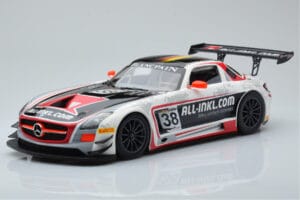
Mercedes SLS AMG GT3 Munnich Motorsport #38 M. Basseng / M. Winkelhock Champions FIA GT1 World Championship 2012 Minichamps 1:18
Only 1 left
Price:
£71.00
Last one
Used
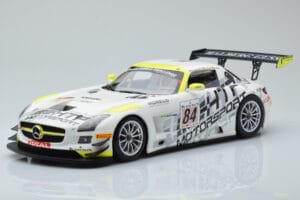
Mercedes SLS AMG GT3 HTP Motorsport Persson #84 B. Schneider / M. Buhk / M. Gotz Winners 24 Hours of Spa-Francorchamps 2013 Minichamps 1:18
Only 1 left
Price:
£94.00
Last one
Used
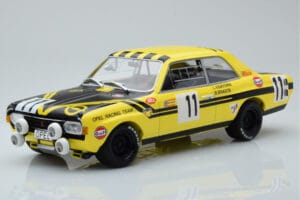
Opel Commodore A Steinmetz #11 E. von Bayern / Johansson 24 Hours of Spa 1970 Minichamps 1:18
Only 1 left
Price:
£93.00
Last one
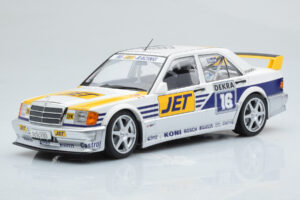
Mercedes 190E 2.5-16 W201 EVO 1 Jet #16 F. Biela Team Ms-Jet Racing DTM 1990 Minichamps 1:18
Only 1 left
Price:
£75.00
Recently viewed
{"id":614258,"name":"Porsche 906K #58 G. Klass \/ R. Stommelen 24 Hours of Le Mans 1966 Minichamps 1:18","price":"£<\/span>160.83<\/bdi><\/span>","image":"https:\/\/models118.co.uk\/wp-content\/uploads\/2026\/06\/porsche-906k-n58-gklass-rstommelen-24h-le-mans-1966-minichamps-1-18-400x400.jpg","permalink":"https:\/\/models118.co.uk\/porsche-906k-58-g-klass-r-stommelen-24-hours-of-le-mans-1966-minichamps-1-18-100666158\/","brand":"Porsche"}