Used
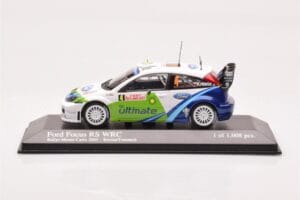
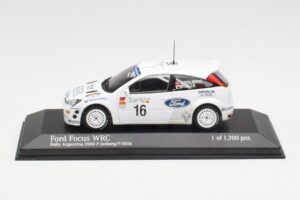
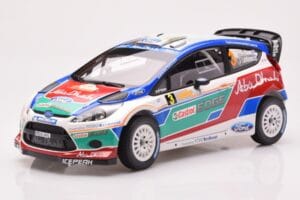
Ford Focus RS WRC #4 R. Kresta / J. Tomanek Rally Monte Carlo 2005 Minichamps 1:43
Only 2 left
Price:
£89.00
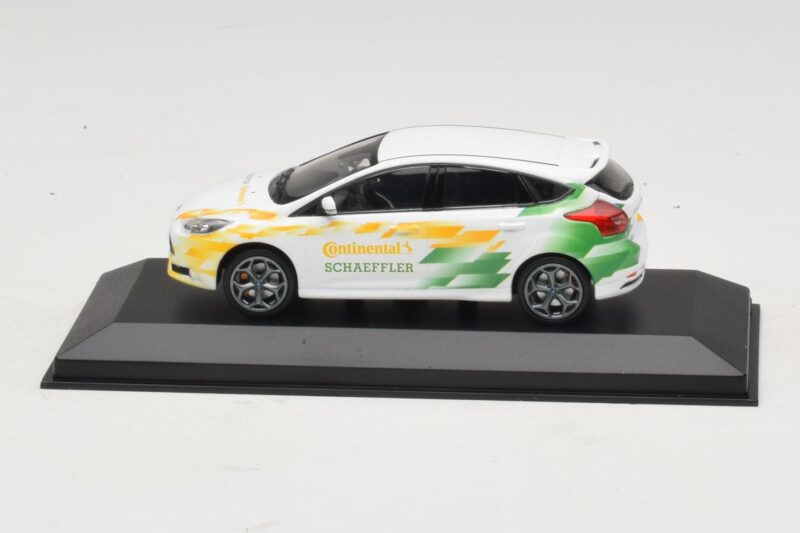
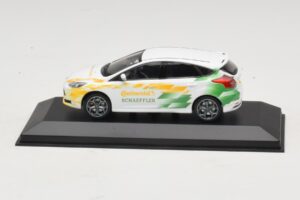
TL;DR: Minichamps' 1:43 diecast Ford Focus GTC carries Continental and Schaeffler branding, a technology-demonstrator livery from 2014 rather than a production paint scheme, cast as a sealed one-piece body. It gives collectors a niche subject: a familiar hatchback shape wearing the graphics of two major automotive suppliers.
Component suppliers rarely get their own model car, which is exactly what makes this Focus interesting. Continental and Schaeffler both build demonstrator vehicles to showcase new engineering at trade events, and Minichamps' decision to reproduce one gives collectors a genuinely unusual entry beyond the standard Ford production catalogue.
Automotive suppliers like Continental and Schaeffler do not sell cars directly to the public, so when either company wants to demonstrate a new tyre compound, bearing design, or drivetrain component, it builds or liveries a demonstrator vehicle and shows it at trade fairs and press events rather than on a dealer forecourt. This Focus GTC carries exactly that kind of branding: graphics for both suppliers together, suggesting a joint showcase rather than a single-company project, wrapped around a hatchback body that Ford buyers would recognise from the showroom floor. The 'GTC' designation points to the touring-car-style body variant Ford used across several motorsport and demonstration projects built on the Focus platform through the 2010s, a shape distinct from the standard road-going hatchback in its aerodynamic detailing even where the model itself stays close to production proportions. Reproducing a livery like this is a departure from the mainstream diecast catalogue, where manufacturer press cars, works liveries, and dealer specials dominate far more than supplier technology demonstrators. For collectors interested in the wider automotive supply chain rather than just the car brands themselves, that makes this Focus a genuinely different kind of subject, one that says more about component engineering culture in the 2010s than about any specific Ford model year.
Minichamps builds this Focus as a sealed, one-piece diecast shell, with no opening doors, bonnet, or boot to work around. That construction keeps the model's tooling and assembly straightforward, which suits a livery-driven subject where the graphics and paintwork carry the interest rather than an opened engine bay or cabin. Without hinge tolerances to accommodate, the door and window lines hold as single, consistent grooves along the flank, and the roofline runs clean and uninterrupted from screen to tailgate. The zinc alloy body has real heft for its size, noticeable the moment it leaves its packaging, and the printed Continental and Schaeffler graphics sit flat and sharply registered across the panel lines, which matters more here than on almost any other subject in the catalogue, since the branding is the entire point of the model. Glazing sits flush in its aperture rather than standing proud, and wheel detail and badge printing carry the fine work a buyer inspects up close. At Minichamps' standard tier, this level of livery precision is exactly what the brand's reputation rests on: mainstream diecast manufacturers are not always careful with sponsor and supplier graphics, but Minichamps has built its name on getting exactly this kind of detail right across motorsport and promotional subjects alike.
At 1:43, this Focus GTC takes up little shelf space, which suits a subject most collectors will treat as a curiosity rather than a centrepiece. It sits best alongside other supplier and technology-partner liveries, works press cars, or a broader Ford Focus motorsport lineage, rather than among standard production hatchbacks. Because subjects like this rarely get reproduced twice, picking one up when it is available matters more than it would for a mainstream Fiesta or Focus road car, where alternative liveries and colours are never far away. For collectors who enjoy the stranger corners of automotive promotional history, this is a small, specific, and genuinely uncommon piece worth seeking out before it disappears from stock lists entirely.



Save £14.00