Used
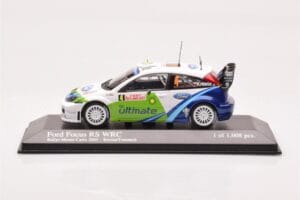
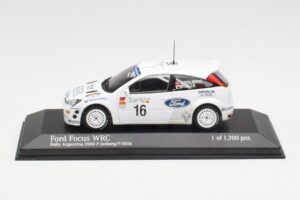
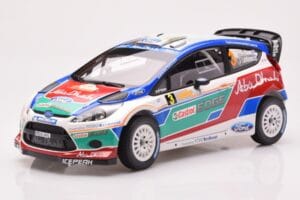
Ford Focus RS WRC #4 R. Kresta / J. Tomanek Rally Monte Carlo 2005 Minichamps 1:43
Only 2 left
Price:
£89.00
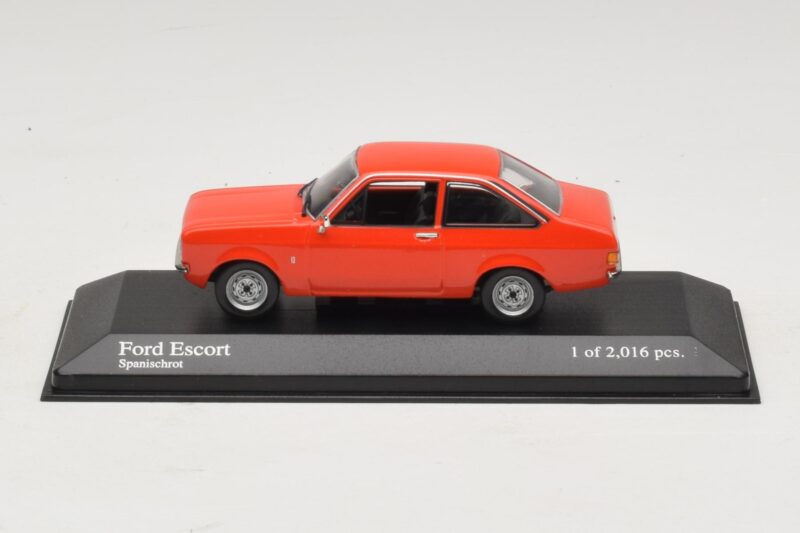
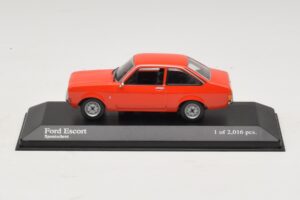
TL;DR: The Minichamps 1:43 Ford Escort Mk2 reproduces the 1975 four-door saloon in Spanish Red diecast. The sealed one-piece body carries correct period proportions, chrome trim and tight shut lines. An accessible, honestly detailed way to anchor a 1970s British saloon collection.
The Mk2 Escort was Ford's bread-and-butter family car through the second half of the 1970s, built in huge numbers for buyers who wanted no-nonsense transport rather than a talking point. Minichamps treats that everyday ordinariness with the same care it gives a sports car, at 1:43 scale.
The Escort Mk2 arrives as a fixed, one-piece body rather than an opening one, doors, bonnet and boot cast solid into the shell. For a compact 1970s saloon that suits the subject: the roofline stays true, the waistline runs unbroken from front wing to rear, and there is no hinge gap to interrupt the greenhouse shape. Shut lines are moulded in as fine grooves rather than functional joints, holding a consistent width the whole way round the body rather than widening near a hinge point. The stance sits correctly on its wheels, neither too high nor too low for a family saloon of this period.
Spanish Red covers the body in a flat, period-correct finish rather than a modern metallic flake, matching how these cars were actually painted when new. Chrome window surrounds, bumpers and grille slats are picked out separately from the body colour, and the black rubber seals around the glazing are moulded distinctly rather than merged into the paintwork. Badging on the boot lid and grille is fine enough to read under magnification, and the wheels carry the simple steel-and-trim look the Mk2 wore in everyday specification rather than a sportier alloy pattern.
Ford introduced the Mk2 Escort in 1975 as a direct replacement for the Mk1, keeping the same rear-wheel-drive layout and overall size while squaring off the styling with a more modern, slightly boxier silhouette. The saloon body, offered in two-door and four-door form, was the volume seller: family transport for a market that valued reliability and running costs over anything sportier. Underneath, changes over the Mk1 were modest, but the sharper grille, rectangular headlamps on higher trims and revised dashboard gave the Mk2 a distinctly different character from the car it replaced. It remained in production into the early 1980s, one of the most common sights on British roads through that period.
The same Mk2 platform also underpinned Ford's competition Escorts, the RS1800 and RS2000 that built the model's rallying reputation. This four-door saloon carries none of that specification: no wide arches, no bonnet vents, no rally-derived running gear. It represents the car most Mk2 buyers actually drove, and pairing it with an RS-badged model on the same shelf tells the fuller story of one platform stretched across two very different audiences. Collectors who want the full picture of the Mk2 generation often run the saloon and a motorsport-liveried variant side by side, letting the ordinary car set off the extraordinary one.
This saloon works best as a foundation rather than a highlight, the car a Mk2 Escort collection is built around before rally liveries and sportier trims join it. At 1:43 it takes up little shelf space, so a handful of contemporary Fords, other Escorts, Cortinas, Capris, sit easily alongside it without crowding a cabinet. The sealed body needs nothing beyond routine dusting: no hinges to check, no doors to realign after handling. Pricing at this end of the Ford range stays accessible, which makes building a complete Mk2 saloon-and-variant run a realistic project rather than an expensive one. For a collector working through 1970s Ford history in sequence rather than jumping straight to the famous names, this is the honest starting point.


Save £14.00