Used
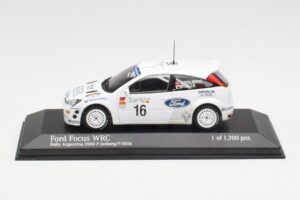
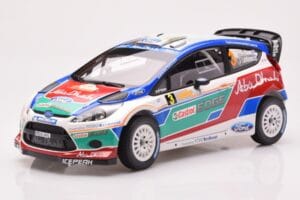
Ford Focus RS WRC #4 R. Kresta / J. Tomanek Rally Monte Carlo 2005 Minichamps 1:43
Only 2 left
Price:
£89.00
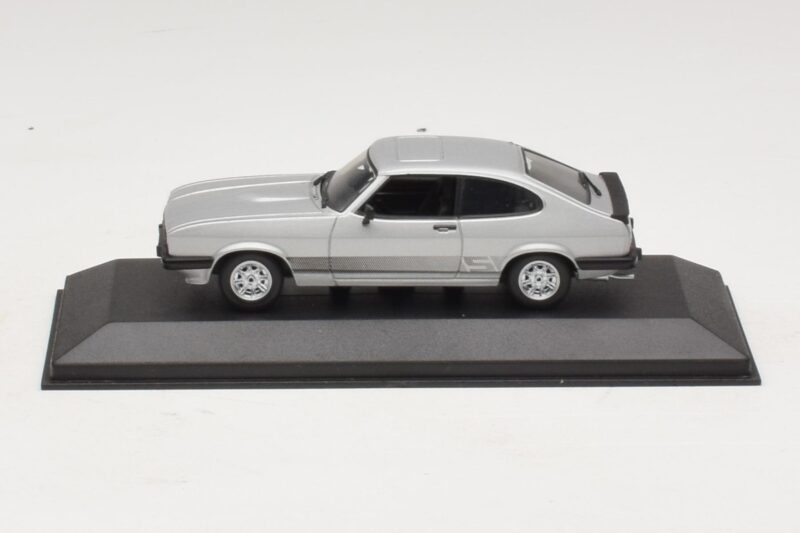
TL;DR: Minichamps' 1:43 diecast Ford Capri RS Mk1 reproduces the 1970 performance coupe finished in Silver, its sealed one-piece body holding tight panel gaps along a long, low bonnet. The Capri's mainstream performance appeal shows through in a straightforward, honestly finished casting. A dependable entry into a 1970s Ford shelf.
Ford sold the Capri on aspiration at an accessible price, the coupe billed as 'the car you always promised yourself' when it launched in 1969. The RS versions sharpened that appeal into genuine performance, and this Mk1 in Silver represents the everyday-hero side of Ford's range rather than a factory racing programme.
Ford launched the Capri in 1969 as a European coupe built on familiar, cost-effective mechanical underpinnings, a formula that let the marque sell genuine style at a price ordinary buyers could stretch to. The RS treatment, applied to selected engines through the Mk1's run, added the sharper suspension, wider wheels and stronger brakes that turned an affordable coupe into something capable on a fast road or a club circuit. That approach mirrored what Ford was doing with the Escort at the same time: take a mainstream platform, apply focused performance engineering, and homologate the result for competition where it mattered. The Capri RS Mk1 is a clear expression of that Ford philosophy from the turn of the 1970s.
The Capri's long bonnet and short rear deck borrowed a silhouette that had worked for American pony cars, translated into a size and price that suited European roads and budgets, and it sold in enormous numbers across Britain and continental Europe through the 1970s. That volume, combined with a genuine performance option in the RS, is what made the Capri a car people aspired to rather than simply bought, closing the gap between family transport and something with real character. Unlike the marque's works rally and touring car programmes, the Capri RS's significance sits in how many ordinary drivers actually owned one, which gives a well-finished road-car casting like this a different, more personal kind of appeal.
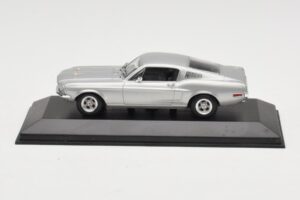
Minichamps casts this Capri as a sealed one-piece body, and the payoff shows most clearly along the bonnet and boot lines, where a single continuous shut line tracks each edge without the widening a hinge mechanism introduces. The coupe's long bonnet, short boot and fastback rear window are proportions that depend on clean, uninterrupted surfaces to read correctly at 1:43, and a sealed casting delivers exactly that. Glazing sits flush within its surrounds, and the grille, with its horizontal slats and central badge, is moulded with enough sharpness to identify the model year without needing paint to carry the detail.
Cast in zinc alloy, the model carries real weight, and Silver paint sits on that hard metal shell with a flat, even gloss that suits the Capri's simple panel surfaces better than a busier metallic finish would. Chrome bumpers, door handles and wing mirrors are picked out cleanly against the body colour, and the wheels carry the correctly sized rim and tyre proportions for a period performance coupe rather than an oversized modern-looking set. This is straightforward, honestly built diecast without pretension, which suits a subject whose whole appeal rested on being genuinely attainable rather than exotic.
This Capri RS works best as a foundation piece rather than a headline model, the kind of car that anchors a 1970s Ford display and gives context to the marque's more dramatic rally and touring car subjects from the same period. At 1:43, its compact coupe proportions leave room to build out a wider Ford range on one shelf without the Capri dominating the arrangement. Displayed next to the Escort RS1800's competition liveries, this road-going Capri shows the other half of Ford's strategy: mainstream performance cars sold in volume, standing alongside the works cars built to prove the same engineering on track. Judged as a sealed-body diecast, the model earns its place through clean shut lines and honest paint rather than moving parts, and for an accessible classic like this, that is exactly the right measure.


Save £14.00