


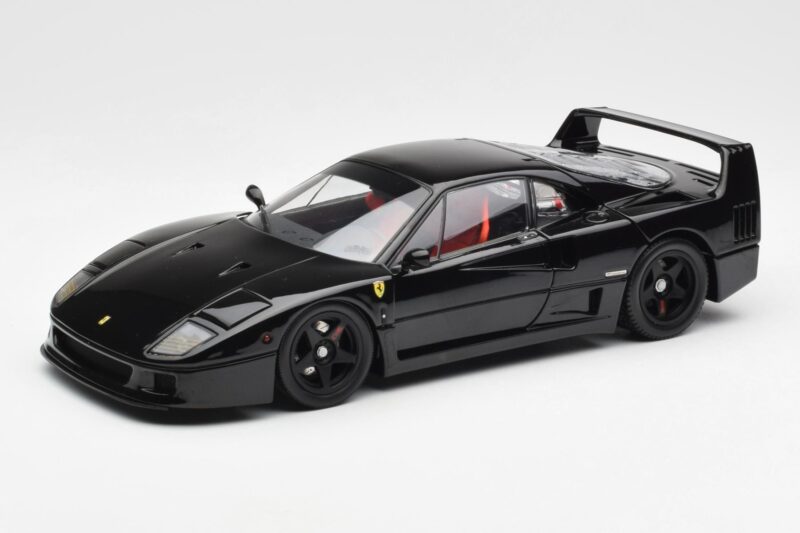
Ferrari F40 Black Kyosho 1:18
Sold out
1
/
10
Kyosho's 1:18 diecast Ferrari F40 wears black, a genuinely rare special-order colour on a supercar almost always pictured in Rosso Corsa red. Pop-up headlamps, a lifting engine cover over the twin-turbo V8, and the correct rear wing proportions carry the F40's shape faithfully. A distinctive centrepiece for a 1980s Ferrari or supercar collection that wants something beyond the expected red.
1 / 10
[{"index":0,"id":"477511","thumb":"https:\/\/models118.co.uk\/wp-content\/uploads\/2026\/06\/ferrari-f40-black-kyosho-1-18-300x200.jpg","medium":"https:\/\/models118.co.uk\/wp-content\/uploads\/2026\/06\/ferrari-f40-black-kyosho-1-18-800x533.jpg","full":"https:\/\/models118.co.uk\/wp-content\/uploads\/2026\/06\/ferrari-f40-black-kyosho-1-18.jpg","srcset":"https:\/\/models118.co.uk\/wp-content\/uploads\/2026\/06\/ferrari-f40-black-kyosho-1-18-800x533.jpg 800w, https:\/\/models118.co.uk\/wp-content\/uploads\/2026\/06\/ferrari-f40-black-kyosho-1-18-64x43.jpg 64w, https:\/\/models118.co.uk\/wp-content\/uploads\/2026\/06\/ferrari-f40-black-kyosho-1-18-300x200.jpg 300w, https:\/\/models118.co.uk\/wp-content\/uploads\/2026\/06\/ferrari-f40-black-kyosho-1-18.jpg 1800w","sizes":"(max-width: 1023px) 400px, 640px","srcsetAvif":"https:\/\/models118.co.uk\/wp-content\/uploads\/2026\/06\/ferrari-f40-black-kyosho-1-18-800x533.jpg.avif 800w, https:\/\/models118.co.uk\/wp-content\/uploads\/2026\/06\/ferrari-f40-black-kyosho-1-18-64x43.jpg.avif 64w, https:\/\/models118.co.uk\/wp-content\/uploads\/2026\/06\/ferrari-f40-black-kyosho-1-18-300x200.jpg.avif 300w, https:\/\/models118.co.uk\/wp-content\/uploads\/2026\/06\/ferrari-f40-black-kyosho-1-18.jpg.avif 1800w","srcsetWebp":"https:\/\/models118.co.uk\/wp-content\/uploads\/2026\/06\/ferrari-f40-black-kyosho-1-18-800x533.jpg.webp 800w, https:\/\/models118.co.uk\/wp-content\/uploads\/2026\/06\/ferrari-f40-black-kyosho-1-18-64x43.jpg.webp 64w, https:\/\/models118.co.uk\/wp-content\/uploads\/2026\/06\/ferrari-f40-black-kyosho-1-18-300x200.jpg.webp 300w, https:\/\/models118.co.uk\/wp-content\/uploads\/2026\/06\/ferrari-f40-black-kyosho-1-18.jpg.webp 1800w","alt":"Ferrari F40 Black Kyosho 1:18 08416BK Diecast"},{"index":1,"id":477538,"thumb":"https:\/\/models118.co.uk\/wp-content\/uploads\/2026\/06\/ferrari-f40-black-kyosho-1-18-1-300x200.jpg","medium":"https:\/\/models118.co.uk\/wp-content\/uploads\/2026\/06\/ferrari-f40-black-kyosho-1-18-1-800x533.jpg","full":"https:\/\/models118.co.uk\/wp-content\/uploads\/2026\/06\/ferrari-f40-black-kyosho-1-18-1.jpg","srcset":"https:\/\/models118.co.uk\/wp-content\/uploads\/2026\/06\/ferrari-f40-black-kyosho-1-18-1-800x533.jpg 800w, https:\/\/models118.co.uk\/wp-content\/uploads\/2026\/06\/ferrari-f40-black-kyosho-1-18-1-64x43.jpg 64w, https:\/\/models118.co.uk\/wp-content\/uploads\/2026\/06\/ferrari-f40-black-kyosho-1-18-1-300x200.jpg 300w, https:\/\/models118.co.uk\/wp-content\/uploads\/2026\/06\/ferrari-f40-black-kyosho-1-18-1.jpg 1800w","sizes":"(max-width: 1023px) 400px, 640px","srcsetAvif":"https:\/\/models118.co.uk\/wp-content\/uploads\/2026\/06\/ferrari-f40-black-kyosho-1-18-1-800x533.jpg.avif 800w, https:\/\/models118.co.uk\/wp-content\/uploads\/2026\/06\/ferrari-f40-black-kyosho-1-18-1-64x43.jpg.avif 64w, https:\/\/models118.co.uk\/wp-content\/uploads\/2026\/06\/ferrari-f40-black-kyosho-1-18-1-300x200.jpg.avif 300w, https:\/\/models118.co.uk\/wp-content\/uploads\/2026\/06\/ferrari-f40-black-kyosho-1-18-1.jpg.avif 1800w","srcsetWebp":"https:\/\/models118.co.uk\/wp-content\/uploads\/2026\/06\/ferrari-f40-black-kyosho-1-18-1-800x533.jpg.webp 800w, https:\/\/models118.co.uk\/wp-content\/uploads\/2026\/06\/ferrari-f40-black-kyosho-1-18-1-64x43.jpg.webp 64w, https:\/\/models118.co.uk\/wp-content\/uploads\/2026\/06\/ferrari-f40-black-kyosho-1-18-1-300x200.jpg.webp 300w, https:\/\/models118.co.uk\/wp-content\/uploads\/2026\/06\/ferrari-f40-black-kyosho-1-18-1.jpg.webp 1800w","alt":"Ferrari F40 Black Kyosho 1:18 08416BK Diecast \u2014 photo 2 of 10"},{"index":2,"id":477565,"thumb":"https:\/\/models118.co.uk\/wp-content\/uploads\/2026\/06\/ferrari-f40-black-kyosho-1-18-2-300x200.jpg","medium":"https:\/\/models118.co.uk\/wp-content\/uploads\/2026\/06\/ferrari-f40-black-kyosho-1-18-2-800x533.jpg","full":"https:\/\/models118.co.uk\/wp-content\/uploads\/2026\/06\/ferrari-f40-black-kyosho-1-18-2.jpg","srcset":"https:\/\/models118.co.uk\/wp-content\/uploads\/2026\/06\/ferrari-f40-black-kyosho-1-18-2-800x533.jpg 800w, https:\/\/models118.co.uk\/wp-content\/uploads\/2026\/06\/ferrari-f40-black-kyosho-1-18-2-64x43.jpg 64w, https:\/\/models118.co.uk\/wp-content\/uploads\/2026\/06\/ferrari-f40-black-kyosho-1-18-2-300x200.jpg 300w, https:\/\/models118.co.uk\/wp-content\/uploads\/2026\/06\/ferrari-f40-black-kyosho-1-18-2.jpg 1800w","sizes":"(max-width: 1023px) 400px, 640px","srcsetAvif":"https:\/\/models118.co.uk\/wp-content\/uploads\/2026\/06\/ferrari-f40-black-kyosho-1-18-2-800x533.jpg.avif 800w, https:\/\/models118.co.uk\/wp-content\/uploads\/2026\/06\/ferrari-f40-black-kyosho-1-18-2-64x43.jpg.avif 64w, https:\/\/models118.co.uk\/wp-content\/uploads\/2026\/06\/ferrari-f40-black-kyosho-1-18-2-300x200.jpg.avif 300w, https:\/\/models118.co.uk\/wp-content\/uploads\/2026\/06\/ferrari-f40-black-kyosho-1-18-2.jpg.avif 1800w","srcsetWebp":"https:\/\/models118.co.uk\/wp-content\/uploads\/2026\/06\/ferrari-f40-black-kyosho-1-18-2-800x533.jpg.webp 800w, https:\/\/models118.co.uk\/wp-content\/uploads\/2026\/06\/ferrari-f40-black-kyosho-1-18-2-64x43.jpg.webp 64w, https:\/\/models118.co.uk\/wp-content\/uploads\/2026\/06\/ferrari-f40-black-kyosho-1-18-2-300x200.jpg.webp 300w, https:\/\/models118.co.uk\/wp-content\/uploads\/2026\/06\/ferrari-f40-black-kyosho-1-18-2.jpg.webp 1800w","alt":"Ferrari F40 Black Kyosho 1:18 08416BK Diecast \u2014 photo 3 of 10"},{"index":3,"id":477592,"thumb":"https:\/\/models118.co.uk\/wp-content\/uploads\/2026\/06\/ferrari-f40-black-kyosho-1-18-3-300x200.jpg","medium":"https:\/\/models118.co.uk\/wp-content\/uploads\/2026\/06\/ferrari-f40-black-kyosho-1-18-3-800x533.jpg","full":"https:\/\/models118.co.uk\/wp-content\/uploads\/2026\/06\/ferrari-f40-black-kyosho-1-18-3.jpg","srcset":"https:\/\/models118.co.uk\/wp-content\/uploads\/2026\/06\/ferrari-f40-black-kyosho-1-18-3-800x533.jpg 800w, https:\/\/models118.co.uk\/wp-content\/uploads\/2026\/06\/ferrari-f40-black-kyosho-1-18-3-64x43.jpg 64w, https:\/\/models118.co.uk\/wp-content\/uploads\/2026\/06\/ferrari-f40-black-kyosho-1-18-3-300x200.jpg 300w, https:\/\/models118.co.uk\/wp-content\/uploads\/2026\/06\/ferrari-f40-black-kyosho-1-18-3.jpg 1800w","sizes":"(max-width: 1023px) 400px, 640px","srcsetAvif":"https:\/\/models118.co.uk\/wp-content\/uploads\/2026\/06\/ferrari-f40-black-kyosho-1-18-3-800x533.jpg.avif 800w, https:\/\/models118.co.uk\/wp-content\/uploads\/2026\/06\/ferrari-f40-black-kyosho-1-18-3-64x43.jpg.avif 64w, https:\/\/models118.co.uk\/wp-content\/uploads\/2026\/06\/ferrari-f40-black-kyosho-1-18-3-300x200.jpg.avif 300w, https:\/\/models118.co.uk\/wp-content\/uploads\/2026\/06\/ferrari-f40-black-kyosho-1-18-3.jpg.avif 1800w","srcsetWebp":"https:\/\/models118.co.uk\/wp-content\/uploads\/2026\/06\/ferrari-f40-black-kyosho-1-18-3-800x533.jpg.webp 800w, https:\/\/models118.co.uk\/wp-content\/uploads\/2026\/06\/ferrari-f40-black-kyosho-1-18-3-64x43.jpg.webp 64w, https:\/\/models118.co.uk\/wp-content\/uploads\/2026\/06\/ferrari-f40-black-kyosho-1-18-3-300x200.jpg.webp 300w, https:\/\/models118.co.uk\/wp-content\/uploads\/2026\/06\/ferrari-f40-black-kyosho-1-18-3.jpg.webp 1800w","alt":"Ferrari F40 Black Kyosho 1:18 08416BK Diecast \u2014 photo 4 of 10"},{"index":4,"id":477619,"thumb":"https:\/\/models118.co.uk\/wp-content\/uploads\/2026\/06\/ferrari-f40-black-kyosho-1-18-4-300x200.jpg","medium":"https:\/\/models118.co.uk\/wp-content\/uploads\/2026\/06\/ferrari-f40-black-kyosho-1-18-4-800x533.jpg","full":"https:\/\/models118.co.uk\/wp-content\/uploads\/2026\/06\/ferrari-f40-black-kyosho-1-18-4.jpg","srcset":"https:\/\/models118.co.uk\/wp-content\/uploads\/2026\/06\/ferrari-f40-black-kyosho-1-18-4-800x533.jpg 800w, https:\/\/models118.co.uk\/wp-content\/uploads\/2026\/06\/ferrari-f40-black-kyosho-1-18-4-64x43.jpg 64w, https:\/\/models118.co.uk\/wp-content\/uploads\/2026\/06\/ferrari-f40-black-kyosho-1-18-4-300x200.jpg 300w, https:\/\/models118.co.uk\/wp-content\/uploads\/2026\/06\/ferrari-f40-black-kyosho-1-18-4.jpg 1800w","sizes":"(max-width: 1023px) 400px, 640px","srcsetAvif":"https:\/\/models118.co.uk\/wp-content\/uploads\/2026\/06\/ferrari-f40-black-kyosho-1-18-4-800x533.jpg.avif 800w, https:\/\/models118.co.uk\/wp-content\/uploads\/2026\/06\/ferrari-f40-black-kyosho-1-18-4-64x43.jpg.avif 64w, https:\/\/models118.co.uk\/wp-content\/uploads\/2026\/06\/ferrari-f40-black-kyosho-1-18-4-300x200.jpg.avif 300w, https:\/\/models118.co.uk\/wp-content\/uploads\/2026\/06\/ferrari-f40-black-kyosho-1-18-4.jpg.avif 1800w","srcsetWebp":"https:\/\/models118.co.uk\/wp-content\/uploads\/2026\/06\/ferrari-f40-black-kyosho-1-18-4-800x533.jpg.webp 800w, https:\/\/models118.co.uk\/wp-content\/uploads\/2026\/06\/ferrari-f40-black-kyosho-1-18-4-64x43.jpg.webp 64w, https:\/\/models118.co.uk\/wp-content\/uploads\/2026\/06\/ferrari-f40-black-kyosho-1-18-4-300x200.jpg.webp 300w, https:\/\/models118.co.uk\/wp-content\/uploads\/2026\/06\/ferrari-f40-black-kyosho-1-18-4.jpg.webp 1800w","alt":"Ferrari F40 Black Kyosho 1:18 08416BK Diecast \u2014 photo 5 of 10"},{"index":5,"id":477646,"thumb":"https:\/\/models118.co.uk\/wp-content\/uploads\/2026\/06\/ferrari-f40-black-kyosho-1-18-5-300x200.jpg","medium":"https:\/\/models118.co.uk\/wp-content\/uploads\/2026\/06\/ferrari-f40-black-kyosho-1-18-5-800x533.jpg","full":"https:\/\/models118.co.uk\/wp-content\/uploads\/2026\/06\/ferrari-f40-black-kyosho-1-18-5.jpg","srcset":"https:\/\/models118.co.uk\/wp-content\/uploads\/2026\/06\/ferrari-f40-black-kyosho-1-18-5-800x533.jpg 800w, https:\/\/models118.co.uk\/wp-content\/uploads\/2026\/06\/ferrari-f40-black-kyosho-1-18-5-64x43.jpg 64w, https:\/\/models118.co.uk\/wp-content\/uploads\/2026\/06\/ferrari-f40-black-kyosho-1-18-5-300x200.jpg 300w, https:\/\/models118.co.uk\/wp-content\/uploads\/2026\/06\/ferrari-f40-black-kyosho-1-18-5.jpg 1800w","sizes":"(max-width: 1023px) 400px, 640px","srcsetAvif":"https:\/\/models118.co.uk\/wp-content\/uploads\/2026\/06\/ferrari-f40-black-kyosho-1-18-5-800x533.jpg.avif 800w, https:\/\/models118.co.uk\/wp-content\/uploads\/2026\/06\/ferrari-f40-black-kyosho-1-18-5-64x43.jpg.avif 64w, https:\/\/models118.co.uk\/wp-content\/uploads\/2026\/06\/ferrari-f40-black-kyosho-1-18-5-300x200.jpg.avif 300w, https:\/\/models118.co.uk\/wp-content\/uploads\/2026\/06\/ferrari-f40-black-kyosho-1-18-5.jpg.avif 1800w","srcsetWebp":"https:\/\/models118.co.uk\/wp-content\/uploads\/2026\/06\/ferrari-f40-black-kyosho-1-18-5-800x533.jpg.webp 800w, https:\/\/models118.co.uk\/wp-content\/uploads\/2026\/06\/ferrari-f40-black-kyosho-1-18-5-64x43.jpg.webp 64w, https:\/\/models118.co.uk\/wp-content\/uploads\/2026\/06\/ferrari-f40-black-kyosho-1-18-5-300x200.jpg.webp 300w, https:\/\/models118.co.uk\/wp-content\/uploads\/2026\/06\/ferrari-f40-black-kyosho-1-18-5.jpg.webp 1800w","alt":"Ferrari F40 Black Kyosho 1:18 08416BK Diecast \u2014 photo 6 of 10"},{"index":6,"id":477673,"thumb":"https:\/\/models118.co.uk\/wp-content\/uploads\/2026\/06\/ferrari-f40-black-kyosho-1-18-6-300x200.jpg","medium":"https:\/\/models118.co.uk\/wp-content\/uploads\/2026\/06\/ferrari-f40-black-kyosho-1-18-6-800x533.jpg","full":"https:\/\/models118.co.uk\/wp-content\/uploads\/2026\/06\/ferrari-f40-black-kyosho-1-18-6.jpg","srcset":"https:\/\/models118.co.uk\/wp-content\/uploads\/2026\/06\/ferrari-f40-black-kyosho-1-18-6-800x533.jpg 800w, https:\/\/models118.co.uk\/wp-content\/uploads\/2026\/06\/ferrari-f40-black-kyosho-1-18-6-64x43.jpg 64w, https:\/\/models118.co.uk\/wp-content\/uploads\/2026\/06\/ferrari-f40-black-kyosho-1-18-6-300x200.jpg 300w, https:\/\/models118.co.uk\/wp-content\/uploads\/2026\/06\/ferrari-f40-black-kyosho-1-18-6.jpg 1800w","sizes":"(max-width: 1023px) 400px, 640px","srcsetAvif":"https:\/\/models118.co.uk\/wp-content\/uploads\/2026\/06\/ferrari-f40-black-kyosho-1-18-6-800x533.jpg.avif 800w, https:\/\/models118.co.uk\/wp-content\/uploads\/2026\/06\/ferrari-f40-black-kyosho-1-18-6-64x43.jpg.avif 64w, https:\/\/models118.co.uk\/wp-content\/uploads\/2026\/06\/ferrari-f40-black-kyosho-1-18-6-300x200.jpg.avif 300w, https:\/\/models118.co.uk\/wp-content\/uploads\/2026\/06\/ferrari-f40-black-kyosho-1-18-6.jpg.avif 1800w","srcsetWebp":"https:\/\/models118.co.uk\/wp-content\/uploads\/2026\/06\/ferrari-f40-black-kyosho-1-18-6-800x533.jpg.webp 800w, https:\/\/models118.co.uk\/wp-content\/uploads\/2026\/06\/ferrari-f40-black-kyosho-1-18-6-64x43.jpg.webp 64w, https:\/\/models118.co.uk\/wp-content\/uploads\/2026\/06\/ferrari-f40-black-kyosho-1-18-6-300x200.jpg.webp 300w, https:\/\/models118.co.uk\/wp-content\/uploads\/2026\/06\/ferrari-f40-black-kyosho-1-18-6.jpg.webp 1800w","alt":"Ferrari F40 Black Kyosho 1:18 08416BK Diecast \u2014 photo 7 of 10"},{"index":7,"id":477700,"thumb":"https:\/\/models118.co.uk\/wp-content\/uploads\/2026\/06\/ferrari-f40-black-kyosho-1-18-7-300x200.jpg","medium":"https:\/\/models118.co.uk\/wp-content\/uploads\/2026\/06\/ferrari-f40-black-kyosho-1-18-7-800x533.jpg","full":"https:\/\/models118.co.uk\/wp-content\/uploads\/2026\/06\/ferrari-f40-black-kyosho-1-18-7.jpg","srcset":"https:\/\/models118.co.uk\/wp-content\/uploads\/2026\/06\/ferrari-f40-black-kyosho-1-18-7-800x533.jpg 800w, https:\/\/models118.co.uk\/wp-content\/uploads\/2026\/06\/ferrari-f40-black-kyosho-1-18-7-64x43.jpg 64w, https:\/\/models118.co.uk\/wp-content\/uploads\/2026\/06\/ferrari-f40-black-kyosho-1-18-7-300x200.jpg 300w, https:\/\/models118.co.uk\/wp-content\/uploads\/2026\/06\/ferrari-f40-black-kyosho-1-18-7.jpg 1800w","sizes":"(max-width: 1023px) 400px, 640px","srcsetAvif":"https:\/\/models118.co.uk\/wp-content\/uploads\/2026\/06\/ferrari-f40-black-kyosho-1-18-7-800x533.jpg.avif 800w, https:\/\/models118.co.uk\/wp-content\/uploads\/2026\/06\/ferrari-f40-black-kyosho-1-18-7-64x43.jpg.avif 64w, https:\/\/models118.co.uk\/wp-content\/uploads\/2026\/06\/ferrari-f40-black-kyosho-1-18-7-300x200.jpg.avif 300w, https:\/\/models118.co.uk\/wp-content\/uploads\/2026\/06\/ferrari-f40-black-kyosho-1-18-7.jpg.avif 1800w","srcsetWebp":"https:\/\/models118.co.uk\/wp-content\/uploads\/2026\/06\/ferrari-f40-black-kyosho-1-18-7-800x533.jpg.webp 800w, https:\/\/models118.co.uk\/wp-content\/uploads\/2026\/06\/ferrari-f40-black-kyosho-1-18-7-64x43.jpg.webp 64w, https:\/\/models118.co.uk\/wp-content\/uploads\/2026\/06\/ferrari-f40-black-kyosho-1-18-7-300x200.jpg.webp 300w, https:\/\/models118.co.uk\/wp-content\/uploads\/2026\/06\/ferrari-f40-black-kyosho-1-18-7.jpg.webp 1800w","alt":"Ferrari F40 Black Kyosho 1:18 08416BK Diecast \u2014 photo 8 of 10"},{"index":8,"id":477727,"thumb":"https:\/\/models118.co.uk\/wp-content\/uploads\/2026\/06\/ferrari-f40-black-kyosho-1-18-8-300x200.jpg","medium":"https:\/\/models118.co.uk\/wp-content\/uploads\/2026\/06\/ferrari-f40-black-kyosho-1-18-8-800x533.jpg","full":"https:\/\/models118.co.uk\/wp-content\/uploads\/2026\/06\/ferrari-f40-black-kyosho-1-18-8.jpg","srcset":"https:\/\/models118.co.uk\/wp-content\/uploads\/2026\/06\/ferrari-f40-black-kyosho-1-18-8-800x533.jpg 800w, https:\/\/models118.co.uk\/wp-content\/uploads\/2026\/06\/ferrari-f40-black-kyosho-1-18-8-64x43.jpg 64w, https:\/\/models118.co.uk\/wp-content\/uploads\/2026\/06\/ferrari-f40-black-kyosho-1-18-8-300x200.jpg 300w, https:\/\/models118.co.uk\/wp-content\/uploads\/2026\/06\/ferrari-f40-black-kyosho-1-18-8.jpg 1800w","sizes":"(max-width: 1023px) 400px, 640px","srcsetAvif":"https:\/\/models118.co.uk\/wp-content\/uploads\/2026\/06\/ferrari-f40-black-kyosho-1-18-8-800x533.jpg.avif 800w, https:\/\/models118.co.uk\/wp-content\/uploads\/2026\/06\/ferrari-f40-black-kyosho-1-18-8-64x43.jpg.avif 64w, https:\/\/models118.co.uk\/wp-content\/uploads\/2026\/06\/ferrari-f40-black-kyosho-1-18-8-300x200.jpg.avif 300w, https:\/\/models118.co.uk\/wp-content\/uploads\/2026\/06\/ferrari-f40-black-kyosho-1-18-8.jpg.avif 1800w","srcsetWebp":"https:\/\/models118.co.uk\/wp-content\/uploads\/2026\/06\/ferrari-f40-black-kyosho-1-18-8-800x533.jpg.webp 800w, https:\/\/models118.co.uk\/wp-content\/uploads\/2026\/06\/ferrari-f40-black-kyosho-1-18-8-64x43.jpg.webp 64w, https:\/\/models118.co.uk\/wp-content\/uploads\/2026\/06\/ferrari-f40-black-kyosho-1-18-8-300x200.jpg.webp 300w, https:\/\/models118.co.uk\/wp-content\/uploads\/2026\/06\/ferrari-f40-black-kyosho-1-18-8.jpg.webp 1800w","alt":"Ferrari F40 Black Kyosho 1:18 08416BK Diecast \u2014 photo 9 of 10"},{"index":9,"id":477754,"thumb":"https:\/\/models118.co.uk\/wp-content\/uploads\/2026\/06\/ferrari-f40-black-kyosho-1-18-9-300x200.jpg","medium":"https:\/\/models118.co.uk\/wp-content\/uploads\/2026\/06\/ferrari-f40-black-kyosho-1-18-9-800x533.jpg","full":"https:\/\/models118.co.uk\/wp-content\/uploads\/2026\/06\/ferrari-f40-black-kyosho-1-18-9.jpg","srcset":"https:\/\/models118.co.uk\/wp-content\/uploads\/2026\/06\/ferrari-f40-black-kyosho-1-18-9-800x533.jpg 800w, https:\/\/models118.co.uk\/wp-content\/uploads\/2026\/06\/ferrari-f40-black-kyosho-1-18-9-64x43.jpg 64w, https:\/\/models118.co.uk\/wp-content\/uploads\/2026\/06\/ferrari-f40-black-kyosho-1-18-9-300x200.jpg 300w, https:\/\/models118.co.uk\/wp-content\/uploads\/2026\/06\/ferrari-f40-black-kyosho-1-18-9.jpg 1800w","sizes":"(max-width: 1023px) 400px, 640px","srcsetAvif":"https:\/\/models118.co.uk\/wp-content\/uploads\/2026\/06\/ferrari-f40-black-kyosho-1-18-9-800x533.jpg.avif 800w, https:\/\/models118.co.uk\/wp-content\/uploads\/2026\/06\/ferrari-f40-black-kyosho-1-18-9-64x43.jpg.avif 64w, https:\/\/models118.co.uk\/wp-content\/uploads\/2026\/06\/ferrari-f40-black-kyosho-1-18-9-300x200.jpg.avif 300w, https:\/\/models118.co.uk\/wp-content\/uploads\/2026\/06\/ferrari-f40-black-kyosho-1-18-9.jpg.avif 1800w","srcsetWebp":"https:\/\/models118.co.uk\/wp-content\/uploads\/2026\/06\/ferrari-f40-black-kyosho-1-18-9-800x533.jpg.webp 800w, https:\/\/models118.co.uk\/wp-content\/uploads\/2026\/06\/ferrari-f40-black-kyosho-1-18-9-64x43.jpg.webp 64w, https:\/\/models118.co.uk\/wp-content\/uploads\/2026\/06\/ferrari-f40-black-kyosho-1-18-9-300x200.jpg.webp 300w, https:\/\/models118.co.uk\/wp-content\/uploads\/2026\/06\/ferrari-f40-black-kyosho-1-18-9.jpg.webp 1800w","alt":"Ferrari F40 Black Kyosho 1:18 08416BK Diecast \u2014 photo 10 of 10"}]
Ferrari F40 Black Kyosho 1:18
Current price:
£231.67
Price shown excluding UK VAT. Import VAT and the courier's customs clearance fee are collected on delivery.
Out of production
This model is currently sold out. Enter your email and we'll let you know when it's back in stock.
Genuine articles
Sourced from manufacturers
5-layer carton
Foam-filled interior
Hassle-free returns
14-day no-quibble returns
Secure payment
Bank-level encryption
About the Ferrari F40 Black Kyosho 1:18
TL;DR: Kyosho's 1:18 diecast Ferrari F40 wears black, a genuinely rare special-order colour on the 1987 supercar built to mark Ferrari's 40th anniversary. Pop-up headlamps, a lifting engine cover over the twin-turbo V8, and correct wing proportions carry the shape faithfully. A distinctive alternative to the usual Rosso Corsa red.
Red is so completely the F40's default colour that a black example almost reads as a different car. Kyosho's diecast treats that rarity seriously, giving collectors a genuine alternative to the shape everyone already knows in red.
Kyosho's Diecast Take on a Rare F40 Special Order
Black Paint Against the F40's Sharp Creases
The F40's body is all flat planes and hard creases, designed in the wind tunnel rather than styled for effect, and black is an exacting test of whether a diecast gets those creases right, since a dark colour reveals every line through reflection rather than colour contrast. Kyosho's black holds a genuine depth under direct light rather than sitting flat, and the crease running along the door and into the sculpted rear haunch reads clearly rather than disappearing into shadow. The panel gaps around the nose and the lifting engine cover stay tight and even, which matters more on a car whose entire visual language depends on sharp, deliberate lines.
Pop-Up Headlamps and the Engine Cover
The pop-up headlamps operate correctly, tucking flush into the nose when closed, and the rear engine cover lifts to reveal the twin-turbocharged V8 that made the F40 the first production car widely reported to exceed 200mph. The louvred cover and exposed engine detail behind it are part of what made the F40 feel like a race car for the road, and Kyosho's rendering of that cover's slats and the wing mounted above it keeps the proportions correct rather than oversized for visual drama.
1987, Ferrari's 40th Anniversary, and Enzo's Final Approval
The Last Car Enzo Ferrari Personally Signed Off
Ferrari built the F40 in 1987 to mark the company's 40th anniversary, and it holds the distinction of being the last car Enzo Ferrari personally approved before his death in 1988. Stripped of power steering, ABS and much of the luxury expected of a road car by that point, the F40 prioritised speed and feedback over comfort, wrapped in composite bodywork that kept weight down in a way few road cars of its era matched. That uncompromising brief is exactly why an unusual colour like black suits the car: it was never built to be gentle, and neither is this paint choice.
A Rare Colour's Place in a Supercar Collection
Positioning Black Beside the Expected Red
Displayed next to a red F40, this black example makes the point that the shape, not the colour, is what made the car matter, and a collector who already owns the red version gains real value from adding the rarer black rather than a second red. At roughly 23 centimetres, it holds a commanding footprint among 1980s and 1990s supercars, and its flat black surfaces catch light differently to red at almost every angle, rewarding a shelf position with strong, direct lighting.
Diecast Weight and Colour Comparison on the Same Tooling
Diecast Weight and Composite-Bodied Realism
The real F40's composite panels were about lightness, a quality a diecast model cannot replicate directly since the zinc alloy body carries genuine weight in the hand regardless of colour. That weight is still useful as a quality signal, distinguishing a properly tooled diecast from a hollow-feeling lighter casting sold at a similar price. Black paint shows fingerprints and dust more readily than red, so handling by the base rather than the bodywork keeps the finish looking correct over years of display.
Black Against Red on Identical Tooling
Because this is the same casting as the more common red F40, comparing the two side by side is a genuinely instructive exercise in how far colour alone can change a shape's read. Red pushes the F40 toward theatre and expectation, black toward menace and restraint, and owning both from the same tooling turns a straightforward supercar purchase into a small study of colour and presence.
Same marque, same scale
Last one
Used
Last one
Used
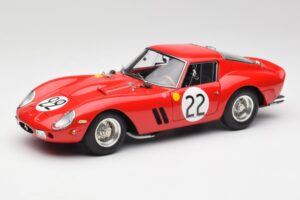
Ferrari 250 GTO #22 Beurlys / Elde / Mason 24 Hours of Le Mans 1962 CMC 1:18
Only 3 left
Price:
£448.33
Collectors also bought
Browse all 1:18
Last one
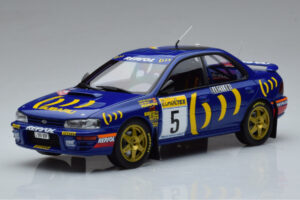
Subaru Impreza #5 C. Sainz / L. Moya 2nd Place Rally Monte Carlo 1995 Kyosho 1:18
Only 1 left
Price:
£180.83
Last one
Last one
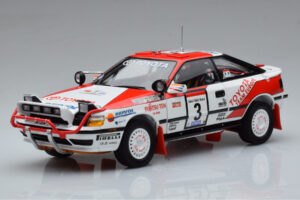
Toyota Celica GT-Four ST165 #3 B. Waldegard / F. Gallagher Winner Safari Rally 1990 Kyosho 1:18
Only 1 left
Price:
£180.83
Last one
Last one
Last one
Last one
Recently viewed
{"id":490161,"name":"Ferrari F40 Black Kyosho 1:18","price":"£<\/span>231.67<\/bdi><\/span>","image":"https:\/\/models118.co.uk\/wp-content\/uploads\/2026\/06\/ferrari-f40-black-kyosho-1-18-400x400.jpg","permalink":"https:\/\/models118.co.uk\/ferrari-f40-black-kyosho-1-18-08416bk\/","brand":"Ferrari"}