{"ajaxurl":"https:\/\/models118.co.uk\/wp-admin\/admin-ajax.php?lang=en_GB","nonce":"ee5911ef52","homeUrl":"https:\/\/models118.co.uk\/","shopUrl":"https:\/\/models118.co.uk\/shop\/","cartUrl":"https:\/\/models118.co.uk\/cart-en-gb\/","checkoutUrl":"https:\/\/models118.co.uk\/checkout\/","skipCart":true,"collectionLimit":12,"i18n":{"addedToCart":"Added to basket","addToWishlist":"Add to wishlist","addedToWishlist":"Added to wishlist","removeFromWishlist":"Remove from wishlist","removedFromWishlist":"Removed from wishlist","undo":"Undo","error":"Something went wrong","loading":"Loading...","outOfStock":"Out of stock","viewCart":"View basket","proceedToCheckout":"Proceed to checkout","addedToCollection":"Added to your collection","reserved":"Added to your collection","soldOut":"Sold out","invalidEmail":"Please enter a valid email address","connectionError":"Connection error. Please try again.","tocToggle":"On this page","close":"Close","inCartTooltip":"Already in your basket \u2013 open your basket to check out","loginToSave":"Sign in to save this model","waitlistNotify":"Notify me","waitlistOnList":"On the waiting list \u2713","waitlistJoined":"You're on the waiting list. We'll email you the moment this model is available again.","waitlistRemoved":"Done \u2014 you're off the waiting list for this model.","waitlistRateLimit":"Too many attempts \u2014 please try again shortly","waitlistTurnstile":"We couldn't complete the check \u2014 please try again","waitlistError":"Sorry, something went wrong. Please try again in a moment."},"wishlist":{"loggedIn":false,"loginUrl":"https:\/\/models118.co.uk\/my-account\/","addAction":"models118_wishlist_add","removeAction":"models118_wishlist_remove"},"waitlist":{"loggedIn":false,"subscribeAction":"models118_waitlist_subscribe","toggleAction":"models118_waitlist_toggle","stateAction":"models118_waitlist_state"},"stats":{"models":2269,"brands":214,"manufacturers":129,"collectors":10000},"product":{"id":1688725,"sku":"80430150918","condition":"new","availability":"in_stock","name":"BMW 3.0 CSL Art Car Alexander Calder #51 H. Poulain \/ S. Posey \/ J. Guichet 24 Hours of Le Mans 1975 Minichamps 1:18","brand":"BMW","manufacturer":"Minichamps","scale":"1:18","material":"Diecast","price":531.67,"regularPrice":531.67,"isOnSale":false,"savingsAmount":0,"stockQty":1,"stockStatus":"very_low","isDiscontinued":false,"image":"https:\/\/models118.co.uk\/wp-content\/uploads\/2026\/10\/bmw-3-0-csl-art-car-alexander-calder-51-h-poulain-s-posey-j-guichet-24-hours-of-le-mans-1975-minichamps-1-18-80430150918-1-1-300x200.jpg","permalink":"https:\/\/models118.co.uk\/bmw-3-0-csl-art-car-alexander-calder-51-h-poulain-s-posey-j-guichet-24-hours-of-le-mans-1975-minichamps-1-18-80430150918\/"}}
Cookies on Models118
We use cookies to remember your preferences, understand how the shop is used and show you models and offers that suit your interests. What you allow is up to you, and you can change it at any time.
Always active
The technical storage or access is strictly necessary for the legitimate purpose of enabling the use of a specific service explicitly requested by the subscriber or user, or for the sole purpose of carrying out the transmission of a communication over an electronic communications network.
The technical storage or access is necessary for the legitimate purpose of storing preferences that are not requested by the subscriber or user.
The technical storage or access that is used exclusively for statistical purposes.
The technical storage or access is required to create user profiles to send advertising, or to track the user on a website or across several websites for similar marketing purposes.
BMW 3.0 CSL Art Car Alexander Calder #51 H. Poulain / S. Posey / J. Guichet 24 Hours of Le Mans 1975 Minichamps 1:18
New arrival
1/7
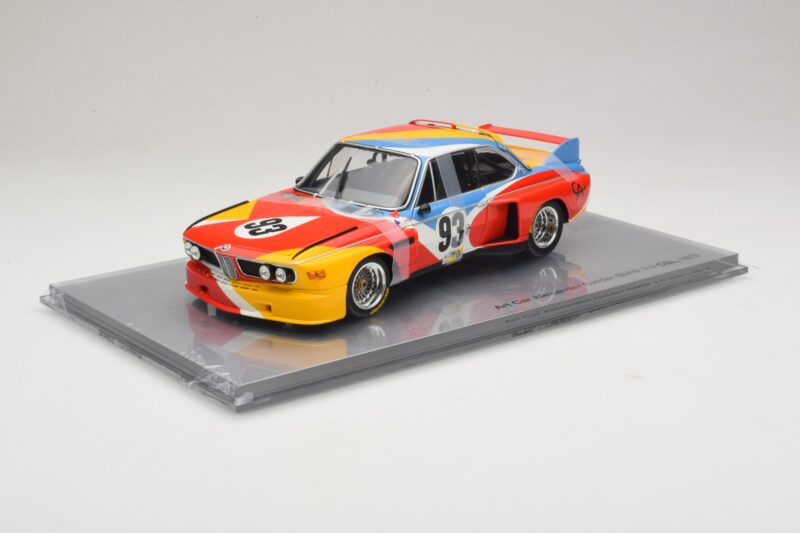
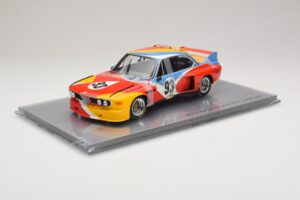
Minichamps' 1:18 diecast BMW 3.0 CSL recreates the first BMW Art Car, painted freehand by Alexander Calder for the 1975 24 Hours of Le Mans. Driven by Hervé Poulain, Sam Posey and Jean Guichet, car number 51 carried Calder's swirling colour scheme across a Group 5 racing body. Doors, bonnet and boot open on this diecast, revealing the stripped cockpit beneath livery that still defines the Art Car programme today. A genuine conversation piece for any BMW or motorsport-art display.
1 / 7
[{"index":0,"id":"1691041","thumb":"https:\/\/models118.co.uk\/wp-content\/uploads\/2026\/10\/bmw-3-0-csl-art-car-alexander-calder-51-h-poulain-s-posey-j-guichet-24-hours-of-le-mans-1975-minichamps-1-18-80430150918-1-1-300x200.jpg","medium":"https:\/\/models118.co.uk\/wp-content\/uploads\/2026\/10\/bmw-3-0-csl-art-car-alexander-calder-51-h-poulain-s-posey-j-guichet-24-hours-of-le-mans-1975-minichamps-1-18-80430150918-1-1-800x533.jpg","full":"https:\/\/models118.co.uk\/wp-content\/uploads\/2026\/10\/bmw-3-0-csl-art-car-alexander-calder-51-h-poulain-s-posey-j-guichet-24-hours-of-le-mans-1975-minichamps-1-18-80430150918-1-1.jpg","srcset":"https:\/\/models118.co.uk\/wp-content\/uploads\/2026\/10\/bmw-3-0-csl-art-car-alexander-calder-51-h-poulain-s-posey-j-guichet-24-hours-of-le-mans-1975-minichamps-1-18-80430150918-1-1-800x533.jpg 800w, https:\/\/models118.co.uk\/wp-content\/uploads\/2026\/10\/bmw-3-0-csl-art-car-alexander-calder-51-h-poulain-s-posey-j-guichet-24-hours-of-le-mans-1975-minichamps-1-18-80430150918-1-1-300x200.jpg 300w, https:\/\/models118.co.uk\/wp-content\/uploads\/2026\/10\/bmw-3-0-csl-art-car-alexander-calder-51-h-poulain-s-posey-j-guichet-24-hours-of-le-mans-1975-minichamps-1-18-80430150918-1-1-64x43.jpg 64w, https:\/\/models118.co.uk\/wp-content\/uploads\/2026\/10\/bmw-3-0-csl-art-car-alexander-calder-51-h-poulain-s-posey-j-guichet-24-hours-of-le-mans-1975-minichamps-1-18-80430150918-1-1.jpg 1800w","sizes":"(max-width: 1023px) 400px, 640px","srcsetAvif":"https:\/\/models118.co.uk\/wp-content\/uploads\/2026\/10\/bmw-3-0-csl-art-car-alexander-calder-51-h-poulain-s-posey-j-guichet-24-hours-of-le-mans-1975-minichamps-1-18-80430150918-1-1-800x533.jpg.avif 800w, https:\/\/models118.co.uk\/wp-content\/uploads\/2026\/10\/bmw-3-0-csl-art-car-alexander-calder-51-h-poulain-s-posey-j-guichet-24-hours-of-le-mans-1975-minichamps-1-18-80430150918-1-1-300x200.jpg.avif 300w, https:\/\/models118.co.uk\/wp-content\/uploads\/2026\/10\/bmw-3-0-csl-art-car-alexander-calder-51-h-poulain-s-posey-j-guichet-24-hours-of-le-mans-1975-minichamps-1-18-80430150918-1-1-64x43.jpg.avif 64w, https:\/\/models118.co.uk\/wp-content\/uploads\/2026\/10\/bmw-3-0-csl-art-car-alexander-calder-51-h-poulain-s-posey-j-guichet-24-hours-of-le-mans-1975-minichamps-1-18-80430150918-1-1.jpg.avif 1800w","srcsetWebp":"https:\/\/models118.co.uk\/wp-content\/uploads\/2026\/10\/bmw-3-0-csl-art-car-alexander-calder-51-h-poulain-s-posey-j-guichet-24-hours-of-le-mans-1975-minichamps-1-18-80430150918-1-1-800x533.jpg.webp 800w, https:\/\/models118.co.uk\/wp-content\/uploads\/2026\/10\/bmw-3-0-csl-art-car-alexander-calder-51-h-poulain-s-posey-j-guichet-24-hours-of-le-mans-1975-minichamps-1-18-80430150918-1-1-300x200.jpg.webp 300w, https:\/\/models118.co.uk\/wp-content\/uploads\/2026\/10\/bmw-3-0-csl-art-car-alexander-calder-51-h-poulain-s-posey-j-guichet-24-hours-of-le-mans-1975-minichamps-1-18-80430150918-1-1-64x43.jpg.webp 64w, https:\/\/models118.co.uk\/wp-content\/uploads\/2026\/10\/bmw-3-0-csl-art-car-alexander-calder-51-h-poulain-s-posey-j-guichet-24-hours-of-le-mans-1975-minichamps-1-18-80430150918-1-1.jpg.webp 1800w","alt":"BMW 3.0 CSL Art Car Alexander Calder #51 H. Poulain \/ S. Posey \/ J. Guichet 24 Hours of Le Mans 1975 Minichamps 1:18 80430150"},{"index":1,"id":1691042,"thumb":"https:\/\/models118.co.uk\/wp-content\/uploads\/2026\/10\/bmw-3-0-csl-art-car-alexander-calder-51-h-poulain-s-posey-j-guichet-24-hours-of-le-mans-1975-minichamps-1-18-80430150918-1-300x200.jpg","medium":"https:\/\/models118.co.uk\/wp-content\/uploads\/2026\/10\/bmw-3-0-csl-art-car-alexander-calder-51-h-poulain-s-posey-j-guichet-24-hours-of-le-mans-1975-minichamps-1-18-80430150918-1-800x533.jpg","full":"https:\/\/models118.co.uk\/wp-content\/uploads\/2026\/10\/bmw-3-0-csl-art-car-alexander-calder-51-h-poulain-s-posey-j-guichet-24-hours-of-le-mans-1975-minichamps-1-18-80430150918-1.jpg","srcset":"https:\/\/models118.co.uk\/wp-content\/uploads\/2026\/10\/bmw-3-0-csl-art-car-alexander-calder-51-h-poulain-s-posey-j-guichet-24-hours-of-le-mans-1975-minichamps-1-18-80430150918-1-800x533.jpg 800w, https:\/\/models118.co.uk\/wp-content\/uploads\/2026\/10\/bmw-3-0-csl-art-car-alexander-calder-51-h-poulain-s-posey-j-guichet-24-hours-of-le-mans-1975-minichamps-1-18-80430150918-1-300x200.jpg 300w, https:\/\/models118.co.uk\/wp-content\/uploads\/2026\/10\/bmw-3-0-csl-art-car-alexander-calder-51-h-poulain-s-posey-j-guichet-24-hours-of-le-mans-1975-minichamps-1-18-80430150918-1-64x43.jpg 64w, https:\/\/models118.co.uk\/wp-content\/uploads\/2026\/10\/bmw-3-0-csl-art-car-alexander-calder-51-h-poulain-s-posey-j-guichet-24-hours-of-le-mans-1975-minichamps-1-18-80430150918-1.jpg 1800w","sizes":"(max-width: 1023px) 400px, 640px","srcsetAvif":"https:\/\/models118.co.uk\/wp-content\/uploads\/2026\/10\/bmw-3-0-csl-art-car-alexander-calder-51-h-poulain-s-posey-j-guichet-24-hours-of-le-mans-1975-minichamps-1-18-80430150918-1-800x533.jpg.avif 800w, https:\/\/models118.co.uk\/wp-content\/uploads\/2026\/10\/bmw-3-0-csl-art-car-alexander-calder-51-h-poulain-s-posey-j-guichet-24-hours-of-le-mans-1975-minichamps-1-18-80430150918-1-300x200.jpg.avif 300w, https:\/\/models118.co.uk\/wp-content\/uploads\/2026\/10\/bmw-3-0-csl-art-car-alexander-calder-51-h-poulain-s-posey-j-guichet-24-hours-of-le-mans-1975-minichamps-1-18-80430150918-1-64x43.jpg.avif 64w, https:\/\/models118.co.uk\/wp-content\/uploads\/2026\/10\/bmw-3-0-csl-art-car-alexander-calder-51-h-poulain-s-posey-j-guichet-24-hours-of-le-mans-1975-minichamps-1-18-80430150918-1.jpg.avif 1800w","srcsetWebp":"https:\/\/models118.co.uk\/wp-content\/uploads\/2026\/10\/bmw-3-0-csl-art-car-alexander-calder-51-h-poulain-s-posey-j-guichet-24-hours-of-le-mans-1975-minichamps-1-18-80430150918-1-800x533.jpg.webp 800w, https:\/\/models118.co.uk\/wp-content\/uploads\/2026\/10\/bmw-3-0-csl-art-car-alexander-calder-51-h-poulain-s-posey-j-guichet-24-hours-of-le-mans-1975-minichamps-1-18-80430150918-1-300x200.jpg.webp 300w, https:\/\/models118.co.uk\/wp-content\/uploads\/2026\/10\/bmw-3-0-csl-art-car-alexander-calder-51-h-poulain-s-posey-j-guichet-24-hours-of-le-mans-1975-minichamps-1-18-80430150918-1-64x43.jpg.webp 64w, https:\/\/models118.co.uk\/wp-content\/uploads\/2026\/10\/bmw-3-0-csl-art-car-alexander-calder-51-h-poulain-s-posey-j-guichet-24-hours-of-le-mans-1975-minichamps-1-18-80430150918-1.jpg.webp 1800w","alt":"BMW 3.0 CSL Art Car Alexander Calder #51 H. Poulain \/ S. Posey \/ J. Guichet 24 Hours of Le Mans 1975 Minichamps 1:18 80430150 \u2014 photo 2 of 7"},{"index":2,"id":1691043,"thumb":"https:\/\/models118.co.uk\/wp-content\/uploads\/2026\/10\/bmw-3-0-csl-art-car-alexander-calder-51-h-poulain-s-posey-j-guichet-24-hours-of-le-mans-1975-minichamps-1-18-80430150918-2-300x200.jpg","medium":"https:\/\/models118.co.uk\/wp-content\/uploads\/2026\/10\/bmw-3-0-csl-art-car-alexander-calder-51-h-poulain-s-posey-j-guichet-24-hours-of-le-mans-1975-minichamps-1-18-80430150918-2-800x533.jpg","full":"https:\/\/models118.co.uk\/wp-content\/uploads\/2026\/10\/bmw-3-0-csl-art-car-alexander-calder-51-h-poulain-s-posey-j-guichet-24-hours-of-le-mans-1975-minichamps-1-18-80430150918-2.jpg","srcset":"https:\/\/models118.co.uk\/wp-content\/uploads\/2026\/10\/bmw-3-0-csl-art-car-alexander-calder-51-h-poulain-s-posey-j-guichet-24-hours-of-le-mans-1975-minichamps-1-18-80430150918-2-800x533.jpg 800w, https:\/\/models118.co.uk\/wp-content\/uploads\/2026\/10\/bmw-3-0-csl-art-car-alexander-calder-51-h-poulain-s-posey-j-guichet-24-hours-of-le-mans-1975-minichamps-1-18-80430150918-2-300x200.jpg 300w, https:\/\/models118.co.uk\/wp-content\/uploads\/2026\/10\/bmw-3-0-csl-art-car-alexander-calder-51-h-poulain-s-posey-j-guichet-24-hours-of-le-mans-1975-minichamps-1-18-80430150918-2-64x43.jpg 64w, https:\/\/models118.co.uk\/wp-content\/uploads\/2026\/10\/bmw-3-0-csl-art-car-alexander-calder-51-h-poulain-s-posey-j-guichet-24-hours-of-le-mans-1975-minichamps-1-18-80430150918-2.jpg 1800w","sizes":"(max-width: 1023px) 400px, 640px","srcsetAvif":"https:\/\/models118.co.uk\/wp-content\/uploads\/2026\/10\/bmw-3-0-csl-art-car-alexander-calder-51-h-poulain-s-posey-j-guichet-24-hours-of-le-mans-1975-minichamps-1-18-80430150918-2-800x533.jpg.avif 800w, https:\/\/models118.co.uk\/wp-content\/uploads\/2026\/10\/bmw-3-0-csl-art-car-alexander-calder-51-h-poulain-s-posey-j-guichet-24-hours-of-le-mans-1975-minichamps-1-18-80430150918-2-300x200.jpg.avif 300w, https:\/\/models118.co.uk\/wp-content\/uploads\/2026\/10\/bmw-3-0-csl-art-car-alexander-calder-51-h-poulain-s-posey-j-guichet-24-hours-of-le-mans-1975-minichamps-1-18-80430150918-2-64x43.jpg.avif 64w, https:\/\/models118.co.uk\/wp-content\/uploads\/2026\/10\/bmw-3-0-csl-art-car-alexander-calder-51-h-poulain-s-posey-j-guichet-24-hours-of-le-mans-1975-minichamps-1-18-80430150918-2.jpg.avif 1800w","srcsetWebp":"https:\/\/models118.co.uk\/wp-content\/uploads\/2026\/10\/bmw-3-0-csl-art-car-alexander-calder-51-h-poulain-s-posey-j-guichet-24-hours-of-le-mans-1975-minichamps-1-18-80430150918-2-800x533.jpg.webp 800w, https:\/\/models118.co.uk\/wp-content\/uploads\/2026\/10\/bmw-3-0-csl-art-car-alexander-calder-51-h-poulain-s-posey-j-guichet-24-hours-of-le-mans-1975-minichamps-1-18-80430150918-2-300x200.jpg.webp 300w, https:\/\/models118.co.uk\/wp-content\/uploads\/2026\/10\/bmw-3-0-csl-art-car-alexander-calder-51-h-poulain-s-posey-j-guichet-24-hours-of-le-mans-1975-minichamps-1-18-80430150918-2-64x43.jpg.webp 64w, https:\/\/models118.co.uk\/wp-content\/uploads\/2026\/10\/bmw-3-0-csl-art-car-alexander-calder-51-h-poulain-s-posey-j-guichet-24-hours-of-le-mans-1975-minichamps-1-18-80430150918-2.jpg.webp 1800w","alt":"BMW 3.0 CSL Art Car Alexander Calder #51 H. Poulain \/ S. Posey \/ J. Guichet 24 Hours of Le Mans 1975 Minichamps 1:18 80430150 \u2014 photo 3 of 7"},{"index":3,"id":1691044,"thumb":"https:\/\/models118.co.uk\/wp-content\/uploads\/2026\/10\/bmw-3-0-csl-art-car-alexander-calder-51-h-poulain-s-posey-j-guichet-24-hours-of-le-mans-1975-minichamps-1-18-80430150918-3-300x200.jpg","medium":"https:\/\/models118.co.uk\/wp-content\/uploads\/2026\/10\/bmw-3-0-csl-art-car-alexander-calder-51-h-poulain-s-posey-j-guichet-24-hours-of-le-mans-1975-minichamps-1-18-80430150918-3-800x533.jpg","full":"https:\/\/models118.co.uk\/wp-content\/uploads\/2026\/10\/bmw-3-0-csl-art-car-alexander-calder-51-h-poulain-s-posey-j-guichet-24-hours-of-le-mans-1975-minichamps-1-18-80430150918-3.jpg","srcset":"https:\/\/models118.co.uk\/wp-content\/uploads\/2026\/10\/bmw-3-0-csl-art-car-alexander-calder-51-h-poulain-s-posey-j-guichet-24-hours-of-le-mans-1975-minichamps-1-18-80430150918-3-800x533.jpg 800w, https:\/\/models118.co.uk\/wp-content\/uploads\/2026\/10\/bmw-3-0-csl-art-car-alexander-calder-51-h-poulain-s-posey-j-guichet-24-hours-of-le-mans-1975-minichamps-1-18-80430150918-3-300x200.jpg 300w, https:\/\/models118.co.uk\/wp-content\/uploads\/2026\/10\/bmw-3-0-csl-art-car-alexander-calder-51-h-poulain-s-posey-j-guichet-24-hours-of-le-mans-1975-minichamps-1-18-80430150918-3-64x43.jpg 64w, https:\/\/models118.co.uk\/wp-content\/uploads\/2026\/10\/bmw-3-0-csl-art-car-alexander-calder-51-h-poulain-s-posey-j-guichet-24-hours-of-le-mans-1975-minichamps-1-18-80430150918-3.jpg 1800w","sizes":"(max-width: 1023px) 400px, 640px","srcsetAvif":"https:\/\/models118.co.uk\/wp-content\/uploads\/2026\/10\/bmw-3-0-csl-art-car-alexander-calder-51-h-poulain-s-posey-j-guichet-24-hours-of-le-mans-1975-minichamps-1-18-80430150918-3-800x533.jpg.avif 800w, https:\/\/models118.co.uk\/wp-content\/uploads\/2026\/10\/bmw-3-0-csl-art-car-alexander-calder-51-h-poulain-s-posey-j-guichet-24-hours-of-le-mans-1975-minichamps-1-18-80430150918-3-300x200.jpg.avif 300w, https:\/\/models118.co.uk\/wp-content\/uploads\/2026\/10\/bmw-3-0-csl-art-car-alexander-calder-51-h-poulain-s-posey-j-guichet-24-hours-of-le-mans-1975-minichamps-1-18-80430150918-3-64x43.jpg.avif 64w, https:\/\/models118.co.uk\/wp-content\/uploads\/2026\/10\/bmw-3-0-csl-art-car-alexander-calder-51-h-poulain-s-posey-j-guichet-24-hours-of-le-mans-1975-minichamps-1-18-80430150918-3.jpg.avif 1800w","srcsetWebp":"https:\/\/models118.co.uk\/wp-content\/uploads\/2026\/10\/bmw-3-0-csl-art-car-alexander-calder-51-h-poulain-s-posey-j-guichet-24-hours-of-le-mans-1975-minichamps-1-18-80430150918-3-800x533.jpg.webp 800w, https:\/\/models118.co.uk\/wp-content\/uploads\/2026\/10\/bmw-3-0-csl-art-car-alexander-calder-51-h-poulain-s-posey-j-guichet-24-hours-of-le-mans-1975-minichamps-1-18-80430150918-3-300x200.jpg.webp 300w, https:\/\/models118.co.uk\/wp-content\/uploads\/2026\/10\/bmw-3-0-csl-art-car-alexander-calder-51-h-poulain-s-posey-j-guichet-24-hours-of-le-mans-1975-minichamps-1-18-80430150918-3-64x43.jpg.webp 64w, https:\/\/models118.co.uk\/wp-content\/uploads\/2026\/10\/bmw-3-0-csl-art-car-alexander-calder-51-h-poulain-s-posey-j-guichet-24-hours-of-le-mans-1975-minichamps-1-18-80430150918-3.jpg.webp 1800w","alt":"BMW 3.0 CSL Art Car Alexander Calder #51 H. Poulain \/ S. Posey \/ J. Guichet 24 Hours of Le Mans 1975 Minichamps 1:18 80430150 \u2014 photo 4 of 7"},{"index":4,"id":1691045,"thumb":"https:\/\/models118.co.uk\/wp-content\/uploads\/2026\/10\/bmw-3-0-csl-art-car-alexander-calder-51-h-poulain-s-posey-j-guichet-24-hours-of-le-mans-1975-minichamps-1-18-80430150918-4-300x200.jpg","medium":"https:\/\/models118.co.uk\/wp-content\/uploads\/2026\/10\/bmw-3-0-csl-art-car-alexander-calder-51-h-poulain-s-posey-j-guichet-24-hours-of-le-mans-1975-minichamps-1-18-80430150918-4-800x533.jpg","full":"https:\/\/models118.co.uk\/wp-content\/uploads\/2026\/10\/bmw-3-0-csl-art-car-alexander-calder-51-h-poulain-s-posey-j-guichet-24-hours-of-le-mans-1975-minichamps-1-18-80430150918-4.jpg","srcset":"https:\/\/models118.co.uk\/wp-content\/uploads\/2026\/10\/bmw-3-0-csl-art-car-alexander-calder-51-h-poulain-s-posey-j-guichet-24-hours-of-le-mans-1975-minichamps-1-18-80430150918-4-800x533.jpg 800w, https:\/\/models118.co.uk\/wp-content\/uploads\/2026\/10\/bmw-3-0-csl-art-car-alexander-calder-51-h-poulain-s-posey-j-guichet-24-hours-of-le-mans-1975-minichamps-1-18-80430150918-4-300x200.jpg 300w, https:\/\/models118.co.uk\/wp-content\/uploads\/2026\/10\/bmw-3-0-csl-art-car-alexander-calder-51-h-poulain-s-posey-j-guichet-24-hours-of-le-mans-1975-minichamps-1-18-80430150918-4-64x43.jpg 64w, https:\/\/models118.co.uk\/wp-content\/uploads\/2026\/10\/bmw-3-0-csl-art-car-alexander-calder-51-h-poulain-s-posey-j-guichet-24-hours-of-le-mans-1975-minichamps-1-18-80430150918-4.jpg 1800w","sizes":"(max-width: 1023px) 400px, 640px","srcsetAvif":"https:\/\/models118.co.uk\/wp-content\/uploads\/2026\/10\/bmw-3-0-csl-art-car-alexander-calder-51-h-poulain-s-posey-j-guichet-24-hours-of-le-mans-1975-minichamps-1-18-80430150918-4-800x533.jpg.avif 800w, https:\/\/models118.co.uk\/wp-content\/uploads\/2026\/10\/bmw-3-0-csl-art-car-alexander-calder-51-h-poulain-s-posey-j-guichet-24-hours-of-le-mans-1975-minichamps-1-18-80430150918-4-300x200.jpg.avif 300w, https:\/\/models118.co.uk\/wp-content\/uploads\/2026\/10\/bmw-3-0-csl-art-car-alexander-calder-51-h-poulain-s-posey-j-guichet-24-hours-of-le-mans-1975-minichamps-1-18-80430150918-4-64x43.jpg.avif 64w, https:\/\/models118.co.uk\/wp-content\/uploads\/2026\/10\/bmw-3-0-csl-art-car-alexander-calder-51-h-poulain-s-posey-j-guichet-24-hours-of-le-mans-1975-minichamps-1-18-80430150918-4.jpg.avif 1800w","srcsetWebp":"https:\/\/models118.co.uk\/wp-content\/uploads\/2026\/10\/bmw-3-0-csl-art-car-alexander-calder-51-h-poulain-s-posey-j-guichet-24-hours-of-le-mans-1975-minichamps-1-18-80430150918-4-800x533.jpg.webp 800w, https:\/\/models118.co.uk\/wp-content\/uploads\/2026\/10\/bmw-3-0-csl-art-car-alexander-calder-51-h-poulain-s-posey-j-guichet-24-hours-of-le-mans-1975-minichamps-1-18-80430150918-4-300x200.jpg.webp 300w, https:\/\/models118.co.uk\/wp-content\/uploads\/2026\/10\/bmw-3-0-csl-art-car-alexander-calder-51-h-poulain-s-posey-j-guichet-24-hours-of-le-mans-1975-minichamps-1-18-80430150918-4-64x43.jpg.webp 64w, https:\/\/models118.co.uk\/wp-content\/uploads\/2026\/10\/bmw-3-0-csl-art-car-alexander-calder-51-h-poulain-s-posey-j-guichet-24-hours-of-le-mans-1975-minichamps-1-18-80430150918-4.jpg.webp 1800w","alt":"BMW 3.0 CSL Art Car Alexander Calder #51 H. Poulain \/ S. Posey \/ J. Guichet 24 Hours of Le Mans 1975 Minichamps 1:18 80430150 \u2014 photo 5 of 7"},{"index":5,"id":1691046,"thumb":"https:\/\/models118.co.uk\/wp-content\/uploads\/2026\/10\/bmw-3-0-csl-art-car-alexander-calder-51-h-poulain-s-posey-j-guichet-24-hours-of-le-mans-1975-minichamps-1-18-80430150918-5-300x200.jpg","medium":"https:\/\/models118.co.uk\/wp-content\/uploads\/2026\/10\/bmw-3-0-csl-art-car-alexander-calder-51-h-poulain-s-posey-j-guichet-24-hours-of-le-mans-1975-minichamps-1-18-80430150918-5-800x533.jpg","full":"https:\/\/models118.co.uk\/wp-content\/uploads\/2026\/10\/bmw-3-0-csl-art-car-alexander-calder-51-h-poulain-s-posey-j-guichet-24-hours-of-le-mans-1975-minichamps-1-18-80430150918-5.jpg","srcset":"https:\/\/models118.co.uk\/wp-content\/uploads\/2026\/10\/bmw-3-0-csl-art-car-alexander-calder-51-h-poulain-s-posey-j-guichet-24-hours-of-le-mans-1975-minichamps-1-18-80430150918-5-800x533.jpg 800w, https:\/\/models118.co.uk\/wp-content\/uploads\/2026\/10\/bmw-3-0-csl-art-car-alexander-calder-51-h-poulain-s-posey-j-guichet-24-hours-of-le-mans-1975-minichamps-1-18-80430150918-5-300x200.jpg 300w, https:\/\/models118.co.uk\/wp-content\/uploads\/2026\/10\/bmw-3-0-csl-art-car-alexander-calder-51-h-poulain-s-posey-j-guichet-24-hours-of-le-mans-1975-minichamps-1-18-80430150918-5-64x43.jpg 64w, https:\/\/models118.co.uk\/wp-content\/uploads\/2026\/10\/bmw-3-0-csl-art-car-alexander-calder-51-h-poulain-s-posey-j-guichet-24-hours-of-le-mans-1975-minichamps-1-18-80430150918-5.jpg 1800w","sizes":"(max-width: 1023px) 400px, 640px","srcsetAvif":"https:\/\/models118.co.uk\/wp-content\/uploads\/2026\/10\/bmw-3-0-csl-art-car-alexander-calder-51-h-poulain-s-posey-j-guichet-24-hours-of-le-mans-1975-minichamps-1-18-80430150918-5-800x533.jpg.avif 800w, https:\/\/models118.co.uk\/wp-content\/uploads\/2026\/10\/bmw-3-0-csl-art-car-alexander-calder-51-h-poulain-s-posey-j-guichet-24-hours-of-le-mans-1975-minichamps-1-18-80430150918-5-300x200.jpg.avif 300w, https:\/\/models118.co.uk\/wp-content\/uploads\/2026\/10\/bmw-3-0-csl-art-car-alexander-calder-51-h-poulain-s-posey-j-guichet-24-hours-of-le-mans-1975-minichamps-1-18-80430150918-5-64x43.jpg.avif 64w, https:\/\/models118.co.uk\/wp-content\/uploads\/2026\/10\/bmw-3-0-csl-art-car-alexander-calder-51-h-poulain-s-posey-j-guichet-24-hours-of-le-mans-1975-minichamps-1-18-80430150918-5.jpg.avif 1800w","srcsetWebp":"https:\/\/models118.co.uk\/wp-content\/uploads\/2026\/10\/bmw-3-0-csl-art-car-alexander-calder-51-h-poulain-s-posey-j-guichet-24-hours-of-le-mans-1975-minichamps-1-18-80430150918-5-800x533.jpg.webp 800w, https:\/\/models118.co.uk\/wp-content\/uploads\/2026\/10\/bmw-3-0-csl-art-car-alexander-calder-51-h-poulain-s-posey-j-guichet-24-hours-of-le-mans-1975-minichamps-1-18-80430150918-5-300x200.jpg.webp 300w, https:\/\/models118.co.uk\/wp-content\/uploads\/2026\/10\/bmw-3-0-csl-art-car-alexander-calder-51-h-poulain-s-posey-j-guichet-24-hours-of-le-mans-1975-minichamps-1-18-80430150918-5-64x43.jpg.webp 64w, https:\/\/models118.co.uk\/wp-content\/uploads\/2026\/10\/bmw-3-0-csl-art-car-alexander-calder-51-h-poulain-s-posey-j-guichet-24-hours-of-le-mans-1975-minichamps-1-18-80430150918-5.jpg.webp 1800w","alt":"BMW 3.0 CSL Art Car Alexander Calder #51 H. Poulain \/ S. Posey \/ J. Guichet 24 Hours of Le Mans 1975 Minichamps 1:18 80430150 \u2014 photo 6 of 7"},{"index":6,"id":1691047,"thumb":"https:\/\/models118.co.uk\/wp-content\/uploads\/2026\/10\/bmw-3-0-csl-art-car-alexander-calder-51-h-poulain-s-posey-j-guichet-24-hours-of-le-mans-1975-minichamps-1-18-80430150918-6-300x200.jpg","medium":"https:\/\/models118.co.uk\/wp-content\/uploads\/2026\/10\/bmw-3-0-csl-art-car-alexander-calder-51-h-poulain-s-posey-j-guichet-24-hours-of-le-mans-1975-minichamps-1-18-80430150918-6-800x533.jpg","full":"https:\/\/models118.co.uk\/wp-content\/uploads\/2026\/10\/bmw-3-0-csl-art-car-alexander-calder-51-h-poulain-s-posey-j-guichet-24-hours-of-le-mans-1975-minichamps-1-18-80430150918-6.jpg","srcset":"https:\/\/models118.co.uk\/wp-content\/uploads\/2026\/10\/bmw-3-0-csl-art-car-alexander-calder-51-h-poulain-s-posey-j-guichet-24-hours-of-le-mans-1975-minichamps-1-18-80430150918-6-800x533.jpg 800w, https:\/\/models118.co.uk\/wp-content\/uploads\/2026\/10\/bmw-3-0-csl-art-car-alexander-calder-51-h-poulain-s-posey-j-guichet-24-hours-of-le-mans-1975-minichamps-1-18-80430150918-6-300x200.jpg 300w, https:\/\/models118.co.uk\/wp-content\/uploads\/2026\/10\/bmw-3-0-csl-art-car-alexander-calder-51-h-poulain-s-posey-j-guichet-24-hours-of-le-mans-1975-minichamps-1-18-80430150918-6-64x43.jpg 64w, https:\/\/models118.co.uk\/wp-content\/uploads\/2026\/10\/bmw-3-0-csl-art-car-alexander-calder-51-h-poulain-s-posey-j-guichet-24-hours-of-le-mans-1975-minichamps-1-18-80430150918-6.jpg 1800w","sizes":"(max-width: 1023px) 400px, 640px","srcsetAvif":"https:\/\/models118.co.uk\/wp-content\/uploads\/2026\/10\/bmw-3-0-csl-art-car-alexander-calder-51-h-poulain-s-posey-j-guichet-24-hours-of-le-mans-1975-minichamps-1-18-80430150918-6-800x533.jpg.avif 800w, https:\/\/models118.co.uk\/wp-content\/uploads\/2026\/10\/bmw-3-0-csl-art-car-alexander-calder-51-h-poulain-s-posey-j-guichet-24-hours-of-le-mans-1975-minichamps-1-18-80430150918-6-300x200.jpg.avif 300w, https:\/\/models118.co.uk\/wp-content\/uploads\/2026\/10\/bmw-3-0-csl-art-car-alexander-calder-51-h-poulain-s-posey-j-guichet-24-hours-of-le-mans-1975-minichamps-1-18-80430150918-6-64x43.jpg.avif 64w, https:\/\/models118.co.uk\/wp-content\/uploads\/2026\/10\/bmw-3-0-csl-art-car-alexander-calder-51-h-poulain-s-posey-j-guichet-24-hours-of-le-mans-1975-minichamps-1-18-80430150918-6.jpg.avif 1800w","srcsetWebp":"https:\/\/models118.co.uk\/wp-content\/uploads\/2026\/10\/bmw-3-0-csl-art-car-alexander-calder-51-h-poulain-s-posey-j-guichet-24-hours-of-le-mans-1975-minichamps-1-18-80430150918-6-800x533.jpg.webp 800w, https:\/\/models118.co.uk\/wp-content\/uploads\/2026\/10\/bmw-3-0-csl-art-car-alexander-calder-51-h-poulain-s-posey-j-guichet-24-hours-of-le-mans-1975-minichamps-1-18-80430150918-6-300x200.jpg.webp 300w, https:\/\/models118.co.uk\/wp-content\/uploads\/2026\/10\/bmw-3-0-csl-art-car-alexander-calder-51-h-poulain-s-posey-j-guichet-24-hours-of-le-mans-1975-minichamps-1-18-80430150918-6-64x43.jpg.webp 64w, https:\/\/models118.co.uk\/wp-content\/uploads\/2026\/10\/bmw-3-0-csl-art-car-alexander-calder-51-h-poulain-s-posey-j-guichet-24-hours-of-le-mans-1975-minichamps-1-18-80430150918-6.jpg.webp 1800w","alt":"BMW 3.0 CSL Art Car Alexander Calder #51 H. Poulain \/ S. Posey \/ J. Guichet 24 Hours of Le Mans 1975 Minichamps 1:18 80430150 \u2014 photo 7 of 7"}]
BMW 3.0 CSL Art Car Alexander Calder #51 H. Poulain / S. Posey / J. Guichet 24 Hours of Le Mans 1975 Minichamps 1:18
About the BMW 3.0 CSL Art Car Alexander Calder #51 H. Poulain / S. Posey / J. Guichet 24 Hours of Le Mans 1975 Minichamps 1:18
TL;DR: Minichamps' 1:18 BMW 3.0 CSL recreates the 1975 Le Mans entry painted by Alexander Calder, the first BMW Art Car, driven by Hervé Poulain, Sam Posey and Jean Guichet. The diecast body opens at doors, bonnet and boot, with Calder's freehand colour scheme reproduced across every panel.
Hervé Poulain conceived the BMW Art Car project to fuse motorsport and contemporary art, and Alexander Calder was the first artist he approached. The result raced at Le Mans in 1975, carrying free-flowing colour across bodywork built for competition rather than canvas. Minichamps renders that pairing in zinc alloy, scaled to sit convincingly on a shelf.
Minichamps' BMW 3.0 CSL Build and Opening Panels
Calder's Livery in Tampo Print
Reproducing a hand-painted livery in miniature is harder than reproducing a factory colour code, and this is where tampo printing earns its keep. Calder worked directly on the bodywork with brushes, laying down broad, free-flowing bands of colour that ignore panel lines entirely, sweeping from bonnet to boot without regard for where one body section meets the next. Minichamps prints that artwork in careful registration across the diecast shell, so the bands continue unbroken over the wheel arches and door edges exactly as Calder intended. Car number 51 sits clearly on the doors, and the surrounding sponsor and class markings stay sharp under close inspection, a sign of a confident print run.
Doors, Bonnet and Boot on a Racing Shell
This diecast opens at the doors, bonnet and boot, and lifting any of them reveals the stripped-out cockpit the real CSL ran at Le Mans: a roll cage, a single racing seat, and none of the trim a road car would carry. The zinc alloy body has real heft in the hand, and that density carries through to how the opening panels settle once released, holding their position rather than drifting shut. Cracking the bonnet exposes an engine bay detailed to match the competition specification beneath the paintwork, which is where a Group 5 CSL differs most from a road-going 3.0 CSL and where this model earns its racing credentials.
Hervé Poulain's Art Car and the 1975 Le Mans Grid
From Commission to Canvas on Wheels
Hervé Poulain raced BMWs and dealt in contemporary art, and he put those two interests together by asking Alexander Calder to paint a car he intended to drive at Le Mans. BMW agreed to supply a competition 3.0 CSL rather than a static display piece, which meant the artwork had to survive an actual 24-hour race rather than sit under gallery lighting. Calder painted the CSL freehand in his Connecticut studio, and the finished car went straight from that session to the circuit. The idea proved durable enough that BMW turned it into an ongoing programme, but this CSL was the one that started it, in full competition trim.
Poulain, Posey and Guichet in Car Number 51
Poulain shared driving duties with Sam Posey, an American road racer known on both sides of the Atlantic, and Jean Guichet, a Frenchman who had already won Le Mans outright in a Ferrari a decade earlier. That crew brought genuine competition pedigree to a car that could easily have been dismissed as a novelty. The 3.0 CSL itself carried a strong Group 5 record through the mid-1970s, built on the same homologation special that earned the nickname Batmobile for its aerodynamic addenda, so the chassis underneath Calder's paint was already a proven race winner before it ever wore colour, a pedigree that gives the livery genuine sporting weight.
Collecting the BMW Art Car Series
This CSL anchors two collecting threads at once: the BMW Art Car series, now numbering well beyond Calder's original, and the Group 5 CSL racing lineage that includes the striped Batmobile liveries more familiar to touring car fans. Displayed next to a standard-liveried CSL, the contrast does the explaining for you, since nothing about Calder's brushwork looks like it was designed by an engineer. At this scale and tier, Minichamps keeps the diecast construction of its racing CSLs consistent, so panel fit and paint depth read the same across the wider range, which matters for building out several Le Mans-era CSLs side by side.
Create a free account and claim 5% off your first order — from hundreds of collectible 1:18, 1:43 and 1:12 models by Porsche, Mercedes-Benz, BMW and more.
{"id":1688725,"name":"BMW 3.0 CSL Art Car Alexander Calder #51 H. Poulain \/ S. Posey \/ J. Guichet 24 Hours of Le Mans 1975 Minichamps 1:18","price":"£<\/span>531.67<\/bdi><\/span>","image":"https:\/\/models118.co.uk\/wp-content\/uploads\/2026\/10\/bmw-3-0-csl-art-car-alexander-calder-51-h-poulain-s-posey-j-guichet-24-hours-of-le-mans-1975-minichamps-1-18-80430150918-1-1-400x400.jpg","permalink":"https:\/\/models118.co.uk\/bmw-3-0-csl-art-car-alexander-calder-51-h-poulain-s-posey-j-guichet-24-hours-of-le-mans-1975-minichamps-1-18-80430150918\/","brand":"BMW"}