Used
Back in stock

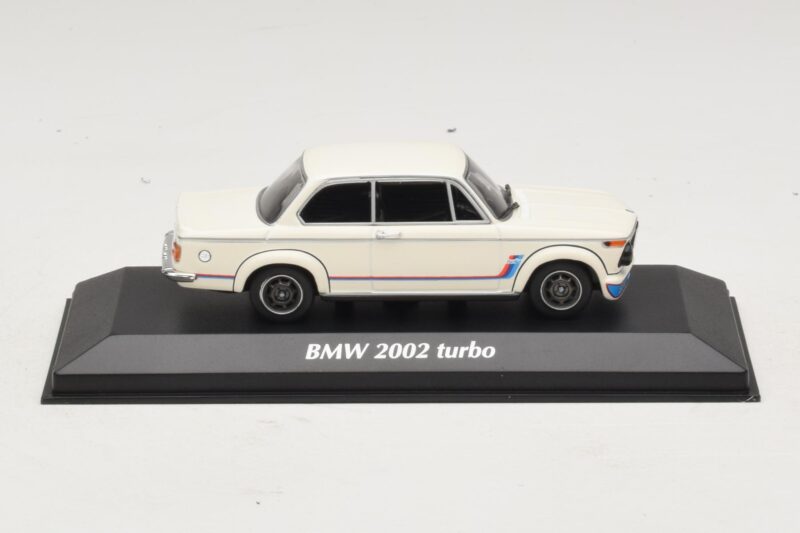
TL;DR: Maxichamps' 1:43 BMW 2002 Turbo reproduces the 1973 white coupe, Europe's first turbocharged production car, complete with the famous mirror-image spoiler lettering. Cast as a sealed one-piece diecast body, it suits collectors chasing landmark BMW engineering or 1970s classic sports coupes.
BMW timed the 2002 Turbo about as badly as any car launch in history, unveiling Europe's first turbocharged production car right as the 1973 oil crisis made forced-induction performance look almost provocative. The controversy has since faded, but the engineering milestone remains, and Maxichamps preserves it faithfully in white with the model's signature mirrored lettering intact.
The BMW 2002 Turbo arrived in 1973 as Europe's first production car fitted with a turbocharged engine, a genuine engineering first that should have been an unambiguous triumph. Instead it launched into the teeth of the oil crisis, and a car built around forced-induction performance found itself criticised publicly for its timing rather than celebrated for its innovation. BMW built the Turbo in strictly limited numbers as a result, and its production run stayed short even by the standards of homologation-driven performance coupes from the period. That combination of genuine engineering significance and commercial misfortune has made surviving examples, and well-executed replicas, particularly sought after among BMW specialists.
The Turbo's most famous detail sits low on the front airdam: '2002 TURBO' lettering printed in mirror-image reverse, designed to read correctly only in the rear-view mirror of whatever car happened to be in front. BMW pulled the graphic from production cars after complaints about its aggressive tone, making an accurate mirrored spoiler one of the clearest ways to distinguish a faithful 2002 Turbo replica from a generic 2002 wearing turbo badges. Maxichamps reproduces the lettering correctly, reversed exactly as the original graphic appeared, a small detail that carries outsized importance for anyone who actually knows this car's history.
The model is cast in zinc alloy with a sealed, one-piece body and no opening doors or bonnet, the standard construction at this scale and price point for a subject built primarily around livery and body-line accuracy rather than cabin detail. White is an unforgiving colour for exposing paint flaws, since any unevenness in gloss or coverage shows immediately under direct light, and this casting holds a consistent, even finish across the bonnet, roof, and wing panels without patchiness around the shutlines. The boxy 2002 silhouette, wheel arch flares, and front spoiler profile all read correctly against reference photographs of the real car, giving the model genuine visual authority despite its compact size.
Beyond the mirrored lettering itself, check the spoiler's fit against the front bumper line and the crispness of the Turbo badging on the boot lid, since both details separate a well-tooled replica from a rushed one wearing the right colour but the wrong finishing. Tampo-printed graphics should sit flat and legible under magnification without any blurring at the letter edges, a straightforward test that takes seconds but reveals genuine build quality immediately.
This 2002 Turbo earns its place in a collection on genuine engineering merit rather than manufactured hype: it really was Europe's first turbocharged production car, and its commercial struggles only add depth to the story rather than diminishing it. Pair it with contemporary 2002 variants or later BMW turbocharged models to trace a direct engineering lineage across the marque's history. Collectors focused on 1970s classic sports coupes, turbocharging milestones, or BMW's broader model history will find this a considered, historically grounded purchase rather than an impulse buy. At a standard 1:43 diecast price point, it offers a genuinely significant subject without demanding investment-tier pricing, which makes it an easy recommendation for anyone building a serious BMW shelf.