


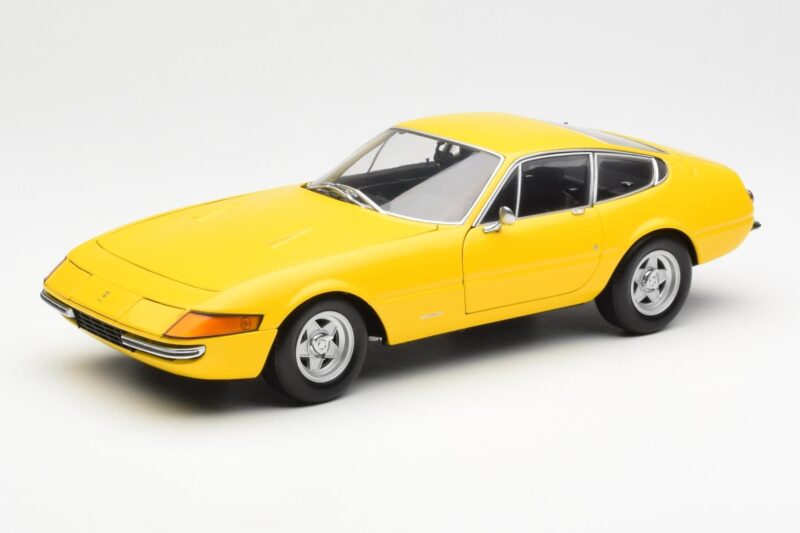
Ferrari 365 GTB/4 Daytona Yellow Kyosho 1:18
Sold out
1
/
8
Kyosho's 1:18 diecast Ferrari 365 GTB/4 Daytona reproduces the 1971 Pininfarina-styled coupe in yellow, with the long, low nose and V12 proportions that made it one of the fastest road cars of its day. A striking colour choice against the more common red examples, this suits a classic Ferrari or 1970s Italian GT collection.
1 / 8
[{"index":0,"id":"466116","thumb":"https:\/\/models118.co.uk\/wp-content\/uploads\/2026\/06\/ferrari-365-gtb-4-daytona-yellow-kyosho-1-18-300x200.jpg","medium":"https:\/\/models118.co.uk\/wp-content\/uploads\/2026\/06\/ferrari-365-gtb-4-daytona-yellow-kyosho-1-18-800x533.jpg","full":"https:\/\/models118.co.uk\/wp-content\/uploads\/2026\/06\/ferrari-365-gtb-4-daytona-yellow-kyosho-1-18.jpg","srcset":"https:\/\/models118.co.uk\/wp-content\/uploads\/2026\/06\/ferrari-365-gtb-4-daytona-yellow-kyosho-1-18-800x533.jpg 800w, https:\/\/models118.co.uk\/wp-content\/uploads\/2026\/06\/ferrari-365-gtb-4-daytona-yellow-kyosho-1-18-64x43.jpg 64w, https:\/\/models118.co.uk\/wp-content\/uploads\/2026\/06\/ferrari-365-gtb-4-daytona-yellow-kyosho-1-18-300x200.jpg 300w, https:\/\/models118.co.uk\/wp-content\/uploads\/2026\/06\/ferrari-365-gtb-4-daytona-yellow-kyosho-1-18.jpg 1800w","sizes":"(max-width: 1023px) 400px, 640px","srcsetAvif":"https:\/\/models118.co.uk\/wp-content\/uploads\/2026\/06\/ferrari-365-gtb-4-daytona-yellow-kyosho-1-18-800x533.jpg.avif 800w, https:\/\/models118.co.uk\/wp-content\/uploads\/2026\/06\/ferrari-365-gtb-4-daytona-yellow-kyosho-1-18-64x43.jpg.avif 64w, https:\/\/models118.co.uk\/wp-content\/uploads\/2026\/06\/ferrari-365-gtb-4-daytona-yellow-kyosho-1-18-300x200.jpg.avif 300w, https:\/\/models118.co.uk\/wp-content\/uploads\/2026\/06\/ferrari-365-gtb-4-daytona-yellow-kyosho-1-18.jpg.avif 1800w","srcsetWebp":"https:\/\/models118.co.uk\/wp-content\/uploads\/2026\/06\/ferrari-365-gtb-4-daytona-yellow-kyosho-1-18-800x533.jpg.webp 800w, https:\/\/models118.co.uk\/wp-content\/uploads\/2026\/06\/ferrari-365-gtb-4-daytona-yellow-kyosho-1-18-64x43.jpg.webp 64w, https:\/\/models118.co.uk\/wp-content\/uploads\/2026\/06\/ferrari-365-gtb-4-daytona-yellow-kyosho-1-18-300x200.jpg.webp 300w, https:\/\/models118.co.uk\/wp-content\/uploads\/2026\/06\/ferrari-365-gtb-4-daytona-yellow-kyosho-1-18.jpg.webp 1800w","alt":"Ferrari 365 GTB\/4 Daytona Yellow Kyosho 1:18 08162Y Diecast"},{"index":1,"id":466143,"thumb":"https:\/\/models118.co.uk\/wp-content\/uploads\/2026\/06\/ferrari-365-gtb-4-daytona-yellow-kyosho-1-18-1-300x200.jpg","medium":"https:\/\/models118.co.uk\/wp-content\/uploads\/2026\/06\/ferrari-365-gtb-4-daytona-yellow-kyosho-1-18-1-800x533.jpg","full":"https:\/\/models118.co.uk\/wp-content\/uploads\/2026\/06\/ferrari-365-gtb-4-daytona-yellow-kyosho-1-18-1.jpg","srcset":"https:\/\/models118.co.uk\/wp-content\/uploads\/2026\/06\/ferrari-365-gtb-4-daytona-yellow-kyosho-1-18-1-800x533.jpg 800w, https:\/\/models118.co.uk\/wp-content\/uploads\/2026\/06\/ferrari-365-gtb-4-daytona-yellow-kyosho-1-18-1-64x43.jpg 64w, https:\/\/models118.co.uk\/wp-content\/uploads\/2026\/06\/ferrari-365-gtb-4-daytona-yellow-kyosho-1-18-1-300x200.jpg 300w, https:\/\/models118.co.uk\/wp-content\/uploads\/2026\/06\/ferrari-365-gtb-4-daytona-yellow-kyosho-1-18-1.jpg 1800w","sizes":"(max-width: 1023px) 400px, 640px","srcsetAvif":"https:\/\/models118.co.uk\/wp-content\/uploads\/2026\/06\/ferrari-365-gtb-4-daytona-yellow-kyosho-1-18-1-800x533.jpg.avif 800w, https:\/\/models118.co.uk\/wp-content\/uploads\/2026\/06\/ferrari-365-gtb-4-daytona-yellow-kyosho-1-18-1-64x43.jpg.avif 64w, https:\/\/models118.co.uk\/wp-content\/uploads\/2026\/06\/ferrari-365-gtb-4-daytona-yellow-kyosho-1-18-1-300x200.jpg.avif 300w, https:\/\/models118.co.uk\/wp-content\/uploads\/2026\/06\/ferrari-365-gtb-4-daytona-yellow-kyosho-1-18-1.jpg.avif 1800w","srcsetWebp":"https:\/\/models118.co.uk\/wp-content\/uploads\/2026\/06\/ferrari-365-gtb-4-daytona-yellow-kyosho-1-18-1-800x533.jpg.webp 800w, https:\/\/models118.co.uk\/wp-content\/uploads\/2026\/06\/ferrari-365-gtb-4-daytona-yellow-kyosho-1-18-1-64x43.jpg.webp 64w, https:\/\/models118.co.uk\/wp-content\/uploads\/2026\/06\/ferrari-365-gtb-4-daytona-yellow-kyosho-1-18-1-300x200.jpg.webp 300w, https:\/\/models118.co.uk\/wp-content\/uploads\/2026\/06\/ferrari-365-gtb-4-daytona-yellow-kyosho-1-18-1.jpg.webp 1800w","alt":"Ferrari 365 GTB\/4 Daytona Yellow Kyosho 1:18 08162Y Diecast \u2014 photo 2 of 8"},{"index":2,"id":466170,"thumb":"https:\/\/models118.co.uk\/wp-content\/uploads\/2026\/06\/ferrari-365-gtb-4-daytona-yellow-kyosho-1-18-2-300x200.jpg","medium":"https:\/\/models118.co.uk\/wp-content\/uploads\/2026\/06\/ferrari-365-gtb-4-daytona-yellow-kyosho-1-18-2-800x533.jpg","full":"https:\/\/models118.co.uk\/wp-content\/uploads\/2026\/06\/ferrari-365-gtb-4-daytona-yellow-kyosho-1-18-2.jpg","srcset":"https:\/\/models118.co.uk\/wp-content\/uploads\/2026\/06\/ferrari-365-gtb-4-daytona-yellow-kyosho-1-18-2-800x533.jpg 800w, https:\/\/models118.co.uk\/wp-content\/uploads\/2026\/06\/ferrari-365-gtb-4-daytona-yellow-kyosho-1-18-2-64x43.jpg 64w, https:\/\/models118.co.uk\/wp-content\/uploads\/2026\/06\/ferrari-365-gtb-4-daytona-yellow-kyosho-1-18-2-300x200.jpg 300w, https:\/\/models118.co.uk\/wp-content\/uploads\/2026\/06\/ferrari-365-gtb-4-daytona-yellow-kyosho-1-18-2.jpg 1800w","sizes":"(max-width: 1023px) 400px, 640px","srcsetAvif":"https:\/\/models118.co.uk\/wp-content\/uploads\/2026\/06\/ferrari-365-gtb-4-daytona-yellow-kyosho-1-18-2-800x533.jpg.avif 800w, https:\/\/models118.co.uk\/wp-content\/uploads\/2026\/06\/ferrari-365-gtb-4-daytona-yellow-kyosho-1-18-2-64x43.jpg.avif 64w, https:\/\/models118.co.uk\/wp-content\/uploads\/2026\/06\/ferrari-365-gtb-4-daytona-yellow-kyosho-1-18-2-300x200.jpg.avif 300w, https:\/\/models118.co.uk\/wp-content\/uploads\/2026\/06\/ferrari-365-gtb-4-daytona-yellow-kyosho-1-18-2.jpg.avif 1800w","srcsetWebp":"https:\/\/models118.co.uk\/wp-content\/uploads\/2026\/06\/ferrari-365-gtb-4-daytona-yellow-kyosho-1-18-2-800x533.jpg.webp 800w, https:\/\/models118.co.uk\/wp-content\/uploads\/2026\/06\/ferrari-365-gtb-4-daytona-yellow-kyosho-1-18-2-64x43.jpg.webp 64w, https:\/\/models118.co.uk\/wp-content\/uploads\/2026\/06\/ferrari-365-gtb-4-daytona-yellow-kyosho-1-18-2-300x200.jpg.webp 300w, https:\/\/models118.co.uk\/wp-content\/uploads\/2026\/06\/ferrari-365-gtb-4-daytona-yellow-kyosho-1-18-2.jpg.webp 1800w","alt":"Ferrari 365 GTB\/4 Daytona Yellow Kyosho 1:18 08162Y Diecast \u2014 photo 3 of 8"},{"index":3,"id":466197,"thumb":"https:\/\/models118.co.uk\/wp-content\/uploads\/2026\/06\/ferrari-365-gtb-4-daytona-yellow-kyosho-1-18-3-300x200.jpg","medium":"https:\/\/models118.co.uk\/wp-content\/uploads\/2026\/06\/ferrari-365-gtb-4-daytona-yellow-kyosho-1-18-3-800x533.jpg","full":"https:\/\/models118.co.uk\/wp-content\/uploads\/2026\/06\/ferrari-365-gtb-4-daytona-yellow-kyosho-1-18-3.jpg","srcset":"https:\/\/models118.co.uk\/wp-content\/uploads\/2026\/06\/ferrari-365-gtb-4-daytona-yellow-kyosho-1-18-3-800x533.jpg 800w, https:\/\/models118.co.uk\/wp-content\/uploads\/2026\/06\/ferrari-365-gtb-4-daytona-yellow-kyosho-1-18-3-64x43.jpg 64w, https:\/\/models118.co.uk\/wp-content\/uploads\/2026\/06\/ferrari-365-gtb-4-daytona-yellow-kyosho-1-18-3-300x200.jpg 300w, https:\/\/models118.co.uk\/wp-content\/uploads\/2026\/06\/ferrari-365-gtb-4-daytona-yellow-kyosho-1-18-3.jpg 1800w","sizes":"(max-width: 1023px) 400px, 640px","srcsetAvif":"https:\/\/models118.co.uk\/wp-content\/uploads\/2026\/06\/ferrari-365-gtb-4-daytona-yellow-kyosho-1-18-3-800x533.jpg.avif 800w, https:\/\/models118.co.uk\/wp-content\/uploads\/2026\/06\/ferrari-365-gtb-4-daytona-yellow-kyosho-1-18-3-64x43.jpg.avif 64w, https:\/\/models118.co.uk\/wp-content\/uploads\/2026\/06\/ferrari-365-gtb-4-daytona-yellow-kyosho-1-18-3-300x200.jpg.avif 300w, https:\/\/models118.co.uk\/wp-content\/uploads\/2026\/06\/ferrari-365-gtb-4-daytona-yellow-kyosho-1-18-3.jpg.avif 1800w","srcsetWebp":"https:\/\/models118.co.uk\/wp-content\/uploads\/2026\/06\/ferrari-365-gtb-4-daytona-yellow-kyosho-1-18-3-800x533.jpg.webp 800w, https:\/\/models118.co.uk\/wp-content\/uploads\/2026\/06\/ferrari-365-gtb-4-daytona-yellow-kyosho-1-18-3-64x43.jpg.webp 64w, https:\/\/models118.co.uk\/wp-content\/uploads\/2026\/06\/ferrari-365-gtb-4-daytona-yellow-kyosho-1-18-3-300x200.jpg.webp 300w, https:\/\/models118.co.uk\/wp-content\/uploads\/2026\/06\/ferrari-365-gtb-4-daytona-yellow-kyosho-1-18-3.jpg.webp 1800w","alt":"Ferrari 365 GTB\/4 Daytona Yellow Kyosho 1:18 08162Y Diecast \u2014 photo 4 of 8"},{"index":4,"id":466224,"thumb":"https:\/\/models118.co.uk\/wp-content\/uploads\/2026\/06\/ferrari-365-gtb-4-daytona-yellow-kyosho-1-18-4-300x200.jpg","medium":"https:\/\/models118.co.uk\/wp-content\/uploads\/2026\/06\/ferrari-365-gtb-4-daytona-yellow-kyosho-1-18-4-800x533.jpg","full":"https:\/\/models118.co.uk\/wp-content\/uploads\/2026\/06\/ferrari-365-gtb-4-daytona-yellow-kyosho-1-18-4.jpg","srcset":"https:\/\/models118.co.uk\/wp-content\/uploads\/2026\/06\/ferrari-365-gtb-4-daytona-yellow-kyosho-1-18-4-800x533.jpg 800w, https:\/\/models118.co.uk\/wp-content\/uploads\/2026\/06\/ferrari-365-gtb-4-daytona-yellow-kyosho-1-18-4-64x43.jpg 64w, https:\/\/models118.co.uk\/wp-content\/uploads\/2026\/06\/ferrari-365-gtb-4-daytona-yellow-kyosho-1-18-4-300x200.jpg 300w, https:\/\/models118.co.uk\/wp-content\/uploads\/2026\/06\/ferrari-365-gtb-4-daytona-yellow-kyosho-1-18-4.jpg 1800w","sizes":"(max-width: 1023px) 400px, 640px","srcsetAvif":"https:\/\/models118.co.uk\/wp-content\/uploads\/2026\/06\/ferrari-365-gtb-4-daytona-yellow-kyosho-1-18-4-800x533.jpg.avif 800w, https:\/\/models118.co.uk\/wp-content\/uploads\/2026\/06\/ferrari-365-gtb-4-daytona-yellow-kyosho-1-18-4-64x43.jpg.avif 64w, https:\/\/models118.co.uk\/wp-content\/uploads\/2026\/06\/ferrari-365-gtb-4-daytona-yellow-kyosho-1-18-4-300x200.jpg.avif 300w, https:\/\/models118.co.uk\/wp-content\/uploads\/2026\/06\/ferrari-365-gtb-4-daytona-yellow-kyosho-1-18-4.jpg.avif 1800w","srcsetWebp":"https:\/\/models118.co.uk\/wp-content\/uploads\/2026\/06\/ferrari-365-gtb-4-daytona-yellow-kyosho-1-18-4-800x533.jpg.webp 800w, https:\/\/models118.co.uk\/wp-content\/uploads\/2026\/06\/ferrari-365-gtb-4-daytona-yellow-kyosho-1-18-4-64x43.jpg.webp 64w, https:\/\/models118.co.uk\/wp-content\/uploads\/2026\/06\/ferrari-365-gtb-4-daytona-yellow-kyosho-1-18-4-300x200.jpg.webp 300w, https:\/\/models118.co.uk\/wp-content\/uploads\/2026\/06\/ferrari-365-gtb-4-daytona-yellow-kyosho-1-18-4.jpg.webp 1800w","alt":"Ferrari 365 GTB\/4 Daytona Yellow Kyosho 1:18 08162Y Diecast \u2014 photo 5 of 8"},{"index":5,"id":466251,"thumb":"https:\/\/models118.co.uk\/wp-content\/uploads\/2026\/06\/ferrari-365-gtb-4-daytona-yellow-kyosho-1-18-5-300x200.jpg","medium":"https:\/\/models118.co.uk\/wp-content\/uploads\/2026\/06\/ferrari-365-gtb-4-daytona-yellow-kyosho-1-18-5-800x533.jpg","full":"https:\/\/models118.co.uk\/wp-content\/uploads\/2026\/06\/ferrari-365-gtb-4-daytona-yellow-kyosho-1-18-5.jpg","srcset":"https:\/\/models118.co.uk\/wp-content\/uploads\/2026\/06\/ferrari-365-gtb-4-daytona-yellow-kyosho-1-18-5-800x533.jpg 800w, https:\/\/models118.co.uk\/wp-content\/uploads\/2026\/06\/ferrari-365-gtb-4-daytona-yellow-kyosho-1-18-5-64x43.jpg 64w, https:\/\/models118.co.uk\/wp-content\/uploads\/2026\/06\/ferrari-365-gtb-4-daytona-yellow-kyosho-1-18-5-300x200.jpg 300w, https:\/\/models118.co.uk\/wp-content\/uploads\/2026\/06\/ferrari-365-gtb-4-daytona-yellow-kyosho-1-18-5.jpg 1800w","sizes":"(max-width: 1023px) 400px, 640px","srcsetAvif":"https:\/\/models118.co.uk\/wp-content\/uploads\/2026\/06\/ferrari-365-gtb-4-daytona-yellow-kyosho-1-18-5-800x533.jpg.avif 800w, https:\/\/models118.co.uk\/wp-content\/uploads\/2026\/06\/ferrari-365-gtb-4-daytona-yellow-kyosho-1-18-5-64x43.jpg.avif 64w, https:\/\/models118.co.uk\/wp-content\/uploads\/2026\/06\/ferrari-365-gtb-4-daytona-yellow-kyosho-1-18-5-300x200.jpg.avif 300w, https:\/\/models118.co.uk\/wp-content\/uploads\/2026\/06\/ferrari-365-gtb-4-daytona-yellow-kyosho-1-18-5.jpg.avif 1800w","srcsetWebp":"https:\/\/models118.co.uk\/wp-content\/uploads\/2026\/06\/ferrari-365-gtb-4-daytona-yellow-kyosho-1-18-5-800x533.jpg.webp 800w, https:\/\/models118.co.uk\/wp-content\/uploads\/2026\/06\/ferrari-365-gtb-4-daytona-yellow-kyosho-1-18-5-64x43.jpg.webp 64w, https:\/\/models118.co.uk\/wp-content\/uploads\/2026\/06\/ferrari-365-gtb-4-daytona-yellow-kyosho-1-18-5-300x200.jpg.webp 300w, https:\/\/models118.co.uk\/wp-content\/uploads\/2026\/06\/ferrari-365-gtb-4-daytona-yellow-kyosho-1-18-5.jpg.webp 1800w","alt":"Ferrari 365 GTB\/4 Daytona Yellow Kyosho 1:18 08162Y Diecast \u2014 photo 6 of 8"},{"index":6,"id":466278,"thumb":"https:\/\/models118.co.uk\/wp-content\/uploads\/2026\/06\/ferrari-365-gtb-4-daytona-yellow-kyosho-1-18-6-300x200.jpg","medium":"https:\/\/models118.co.uk\/wp-content\/uploads\/2026\/06\/ferrari-365-gtb-4-daytona-yellow-kyosho-1-18-6-800x533.jpg","full":"https:\/\/models118.co.uk\/wp-content\/uploads\/2026\/06\/ferrari-365-gtb-4-daytona-yellow-kyosho-1-18-6.jpg","srcset":"https:\/\/models118.co.uk\/wp-content\/uploads\/2026\/06\/ferrari-365-gtb-4-daytona-yellow-kyosho-1-18-6-800x533.jpg 800w, https:\/\/models118.co.uk\/wp-content\/uploads\/2026\/06\/ferrari-365-gtb-4-daytona-yellow-kyosho-1-18-6-64x43.jpg 64w, https:\/\/models118.co.uk\/wp-content\/uploads\/2026\/06\/ferrari-365-gtb-4-daytona-yellow-kyosho-1-18-6-300x200.jpg 300w, https:\/\/models118.co.uk\/wp-content\/uploads\/2026\/06\/ferrari-365-gtb-4-daytona-yellow-kyosho-1-18-6.jpg 1800w","sizes":"(max-width: 1023px) 400px, 640px","srcsetAvif":"https:\/\/models118.co.uk\/wp-content\/uploads\/2026\/06\/ferrari-365-gtb-4-daytona-yellow-kyosho-1-18-6-800x533.jpg.avif 800w, https:\/\/models118.co.uk\/wp-content\/uploads\/2026\/06\/ferrari-365-gtb-4-daytona-yellow-kyosho-1-18-6-64x43.jpg.avif 64w, https:\/\/models118.co.uk\/wp-content\/uploads\/2026\/06\/ferrari-365-gtb-4-daytona-yellow-kyosho-1-18-6-300x200.jpg.avif 300w, https:\/\/models118.co.uk\/wp-content\/uploads\/2026\/06\/ferrari-365-gtb-4-daytona-yellow-kyosho-1-18-6.jpg.avif 1800w","srcsetWebp":"https:\/\/models118.co.uk\/wp-content\/uploads\/2026\/06\/ferrari-365-gtb-4-daytona-yellow-kyosho-1-18-6-800x533.jpg.webp 800w, https:\/\/models118.co.uk\/wp-content\/uploads\/2026\/06\/ferrari-365-gtb-4-daytona-yellow-kyosho-1-18-6-64x43.jpg.webp 64w, https:\/\/models118.co.uk\/wp-content\/uploads\/2026\/06\/ferrari-365-gtb-4-daytona-yellow-kyosho-1-18-6-300x200.jpg.webp 300w, https:\/\/models118.co.uk\/wp-content\/uploads\/2026\/06\/ferrari-365-gtb-4-daytona-yellow-kyosho-1-18-6.jpg.webp 1800w","alt":"Ferrari 365 GTB\/4 Daytona Yellow Kyosho 1:18 08162Y Diecast \u2014 photo 7 of 8"},{"index":7,"id":466305,"thumb":"https:\/\/models118.co.uk\/wp-content\/uploads\/2026\/06\/ferrari-365-gtb-4-daytona-yellow-kyosho-1-18-7-300x200.jpg","medium":"https:\/\/models118.co.uk\/wp-content\/uploads\/2026\/06\/ferrari-365-gtb-4-daytona-yellow-kyosho-1-18-7-800x533.jpg","full":"https:\/\/models118.co.uk\/wp-content\/uploads\/2026\/06\/ferrari-365-gtb-4-daytona-yellow-kyosho-1-18-7.jpg","srcset":"https:\/\/models118.co.uk\/wp-content\/uploads\/2026\/06\/ferrari-365-gtb-4-daytona-yellow-kyosho-1-18-7-800x533.jpg 800w, https:\/\/models118.co.uk\/wp-content\/uploads\/2026\/06\/ferrari-365-gtb-4-daytona-yellow-kyosho-1-18-7-64x43.jpg 64w, https:\/\/models118.co.uk\/wp-content\/uploads\/2026\/06\/ferrari-365-gtb-4-daytona-yellow-kyosho-1-18-7-300x200.jpg 300w, https:\/\/models118.co.uk\/wp-content\/uploads\/2026\/06\/ferrari-365-gtb-4-daytona-yellow-kyosho-1-18-7.jpg 1800w","sizes":"(max-width: 1023px) 400px, 640px","srcsetAvif":"https:\/\/models118.co.uk\/wp-content\/uploads\/2026\/06\/ferrari-365-gtb-4-daytona-yellow-kyosho-1-18-7-800x533.jpg.avif 800w, https:\/\/models118.co.uk\/wp-content\/uploads\/2026\/06\/ferrari-365-gtb-4-daytona-yellow-kyosho-1-18-7-64x43.jpg.avif 64w, https:\/\/models118.co.uk\/wp-content\/uploads\/2026\/06\/ferrari-365-gtb-4-daytona-yellow-kyosho-1-18-7-300x200.jpg.avif 300w, https:\/\/models118.co.uk\/wp-content\/uploads\/2026\/06\/ferrari-365-gtb-4-daytona-yellow-kyosho-1-18-7.jpg.avif 1800w","srcsetWebp":"https:\/\/models118.co.uk\/wp-content\/uploads\/2026\/06\/ferrari-365-gtb-4-daytona-yellow-kyosho-1-18-7-800x533.jpg.webp 800w, https:\/\/models118.co.uk\/wp-content\/uploads\/2026\/06\/ferrari-365-gtb-4-daytona-yellow-kyosho-1-18-7-64x43.jpg.webp 64w, https:\/\/models118.co.uk\/wp-content\/uploads\/2026\/06\/ferrari-365-gtb-4-daytona-yellow-kyosho-1-18-7-300x200.jpg.webp 300w, https:\/\/models118.co.uk\/wp-content\/uploads\/2026\/06\/ferrari-365-gtb-4-daytona-yellow-kyosho-1-18-7.jpg.webp 1800w","alt":"Ferrari 365 GTB\/4 Daytona Yellow Kyosho 1:18 08162Y Diecast \u2014 photo 8 of 8"}]
Ferrari 365 GTB/4 Daytona Yellow Kyosho 1:18
Current price:
£156.67
Price shown excluding UK VAT. Import VAT and the courier's customs clearance fee are collected on delivery.
Out of production
This model is currently sold out. Enter your email and we'll let you know when it's back in stock.
Specifications
- Car Brand
- Ferrari
- Model Manufacturer
- Kyosho
- Scale
- 1:18
- Material
- Diecast
- Model Condition
- Used Model
- SKU
- 08162Y
- Year
- 1971
- Era
- 1970s
- Body Type
- Coupé
- Vehicle Class
- Classic Sports
- Openable Parts
- Yes
- Packaging Condition
- Traces of Storage
- Model Type
- Street Models
- EAN / GTIN
- —
Genuine articles
Sourced from manufacturers
5-layer carton
Foam-filled interior
Hassle-free returns
14-day no-quibble returns
Secure payment
Bank-level encryption
About the Ferrari 365 GTB/4 Daytona Yellow Kyosho 1:18
TL;DR: Kyosho's 1:18 diecast Ferrari 365 GTB/4 Daytona reproduces the 1971 Pininfarina-styled coupe in yellow, with the long nose and V12 proportions of one of the fastest road cars of its era. The nickname followed Ferrari's 1967 Daytona victory, at standard diecast tier for classic Ferrari collectors.
Ferrari never officially called this car the Daytona, yet the name stuck after the marque's dominant 1967 finish at the Daytona 24 Hours and never let go. Kyosho renders this yellow example with the long, flat bonnet that made the 365 GTB/4 look fast standing still.
A Nickname Earned on Track, Applied to the Road
Pininfarina's Long-Nose GT Shape
Leonardo Fioravanti's design for Pininfarina gave the 365 GTB/4 an unusually long, flat bonnet housing a front-mounted V12, a silhouette built for high-speed stability rather than showroom drama alone. Early cars carried glass-covered headlights before US regulations forced a pop-up design on later models, and Kyosho's version reflects the styling detail collectors look for first when identifying which production phase a Daytona actually represents. That long bonnet also housed the spare wheel and a surprisingly usable boot, practical touches that separated the Daytona from purer two-seat exotics of the same period.
Where the Daytona Name Actually Came From
The unofficial 'Daytona' nickname followed Ferrari's 1-2-3 finish at the 1967 24 Hours of Daytona, a result achieved with prototype racers rather than this road car, yet the association stuck to the 365 GTB/4 so firmly that Ferrari itself eventually used it in later marketing. That borrowed racing glory gives an otherwise road-focused GT a competition connection it never earned on track under its own name. Top speed for the period approached 280 kilometres an hour, a figure that made the Daytona one of the fastest production cars anywhere in the world when it launched.
Kyosho's Take on a Long, Flat Silhouette
Panel Lines Along an Unbroken Bonnet
The Daytona's long bonnet leaves little room to hide an uneven panel gap, since the eye follows that single flat surface from the nose right back to the windscreen without interruption. Kyosho's tooling holds a consistent line along that length, and the yellow paint carries genuine depth under direct light rather than looking flat across such a large, unbroken panel, a common weak point on lower-tier castings of long-bonnet GTs.
V12 Engine Bay and Cabin Detail
Lifting the bonnet reveals a reasonably detailed V12 rendering rather than a blanked-off block, appropriate for a car whose engine defined its entire character, and the cabin carries correct period switchgear and seat shaping. The wheels sit with the right offset within the arches, neither too small nor pushed out too far, a detail that affects how convincingly the whole stance reads from a normal viewing distance. Chrome trim around the headlight covers and bumpers is applied cleanly, without bleeding into the surrounding yellow paintwork. A collector inspecting the model closely will find the exhaust tips and rear valance shaped with real intent, not simplified into a flat panel the way cheaper GT castings often are.
A Bold Colour Choice for a Ferrari Shelf
At roughly 24 centimetres, the Daytona commands genuine shelf presence, its long nose taking more visual space than a shorter, stubbier GT of the same era. Yellow was a genuine factory option rather than an invented model colour, and it sets this example apart from the red Daytonas that dominate most Ferrari collections, giving a themed shelf real visual variety. Displayed beside a 275 GTB or an early Boxer, this Daytona traces one clear line through Ferrari's front-engined V12 GT tradition just before the marque turned decisively toward mid-engined design. Keep the yellow finish away from prolonged direct sun, since bright factory colours can fade slightly faster than darker paints over years of display. For collectors who already own a red example, a second Daytona in yellow doubles as a study in how colour alone changes a car's read from across a room.
Same marque, same scale
Last one
Used
Last one
Used
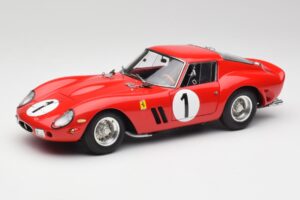
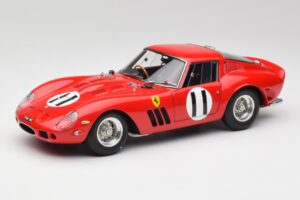
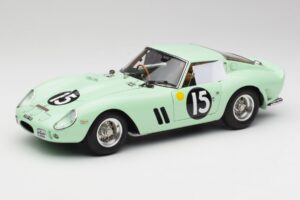
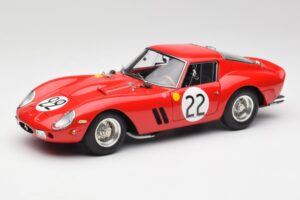
Ferrari 250 GTO #22 Beurlys / Elde / Mason 24 Hours of Le Mans 1962 CMC 1:18
Only 3 left
Price:
£448.33
Collectors also bought
Browse all 1:18
Last one
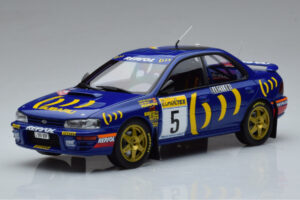
Subaru Impreza #5 C. Sainz / L. Moya 2nd Place Rally Monte Carlo 1995 Kyosho 1:18
Only 1 left
Price:
£180.83
Last one
Last one
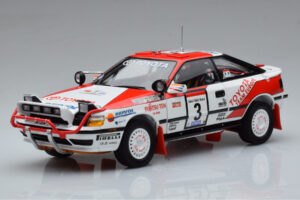
Toyota Celica GT-Four ST165 #3 B. Waldegard / F. Gallagher Winner Safari Rally 1990 Kyosho 1:18
Only 1 left
Price:
£180.83
Last one
Last one
Last one
Last one
Recently viewed
{"id":470437,"name":"Ferrari 365 GTB\/4 Daytona Yellow Kyosho 1:18","price":"£<\/span>156.67<\/bdi><\/span>","image":"https:\/\/models118.co.uk\/wp-content\/uploads\/2026\/06\/ferrari-365-gtb-4-daytona-yellow-kyosho-1-18-400x400.jpg","permalink":"https:\/\/models118.co.uk\/ferrari-365-gtb-4-daytona-yellow-kyosho-1-18-08162y\/","brand":"Ferrari"}