
Peugeot 406 Coupe Yellow Maxichamps 1:43
New arrival
1
/
5
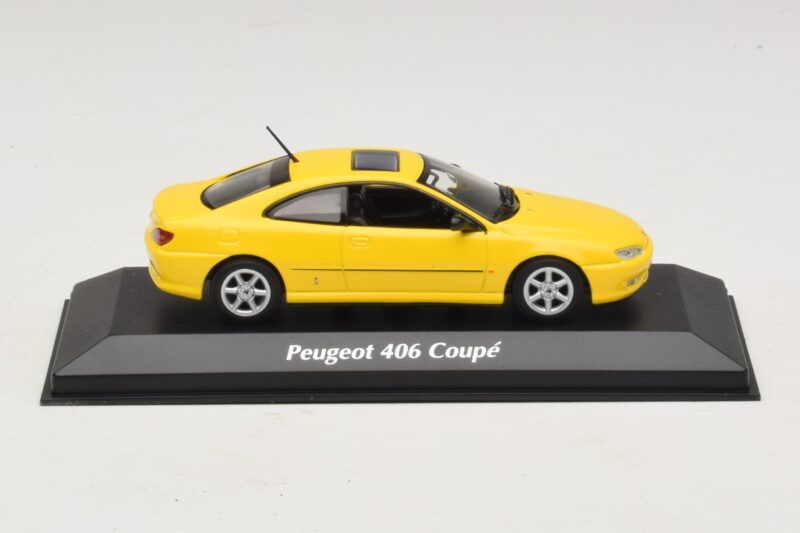
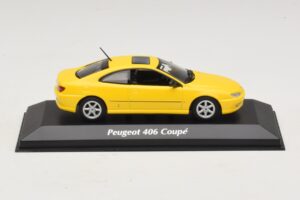
Maxichamps' 1:43 Peugeot 406 Coupe in yellow is a diecast model of the 1997 Pininfarina-built coupe, cast as a sealed one-piece body. Long, smooth surfaces make the paint and casting quality easy to judge, and yellow is an unforgiving colour that shows every flaw. At around 10 cm it brings understated 1990s elegance to a continental coupe shelf.
1 / 5
[{"index":0,"id":"1708803","thumb":"https:\/\/models118.co.uk\/wp-content\/uploads\/2026\/10\/peugeot-406-coupe-yellow-maxichamps-1-43-940112621-1-1-300x200.jpg","medium":"https:\/\/models118.co.uk\/wp-content\/uploads\/2026\/10\/peugeot-406-coupe-yellow-maxichamps-1-43-940112621-1-1-800x533.jpg","full":"https:\/\/models118.co.uk\/wp-content\/uploads\/2026\/10\/peugeot-406-coupe-yellow-maxichamps-1-43-940112621-1-1.jpg","srcset":"https:\/\/models118.co.uk\/wp-content\/uploads\/2026\/10\/peugeot-406-coupe-yellow-maxichamps-1-43-940112621-1-1-800x533.jpg 800w, https:\/\/models118.co.uk\/wp-content\/uploads\/2026\/10\/peugeot-406-coupe-yellow-maxichamps-1-43-940112621-1-1-300x200.jpg 300w, https:\/\/models118.co.uk\/wp-content\/uploads\/2026\/10\/peugeot-406-coupe-yellow-maxichamps-1-43-940112621-1-1-480x320.jpg 480w, https:\/\/models118.co.uk\/wp-content\/uploads\/2026\/10\/peugeot-406-coupe-yellow-maxichamps-1-43-940112621-1-1-64x43.jpg 64w, https:\/\/models118.co.uk\/wp-content\/uploads\/2026\/10\/peugeot-406-coupe-yellow-maxichamps-1-43-940112621-1-1.jpg 1800w","sizes":"(max-width: 1023px) 400px, 640px","srcsetAvif":"https:\/\/models118.co.uk\/wp-content\/uploads\/2026\/10\/peugeot-406-coupe-yellow-maxichamps-1-43-940112621-1-1-800x533.jpg.avif 800w, https:\/\/models118.co.uk\/wp-content\/uploads\/2026\/10\/peugeot-406-coupe-yellow-maxichamps-1-43-940112621-1-1-300x200.jpg.avif 300w, https:\/\/models118.co.uk\/wp-content\/uploads\/2026\/10\/peugeot-406-coupe-yellow-maxichamps-1-43-940112621-1-1-480x320.jpg.avif 480w, https:\/\/models118.co.uk\/wp-content\/uploads\/2026\/10\/peugeot-406-coupe-yellow-maxichamps-1-43-940112621-1-1-64x43.jpg.avif 64w, https:\/\/models118.co.uk\/wp-content\/uploads\/2026\/10\/peugeot-406-coupe-yellow-maxichamps-1-43-940112621-1-1.jpg.avif 1800w","srcsetWebp":"https:\/\/models118.co.uk\/wp-content\/uploads\/2026\/10\/peugeot-406-coupe-yellow-maxichamps-1-43-940112621-1-1-800x533.jpg.webp 800w, https:\/\/models118.co.uk\/wp-content\/uploads\/2026\/10\/peugeot-406-coupe-yellow-maxichamps-1-43-940112621-1-1-300x200.jpg.webp 300w, https:\/\/models118.co.uk\/wp-content\/uploads\/2026\/10\/peugeot-406-coupe-yellow-maxichamps-1-43-940112621-1-1-480x320.jpg.webp 480w, https:\/\/models118.co.uk\/wp-content\/uploads\/2026\/10\/peugeot-406-coupe-yellow-maxichamps-1-43-940112621-1-1-64x43.jpg.webp 64w, https:\/\/models118.co.uk\/wp-content\/uploads\/2026\/10\/peugeot-406-coupe-yellow-maxichamps-1-43-940112621-1-1.jpg.webp 1800w","alt":"Peugeot 406 Coupe Yellow Maxichamps 1:43 940112621 Diecast"},{"index":1,"id":1708804,"thumb":"https:\/\/models118.co.uk\/wp-content\/uploads\/2026\/10\/peugeot-406-coupe-yellow-maxichamps-1-43-940112621-1-300x200.jpg","medium":"https:\/\/models118.co.uk\/wp-content\/uploads\/2026\/10\/peugeot-406-coupe-yellow-maxichamps-1-43-940112621-1-800x533.jpg","full":"https:\/\/models118.co.uk\/wp-content\/uploads\/2026\/10\/peugeot-406-coupe-yellow-maxichamps-1-43-940112621-1.jpg","srcset":"https:\/\/models118.co.uk\/wp-content\/uploads\/2026\/10\/peugeot-406-coupe-yellow-maxichamps-1-43-940112621-1-800x533.jpg 800w, https:\/\/models118.co.uk\/wp-content\/uploads\/2026\/10\/peugeot-406-coupe-yellow-maxichamps-1-43-940112621-1-300x200.jpg 300w, https:\/\/models118.co.uk\/wp-content\/uploads\/2026\/10\/peugeot-406-coupe-yellow-maxichamps-1-43-940112621-1-480x320.jpg 480w, https:\/\/models118.co.uk\/wp-content\/uploads\/2026\/10\/peugeot-406-coupe-yellow-maxichamps-1-43-940112621-1-64x43.jpg 64w, https:\/\/models118.co.uk\/wp-content\/uploads\/2026\/10\/peugeot-406-coupe-yellow-maxichamps-1-43-940112621-1.jpg 1800w","sizes":"(max-width: 1023px) 400px, 640px","srcsetAvif":"https:\/\/models118.co.uk\/wp-content\/uploads\/2026\/10\/peugeot-406-coupe-yellow-maxichamps-1-43-940112621-1-800x533.jpg.avif 800w, https:\/\/models118.co.uk\/wp-content\/uploads\/2026\/10\/peugeot-406-coupe-yellow-maxichamps-1-43-940112621-1-300x200.jpg.avif 300w, https:\/\/models118.co.uk\/wp-content\/uploads\/2026\/10\/peugeot-406-coupe-yellow-maxichamps-1-43-940112621-1-480x320.jpg.avif 480w, https:\/\/models118.co.uk\/wp-content\/uploads\/2026\/10\/peugeot-406-coupe-yellow-maxichamps-1-43-940112621-1-64x43.jpg.avif 64w, https:\/\/models118.co.uk\/wp-content\/uploads\/2026\/10\/peugeot-406-coupe-yellow-maxichamps-1-43-940112621-1.jpg.avif 1800w","srcsetWebp":"https:\/\/models118.co.uk\/wp-content\/uploads\/2026\/10\/peugeot-406-coupe-yellow-maxichamps-1-43-940112621-1-800x533.jpg.webp 800w, https:\/\/models118.co.uk\/wp-content\/uploads\/2026\/10\/peugeot-406-coupe-yellow-maxichamps-1-43-940112621-1-300x200.jpg.webp 300w, https:\/\/models118.co.uk\/wp-content\/uploads\/2026\/10\/peugeot-406-coupe-yellow-maxichamps-1-43-940112621-1-480x320.jpg.webp 480w, https:\/\/models118.co.uk\/wp-content\/uploads\/2026\/10\/peugeot-406-coupe-yellow-maxichamps-1-43-940112621-1-64x43.jpg.webp 64w, https:\/\/models118.co.uk\/wp-content\/uploads\/2026\/10\/peugeot-406-coupe-yellow-maxichamps-1-43-940112621-1.jpg.webp 1800w","alt":"Peugeot 406 Coupe Yellow Maxichamps 1:43 940112621 Diecast \u2014 photo 2 of 5"},{"index":2,"id":1708805,"thumb":"https:\/\/models118.co.uk\/wp-content\/uploads\/2026\/10\/peugeot-406-coupe-yellow-maxichamps-1-43-940112621-2-300x200.jpg","medium":"https:\/\/models118.co.uk\/wp-content\/uploads\/2026\/10\/peugeot-406-coupe-yellow-maxichamps-1-43-940112621-2-800x533.jpg","full":"https:\/\/models118.co.uk\/wp-content\/uploads\/2026\/10\/peugeot-406-coupe-yellow-maxichamps-1-43-940112621-2.jpg","srcset":"https:\/\/models118.co.uk\/wp-content\/uploads\/2026\/10\/peugeot-406-coupe-yellow-maxichamps-1-43-940112621-2-800x533.jpg 800w, https:\/\/models118.co.uk\/wp-content\/uploads\/2026\/10\/peugeot-406-coupe-yellow-maxichamps-1-43-940112621-2-300x200.jpg 300w, https:\/\/models118.co.uk\/wp-content\/uploads\/2026\/10\/peugeot-406-coupe-yellow-maxichamps-1-43-940112621-2-480x320.jpg 480w, https:\/\/models118.co.uk\/wp-content\/uploads\/2026\/10\/peugeot-406-coupe-yellow-maxichamps-1-43-940112621-2-64x43.jpg 64w, https:\/\/models118.co.uk\/wp-content\/uploads\/2026\/10\/peugeot-406-coupe-yellow-maxichamps-1-43-940112621-2.jpg 1800w","sizes":"(max-width: 1023px) 400px, 640px","srcsetAvif":"https:\/\/models118.co.uk\/wp-content\/uploads\/2026\/10\/peugeot-406-coupe-yellow-maxichamps-1-43-940112621-2-800x533.jpg.avif 800w, https:\/\/models118.co.uk\/wp-content\/uploads\/2026\/10\/peugeot-406-coupe-yellow-maxichamps-1-43-940112621-2-300x200.jpg.avif 300w, https:\/\/models118.co.uk\/wp-content\/uploads\/2026\/10\/peugeot-406-coupe-yellow-maxichamps-1-43-940112621-2-480x320.jpg.avif 480w, https:\/\/models118.co.uk\/wp-content\/uploads\/2026\/10\/peugeot-406-coupe-yellow-maxichamps-1-43-940112621-2-64x43.jpg.avif 64w, https:\/\/models118.co.uk\/wp-content\/uploads\/2026\/10\/peugeot-406-coupe-yellow-maxichamps-1-43-940112621-2.jpg.avif 1800w","srcsetWebp":"https:\/\/models118.co.uk\/wp-content\/uploads\/2026\/10\/peugeot-406-coupe-yellow-maxichamps-1-43-940112621-2-800x533.jpg.webp 800w, https:\/\/models118.co.uk\/wp-content\/uploads\/2026\/10\/peugeot-406-coupe-yellow-maxichamps-1-43-940112621-2-300x200.jpg.webp 300w, https:\/\/models118.co.uk\/wp-content\/uploads\/2026\/10\/peugeot-406-coupe-yellow-maxichamps-1-43-940112621-2-480x320.jpg.webp 480w, https:\/\/models118.co.uk\/wp-content\/uploads\/2026\/10\/peugeot-406-coupe-yellow-maxichamps-1-43-940112621-2-64x43.jpg.webp 64w, https:\/\/models118.co.uk\/wp-content\/uploads\/2026\/10\/peugeot-406-coupe-yellow-maxichamps-1-43-940112621-2.jpg.webp 1800w","alt":"Peugeot 406 Coupe Yellow Maxichamps 1:43 940112621 Diecast \u2014 photo 3 of 5"},{"index":3,"id":1708806,"thumb":"https:\/\/models118.co.uk\/wp-content\/uploads\/2026\/10\/peugeot-406-coupe-yellow-maxichamps-1-43-940112621-3-300x200.jpg","medium":"https:\/\/models118.co.uk\/wp-content\/uploads\/2026\/10\/peugeot-406-coupe-yellow-maxichamps-1-43-940112621-3-800x533.jpg","full":"https:\/\/models118.co.uk\/wp-content\/uploads\/2026\/10\/peugeot-406-coupe-yellow-maxichamps-1-43-940112621-3.jpg","srcset":"https:\/\/models118.co.uk\/wp-content\/uploads\/2026\/10\/peugeot-406-coupe-yellow-maxichamps-1-43-940112621-3-800x533.jpg 800w, https:\/\/models118.co.uk\/wp-content\/uploads\/2026\/10\/peugeot-406-coupe-yellow-maxichamps-1-43-940112621-3-300x200.jpg 300w, https:\/\/models118.co.uk\/wp-content\/uploads\/2026\/10\/peugeot-406-coupe-yellow-maxichamps-1-43-940112621-3-480x320.jpg 480w, https:\/\/models118.co.uk\/wp-content\/uploads\/2026\/10\/peugeot-406-coupe-yellow-maxichamps-1-43-940112621-3-64x43.jpg 64w, https:\/\/models118.co.uk\/wp-content\/uploads\/2026\/10\/peugeot-406-coupe-yellow-maxichamps-1-43-940112621-3.jpg 1800w","sizes":"(max-width: 1023px) 400px, 640px","srcsetAvif":"https:\/\/models118.co.uk\/wp-content\/uploads\/2026\/10\/peugeot-406-coupe-yellow-maxichamps-1-43-940112621-3-800x533.jpg.avif 800w, https:\/\/models118.co.uk\/wp-content\/uploads\/2026\/10\/peugeot-406-coupe-yellow-maxichamps-1-43-940112621-3-300x200.jpg.avif 300w, https:\/\/models118.co.uk\/wp-content\/uploads\/2026\/10\/peugeot-406-coupe-yellow-maxichamps-1-43-940112621-3-480x320.jpg.avif 480w, https:\/\/models118.co.uk\/wp-content\/uploads\/2026\/10\/peugeot-406-coupe-yellow-maxichamps-1-43-940112621-3-64x43.jpg.avif 64w, https:\/\/models118.co.uk\/wp-content\/uploads\/2026\/10\/peugeot-406-coupe-yellow-maxichamps-1-43-940112621-3.jpg.avif 1800w","srcsetWebp":"https:\/\/models118.co.uk\/wp-content\/uploads\/2026\/10\/peugeot-406-coupe-yellow-maxichamps-1-43-940112621-3-800x533.jpg.webp 800w, https:\/\/models118.co.uk\/wp-content\/uploads\/2026\/10\/peugeot-406-coupe-yellow-maxichamps-1-43-940112621-3-300x200.jpg.webp 300w, https:\/\/models118.co.uk\/wp-content\/uploads\/2026\/10\/peugeot-406-coupe-yellow-maxichamps-1-43-940112621-3-480x320.jpg.webp 480w, https:\/\/models118.co.uk\/wp-content\/uploads\/2026\/10\/peugeot-406-coupe-yellow-maxichamps-1-43-940112621-3-64x43.jpg.webp 64w, https:\/\/models118.co.uk\/wp-content\/uploads\/2026\/10\/peugeot-406-coupe-yellow-maxichamps-1-43-940112621-3.jpg.webp 1800w","alt":"Peugeot 406 Coupe Yellow Maxichamps 1:43 940112621 Diecast \u2014 photo 4 of 5"},{"index":4,"id":1708807,"thumb":"https:\/\/models118.co.uk\/wp-content\/uploads\/2026\/10\/peugeot-406-coupe-yellow-maxichamps-1-43-940112621-4-300x200.jpg","medium":"https:\/\/models118.co.uk\/wp-content\/uploads\/2026\/10\/peugeot-406-coupe-yellow-maxichamps-1-43-940112621-4-800x533.jpg","full":"https:\/\/models118.co.uk\/wp-content\/uploads\/2026\/10\/peugeot-406-coupe-yellow-maxichamps-1-43-940112621-4.jpg","srcset":"https:\/\/models118.co.uk\/wp-content\/uploads\/2026\/10\/peugeot-406-coupe-yellow-maxichamps-1-43-940112621-4-800x533.jpg 800w, https:\/\/models118.co.uk\/wp-content\/uploads\/2026\/10\/peugeot-406-coupe-yellow-maxichamps-1-43-940112621-4-300x200.jpg 300w, https:\/\/models118.co.uk\/wp-content\/uploads\/2026\/10\/peugeot-406-coupe-yellow-maxichamps-1-43-940112621-4-480x320.jpg 480w, https:\/\/models118.co.uk\/wp-content\/uploads\/2026\/10\/peugeot-406-coupe-yellow-maxichamps-1-43-940112621-4-64x43.jpg 64w, https:\/\/models118.co.uk\/wp-content\/uploads\/2026\/10\/peugeot-406-coupe-yellow-maxichamps-1-43-940112621-4.jpg 1800w","sizes":"(max-width: 1023px) 400px, 640px","srcsetAvif":"https:\/\/models118.co.uk\/wp-content\/uploads\/2026\/10\/peugeot-406-coupe-yellow-maxichamps-1-43-940112621-4-800x533.jpg.avif 800w, https:\/\/models118.co.uk\/wp-content\/uploads\/2026\/10\/peugeot-406-coupe-yellow-maxichamps-1-43-940112621-4-300x200.jpg.avif 300w, https:\/\/models118.co.uk\/wp-content\/uploads\/2026\/10\/peugeot-406-coupe-yellow-maxichamps-1-43-940112621-4-480x320.jpg.avif 480w, https:\/\/models118.co.uk\/wp-content\/uploads\/2026\/10\/peugeot-406-coupe-yellow-maxichamps-1-43-940112621-4-64x43.jpg.avif 64w, https:\/\/models118.co.uk\/wp-content\/uploads\/2026\/10\/peugeot-406-coupe-yellow-maxichamps-1-43-940112621-4.jpg.avif 1800w","srcsetWebp":"https:\/\/models118.co.uk\/wp-content\/uploads\/2026\/10\/peugeot-406-coupe-yellow-maxichamps-1-43-940112621-4-800x533.jpg.webp 800w, https:\/\/models118.co.uk\/wp-content\/uploads\/2026\/10\/peugeot-406-coupe-yellow-maxichamps-1-43-940112621-4-300x200.jpg.webp 300w, https:\/\/models118.co.uk\/wp-content\/uploads\/2026\/10\/peugeot-406-coupe-yellow-maxichamps-1-43-940112621-4-480x320.jpg.webp 480w, https:\/\/models118.co.uk\/wp-content\/uploads\/2026\/10\/peugeot-406-coupe-yellow-maxichamps-1-43-940112621-4-64x43.jpg.webp 64w, https:\/\/models118.co.uk\/wp-content\/uploads\/2026\/10\/peugeot-406-coupe-yellow-maxichamps-1-43-940112621-4.jpg.webp 1800w","alt":"Peugeot 406 Coupe Yellow Maxichamps 1:43 940112621 Diecast \u2014 photo 5 of 5"}]
Peugeot 406 Coupe Yellow Maxichamps 1:43
Current price:
£67.00
Only 2 units left
Estimated delivery: 29 Oct – 3 Nov 2026
Delivery from £10.00
Tracked & insured
5% off your first order — create a free account
Specifications
- Car Brand
- Peugeot
- Model Manufacturer
- Maxichamps
- Scale
- 1:43
- Material
- Diecast
- Model Condition
- New Model
- SKU
- 940112621
- Year
- 1997
- Era
- 1990s
- Body Type
- Coupé
- Vehicle Class
- Premium Coupés
- Openable Parts
- No
- Packaging Condition
- New
- Model Type
- Street Models
- EAN / GTIN
- 4012138154544
Genuine articles
Sourced from manufacturers
5-layer carton
Foam-filled interior
Hassle-free returns
14-day no-quibble returns
Secure payment
Bank-level encryption
About the Peugeot 406 Coupe Yellow Maxichamps 1:43
TL;DR: The Maxichamps Peugeot 406 Coupe Yellow is a 1:43 diecast model of the 1997 Pininfarina-built coupe, cast as a sealed one-piece body. Long, clean surfaces make paint and casting quality easy to judge, and at around 10 cm it suits a 1990s continental coupe display.
The 406 Coupe shares a name with the saloon but little of its look. Maxichamps' Peugeot 406 Coupe at 1:43, in yellow, reproduces a long, low two-door whose clean lines were shaped by Pininfarina, and a bright colour that brings out every curve of the bodywork.
Maxichamps Peugeot 406 Coupe in Yellow
Pininfarina's Coupe, Not a Two-Door Saloon
Peugeot's 406 Coupe launched in 1997 as a distinct car from the saloon, with bodywork designed and built by Pininfarina. It was a long, smooth, elegant coupe, positioned as a premium Peugeot, and offered with a V6 engine at the top of the range. That origin matters to collectors because it explains the shape: a lengthy bonnet, a gently sloping roof and tidy, restrained detailing. A model should convey that calm, flowing profile rather than any aggression.
Yellow and Long Smooth Surfaces
Yellow is the hardest solid colour to apply evenly, since a thin coat shows the metal beneath as a greenish or grey patch. On zinc alloy, a good yellow should be uniformly bright from nose to tail with no tonal variation across the large bonnet and roof. This is a car of broad, gentle surfaces, so look along them in raking light for ripples or waviness. The glazing should follow the smooth roofline and sit flush, and the lamp shapes at each end should be clean in outline. Do the check in daylight too. Bright colours look different under a lamp, and a good finish holds its tone in both lights, whereas a weaker one will look flat in one of them.
Smooth Surfaces Show Every Casting Flaw
Why Clean Panels Demand Careful Casting
A coupe with few creases leaves a casting nowhere to hide. Sink marks, die lines and small ripples are far more obvious on broad flat areas than on a sharp-edged car. Zinc alloy is a rigid, stable material that holds those panels true, and the one-piece body avoids the joins that a model with separate panels would carry. When buying, run your eye along the flank, the sill line and the bonnet. If they read as clean and continuous, the casting is doing its job.
Glazing, Lamps and Wheel Choice
Three details tell you the most. First, the glazing: it should sit flush with a crisp edge and show no smears. Second, the lamps, whose outlines are distinctive on this car and should be neatly defined. Third, the wheels, which should fill the arches properly and sit at the right ride height. At 1:43, interior detail is limited to what shows through the glass, and nothing opens, so those external checks decide how good the model looks. None of this requires specialist equipment. A bright lamp and a steady hand are enough to see whether a casting has been made with care.
A 1990s Continental Coupe Shelf
The 406 Coupe belongs on a shelf of 1990s European coupes, alongside other grand-touring two-doors from the decade, where its understated elegance gives variety against more aggressive neighbours. Yellow makes it a bright contrast in a row of silvers and blacks. At around 10 cm, it takes little space and several coupes fit side by side. This is an accessible diecast, so expect good weight and tidy printing, not hand-fitted detail. For collectors who prefer subtle design over spectacle, the 406 Coupe is a thoughtful addition. Keep it behind glass and out of direct sunlight, as bright paint is the first to fade, and brush dust away with a soft brush.
Same marque, same scale
Last one

Last one

Last one

Last one
New arrival
New arrival
New arrival
New arrival
Collectors also bought
Browse all 1:43
Last one
Used
Back in stock
Used
Back in stock
Last one
Used
Last one
Used
Back in stock

Used
Used
Back in stock
Last one
Used
Used
Recently viewed
{"id":1704014,"name":"Peugeot 406 Coupe Yellow Maxichamps 1:43","price":"£<\/span>67.00<\/bdi><\/span>","image":"https:\/\/models118.co.uk\/wp-content\/uploads\/2026\/10\/peugeot-406-coupe-yellow-maxichamps-1-43-940112621-1-1-400x400.jpg","permalink":"https:\/\/models118.co.uk\/peugeot-406-coupe-yellow-maxichamps-1-43-940112621\/","brand":"Peugeot"}