Last one
Used
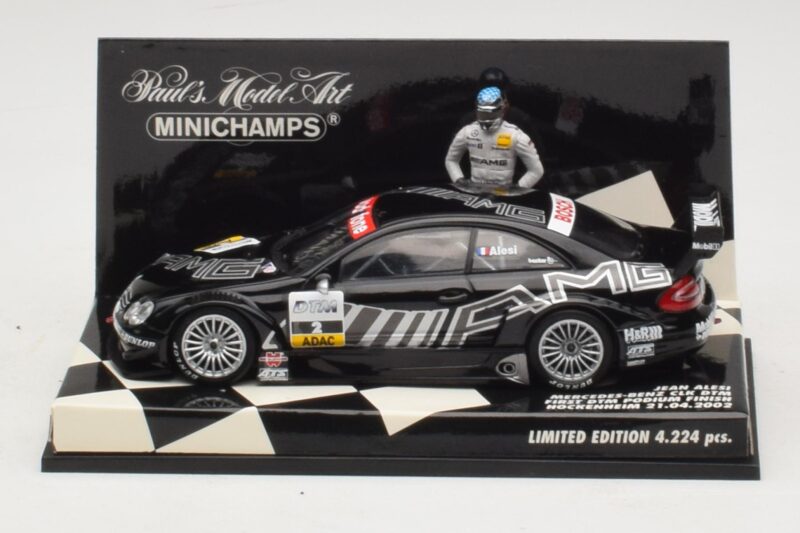
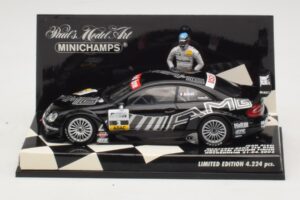
TL;DR: Minichamps' 1:43 Mercedes CLK-DTM #2 reproduces Jean Alesi's car from Hockenheim 2002, the race that brought his first DTM podium finish after moving from Formula 1. Diecast zinc alloy, sealed one-piece body with tampo-printed AMG-Mercedes livery. A specific, documented career milestone rather than a generic touring car livery.
Jean Alesi spent a decade in Formula 1 chasing a maiden win that came only once, at Canada in 1995, before moving into DTM with Mercedes-Benz in the early 2000s. Minichamps' 1:43 CLK-DTM #2 captures the car from Hockenheim in 2002, the round where Alesi stood on a DTM podium for the first time in his new category.
The #2 car's AMG-Mercedes livery combines the manufacturer's silver-and-black scheme with sponsor panels positioned across the doors, bonnet and rear wing, and Minichamps applies all of it by tampo printing directly onto the body rather than through separate decals. That method keeps the graphics flat against the sealed shell, with the door number and sponsor lettering holding sharp edges under close inspection rather than showing the slight lift or bubbling that ages less durable printing over time. Because the body has no opening panels, every millimetre of that livery work is visible and permanent, exactly as it needs to be on a subject this specific.
By 2002, DTM's CLK-based cars were silhouette racers built around a tube-frame chassis rather than a genuine production Mercedes underneath the bodywork, with the road car's shape retained mostly for brand recognition on television. The wide front splitter, flared arches and full-width rear wing that Minichamps reproduces here reflect that purpose-built approach, closer in concept to a prototype racer wearing a saloon's silhouette than to a modified road car. Diecast construction holds that aggressive bodywork's sharp creases well at 1:43, keeping the arch flares crisp rather than softened.
Alesi built his Formula 1 reputation on raw speed and a combative style that made him a fan favourite through the 1990s, driving for Tyrrell, Ferrari, Benetton, Sauber, Prost and Jordan across a career that produced a single grand prix win, at the 1995 Canadian Grand Prix, despite finishing on the podium many times over. That solitary win against such a long career became one of the era's more sympathetic F1 storylines, and it shaped how his subsequent move into touring cars was received by fans who had followed him for a decade.
Alesi joined Mercedes-Benz's factory-backed DTM effort in the early 2000s, part of the series' broader strategy of recruiting recognisable names from other categories to raise its profile. The round at Hockenheim in 2002 marked his first podium finish in the category, a genuine result rather than a promotional appearance, and it demonstrated that his single-seater speed translated into the heavier, more physical demands of DTM's silhouette cars. That specific result is what this Minichamps release documents, rather than a generic season livery applied without race-day context.
This CLK-DTM works best for a collector building around a specific narrative, either Alesi's career arc from Formula 1 into touring cars or Mercedes-Benz's factory DTM programme through the early 2000s, rather than as a generic addition to a general motorsport shelf. Pairing it with Alesi's earlier Ferrari or Benetton F1 liveries tells a complete driver story across categories. At 1:43, the model sits comfortably alongside other early-2000s DTM entries without demanding disproportionate shelf space, and the documented, dated result behind the livery gives it a specificity a season-generic touring car model cannot match.






Save £14.00