Mercedes S-Class W220 S600 Limited Edition Norev 1:18
Price:
£77.00
Save £3.00
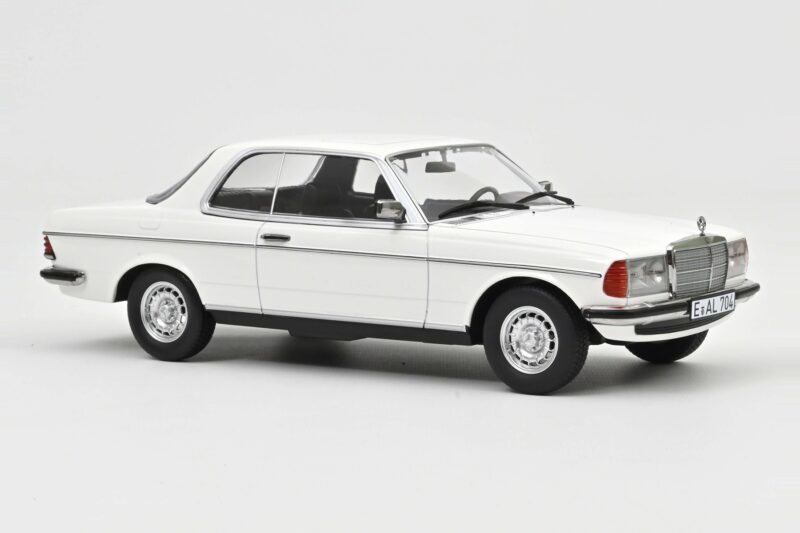
TL;DR: Norev's 1:18 diecast Mercedes 280 CE (C123) reproduces the 1980 coupe in Classic White, cast as a sealed one-piece body with crisp shut lines and deep gloss paint. Built on the famously durable W123 platform, this elegant two-door is a dependable grand tourer anchor for any Mercedes lineup.
The W123 earned its reputation as one of the most durable saloons Mercedes ever built, and the C123 coupe took that engineering and wrapped it in a lower, more elegant body designed by Bruno Sacco. The 280 CE sat near the top of the coupe range, with Mercedes' smooth inline-six under the bonnet.
This 280 CE is cast as a single sealed shell, with no doors, bonnet or boot that open. That construction suits the C123's low, clean lines particularly well, since the coupe's appeal always rested on its unbroken surfaces and tight proportions rather than any mechanical theatre. Norev holds consistent shut lines along the long doors and around the boot edge, with no visible seam where a hinge would otherwise need clearance. The Classic White paint sits deep and even across the bonnet and roof, showing none of the orange-peel texture that lets down cheaper castings, and the chrome window surrounds separate cleanly from the body colour.
With a fixed body, the exterior detail carries the entire impression, and this model earns it: the slim chrome bumpers, the correctly shaped headlamp surrounds, and the C123's distinctive quad round headlamps all hold sharp edges under close inspection. Mercedes badge work on the bonnet and boot reads clearly rather than smudging into a blob of silver paint, and the wheel design matches the steel-and-trim-ring look the real car wore before alloy wheels became common. None of this is flashy detail, but it is exactly the kind of quiet accuracy a Mercedes coupe from this era depends on.
Mercedes built the W123 saloon from 1976 and it became one of the brand's most respected cars, known for engineering that routinely carried examples past 300,000 miles with basic maintenance. The C123 coupe, launched slightly later, shared that mechanical foundation but wore its own shorter, lower body rather than a two-door version of the saloon shell. Bruno Sacco's design team gave it a more rakish windscreen angle and pillarless side windows, details that made the coupe feel genuinely distinct from its saloon sibling rather than a cut-down variant. That reliability record is a large part of why the W123 and its coupe sibling remain common sights at classic car gatherings across Europe today.
The 280 CE used Mercedes' smooth, well-regarded 2.8-litre inline-six, giving the coupe effortless cruising manners rather than outright pace, which suited its role as a grand tourer rather than a sports car. It sat below the later, rarer V8-powered coupes in the range but above the four-cylinder versions, making it one of the more balanced choices for buyers who wanted six-cylinder refinement without the running costs of a V8. For a collector, that mid-range specification also makes the 280 CE a representative choice: recognisably a C123 without needing to chase the rarest, most expensive variant to appreciate what the model does well.
Finished in Classic White rather than a darker, more common Mercedes shade, this 280 CE stands out on a shelf without resorting to an unusual colour the real car never wore. Its sealed body makes it a low-maintenance display piece, with nothing to dust out or leave ajar by accident, and the coupe's compact two-door footprint fits comfortably alongside saloons of the same era. It also pairs naturally with other Norev Mercedes releases from the same period, rounding out a themed shelf with minimal duplication of body styles, and few collections feel complete without at least one coupe from this era.