Last one
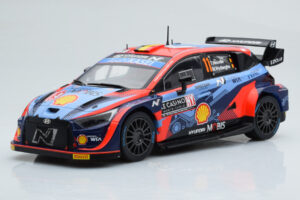
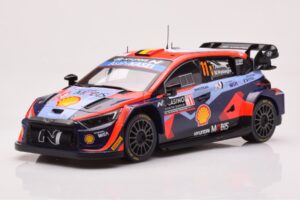
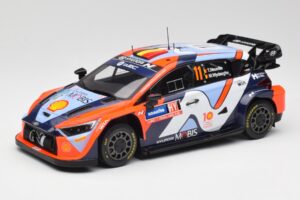
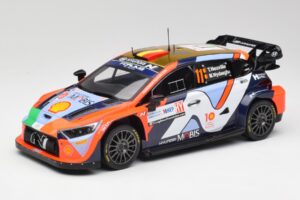
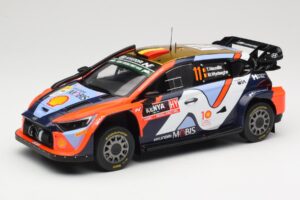
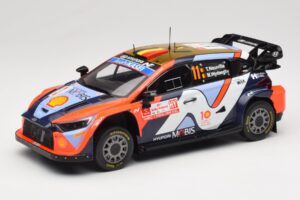
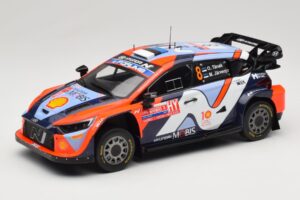
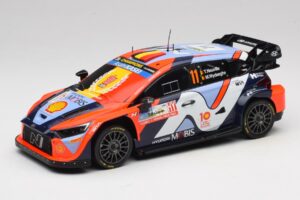
Hyundai i20 N Rally1 #11 T. Neuville / M. Wydaeghe Rally Monte Carlo 2022 IXO 1:18
Only 1 left
Price:
68.00 €
This model is currently sold out. Enter your email and we'll let you know when it's back in stock.
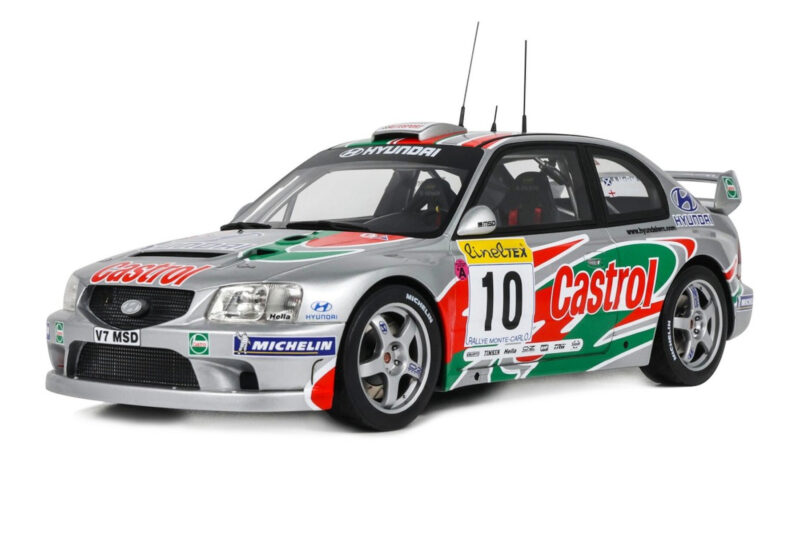
TL;DR: Otto's 1:18 resin Hyundai Accent WRC reproduces car #10, Alister McRae and David Senior's entry at the 2001 Monte Carlo Rally, cast as a sealed body with no opening panels. It documents Hyundai's early factory World Rally Championship effort, a lesser-known chapter beside the dominant Subaru and Ford campaigns of the period.
Monte Carlo has opened the World Rally Championship season for decades, its mix of dry Mediterranean tarmac and icy mountain passes testing crews before the rest of the calendar even begins. Hyundai's factory Accent WRC campaign was still finding its footing when Alister McRae and David Senior tackled the 2001 event, and Otto's 1:18 resin reproduction of car #10 captures that early, formative period of Hyundai's rallying history directly.
Hyundai entered the World Rally Championship as a factory manufacturer at the turn of the millennium, a period when the series was dominated by well-established programmes from Subaru, Ford, Peugeot and Mitsubishi. The Accent WRC gave Hyundai a competitive base, but as a newer entrant the team faced a steep learning curve against manufacturers with decades of rallying development behind them. Alister McRae, brother of the widely known Colin McRae, drove for the team during this period, pairing with co-driver David Senior for the notoriously difficult Monte Carlo Rally that opened the 2001 season.
Monte Carlo's route mixes dry tarmac stages in the hills above the principality with icy, snow-affected mountain passes, often within the same stage, demanding tyre choices and setup compromises that catch out even the most experienced crews. For a manufacturer still developing its rally programme, a result at Monte Carlo carried genuine weight regardless of final position, since simply completing the event intact against that unpredictable weather said something about the car's basic reliability. Reproducing car #10 from that specific event gives this model a dateable place in Hyundai's early WRC story.
Otto casts this Accent WRC in resin, capturing the reinforced arches, underbody protection and rally-specific aero that distinguish a homologated rally car from its road-going counterpart. Resin's tighter casting tolerances hold that added bodywork's edges sharply, and the material takes the dense sponsor livery typical of a factory rally entry with genuine clarity, the kind of small-logo detail that a coarser diecast casting can blur at this scale.
This casting is built as a single sealed shell, with no doors, bonnet or boot moulded to open, which keeps the livery's graphics running as one continuous surface across the door panels rather than breaking at a hinge line. For a rally car specifically, that continuity matters because the sponsor decals typically wrap across multiple panels in a single design, and any interruption at a seam would visibly disrupt the artwork's intended flow. Rally plate numbers and event-specific markings are tampo printed rather than applied as decals, keeping the lettering flat against the body and resistant to lifting over years of handling.
At 1:18, a rally-specification Accent WRC comes out slightly more compact than the road-going hatchback it was based on would suggest, since WRC regulations of the period constrained overall dimensions even as the reinforced bodywork added visual bulk around the arches and sills. That combination of compact footprint and aggressive stance makes it a strong subject for scale, reading as purposeful even standing still on a shelf. Displayed front three-quarter, the rally-specific lighting pods, roof scoop and reinforced arches give the model an immediately different character from any road car reproduction nearby, sitting well alongside the period's better-known Subaru Impreza and Ford Focus entries as a reminder that the championship's grid extended well beyond its two or three dominant teams.
WRC collections built purely around race-winning cars miss a large part of what made the early 2000s championship interesting, and this Hyundai Accent WRC fills exactly that gap. Its resin construction and sealed-body build sit consistently with Otto's wider motorsport range, offering the sharper livery detail resin allows over a mass-market diecast alternative. Alister McRae's name carries genuine recognition for UK collectors familiar with his brother Colin's championship-winning career, and pairing this Monte Carlo entry with a Subaru or Ford rival from the same season makes for a display that tells the full competitive picture rather than just its winning half.