Used

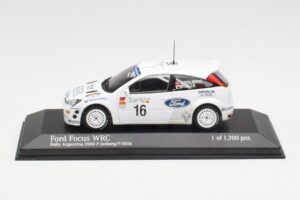
Ford Focus RS WRC #4 R. Kresta / J. Tomanek Rally Monte Carlo 2005 Minichamps 1:43
Only 2 left
Price:
£89.00
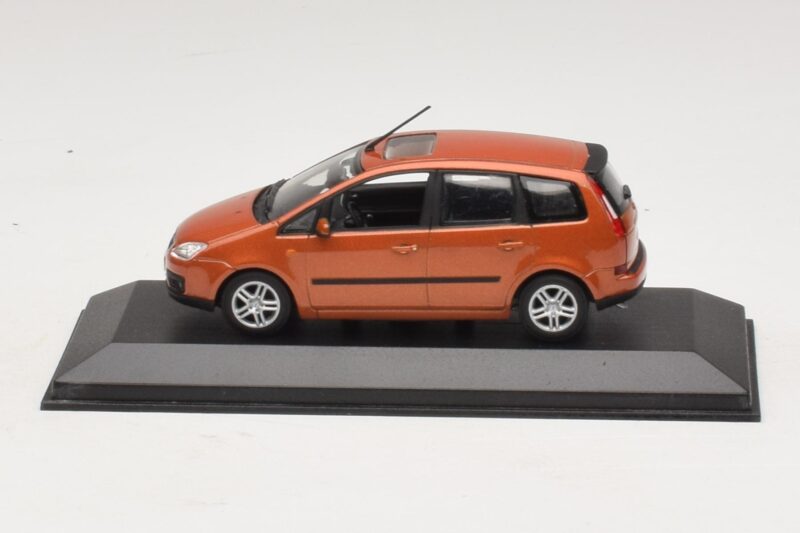
TL;DR: Minichamps' 1:43 diecast reproduces the first-generation Ford C-Max, the Focus-based compact MPV Ford sold from 2003, finished here in Mango Orange Metallic. The sealed zinc-alloy body holds an even gloss with no opening doors or tailgate, an honest, accessible piece for anyone collecting everyday 2000s Fords.
Not every diecast needs a racing pedigree or a supercar badge to earn its place on a shelf. The Ford C-Max was a practical, Focus-based people-carrier built for school runs and shopping trips, and Minichamps' Mango Orange Metallic replica captures exactly that unglamorous, useful character.
Ford launched the first-generation C-Max in 2003, built on the same platform as the contemporary Focus but with a taller body and a more upright driving position aimed squarely at family buyers who wanted MPV practicality without stepping up to a full-size van. It sat in a crowded segment alongside the Renault Scenic and Vauxhall Zafira, competing on interior flexibility and running costs rather than outright desirability. It was never a car anyone aspired to in the way they aspired to a hot hatch, but it sold in real numbers because it did its job without drama. That kind of unglamorous reliability is exactly why some collectors deliberately seek out ordinary family cars rather than only chasing performance icons.
Mango Orange Metallic is an unusual choice for a car this practical, and that is partly what makes this diecast interesting: most C-Max examples on the road were finished in silver, blue or grey, so a metallic orange example stands out on a shelf in a way the original rarely did on the street. The C-Max's tall, boxy silhouette and large glasshouse are captured faithfully, proportions that prioritised headroom and visibility over any pretence at sportiness. Getting that upright stance and generous window area right in miniature matters more than most collectors admit, since it is the detail that instantly identifies a compact MPV against a hatchback or estate on the same shelf.
This C-Max comes as a sealed one-piece casting, with no doors, bonnet or tailgate that open, so the entire impression of build quality rests on the exterior surfaces. The zinc-alloy body carries real weight for its size, and the Mango Orange Metallic paint holds an even gloss across the tall door panels and roofline without a shut line breaking the colour. Window surrounds and the C-Max's distinctive B-pillar are picked out cleanly, and the wheel design follows the practical, unshowy pattern the original wore. It is a straightforward, honest execution rather than a showcase piece, matching the car it depicts.
At 1:43, the C-Max occupies a footprint of roughly nine to ten centimetres, modest enough to sit comfortably alongside other 2000s family hatchbacks and estates without demanding special display treatment. The scale suits this subject well, since the C-Max's appeal was never about mechanical intricacy that a larger scale might reveal, but about a practical shape that reads clearly even at a smaller size. Collectors who focus on ordinary, high-volume family cars from this decade tend to prefer 1:43 for exactly this reason: it lets a whole segment of unglamorous but genuinely important cars sit together on one shelf without needing a room's worth of cabinet space.
There is a genuine collecting case for models like this C-Max, cars that never had racing pedigree or aspirational status but that represented what most people actually drove. Sitting alongside a Focus, a Fiesta or a Mondeo from the same decade, this Mango Orange C-Max tells a more complete story about 2000s British motoring than a shelf full of hot hatches and supercars ever could on its own. It is priced and finished to match that honest ambition rather than pretending to be something grander, and that is precisely why it belongs in a collection built around accuracy rather than glamour. Buyers looking for a genuinely representative family car, not a showpiece, will find good value here.






Save £14.00