New arrival

Composite construction pairs a metal diecast body with resin or plastic interior detailing, giving collectors opening features alongside a level of cockpit realism that pure diecast rarely matches. This category is built almost entirely on AUTOart’s approach to supercars and performance icons in 1:18.





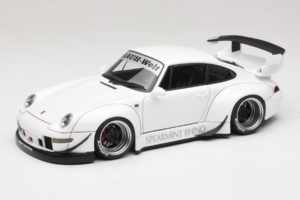



















TL;DR: Composite scale models from AUTOart combine a metal diecast body with detailed resin or plastic interiors in 1:18, covering Porsche, Lamborghini, McLaren, Mercedes, Nissan and Audi supercars, tuner specials and JDM performance icons from the 1970s to the 2010s.
Composite scale models occupy a distinct construction category of their own, sitting between pure diecast and sealed resin. A metal body carries the weight and opening features collectors expect, while a separately detailed resin or plastic interior delivers a level of cockpit realism that pure diecast construction typically cannot match at the same price point.
AUTOart has built its reputation on this composite approach, and its dominance within this category reflects a manufacturer that treats interior fidelity as seriously as exterior bodywork. The metal body gives the piece genuine heft and supports opening doors, bonnets and boots, while the composite interior adds stitching detail, pedal work and dashboard texture that raise the overall fidelity noticeably above standard diecast.
Porsche, Lamborghini and McLaren subjects benefit particularly from composite construction, since supercar interiors carry distinctive design details, carbon-effect trim and sculpted seating, that a plain moulded diecast tub cannot reproduce convincingly.
Nissan and other JDM Sports subjects sit alongside the European supercars here, along with Tuner Specials, reflecting how composite construction has become a favoured approach for enthusiast-driven performance subjects across multiple automotive cultures.
This construction method rewards a collector who values interior detail as much as exterior proportion, making it a strong choice for hero pieces intended for close inspection.
Composite construction typically commands a price above standard diecast but below investment-tier sealed resin, reflecting the additional tooling complexity of producing separate interior components to a matching standard. For collectors weighing opening features against interior realism, composite offers a genuine middle path rather than forcing a choice between the two.
Composite construction combines a metal diecast body, which supports weight and opening features, with a separately detailed resin or plastic interior, offering more realistic cockpit detail than a single-piece moulded diecast interior tub.
AUTOart has built its reputation around this construction approach, prioritising interior fidelity alongside exterior bodywork, which explains its dominance within this specific construction category.
Neither is universally better; composite offers a middle path with opening features plus detailed interiors, while sealed resin achieves sharper exterior panel lines and pure diecast offers the most accessible pricing.
Supercars and JDM performance icons with distinctive interior design, such as Porsche, Lamborghini and Nissan subjects, benefit most from composite construction's ability to reproduce detailed cockpit trim accurately.