


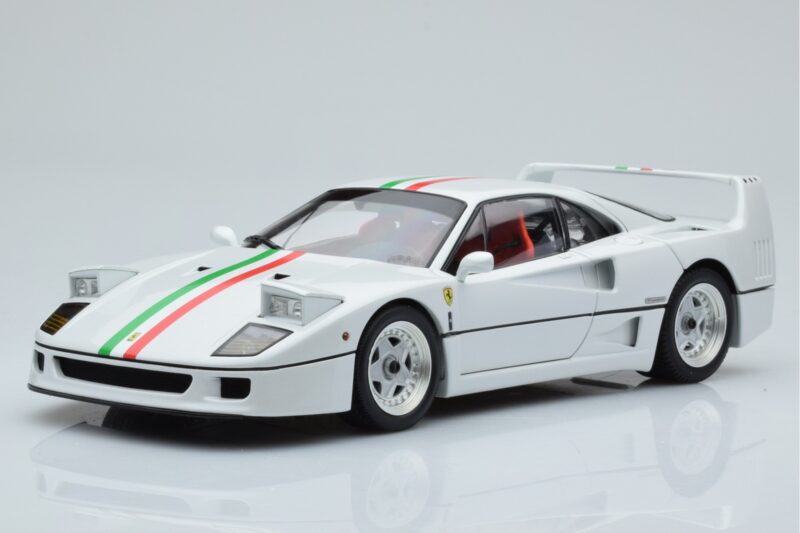
Ferrari F40 Pearl White Italy Kyosho 1:18
Sold out
1
/
8
Kyosho's 1:18 diecast Ferrari F40 Pearl White Italy edition shares its striking pearl finish with the standard Pearl White release but carries its own distinct catalogue designation, worth comparing side by side against product photography before choosing between them. Both reproduce the 1987 supercar's carbon-kevlar bodywork with opening doors and a lifting engine cover over the twin-turbo V8, and either makes a striking departure from the familiar Rosso Corsa F40.
1 / 8
[{"index":0,"id":"196695","thumb":"https:\/\/models118.co.uk\/wp-content\/uploads\/2026\/03\/ferrari-f40-pearl-white-italy-kyosho-1-18-300x200.jpg","medium":"https:\/\/models118.co.uk\/wp-content\/uploads\/2026\/03\/ferrari-f40-pearl-white-italy-kyosho-1-18-800x533.jpg","full":"https:\/\/models118.co.uk\/wp-content\/uploads\/2026\/03\/ferrari-f40-pearl-white-italy-kyosho-1-18.jpg","srcset":"https:\/\/models118.co.uk\/wp-content\/uploads\/2026\/03\/ferrari-f40-pearl-white-italy-kyosho-1-18-800x533.jpg 800w, https:\/\/models118.co.uk\/wp-content\/uploads\/2026\/03\/ferrari-f40-pearl-white-italy-kyosho-1-18-64x43.jpg 64w, https:\/\/models118.co.uk\/wp-content\/uploads\/2026\/03\/ferrari-f40-pearl-white-italy-kyosho-1-18-300x200.jpg 300w, https:\/\/models118.co.uk\/wp-content\/uploads\/2026\/03\/ferrari-f40-pearl-white-italy-kyosho-1-18.jpg 1800w","sizes":"(max-width: 1023px) 400px, 640px","srcsetAvif":"https:\/\/models118.co.uk\/wp-content\/uploads\/2026\/03\/ferrari-f40-pearl-white-italy-kyosho-1-18-800x533.jpg.avif 800w, https:\/\/models118.co.uk\/wp-content\/uploads\/2026\/03\/ferrari-f40-pearl-white-italy-kyosho-1-18-64x43.jpg.avif 64w, https:\/\/models118.co.uk\/wp-content\/uploads\/2026\/03\/ferrari-f40-pearl-white-italy-kyosho-1-18-300x200.jpg.avif 300w, https:\/\/models118.co.uk\/wp-content\/uploads\/2026\/03\/ferrari-f40-pearl-white-italy-kyosho-1-18.jpg.avif 1800w","srcsetWebp":"https:\/\/models118.co.uk\/wp-content\/uploads\/2026\/03\/ferrari-f40-pearl-white-italy-kyosho-1-18-800x533.jpg.webp 800w, https:\/\/models118.co.uk\/wp-content\/uploads\/2026\/03\/ferrari-f40-pearl-white-italy-kyosho-1-18-64x43.jpg.webp 64w, https:\/\/models118.co.uk\/wp-content\/uploads\/2026\/03\/ferrari-f40-pearl-white-italy-kyosho-1-18-300x200.jpg.webp 300w, https:\/\/models118.co.uk\/wp-content\/uploads\/2026\/03\/ferrari-f40-pearl-white-italy-kyosho-1-18.jpg.webp 1800w","alt":"Ferrari F40 Pearl White Italy Kyosho 1:18 08416PWT-G Diecast"},{"index":1,"id":196722,"thumb":"https:\/\/models118.co.uk\/wp-content\/uploads\/2026\/03\/ferrari-f40-pearl-white-italy-kyosho-1-18-1-300x200.jpg","medium":"https:\/\/models118.co.uk\/wp-content\/uploads\/2026\/03\/ferrari-f40-pearl-white-italy-kyosho-1-18-1-800x533.jpg","full":"https:\/\/models118.co.uk\/wp-content\/uploads\/2026\/03\/ferrari-f40-pearl-white-italy-kyosho-1-18-1.jpg","srcset":"https:\/\/models118.co.uk\/wp-content\/uploads\/2026\/03\/ferrari-f40-pearl-white-italy-kyosho-1-18-1-800x533.jpg 800w, https:\/\/models118.co.uk\/wp-content\/uploads\/2026\/03\/ferrari-f40-pearl-white-italy-kyosho-1-18-1-64x43.jpg 64w, https:\/\/models118.co.uk\/wp-content\/uploads\/2026\/03\/ferrari-f40-pearl-white-italy-kyosho-1-18-1-300x200.jpg 300w, https:\/\/models118.co.uk\/wp-content\/uploads\/2026\/03\/ferrari-f40-pearl-white-italy-kyosho-1-18-1.jpg 1800w","sizes":"(max-width: 1023px) 400px, 640px","srcsetAvif":"https:\/\/models118.co.uk\/wp-content\/uploads\/2026\/03\/ferrari-f40-pearl-white-italy-kyosho-1-18-1-800x533.jpg.avif 800w, https:\/\/models118.co.uk\/wp-content\/uploads\/2026\/03\/ferrari-f40-pearl-white-italy-kyosho-1-18-1-64x43.jpg.avif 64w, https:\/\/models118.co.uk\/wp-content\/uploads\/2026\/03\/ferrari-f40-pearl-white-italy-kyosho-1-18-1-300x200.jpg.avif 300w, https:\/\/models118.co.uk\/wp-content\/uploads\/2026\/03\/ferrari-f40-pearl-white-italy-kyosho-1-18-1.jpg.avif 1800w","srcsetWebp":"https:\/\/models118.co.uk\/wp-content\/uploads\/2026\/03\/ferrari-f40-pearl-white-italy-kyosho-1-18-1-800x533.jpg.webp 800w, https:\/\/models118.co.uk\/wp-content\/uploads\/2026\/03\/ferrari-f40-pearl-white-italy-kyosho-1-18-1-64x43.jpg.webp 64w, https:\/\/models118.co.uk\/wp-content\/uploads\/2026\/03\/ferrari-f40-pearl-white-italy-kyosho-1-18-1-300x200.jpg.webp 300w, https:\/\/models118.co.uk\/wp-content\/uploads\/2026\/03\/ferrari-f40-pearl-white-italy-kyosho-1-18-1.jpg.webp 1800w","alt":"Ferrari F40 Pearl White Italy Kyosho 1:18 08416PWT-G Diecast \u2014 photo 2 of 8"},{"index":2,"id":196749,"thumb":"https:\/\/models118.co.uk\/wp-content\/uploads\/2026\/03\/ferrari-f40-pearl-white-italy-kyosho-1-18-2-300x200.jpg","medium":"https:\/\/models118.co.uk\/wp-content\/uploads\/2026\/03\/ferrari-f40-pearl-white-italy-kyosho-1-18-2-800x533.jpg","full":"https:\/\/models118.co.uk\/wp-content\/uploads\/2026\/03\/ferrari-f40-pearl-white-italy-kyosho-1-18-2.jpg","srcset":"https:\/\/models118.co.uk\/wp-content\/uploads\/2026\/03\/ferrari-f40-pearl-white-italy-kyosho-1-18-2-800x533.jpg 800w, https:\/\/models118.co.uk\/wp-content\/uploads\/2026\/03\/ferrari-f40-pearl-white-italy-kyosho-1-18-2-64x43.jpg 64w, https:\/\/models118.co.uk\/wp-content\/uploads\/2026\/03\/ferrari-f40-pearl-white-italy-kyosho-1-18-2-300x200.jpg 300w, https:\/\/models118.co.uk\/wp-content\/uploads\/2026\/03\/ferrari-f40-pearl-white-italy-kyosho-1-18-2.jpg 1800w","sizes":"(max-width: 1023px) 400px, 640px","srcsetAvif":"https:\/\/models118.co.uk\/wp-content\/uploads\/2026\/03\/ferrari-f40-pearl-white-italy-kyosho-1-18-2-800x533.jpg.avif 800w, https:\/\/models118.co.uk\/wp-content\/uploads\/2026\/03\/ferrari-f40-pearl-white-italy-kyosho-1-18-2-64x43.jpg.avif 64w, https:\/\/models118.co.uk\/wp-content\/uploads\/2026\/03\/ferrari-f40-pearl-white-italy-kyosho-1-18-2-300x200.jpg.avif 300w, https:\/\/models118.co.uk\/wp-content\/uploads\/2026\/03\/ferrari-f40-pearl-white-italy-kyosho-1-18-2.jpg.avif 1800w","srcsetWebp":"https:\/\/models118.co.uk\/wp-content\/uploads\/2026\/03\/ferrari-f40-pearl-white-italy-kyosho-1-18-2-800x533.jpg.webp 800w, https:\/\/models118.co.uk\/wp-content\/uploads\/2026\/03\/ferrari-f40-pearl-white-italy-kyosho-1-18-2-64x43.jpg.webp 64w, https:\/\/models118.co.uk\/wp-content\/uploads\/2026\/03\/ferrari-f40-pearl-white-italy-kyosho-1-18-2-300x200.jpg.webp 300w, https:\/\/models118.co.uk\/wp-content\/uploads\/2026\/03\/ferrari-f40-pearl-white-italy-kyosho-1-18-2.jpg.webp 1800w","alt":"Ferrari F40 Pearl White Italy Kyosho 1:18 08416PWT-G Diecast \u2014 photo 3 of 8"},{"index":3,"id":196776,"thumb":"https:\/\/models118.co.uk\/wp-content\/uploads\/2026\/03\/ferrari-f40-pearl-white-italy-kyosho-1-18-3-300x200.jpg","medium":"https:\/\/models118.co.uk\/wp-content\/uploads\/2026\/03\/ferrari-f40-pearl-white-italy-kyosho-1-18-3-800x533.jpg","full":"https:\/\/models118.co.uk\/wp-content\/uploads\/2026\/03\/ferrari-f40-pearl-white-italy-kyosho-1-18-3.jpg","srcset":"https:\/\/models118.co.uk\/wp-content\/uploads\/2026\/03\/ferrari-f40-pearl-white-italy-kyosho-1-18-3-800x533.jpg 800w, https:\/\/models118.co.uk\/wp-content\/uploads\/2026\/03\/ferrari-f40-pearl-white-italy-kyosho-1-18-3-64x43.jpg 64w, https:\/\/models118.co.uk\/wp-content\/uploads\/2026\/03\/ferrari-f40-pearl-white-italy-kyosho-1-18-3-300x200.jpg 300w, https:\/\/models118.co.uk\/wp-content\/uploads\/2026\/03\/ferrari-f40-pearl-white-italy-kyosho-1-18-3.jpg 1800w","sizes":"(max-width: 1023px) 400px, 640px","srcsetAvif":"https:\/\/models118.co.uk\/wp-content\/uploads\/2026\/03\/ferrari-f40-pearl-white-italy-kyosho-1-18-3-800x533.jpg.avif 800w, https:\/\/models118.co.uk\/wp-content\/uploads\/2026\/03\/ferrari-f40-pearl-white-italy-kyosho-1-18-3-64x43.jpg.avif 64w, https:\/\/models118.co.uk\/wp-content\/uploads\/2026\/03\/ferrari-f40-pearl-white-italy-kyosho-1-18-3-300x200.jpg.avif 300w, https:\/\/models118.co.uk\/wp-content\/uploads\/2026\/03\/ferrari-f40-pearl-white-italy-kyosho-1-18-3.jpg.avif 1800w","srcsetWebp":"https:\/\/models118.co.uk\/wp-content\/uploads\/2026\/03\/ferrari-f40-pearl-white-italy-kyosho-1-18-3-800x533.jpg.webp 800w, https:\/\/models118.co.uk\/wp-content\/uploads\/2026\/03\/ferrari-f40-pearl-white-italy-kyosho-1-18-3-64x43.jpg.webp 64w, https:\/\/models118.co.uk\/wp-content\/uploads\/2026\/03\/ferrari-f40-pearl-white-italy-kyosho-1-18-3-300x200.jpg.webp 300w, https:\/\/models118.co.uk\/wp-content\/uploads\/2026\/03\/ferrari-f40-pearl-white-italy-kyosho-1-18-3.jpg.webp 1800w","alt":"Ferrari F40 Pearl White Italy Kyosho 1:18 08416PWT-G Diecast \u2014 photo 4 of 8"},{"index":4,"id":196803,"thumb":"https:\/\/models118.co.uk\/wp-content\/uploads\/2026\/03\/ferrari-f40-pearl-white-italy-kyosho-1-18-4-300x200.jpg","medium":"https:\/\/models118.co.uk\/wp-content\/uploads\/2026\/03\/ferrari-f40-pearl-white-italy-kyosho-1-18-4-800x533.jpg","full":"https:\/\/models118.co.uk\/wp-content\/uploads\/2026\/03\/ferrari-f40-pearl-white-italy-kyosho-1-18-4.jpg","srcset":"https:\/\/models118.co.uk\/wp-content\/uploads\/2026\/03\/ferrari-f40-pearl-white-italy-kyosho-1-18-4-800x533.jpg 800w, https:\/\/models118.co.uk\/wp-content\/uploads\/2026\/03\/ferrari-f40-pearl-white-italy-kyosho-1-18-4-64x43.jpg 64w, https:\/\/models118.co.uk\/wp-content\/uploads\/2026\/03\/ferrari-f40-pearl-white-italy-kyosho-1-18-4-300x200.jpg 300w, https:\/\/models118.co.uk\/wp-content\/uploads\/2026\/03\/ferrari-f40-pearl-white-italy-kyosho-1-18-4.jpg 1800w","sizes":"(max-width: 1023px) 400px, 640px","srcsetAvif":"https:\/\/models118.co.uk\/wp-content\/uploads\/2026\/03\/ferrari-f40-pearl-white-italy-kyosho-1-18-4-800x533.jpg.avif 800w, https:\/\/models118.co.uk\/wp-content\/uploads\/2026\/03\/ferrari-f40-pearl-white-italy-kyosho-1-18-4-64x43.jpg.avif 64w, https:\/\/models118.co.uk\/wp-content\/uploads\/2026\/03\/ferrari-f40-pearl-white-italy-kyosho-1-18-4-300x200.jpg.avif 300w, https:\/\/models118.co.uk\/wp-content\/uploads\/2026\/03\/ferrari-f40-pearl-white-italy-kyosho-1-18-4.jpg.avif 1800w","srcsetWebp":"https:\/\/models118.co.uk\/wp-content\/uploads\/2026\/03\/ferrari-f40-pearl-white-italy-kyosho-1-18-4-800x533.jpg.webp 800w, https:\/\/models118.co.uk\/wp-content\/uploads\/2026\/03\/ferrari-f40-pearl-white-italy-kyosho-1-18-4-64x43.jpg.webp 64w, https:\/\/models118.co.uk\/wp-content\/uploads\/2026\/03\/ferrari-f40-pearl-white-italy-kyosho-1-18-4-300x200.jpg.webp 300w, https:\/\/models118.co.uk\/wp-content\/uploads\/2026\/03\/ferrari-f40-pearl-white-italy-kyosho-1-18-4.jpg.webp 1800w","alt":"Ferrari F40 Pearl White Italy Kyosho 1:18 08416PWT-G Diecast \u2014 photo 5 of 8"},{"index":5,"id":196830,"thumb":"https:\/\/models118.co.uk\/wp-content\/uploads\/2026\/03\/ferrari-f40-pearl-white-italy-kyosho-1-18-5-300x200.jpg","medium":"https:\/\/models118.co.uk\/wp-content\/uploads\/2026\/03\/ferrari-f40-pearl-white-italy-kyosho-1-18-5-800x533.jpg","full":"https:\/\/models118.co.uk\/wp-content\/uploads\/2026\/03\/ferrari-f40-pearl-white-italy-kyosho-1-18-5.jpg","srcset":"https:\/\/models118.co.uk\/wp-content\/uploads\/2026\/03\/ferrari-f40-pearl-white-italy-kyosho-1-18-5-800x533.jpg 800w, https:\/\/models118.co.uk\/wp-content\/uploads\/2026\/03\/ferrari-f40-pearl-white-italy-kyosho-1-18-5-64x43.jpg 64w, https:\/\/models118.co.uk\/wp-content\/uploads\/2026\/03\/ferrari-f40-pearl-white-italy-kyosho-1-18-5-300x200.jpg 300w, https:\/\/models118.co.uk\/wp-content\/uploads\/2026\/03\/ferrari-f40-pearl-white-italy-kyosho-1-18-5.jpg 1800w","sizes":"(max-width: 1023px) 400px, 640px","srcsetAvif":"https:\/\/models118.co.uk\/wp-content\/uploads\/2026\/03\/ferrari-f40-pearl-white-italy-kyosho-1-18-5-800x533.jpg.avif 800w, https:\/\/models118.co.uk\/wp-content\/uploads\/2026\/03\/ferrari-f40-pearl-white-italy-kyosho-1-18-5-64x43.jpg.avif 64w, https:\/\/models118.co.uk\/wp-content\/uploads\/2026\/03\/ferrari-f40-pearl-white-italy-kyosho-1-18-5-300x200.jpg.avif 300w, https:\/\/models118.co.uk\/wp-content\/uploads\/2026\/03\/ferrari-f40-pearl-white-italy-kyosho-1-18-5.jpg.avif 1800w","srcsetWebp":"https:\/\/models118.co.uk\/wp-content\/uploads\/2026\/03\/ferrari-f40-pearl-white-italy-kyosho-1-18-5-800x533.jpg.webp 800w, https:\/\/models118.co.uk\/wp-content\/uploads\/2026\/03\/ferrari-f40-pearl-white-italy-kyosho-1-18-5-64x43.jpg.webp 64w, https:\/\/models118.co.uk\/wp-content\/uploads\/2026\/03\/ferrari-f40-pearl-white-italy-kyosho-1-18-5-300x200.jpg.webp 300w, https:\/\/models118.co.uk\/wp-content\/uploads\/2026\/03\/ferrari-f40-pearl-white-italy-kyosho-1-18-5.jpg.webp 1800w","alt":"Ferrari F40 Pearl White Italy Kyosho 1:18 08416PWT-G Diecast \u2014 photo 6 of 8"},{"index":6,"id":196857,"thumb":"https:\/\/models118.co.uk\/wp-content\/uploads\/2026\/03\/ferrari-f40-pearl-white-italy-kyosho-1-18-6-300x200.jpg","medium":"https:\/\/models118.co.uk\/wp-content\/uploads\/2026\/03\/ferrari-f40-pearl-white-italy-kyosho-1-18-6-800x533.jpg","full":"https:\/\/models118.co.uk\/wp-content\/uploads\/2026\/03\/ferrari-f40-pearl-white-italy-kyosho-1-18-6.jpg","srcset":"https:\/\/models118.co.uk\/wp-content\/uploads\/2026\/03\/ferrari-f40-pearl-white-italy-kyosho-1-18-6-800x533.jpg 800w, https:\/\/models118.co.uk\/wp-content\/uploads\/2026\/03\/ferrari-f40-pearl-white-italy-kyosho-1-18-6-64x43.jpg 64w, https:\/\/models118.co.uk\/wp-content\/uploads\/2026\/03\/ferrari-f40-pearl-white-italy-kyosho-1-18-6-300x200.jpg 300w, https:\/\/models118.co.uk\/wp-content\/uploads\/2026\/03\/ferrari-f40-pearl-white-italy-kyosho-1-18-6.jpg 1800w","sizes":"(max-width: 1023px) 400px, 640px","srcsetAvif":"https:\/\/models118.co.uk\/wp-content\/uploads\/2026\/03\/ferrari-f40-pearl-white-italy-kyosho-1-18-6-800x533.jpg.avif 800w, https:\/\/models118.co.uk\/wp-content\/uploads\/2026\/03\/ferrari-f40-pearl-white-italy-kyosho-1-18-6-64x43.jpg.avif 64w, https:\/\/models118.co.uk\/wp-content\/uploads\/2026\/03\/ferrari-f40-pearl-white-italy-kyosho-1-18-6-300x200.jpg.avif 300w, https:\/\/models118.co.uk\/wp-content\/uploads\/2026\/03\/ferrari-f40-pearl-white-italy-kyosho-1-18-6.jpg.avif 1800w","srcsetWebp":"https:\/\/models118.co.uk\/wp-content\/uploads\/2026\/03\/ferrari-f40-pearl-white-italy-kyosho-1-18-6-800x533.jpg.webp 800w, https:\/\/models118.co.uk\/wp-content\/uploads\/2026\/03\/ferrari-f40-pearl-white-italy-kyosho-1-18-6-64x43.jpg.webp 64w, https:\/\/models118.co.uk\/wp-content\/uploads\/2026\/03\/ferrari-f40-pearl-white-italy-kyosho-1-18-6-300x200.jpg.webp 300w, https:\/\/models118.co.uk\/wp-content\/uploads\/2026\/03\/ferrari-f40-pearl-white-italy-kyosho-1-18-6.jpg.webp 1800w","alt":"Ferrari F40 Pearl White Italy Kyosho 1:18 08416PWT-G Diecast \u2014 photo 7 of 8"},{"index":7,"id":196884,"thumb":"https:\/\/models118.co.uk\/wp-content\/uploads\/2026\/03\/ferrari-f40-pearl-white-italy-kyosho-1-18-7-300x200.jpg","medium":"https:\/\/models118.co.uk\/wp-content\/uploads\/2026\/03\/ferrari-f40-pearl-white-italy-kyosho-1-18-7-800x533.jpg","full":"https:\/\/models118.co.uk\/wp-content\/uploads\/2026\/03\/ferrari-f40-pearl-white-italy-kyosho-1-18-7.jpg","srcset":"https:\/\/models118.co.uk\/wp-content\/uploads\/2026\/03\/ferrari-f40-pearl-white-italy-kyosho-1-18-7-800x533.jpg 800w, https:\/\/models118.co.uk\/wp-content\/uploads\/2026\/03\/ferrari-f40-pearl-white-italy-kyosho-1-18-7-64x43.jpg 64w, https:\/\/models118.co.uk\/wp-content\/uploads\/2026\/03\/ferrari-f40-pearl-white-italy-kyosho-1-18-7-300x200.jpg 300w, https:\/\/models118.co.uk\/wp-content\/uploads\/2026\/03\/ferrari-f40-pearl-white-italy-kyosho-1-18-7.jpg 1800w","sizes":"(max-width: 1023px) 400px, 640px","srcsetAvif":"https:\/\/models118.co.uk\/wp-content\/uploads\/2026\/03\/ferrari-f40-pearl-white-italy-kyosho-1-18-7-800x533.jpg.avif 800w, https:\/\/models118.co.uk\/wp-content\/uploads\/2026\/03\/ferrari-f40-pearl-white-italy-kyosho-1-18-7-64x43.jpg.avif 64w, https:\/\/models118.co.uk\/wp-content\/uploads\/2026\/03\/ferrari-f40-pearl-white-italy-kyosho-1-18-7-300x200.jpg.avif 300w, https:\/\/models118.co.uk\/wp-content\/uploads\/2026\/03\/ferrari-f40-pearl-white-italy-kyosho-1-18-7.jpg.avif 1800w","srcsetWebp":"https:\/\/models118.co.uk\/wp-content\/uploads\/2026\/03\/ferrari-f40-pearl-white-italy-kyosho-1-18-7-800x533.jpg.webp 800w, https:\/\/models118.co.uk\/wp-content\/uploads\/2026\/03\/ferrari-f40-pearl-white-italy-kyosho-1-18-7-64x43.jpg.webp 64w, https:\/\/models118.co.uk\/wp-content\/uploads\/2026\/03\/ferrari-f40-pearl-white-italy-kyosho-1-18-7-300x200.jpg.webp 300w, https:\/\/models118.co.uk\/wp-content\/uploads\/2026\/03\/ferrari-f40-pearl-white-italy-kyosho-1-18-7.jpg.webp 1800w","alt":"Ferrari F40 Pearl White Italy Kyosho 1:18 08416PWT-G Diecast \u2014 photo 8 of 8"}]
Ferrari F40 Pearl White Italy Kyosho 1:18
Current price:
£285.00
Price shown excluding UK VAT. Import VAT and the courier's customs clearance fee are collected on delivery.
Out of production
This model is currently sold out. Enter your email and we'll let you know when it's back in stock.
Genuine articles
Sourced from manufacturers
5-layer carton
Foam-filled interior
Hassle-free returns
14-day no-quibble returns
Secure payment
Bank-level encryption
About the Ferrari F40 Pearl White Italy Kyosho 1:18
TL;DR: Kyosho's 1:18 diecast Ferrari F40 Pearl White Italy edition reproduces the 1987 supercar in pearl white, sharing its finish with a sister Pearl White catalogue entry but issued under its own distinct designation. Opening doors and a lifting engine cover reveal the twin-turbo V8 beneath correctly proportioned carbon-kevlar bodywork.
Kyosho catalogues two pearl white F40 editions carrying nearly identical specification, this one marked as the Italy release. For a collector chasing every distinct F40 variant, that separate designation alone justifies close comparison against its sibling before deciding which to add.
Two Pearl White F40 Editions, One Distinct Catalogue Number
Comparing This Italy Edition Against Its Sibling Release
This Italy-designated edition and Kyosho's standard Pearl White F40 appear to share the same base casting and finish, which raises the obvious question every careful buyer should ask before purchasing either: what precisely separates them. Serious F40 collectors tracking every regional or catalogue variant should compare the two side by side against detailed product photography, checking plate styling, small badge details and box printing, since manufacturers routinely issue near-identical SKUs for different distribution markets without always documenting the exact difference prominently.
Shared Bodywork and Opening Features
Whatever the precise distinction, the underlying model delivers the same construction quality as its sibling: doors lift on sturdy hinges to expose a deliberately sparse cabin, and the rear engine cover raises to reveal the twin-turbo V8 moulded with visible intake plumbing rather than a blanked panel. The pearl white finish carries the same subtle metallic shimmer under direct light, applied evenly across the F40's sharply creased, aerodynamically driven panel work.
The F40's Uncompromising 1980s Engineering
A Turbocharged Statement Built on Minimal Compromise
The F40 was conceived with almost no concession to comfort, built to mark Ferrari's fortieth anniversary as a raw, driver-focused statement rather than a refined grand tourer. It was the last car Enzo Ferrari personally approved before his death, which gives every F40 variant, including this one, a genuine sense of historical closure within the company's story.
Carbon-Kevlar Construction Over a Tubular Chassis
Composite carbon-kevlar panels over a tubular steel chassis kept the F40 light relative to its power output, and the twin-turbocharged V8 behind the cabin was widely reported at launch as capable of pushing the car past 200mph, a genuinely rare claim for a road car in the late 1980s. That combination of light construction and forced induction is exactly what a well-proportioned diecast needs to communicate through its stance, regardless of which catalogue edition wears it.
Why Catalogue Variants Matter to Serious Collectors
Manufacturers issue distinct SKUs for reasons that aren't always obvious from the outside: different export markets, different retail partners, or small production-run adjustments that never make it into public documentation. For a subject as heavily reproduced as the F40, tracking these catalogue variants becomes part of the hobby itself, similar to how coin or stamp collectors distinguish mint marks that look identical to a casual observer. Treat this Italy edition as a genuine variant worth documenting separately in a collection log rather than assuming it's interchangeable with the standard release, even if the visual difference proves minor. That discipline, checking edition numbers, box printing and any small badge or plate differences, is what separates a curated F40 collection from a pile of near-duplicates.
Building a Complete F40 Set Around This Edition
For a collector already committed to building a comprehensive F40 set, owning both the standard Pearl White release and this Italy-designated edition side by side makes more sense than picking one arbitrarily, since the value of tracking catalogue variants lies precisely in owning the full set rather than a single representative example. Positioned within a broader 1980s Ferrari supercar theme, either pearl white F40 works as a striking contrast to a red example, but this Italy edition carries the added interest of its distinct designation for anyone who takes cataloguing seriously.
Same marque, same scale
Last one
Last one
Used
Used
Last one
Used
Last one
Used
Collectors also bought
Browse all 1:18
Last one
Back in stock
Last one
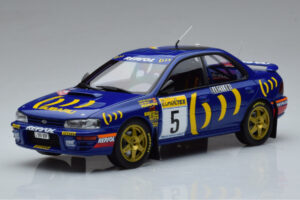
Subaru Impreza #5 C. Sainz / L. Moya 2nd Place Rally Monte Carlo 1995 Kyosho 1:18
Only 1 left
Price:
£180.00
Last one
Last one
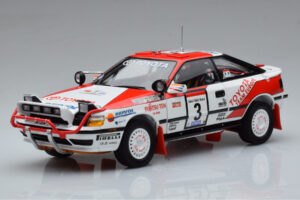
Toyota Celica GT-Four ST165 #3 B. Waldegard / F. Gallagher Winner Safari Rally 1990 Kyosho 1:18
Only 1 left
Price:
£180.00
Last one
Back in stock
Last one
Back in stock
Last one
Back in stock
Recently viewed
{"id":302675,"name":"Ferrari F40 Pearl White Italy Kyosho 1:18","price":"£<\/span>285.00<\/bdi><\/span>","image":"https:\/\/models118.co.uk\/wp-content\/uploads\/2026\/03\/ferrari-f40-pearl-white-italy-kyosho-1-18-400x400.jpg","permalink":"https:\/\/models118.co.uk\/ferrari-f40-pearl-white-italy-kyosho-1-18-08416pwt-g\/","brand":"Ferrari"}