{"ajaxurl":"https:\/\/models118.co.uk\/wp-admin\/admin-ajax.php?lang=en_GB","nonce":"b5ef73b935","homeUrl":"https:\/\/models118.co.uk\/","shopUrl":"https:\/\/models118.co.uk\/shop\/","cartUrl":"https:\/\/models118.co.uk\/cart-en-gb\/","checkoutUrl":"https:\/\/models118.co.uk\/checkout\/","skipCart":true,"collectionLimit":12,"i18n":{"addedToCart":"Added to basket","addToWishlist":"Add to wishlist","addedToWishlist":"Added to wishlist","removeFromWishlist":"Remove from wishlist","removedFromWishlist":"Removed from wishlist","undo":"Undo","error":"Something went wrong","loading":"Loading...","outOfStock":"Out of stock","viewCart":"View basket","proceedToCheckout":"Proceed to checkout","addedToCollection":"Added to your collection","reserved":"Reserved!","soldOut":"Sold out","invalidEmail":"Please enter a valid email address","connectionError":"Connection error. Please try again.","loginToSave":"Sign in to save this model","waitlistNotify":"Notify me","waitlistOnList":"On the waiting list \u2713","waitlistJoined":"You're on the waiting list. We'll email you the moment this model is available again.","waitlistRemoved":"Done \u2014 you're off the waiting list for this model.","waitlistRateLimit":"Too many attempts \u2014 please try again shortly","waitlistTurnstile":"We couldn't complete the check \u2014 please try again","waitlistError":"Sorry, something went wrong. Please try again in a moment."},"wishlist":{"loggedIn":false,"loginUrl":"https:\/\/models118.co.uk\/my-account\/","addAction":"models118_wishlist_add","removeAction":"models118_wishlist_remove"},"waitlist":{"loggedIn":false,"subscribeAction":"models118_waitlist_subscribe","toggleAction":"models118_waitlist_toggle","stateAction":"models118_waitlist_state"},"stats":{"models":2657,"brands":213,"manufacturers":128,"collectors":10000},"product":{"id":1679615,"sku":"540931878","condition":"used","availability":"in_stock","name":"McLaren MP4\/8 Ford #8 A. Senna Winner Japanese GP 1993 Minichamps 1:18","brand":"McLaren","manufacturer":"Minichamps","scale":"1:18","material":"Diecast","price":156.67,"regularPrice":156.67,"isOnSale":false,"savingsAmount":0,"stockQty":1,"stockStatus":"very_low","isDiscontinued":false,"image":"https:\/\/models118.co.uk\/wp-content\/uploads\/2026\/09\/mclaren-mp4-8-ford-8-a-senna-winner-japanese-gp-1993-minichamps-1-18-540931878-1-1-300x200.jpg","permalink":"https:\/\/models118.co.uk\/mclaren-mp4-8-ford-8-a-senna-winner-japanese-gp-1993-minichamps-1-18-540931878\/"}}
Cookies on Models118
We use cookies to remember your preferences, understand how the shop is used and show you models and offers that suit your interests. What you allow is up to you, and you can change it at any time.
Always active
The technical storage or access is strictly necessary for the legitimate purpose of enabling the use of a specific service explicitly requested by the subscriber or user, or for the sole purpose of carrying out the transmission of a communication over an electronic communications network.
The technical storage or access is necessary for the legitimate purpose of storing preferences that are not requested by the subscriber or user.
The technical storage or access that is used exclusively for statistical purposes.
The technical storage or access is required to create user profiles to send advertising, or to track the user on a website or across several websites for similar marketing purposes.
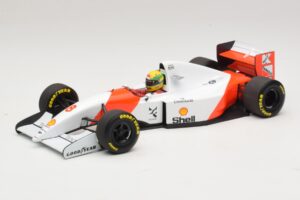
McLaren MP4/8 Ford #8 A. Senna Winner Japanese GP 1993 Minichamps 1:18
1/7
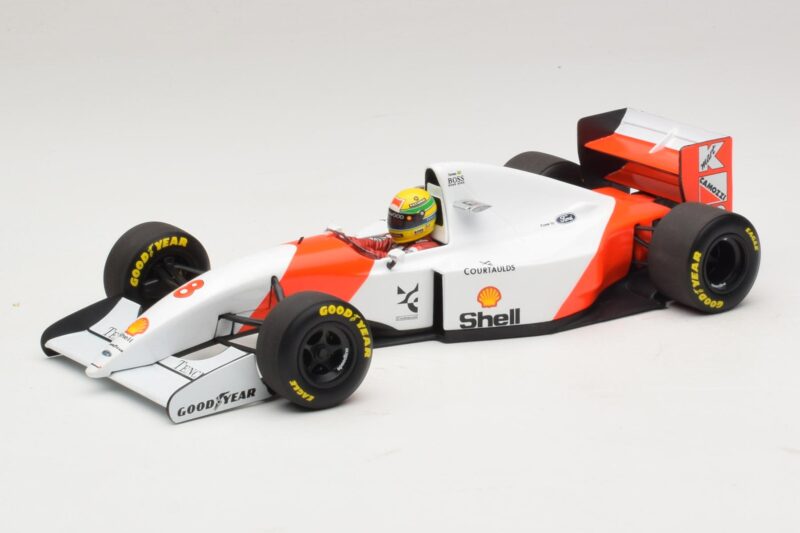
Minichamps' 1:18 diecast McLaren MP4/8 reproduces Ayrton Senna's Ford-powered win at the 1993 Japanese Grand Prix, one of five victories in his final McLaren season before his move to Williams. The body is a sealed one-piece casting, so the red-and-white livery, sponsor decals, and cockpit detail carry the presentation. A focused piece for collectors building a Senna-era or early-1990s F1 shelf.
1 / 7
[{"index":0,"id":"1682119","thumb":"https:\/\/models118.co.uk\/wp-content\/uploads\/2026\/09\/mclaren-mp4-8-ford-8-a-senna-winner-japanese-gp-1993-minichamps-1-18-540931878-1-1-300x200.jpg","medium":"https:\/\/models118.co.uk\/wp-content\/uploads\/2026\/09\/mclaren-mp4-8-ford-8-a-senna-winner-japanese-gp-1993-minichamps-1-18-540931878-1-1-800x533.jpg","full":"https:\/\/models118.co.uk\/wp-content\/uploads\/2026\/09\/mclaren-mp4-8-ford-8-a-senna-winner-japanese-gp-1993-minichamps-1-18-540931878-1-1.jpg","srcset":"https:\/\/models118.co.uk\/wp-content\/uploads\/2026\/09\/mclaren-mp4-8-ford-8-a-senna-winner-japanese-gp-1993-minichamps-1-18-540931878-1-1-800x533.jpg 800w, https:\/\/models118.co.uk\/wp-content\/uploads\/2026\/09\/mclaren-mp4-8-ford-8-a-senna-winner-japanese-gp-1993-minichamps-1-18-540931878-1-1-300x200.jpg 300w, https:\/\/models118.co.uk\/wp-content\/uploads\/2026\/09\/mclaren-mp4-8-ford-8-a-senna-winner-japanese-gp-1993-minichamps-1-18-540931878-1-1-64x43.jpg 64w, https:\/\/models118.co.uk\/wp-content\/uploads\/2026\/09\/mclaren-mp4-8-ford-8-a-senna-winner-japanese-gp-1993-minichamps-1-18-540931878-1-1.jpg 1800w","sizes":"(max-width: 1023px) 400px, 640px","srcsetAvif":"https:\/\/models118.co.uk\/wp-content\/uploads\/2026\/09\/mclaren-mp4-8-ford-8-a-senna-winner-japanese-gp-1993-minichamps-1-18-540931878-1-1-800x533.jpg.avif 800w, https:\/\/models118.co.uk\/wp-content\/uploads\/2026\/09\/mclaren-mp4-8-ford-8-a-senna-winner-japanese-gp-1993-minichamps-1-18-540931878-1-1-300x200.jpg.avif 300w, https:\/\/models118.co.uk\/wp-content\/uploads\/2026\/09\/mclaren-mp4-8-ford-8-a-senna-winner-japanese-gp-1993-minichamps-1-18-540931878-1-1-64x43.jpg.avif 64w, https:\/\/models118.co.uk\/wp-content\/uploads\/2026\/09\/mclaren-mp4-8-ford-8-a-senna-winner-japanese-gp-1993-minichamps-1-18-540931878-1-1.jpg.avif 1800w","srcsetWebp":"https:\/\/models118.co.uk\/wp-content\/uploads\/2026\/09\/mclaren-mp4-8-ford-8-a-senna-winner-japanese-gp-1993-minichamps-1-18-540931878-1-1-800x533.jpg.webp 800w, https:\/\/models118.co.uk\/wp-content\/uploads\/2026\/09\/mclaren-mp4-8-ford-8-a-senna-winner-japanese-gp-1993-minichamps-1-18-540931878-1-1-300x200.jpg.webp 300w, https:\/\/models118.co.uk\/wp-content\/uploads\/2026\/09\/mclaren-mp4-8-ford-8-a-senna-winner-japanese-gp-1993-minichamps-1-18-540931878-1-1-64x43.jpg.webp 64w, https:\/\/models118.co.uk\/wp-content\/uploads\/2026\/09\/mclaren-mp4-8-ford-8-a-senna-winner-japanese-gp-1993-minichamps-1-18-540931878-1-1.jpg.webp 1800w","alt":"McLaren MP4\/8 Ford #8 A. Senna Winner Japanese GP 1993 Minichamps 1:18 540931878 Diecast"},{"index":1,"id":1682122,"thumb":"https:\/\/models118.co.uk\/wp-content\/uploads\/2026\/09\/mclaren-mp4-8-ford-8-a-senna-winner-japanese-gp-1993-minichamps-1-18-540931878-1-300x200.jpg","medium":"https:\/\/models118.co.uk\/wp-content\/uploads\/2026\/09\/mclaren-mp4-8-ford-8-a-senna-winner-japanese-gp-1993-minichamps-1-18-540931878-1-800x533.jpg","full":"https:\/\/models118.co.uk\/wp-content\/uploads\/2026\/09\/mclaren-mp4-8-ford-8-a-senna-winner-japanese-gp-1993-minichamps-1-18-540931878-1.jpg","srcset":"https:\/\/models118.co.uk\/wp-content\/uploads\/2026\/09\/mclaren-mp4-8-ford-8-a-senna-winner-japanese-gp-1993-minichamps-1-18-540931878-1-800x533.jpg 800w, https:\/\/models118.co.uk\/wp-content\/uploads\/2026\/09\/mclaren-mp4-8-ford-8-a-senna-winner-japanese-gp-1993-minichamps-1-18-540931878-1-300x200.jpg 300w, https:\/\/models118.co.uk\/wp-content\/uploads\/2026\/09\/mclaren-mp4-8-ford-8-a-senna-winner-japanese-gp-1993-minichamps-1-18-540931878-1-64x43.jpg 64w, https:\/\/models118.co.uk\/wp-content\/uploads\/2026\/09\/mclaren-mp4-8-ford-8-a-senna-winner-japanese-gp-1993-minichamps-1-18-540931878-1.jpg 1800w","sizes":"(max-width: 1023px) 400px, 640px","srcsetAvif":"https:\/\/models118.co.uk\/wp-content\/uploads\/2026\/09\/mclaren-mp4-8-ford-8-a-senna-winner-japanese-gp-1993-minichamps-1-18-540931878-1-800x533.jpg.avif 800w, https:\/\/models118.co.uk\/wp-content\/uploads\/2026\/09\/mclaren-mp4-8-ford-8-a-senna-winner-japanese-gp-1993-minichamps-1-18-540931878-1-300x200.jpg.avif 300w, https:\/\/models118.co.uk\/wp-content\/uploads\/2026\/09\/mclaren-mp4-8-ford-8-a-senna-winner-japanese-gp-1993-minichamps-1-18-540931878-1-64x43.jpg.avif 64w, https:\/\/models118.co.uk\/wp-content\/uploads\/2026\/09\/mclaren-mp4-8-ford-8-a-senna-winner-japanese-gp-1993-minichamps-1-18-540931878-1.jpg.avif 1800w","srcsetWebp":"https:\/\/models118.co.uk\/wp-content\/uploads\/2026\/09\/mclaren-mp4-8-ford-8-a-senna-winner-japanese-gp-1993-minichamps-1-18-540931878-1-800x533.jpg.webp 800w, https:\/\/models118.co.uk\/wp-content\/uploads\/2026\/09\/mclaren-mp4-8-ford-8-a-senna-winner-japanese-gp-1993-minichamps-1-18-540931878-1-300x200.jpg.webp 300w, https:\/\/models118.co.uk\/wp-content\/uploads\/2026\/09\/mclaren-mp4-8-ford-8-a-senna-winner-japanese-gp-1993-minichamps-1-18-540931878-1-64x43.jpg.webp 64w, https:\/\/models118.co.uk\/wp-content\/uploads\/2026\/09\/mclaren-mp4-8-ford-8-a-senna-winner-japanese-gp-1993-minichamps-1-18-540931878-1.jpg.webp 1800w","alt":"McLaren MP4\/8 Ford #8 A. Senna Winner Japanese GP 1993 Minichamps 1:18 540931878 Diecast \u2014 photo 2 of 7"},{"index":2,"id":1682124,"thumb":"https:\/\/models118.co.uk\/wp-content\/uploads\/2026\/09\/mclaren-mp4-8-ford-8-a-senna-winner-japanese-gp-1993-minichamps-1-18-540931878-2-300x200.jpg","medium":"https:\/\/models118.co.uk\/wp-content\/uploads\/2026\/09\/mclaren-mp4-8-ford-8-a-senna-winner-japanese-gp-1993-minichamps-1-18-540931878-2-800x533.jpg","full":"https:\/\/models118.co.uk\/wp-content\/uploads\/2026\/09\/mclaren-mp4-8-ford-8-a-senna-winner-japanese-gp-1993-minichamps-1-18-540931878-2.jpg","srcset":"https:\/\/models118.co.uk\/wp-content\/uploads\/2026\/09\/mclaren-mp4-8-ford-8-a-senna-winner-japanese-gp-1993-minichamps-1-18-540931878-2-800x533.jpg 800w, https:\/\/models118.co.uk\/wp-content\/uploads\/2026\/09\/mclaren-mp4-8-ford-8-a-senna-winner-japanese-gp-1993-minichamps-1-18-540931878-2-300x200.jpg 300w, https:\/\/models118.co.uk\/wp-content\/uploads\/2026\/09\/mclaren-mp4-8-ford-8-a-senna-winner-japanese-gp-1993-minichamps-1-18-540931878-2-64x43.jpg 64w, https:\/\/models118.co.uk\/wp-content\/uploads\/2026\/09\/mclaren-mp4-8-ford-8-a-senna-winner-japanese-gp-1993-minichamps-1-18-540931878-2.jpg 1800w","sizes":"(max-width: 1023px) 400px, 640px","srcsetAvif":"https:\/\/models118.co.uk\/wp-content\/uploads\/2026\/09\/mclaren-mp4-8-ford-8-a-senna-winner-japanese-gp-1993-minichamps-1-18-540931878-2-800x533.jpg.avif 800w, https:\/\/models118.co.uk\/wp-content\/uploads\/2026\/09\/mclaren-mp4-8-ford-8-a-senna-winner-japanese-gp-1993-minichamps-1-18-540931878-2-300x200.jpg.avif 300w, https:\/\/models118.co.uk\/wp-content\/uploads\/2026\/09\/mclaren-mp4-8-ford-8-a-senna-winner-japanese-gp-1993-minichamps-1-18-540931878-2-64x43.jpg.avif 64w, https:\/\/models118.co.uk\/wp-content\/uploads\/2026\/09\/mclaren-mp4-8-ford-8-a-senna-winner-japanese-gp-1993-minichamps-1-18-540931878-2.jpg.avif 1800w","srcsetWebp":"https:\/\/models118.co.uk\/wp-content\/uploads\/2026\/09\/mclaren-mp4-8-ford-8-a-senna-winner-japanese-gp-1993-minichamps-1-18-540931878-2-800x533.jpg.webp 800w, https:\/\/models118.co.uk\/wp-content\/uploads\/2026\/09\/mclaren-mp4-8-ford-8-a-senna-winner-japanese-gp-1993-minichamps-1-18-540931878-2-300x200.jpg.webp 300w, https:\/\/models118.co.uk\/wp-content\/uploads\/2026\/09\/mclaren-mp4-8-ford-8-a-senna-winner-japanese-gp-1993-minichamps-1-18-540931878-2-64x43.jpg.webp 64w, https:\/\/models118.co.uk\/wp-content\/uploads\/2026\/09\/mclaren-mp4-8-ford-8-a-senna-winner-japanese-gp-1993-minichamps-1-18-540931878-2.jpg.webp 1800w","alt":"McLaren MP4\/8 Ford #8 A. Senna Winner Japanese GP 1993 Minichamps 1:18 540931878 Diecast \u2014 photo 3 of 7"},{"index":3,"id":1682126,"thumb":"https:\/\/models118.co.uk\/wp-content\/uploads\/2026\/09\/mclaren-mp4-8-ford-8-a-senna-winner-japanese-gp-1993-minichamps-1-18-540931878-3-300x200.jpg","medium":"https:\/\/models118.co.uk\/wp-content\/uploads\/2026\/09\/mclaren-mp4-8-ford-8-a-senna-winner-japanese-gp-1993-minichamps-1-18-540931878-3-800x533.jpg","full":"https:\/\/models118.co.uk\/wp-content\/uploads\/2026\/09\/mclaren-mp4-8-ford-8-a-senna-winner-japanese-gp-1993-minichamps-1-18-540931878-3.jpg","srcset":"https:\/\/models118.co.uk\/wp-content\/uploads\/2026\/09\/mclaren-mp4-8-ford-8-a-senna-winner-japanese-gp-1993-minichamps-1-18-540931878-3-800x533.jpg 800w, https:\/\/models118.co.uk\/wp-content\/uploads\/2026\/09\/mclaren-mp4-8-ford-8-a-senna-winner-japanese-gp-1993-minichamps-1-18-540931878-3-300x200.jpg 300w, https:\/\/models118.co.uk\/wp-content\/uploads\/2026\/09\/mclaren-mp4-8-ford-8-a-senna-winner-japanese-gp-1993-minichamps-1-18-540931878-3-64x43.jpg 64w, https:\/\/models118.co.uk\/wp-content\/uploads\/2026\/09\/mclaren-mp4-8-ford-8-a-senna-winner-japanese-gp-1993-minichamps-1-18-540931878-3.jpg 1800w","sizes":"(max-width: 1023px) 400px, 640px","srcsetAvif":"https:\/\/models118.co.uk\/wp-content\/uploads\/2026\/09\/mclaren-mp4-8-ford-8-a-senna-winner-japanese-gp-1993-minichamps-1-18-540931878-3-800x533.jpg.avif 800w, https:\/\/models118.co.uk\/wp-content\/uploads\/2026\/09\/mclaren-mp4-8-ford-8-a-senna-winner-japanese-gp-1993-minichamps-1-18-540931878-3-300x200.jpg.avif 300w, https:\/\/models118.co.uk\/wp-content\/uploads\/2026\/09\/mclaren-mp4-8-ford-8-a-senna-winner-japanese-gp-1993-minichamps-1-18-540931878-3-64x43.jpg.avif 64w, https:\/\/models118.co.uk\/wp-content\/uploads\/2026\/09\/mclaren-mp4-8-ford-8-a-senna-winner-japanese-gp-1993-minichamps-1-18-540931878-3.jpg.avif 1800w","srcsetWebp":"https:\/\/models118.co.uk\/wp-content\/uploads\/2026\/09\/mclaren-mp4-8-ford-8-a-senna-winner-japanese-gp-1993-minichamps-1-18-540931878-3-800x533.jpg.webp 800w, https:\/\/models118.co.uk\/wp-content\/uploads\/2026\/09\/mclaren-mp4-8-ford-8-a-senna-winner-japanese-gp-1993-minichamps-1-18-540931878-3-300x200.jpg.webp 300w, https:\/\/models118.co.uk\/wp-content\/uploads\/2026\/09\/mclaren-mp4-8-ford-8-a-senna-winner-japanese-gp-1993-minichamps-1-18-540931878-3-64x43.jpg.webp 64w, https:\/\/models118.co.uk\/wp-content\/uploads\/2026\/09\/mclaren-mp4-8-ford-8-a-senna-winner-japanese-gp-1993-minichamps-1-18-540931878-3.jpg.webp 1800w","alt":"McLaren MP4\/8 Ford #8 A. Senna Winner Japanese GP 1993 Minichamps 1:18 540931878 Diecast \u2014 photo 4 of 7"},{"index":4,"id":1682128,"thumb":"https:\/\/models118.co.uk\/wp-content\/uploads\/2026\/09\/mclaren-mp4-8-ford-8-a-senna-winner-japanese-gp-1993-minichamps-1-18-540931878-4-300x200.jpg","medium":"https:\/\/models118.co.uk\/wp-content\/uploads\/2026\/09\/mclaren-mp4-8-ford-8-a-senna-winner-japanese-gp-1993-minichamps-1-18-540931878-4-800x533.jpg","full":"https:\/\/models118.co.uk\/wp-content\/uploads\/2026\/09\/mclaren-mp4-8-ford-8-a-senna-winner-japanese-gp-1993-minichamps-1-18-540931878-4.jpg","srcset":"https:\/\/models118.co.uk\/wp-content\/uploads\/2026\/09\/mclaren-mp4-8-ford-8-a-senna-winner-japanese-gp-1993-minichamps-1-18-540931878-4-800x533.jpg 800w, https:\/\/models118.co.uk\/wp-content\/uploads\/2026\/09\/mclaren-mp4-8-ford-8-a-senna-winner-japanese-gp-1993-minichamps-1-18-540931878-4-300x200.jpg 300w, https:\/\/models118.co.uk\/wp-content\/uploads\/2026\/09\/mclaren-mp4-8-ford-8-a-senna-winner-japanese-gp-1993-minichamps-1-18-540931878-4-64x43.jpg 64w, https:\/\/models118.co.uk\/wp-content\/uploads\/2026\/09\/mclaren-mp4-8-ford-8-a-senna-winner-japanese-gp-1993-minichamps-1-18-540931878-4.jpg 1800w","sizes":"(max-width: 1023px) 400px, 640px","srcsetAvif":"https:\/\/models118.co.uk\/wp-content\/uploads\/2026\/09\/mclaren-mp4-8-ford-8-a-senna-winner-japanese-gp-1993-minichamps-1-18-540931878-4-800x533.jpg.avif 800w, https:\/\/models118.co.uk\/wp-content\/uploads\/2026\/09\/mclaren-mp4-8-ford-8-a-senna-winner-japanese-gp-1993-minichamps-1-18-540931878-4-300x200.jpg.avif 300w, https:\/\/models118.co.uk\/wp-content\/uploads\/2026\/09\/mclaren-mp4-8-ford-8-a-senna-winner-japanese-gp-1993-minichamps-1-18-540931878-4-64x43.jpg.avif 64w, https:\/\/models118.co.uk\/wp-content\/uploads\/2026\/09\/mclaren-mp4-8-ford-8-a-senna-winner-japanese-gp-1993-minichamps-1-18-540931878-4.jpg.avif 1800w","srcsetWebp":"https:\/\/models118.co.uk\/wp-content\/uploads\/2026\/09\/mclaren-mp4-8-ford-8-a-senna-winner-japanese-gp-1993-minichamps-1-18-540931878-4-800x533.jpg.webp 800w, https:\/\/models118.co.uk\/wp-content\/uploads\/2026\/09\/mclaren-mp4-8-ford-8-a-senna-winner-japanese-gp-1993-minichamps-1-18-540931878-4-300x200.jpg.webp 300w, https:\/\/models118.co.uk\/wp-content\/uploads\/2026\/09\/mclaren-mp4-8-ford-8-a-senna-winner-japanese-gp-1993-minichamps-1-18-540931878-4-64x43.jpg.webp 64w, https:\/\/models118.co.uk\/wp-content\/uploads\/2026\/09\/mclaren-mp4-8-ford-8-a-senna-winner-japanese-gp-1993-minichamps-1-18-540931878-4.jpg.webp 1800w","alt":"McLaren MP4\/8 Ford #8 A. Senna Winner Japanese GP 1993 Minichamps 1:18 540931878 Diecast \u2014 photo 5 of 7"},{"index":5,"id":1682130,"thumb":"https:\/\/models118.co.uk\/wp-content\/uploads\/2026\/09\/mclaren-mp4-8-ford-8-a-senna-winner-japanese-gp-1993-minichamps-1-18-540931878-5-300x200.jpg","medium":"https:\/\/models118.co.uk\/wp-content\/uploads\/2026\/09\/mclaren-mp4-8-ford-8-a-senna-winner-japanese-gp-1993-minichamps-1-18-540931878-5-800x533.jpg","full":"https:\/\/models118.co.uk\/wp-content\/uploads\/2026\/09\/mclaren-mp4-8-ford-8-a-senna-winner-japanese-gp-1993-minichamps-1-18-540931878-5.jpg","srcset":"https:\/\/models118.co.uk\/wp-content\/uploads\/2026\/09\/mclaren-mp4-8-ford-8-a-senna-winner-japanese-gp-1993-minichamps-1-18-540931878-5-800x533.jpg 800w, https:\/\/models118.co.uk\/wp-content\/uploads\/2026\/09\/mclaren-mp4-8-ford-8-a-senna-winner-japanese-gp-1993-minichamps-1-18-540931878-5-300x200.jpg 300w, https:\/\/models118.co.uk\/wp-content\/uploads\/2026\/09\/mclaren-mp4-8-ford-8-a-senna-winner-japanese-gp-1993-minichamps-1-18-540931878-5-64x43.jpg 64w, https:\/\/models118.co.uk\/wp-content\/uploads\/2026\/09\/mclaren-mp4-8-ford-8-a-senna-winner-japanese-gp-1993-minichamps-1-18-540931878-5.jpg 1800w","sizes":"(max-width: 1023px) 400px, 640px","srcsetAvif":"https:\/\/models118.co.uk\/wp-content\/uploads\/2026\/09\/mclaren-mp4-8-ford-8-a-senna-winner-japanese-gp-1993-minichamps-1-18-540931878-5-800x533.jpg.avif 800w, https:\/\/models118.co.uk\/wp-content\/uploads\/2026\/09\/mclaren-mp4-8-ford-8-a-senna-winner-japanese-gp-1993-minichamps-1-18-540931878-5-300x200.jpg.avif 300w, https:\/\/models118.co.uk\/wp-content\/uploads\/2026\/09\/mclaren-mp4-8-ford-8-a-senna-winner-japanese-gp-1993-minichamps-1-18-540931878-5-64x43.jpg.avif 64w, https:\/\/models118.co.uk\/wp-content\/uploads\/2026\/09\/mclaren-mp4-8-ford-8-a-senna-winner-japanese-gp-1993-minichamps-1-18-540931878-5.jpg.avif 1800w","srcsetWebp":"https:\/\/models118.co.uk\/wp-content\/uploads\/2026\/09\/mclaren-mp4-8-ford-8-a-senna-winner-japanese-gp-1993-minichamps-1-18-540931878-5-800x533.jpg.webp 800w, https:\/\/models118.co.uk\/wp-content\/uploads\/2026\/09\/mclaren-mp4-8-ford-8-a-senna-winner-japanese-gp-1993-minichamps-1-18-540931878-5-300x200.jpg.webp 300w, https:\/\/models118.co.uk\/wp-content\/uploads\/2026\/09\/mclaren-mp4-8-ford-8-a-senna-winner-japanese-gp-1993-minichamps-1-18-540931878-5-64x43.jpg.webp 64w, https:\/\/models118.co.uk\/wp-content\/uploads\/2026\/09\/mclaren-mp4-8-ford-8-a-senna-winner-japanese-gp-1993-minichamps-1-18-540931878-5.jpg.webp 1800w","alt":"McLaren MP4\/8 Ford #8 A. Senna Winner Japanese GP 1993 Minichamps 1:18 540931878 Diecast \u2014 photo 6 of 7"},{"index":6,"id":1682132,"thumb":"https:\/\/models118.co.uk\/wp-content\/uploads\/2026\/09\/mclaren-mp4-8-ford-8-a-senna-winner-japanese-gp-1993-minichamps-1-18-540931878-6-300x200.jpg","medium":"https:\/\/models118.co.uk\/wp-content\/uploads\/2026\/09\/mclaren-mp4-8-ford-8-a-senna-winner-japanese-gp-1993-minichamps-1-18-540931878-6-800x533.jpg","full":"https:\/\/models118.co.uk\/wp-content\/uploads\/2026\/09\/mclaren-mp4-8-ford-8-a-senna-winner-japanese-gp-1993-minichamps-1-18-540931878-6.jpg","srcset":"https:\/\/models118.co.uk\/wp-content\/uploads\/2026\/09\/mclaren-mp4-8-ford-8-a-senna-winner-japanese-gp-1993-minichamps-1-18-540931878-6-800x533.jpg 800w, https:\/\/models118.co.uk\/wp-content\/uploads\/2026\/09\/mclaren-mp4-8-ford-8-a-senna-winner-japanese-gp-1993-minichamps-1-18-540931878-6-300x200.jpg 300w, https:\/\/models118.co.uk\/wp-content\/uploads\/2026\/09\/mclaren-mp4-8-ford-8-a-senna-winner-japanese-gp-1993-minichamps-1-18-540931878-6-64x43.jpg 64w, https:\/\/models118.co.uk\/wp-content\/uploads\/2026\/09\/mclaren-mp4-8-ford-8-a-senna-winner-japanese-gp-1993-minichamps-1-18-540931878-6.jpg 1800w","sizes":"(max-width: 1023px) 400px, 640px","srcsetAvif":"https:\/\/models118.co.uk\/wp-content\/uploads\/2026\/09\/mclaren-mp4-8-ford-8-a-senna-winner-japanese-gp-1993-minichamps-1-18-540931878-6-800x533.jpg.avif 800w, https:\/\/models118.co.uk\/wp-content\/uploads\/2026\/09\/mclaren-mp4-8-ford-8-a-senna-winner-japanese-gp-1993-minichamps-1-18-540931878-6-300x200.jpg.avif 300w, https:\/\/models118.co.uk\/wp-content\/uploads\/2026\/09\/mclaren-mp4-8-ford-8-a-senna-winner-japanese-gp-1993-minichamps-1-18-540931878-6-64x43.jpg.avif 64w, https:\/\/models118.co.uk\/wp-content\/uploads\/2026\/09\/mclaren-mp4-8-ford-8-a-senna-winner-japanese-gp-1993-minichamps-1-18-540931878-6.jpg.avif 1800w","srcsetWebp":"https:\/\/models118.co.uk\/wp-content\/uploads\/2026\/09\/mclaren-mp4-8-ford-8-a-senna-winner-japanese-gp-1993-minichamps-1-18-540931878-6-800x533.jpg.webp 800w, https:\/\/models118.co.uk\/wp-content\/uploads\/2026\/09\/mclaren-mp4-8-ford-8-a-senna-winner-japanese-gp-1993-minichamps-1-18-540931878-6-300x200.jpg.webp 300w, https:\/\/models118.co.uk\/wp-content\/uploads\/2026\/09\/mclaren-mp4-8-ford-8-a-senna-winner-japanese-gp-1993-minichamps-1-18-540931878-6-64x43.jpg.webp 64w, https:\/\/models118.co.uk\/wp-content\/uploads\/2026\/09\/mclaren-mp4-8-ford-8-a-senna-winner-japanese-gp-1993-minichamps-1-18-540931878-6.jpg.webp 1800w","alt":"McLaren MP4\/8 Ford #8 A. Senna Winner Japanese GP 1993 Minichamps 1:18 540931878 Diecast \u2014 photo 7 of 7"}]
McLaren MP4/8 Ford #8 A. Senna Winner Japanese GP 1993 Minichamps 1:18
About the McLaren MP4/8 Ford #8 A. Senna Winner Japanese GP 1993 Minichamps 1:18
TL;DR: Minichamps' 1:18 diecast McLaren MP4/8 reproduces Ayrton Senna's Ford-powered win at the 1993 Japanese Grand Prix, one of five victories in his final season with the team. The body is a sealed one-piece casting with the red-and-white Marlboro-era livery and cockpit detail.
McLaren lost its Honda works engines after 1992 and dropped down the grid on power alone, running Ford's customer HB V8 through 1993 while Williams dominated with Renault. Senna's brilliance masked the gap for one more season, and this Suzuka-winning MP4/8 sits at the centre of that story.
The MP4/8 and McLaren's Ford-Powered Season
Losing Honda and Running a Customer V8
McLaren entered 1993 without the works Honda power that had carried the team to championships through the late 1980s, forced instead onto Ford's customer HB V8, an engine that gave away real horsepower to Williams's factory Renault deal. The MP4/8 compensated with an active suspension system, one of the last seasons before Formula 1 banned the technology outright, and that electronic edge helped narrow a gap that raw power alone could not close. Against a Williams package that most observers considered the class of the field, McLaren's season became a study in extracting results from a car that had no business winning as often as it did.
Senna's Suzuka Win in a Transitional Year
Ayrton Senna took five wins in 1993 driving on a race-by-race contract, a highly unusual arrangement for a driver of his stature and a sign of how uncertain his future at McLaren had become. The Japanese Grand Prix at Suzuka was one of those five, secured on a circuit that suited Senna's reputation for precision through fast, technical corners, and it stands as one of the clearest demonstrations of a driver outperforming his machinery that the sport produced that decade.
Minichamps' Sealed 1:18 Marlboro-Era Livery
Zinc Alloy Weight and Panel Registration
Minichamps casts the MP4/8 in zinc alloy, and the model's weight is immediately apparent lifting it clear of its packaging, the density that only a metal casting delivers at this scale. The body is sealed as a single shell, so the red-and-white Marlboro-era livery runs continuously across the sidepods and nose cone without a seam to interrupt the graphics. That construction lets Minichamps register the sponsor decals with genuine precision, since there is no hinged panel edge for the printing to cross. Panel lines along the sidepods stay tight and consistent, the kind of discipline that separates a considered historic F1 casting from a rushed reissue.
Cockpit and Wing Detail Through a Fixed Body
Through the cockpit opening, the seat, steering wheel, and dashboard sit correctly proportioned and visible, the only interior view a sealed early-1990s Formula 1 casting can offer. The front and rear wing elements hold their thin, period-correct profiles without warping. Wheel rims carry the correct period branding, and the narrow, tall 1990s tyre profile is reproduced accurately. The halo-free cockpit surround, correct for this pre-2018 era, keeps the driver's helmet and shoulders visible from a natural viewing angle rather than obscured behind modern safety structure.
A Senna-Era Anchor for a 1990s F1 Shelf
A Suzuka-winning MP4/8 sits naturally alongside other Senna-era McLarens or a broader early-1990s Formula 1 run, and the Marlboro livery gives it strong visual continuity with the marque's most recognisable period. At 1:18, wing detail, sponsor graphics, and cockpit framing all read clearly from across a shelf, the scale doing real justice to a car whose aerodynamics rewarded close inspection. This was Senna's last season at McLaren before his move to Williams, which gives the casting a natural place at the closing chapter of one era and an equally natural opening into what followed.
Create a free account and claim 10% off your first order — from hundreds of collectible 1:18, 1:43 and 1:12 models by Porsche, Mercedes-Benz, BMW and more.
{"id":1679615,"name":"McLaren MP4\/8 Ford #8 A. Senna Winner Japanese GP 1993 Minichamps 1:18","price":"£<\/span>156.67<\/bdi><\/span>","image":"https:\/\/models118.co.uk\/wp-content\/uploads\/2026\/09\/mclaren-mp4-8-ford-8-a-senna-winner-japanese-gp-1993-minichamps-1-18-540931878-1-1-400x400.jpg","permalink":"https:\/\/models118.co.uk\/mclaren-mp4-8-ford-8-a-senna-winner-japanese-gp-1993-minichamps-1-18-540931878\/","brand":"McLaren"}