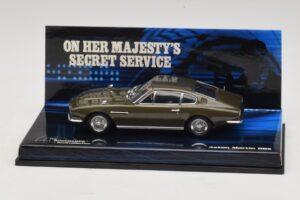
Used
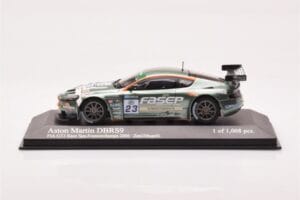
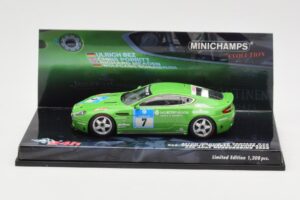
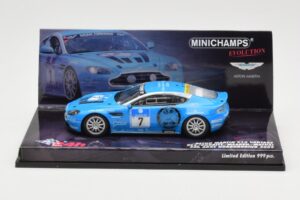
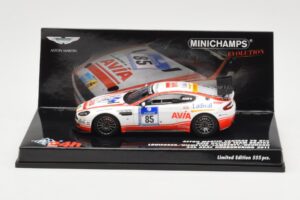
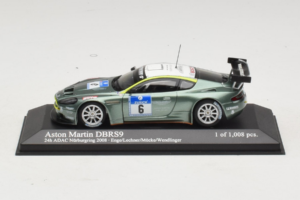
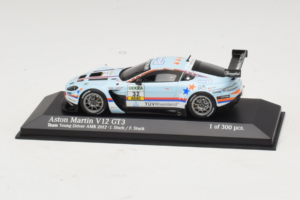
Aston Martin DBRS9 BMS Scuderia Italia #23 Zani / Mugelli FIA GT3 European Championship Spa 2006 Minichamps 1:43
Only 3 left
Price:
£32.00
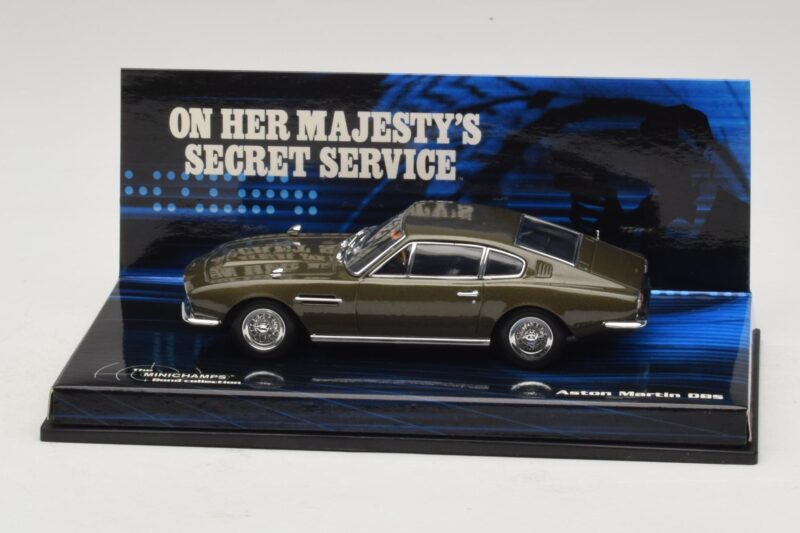
TL;DR: Minichamps' 1:43 diecast Aston Martin DBS reproduces the coupe as driven in On Her Majesty's Secret Service, George Lazenby's sole outing as Bond in 1969. The body is a sealed casting with no opening panels, finished in deep gloss over correct DBS lines. A compact anchor for a Bond-film or Aston Martin display.
Unlike the gadget-laden DB5 that had defined Bond's earlier outings, the DBS in On Her Majesty's Secret Service was presented as Bond's own car: fast, understated, entirely without ejector seats or machine guns. That restraint is part of what makes this Aston Martin a considered subject for a 1:43 diecast rather than the obvious blockbuster choice a DB5 would be.
On Her Majesty's Secret Service marked George Lazenby's only appearance as 007, released in 1969 and remembered as much for its ending as for its cars. Unlike the DB5's arsenal of gadgets, the DBS here was presented simply as Bond's personal transport: a grand tourer rather than a weapon. Aston Martin built the DBS from 1967 to 1972 as its flagship coupe, powered by the marque's straight-six before the V8 arrived, and its understated presence in this particular film gives the model a quieter, more grown-up kind of provenance than the more famous DB5.
Minichamps keeps the DBS's long bonnet and low, tapering roofline correctly proportioned even at this compact scale, with the grille shape and headlamp surrounds reading true to the 1969 car. At 1:43 the whole coupe fits in the palm of a hand, which is precisely the point: this is a piece built for shelf density rather than singular display, letting a collector line up several period Astons or Bond-connected cars without the DBS dominating the row.
Minichamps casts this DBS in zinc alloy, and even at 1:43 the model carries a reassuring density that plastic could never match. The body is a sealed one-piece shell, so the whole account of quality plays out on the exterior: door and boot lines run as single, unbroken grooves, the grille and bumper chrome sit crisply against the paintwork, and the glazing meets its aperture without gaps. Gloss sits deep over the metal shell, giving the paintwork a lift under direct light that a matte finish never achieves.
Compared with a 1:18 diecast, 1:43 sacrifices some separately fitted trim and interior visibility, simply because there is less surface to work with. What it gains is footprint: a full run of Bond cars or Aston Martin generations fits on a single shelf where 1:18 pieces would demand a cabinet each. For a subject like this DBS, whose appeal rests on context rather than mechanical spectacle, that trade favours the smaller scale.
This DBS earns its place either alongside other 1:43 Bond-film cars, tracing the franchise's changing tastes in Aston Martins, or within a straight Aston Martin chronology bridging the DB6 and the later V8 models. It sits at a modest, accessible tier rather than an investment one, and that is worth saying plainly: the value here is the specific film connection and the compact display role, not rarity or scale spectacle. British collectors in particular tend to weigh original packaging and completeness heavily when assessing Bond-related pieces, so a well-kept box adds real value alongside the model itself. That detail matters more here than with an ordinary saloon, since the film tie-in is exactly what a completeness-minded buyer will check first. For a collector already committed to either theme, that is exactly the piece worth adding.
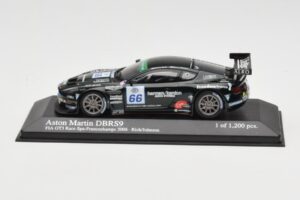
Save £14.00