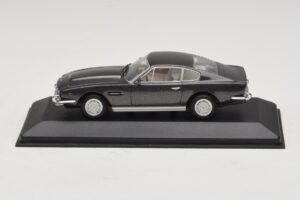
Used
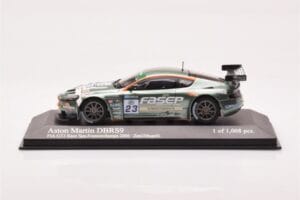
Aston Martin DBRS9 BMS Scuderia Italia #23 Zani / Mugelli FIA GT3 European Championship Spa 2006 Minichamps 1:43
Only 3 left
Price:
£32.00
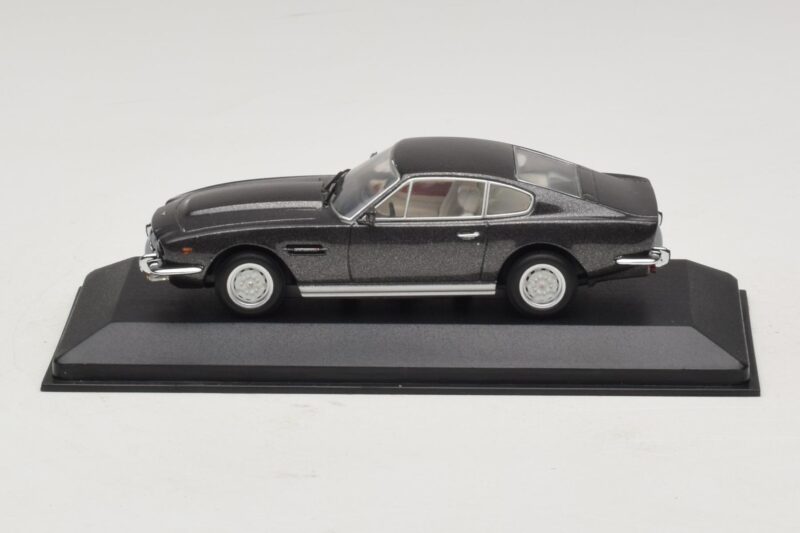
TL;DR: Minichamps' 1:43 diecast Aston Martin DBS reproduces the coupe as it appeared in On Her Majesty's Secret Service, George Lazenby's sole outing as Bond in 1969. Cast as a sealed one-piece body, the model carries period-correct proportions and finish. This example ships in a replacement box rather than original Minichamps packaging.
Aston Martin's DBS took over from the DB5 as Bond's car for On Her Majesty's Secret Service, George Lazenby's single appearance in the role and the first film to give 007 a genuine emotional core. The DBS itself was a short-lived model, in production only a handful of years, making any diecast reproduction a comparatively unusual choice for a film-themed collection.
Minichamps casts this DBS as a sealed one-piece body, a straightforward construction choice for a grand tourer whose appeal rests on clean, long-bonnet proportions rather than opening panels. The paint finish approximates the light silver tone the car wore on screen, sitting with a smooth, even gloss across the bonnet and roof rather than showing the orange-peel texture that lets down cheaper diecast at this price point. Shut lines around the doors and boot are moulded as fine, continuous grooves rather than functional openings, holding a tighter and more consistent width than a hinged assembly would typically achieve at 1:43. The long bonnet-to-cabin ratio that defines the DBS silhouette reads clearly from every angle.
Behind the glazing, the cabin carries a moulded dashboard and bucket seat detail typical of a late-1960s British grand tourer, with wire wheels picked out in a separate finish from the body colour to give the model genuine contrast rather than a single-tone casting. Wing mirrors, door handles, and window surrounds are moulded into the shell instead of applied as separate parts, a sensible economy at this scale where such fittings would add little visible detail once the car sits on a shelf. The rear haunches and glasshouse taper are captured cleanly, the details that separate a considered DBS casting from a generic 1960s coupe wearing the right badge.
George Lazenby took the role of Bond for exactly one film, On Her Majesty's Secret Service, released in 1969 and widely regarded among fans as one of the series' more emotionally serious entries. The DBS replaced the DB5 as Bond's personal car in the story, its role less gadget-laden and more a piece of the character's own taste, driven rather than deployed as a weapon. That distinction matters for a diecast collector: this model represents a car chosen for the character rather than one built around a specific stunt sequence, which is part of why it holds a quieter, more considered place in Bond-diecast collecting than an ejector-seat DB5 or a submarine Lotus.
Aston Martin built the DBS in relatively small numbers during its short production run at the end of the 1960s, before the model evolved into the later V8-engined variants that carried the name into the following decade. That scarcity in period makes an accurate diecast reproduction genuinely useful for collectors interested in the marque's history beyond its most famous models, filling a gap that a DB5 or a modern Vantage cannot cover. Pairing this DBS with earlier or later Aston Martin castings builds a more complete picture of the brand's evolution through one of British motoring's more turbulent decades.
This particular example is supplied with a replacement box rather than the original Minichamps packaging it left the factory in, a point worth stating plainly for UK collectors who weigh packaging condition heavily when judging a piece's long-term desirability. The casting, paint, and interior detail are unaffected by this, produced to exactly the same standard as examples in their original box, but buyers building a collection around completeness and provenance should factor this in before purchasing. For those less concerned with outer packaging and more interested in an accurately finished DBS at a fair price, the replacement box represents genuine value rather than a compromise. Displayed alongside other 1960s British grand tourers or a wider Bond-car theme, this Aston Martin earns its place on merit rather than packaging alone.
Save £14.00