Used
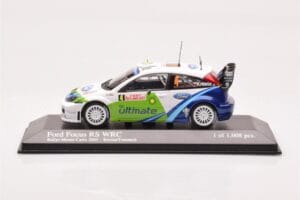
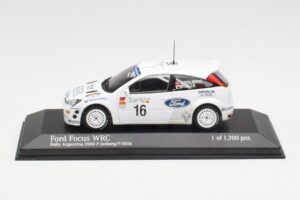
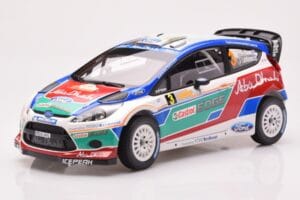
Ford Focus RS WRC #4 R. Kresta / J. Tomanek Rally Monte Carlo 2005 Minichamps 1:43
Only 2 left
Price:
£89.00
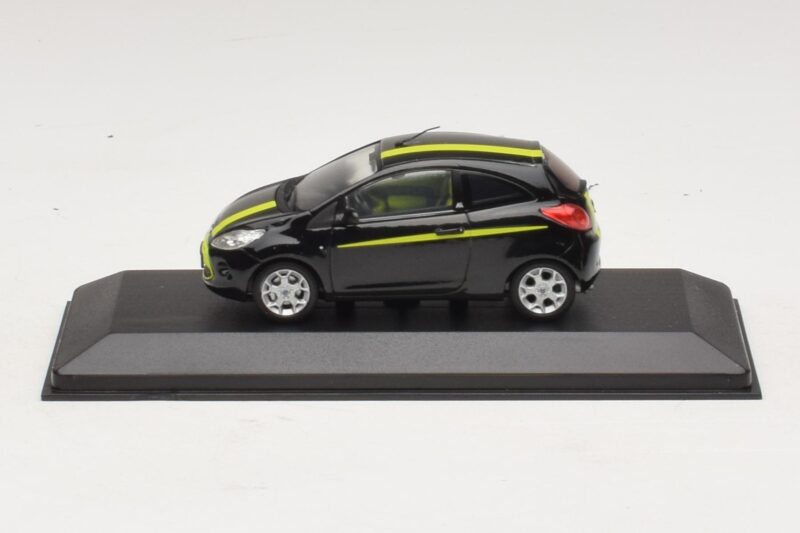
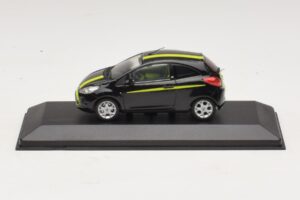
TL;DR: Minichamps' 1:43 diecast Ford Ka Mk2 reproduces the 2009 city car in a striking black and yellow two-tone finish. Built on the sealed-body, entry-tier diecast approach common at this scale, it suits collectors building a run of small Fords or European city cars rather than chasing a single hero piece.
The Ka never asked to be anyone's favourite. Ford's second-generation city car, built in partnership with Fiat and sharing its underpinnings with contemporary small Fiats, was designed to be cheap, cheerful, and easy to park. Minichamps treats the subject honestly, at a scale and price point that matches the car's own modest ambitions rather than dressing it up as something grander.
The second-generation Ka arrived in 2008, built at a Fiat-operated plant in Poland on a platform shared with the contemporary Fiat Panda and 500, badge-engineering at its most sensible. Ford's designers gave it its own nose, lighting, and interior trim to keep the two marques visually distinct, but the underlying structure, glass area, and micro-car proportions came straight from Fiat's small-car playbook. That shared heritage is part of what makes the Ka an interesting subject for a diecast shelf: it represents the point where a mainstream European manufacturer decided that building a cheap car from scratch no longer made commercial sense, and partnership was the answer instead.
This casting carries the black and yellow combination in a genuine two-tone split rather than a single flat colour, with the boundary line running cleanly along the waistline and across the roof pillars. At this price tier, Minichamps keeps the palette simple and lets the colour contrast do the work a more elaborate livery would need on a larger, pricier subject. Badges and lighting units are picked out in a contrasting finish rather than left as unbroken black plastic, which is the detail that separates a considered budget casting from a token one.
The Ka's body is a single sealed casting, with no opening doors, bonnet, or boot lid. On a car this small, that is arguably the right call: a hinge mechanism at 1:43 would demand tolerances the scale can barely support, and a fixed shell lets Minichamps hold tighter, more consistent panel lines than an articulated body could manage. The door line reads as one continuous groove rather than a seam interrupted by a catch, and the glazing sits flush rather than standing proud of the aperture, a small but telling sign of care at this price point.
At 1:43, a car this size occupies barely more shelf space than a coin, which is precisely the appeal for collectors building a broad run of small hatchbacks rather than a handful of hero pieces. A 1:18 version of the same car would carry more surface detail and possibly opening panels, but it would also demand roughly eight times the display footprint. For a micro car with no racing pedigree and no design landmark status, the smaller scale is arguably the more honest fit, and it keeps a whole generation of city cars within reach of one shelf.
The Ka Mk2 was never going to be anyone's centrepiece, and that is not a criticism. It is the sort of model that gives a themed collection of small European hatchbacks its texture, sitting alongside contemporaries from Fiat, Volkswagen, and Vauxhall to tell the story of what mainstream city motoring looked like in the late 2000s. Minichamps' diecast approach matches the car's own unpretentious character: solid, honestly finished, and priced to be bought several at a time rather than saved for. For collectors assembling a run of everyday hatchbacks rather than headline supercars, this is the sort of piece that fills a gap without asking for special justification.


Save £14.00