Last one
Used
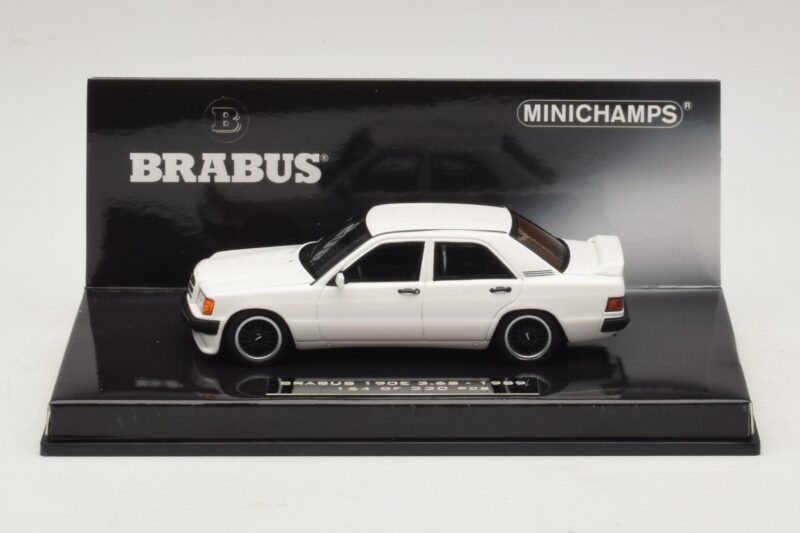
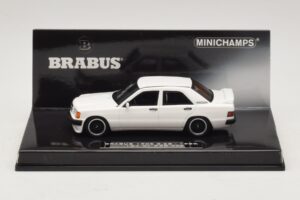
TL;DR: Minichamps' 1:43 Brabus 3.6S reproduces one of Brabus's earliest, most influential tuning conversions, an enlarged-engine take on Mercedes's compact W201 190E finished here in White and cast as a sealed diecast shell. A genuine slice of 1980s German tuning history for enthusiasts who know the marque well.
Long before Brabus became known for wide-body AMG conversions, the tuner built its reputation on cars like this: a modest-looking Mercedes saloon hiding a substantially enlarged engine under an unchanged bonnet. The W201 190E was Mercedes's first genuinely compact executive saloon, and Brabus saw an opportunity in a chassis most buyers underestimated.
Part of the Brabus 190E's appeal, then and now, was how little it announced itself, and a sealed one-piece diecast shell captures that restraint faithfully. The saloon's door line and boot lid meet the body in a single, consistent shutline, with none of the gap widening a working hinge would introduce at this scale, and the subtly lowered stance sits correctly close to the wheel arch rather than reading as stock ride height with different wheels bolted on. White paint holds an even, factory-grade gloss across the flat bonnet and doors, exactly the kind of finish that let the original car hide in plain sight on any German street.
Away from the bumpers, sills, and discreet Brabus badging, this saloon looks almost stock, which is precisely the point of a sleeper build; the model's job is to get those few details exactly right rather than to dramatise the car with flared arches or a loud livery. Brabus script on the rear and the specific alloy wheel design are the only real tells, and Minichamps keeps both sharp and legible rather than softened into generic period trim. Chrome-effect window surrounds and door handles stay crisply separated from the white body colour, a small detail that matters more on a plain-coloured saloon than it would on a wilder paint job.
The '3.6S' designation points to Brabus's practice, in this era, of enlarging Mercedes's own engines well beyond their factory displacement rather than simply adding a turbocharger or a supercharger. On the W201 platform, that meant taking a car sold with modest four- and six-cylinder options and installing something considerably larger under an otherwise unchanged bonnet, a very different approach from the aerodynamic wide-body conversions Brabus is better known for today. That approach demanded genuine engine-building expertise rather than simple bolt-on parts, work that few independent tuners of the period were equipped to do properly.
Building its name on cars like this mattered because the W201 was, on paper, an unglamorous starting point: a compact executive saloon aimed at buyers who wanted a smaller, more efficient Mercedes rather than a performance flagship. Brabus's willingness to extract serious performance from that ordinary chassis, using engineering rather than styling, established the tuning house as a credible engineering outfit rather than a badge-and-spoiler shop, a reputation that carried directly into its later, more visually dramatic work on AMG cars. Collectors who track Brabus's history specifically often rate these early W201 conversions above the brand's later, more famous work, precisely because they show the engineering foundation everything since was built on.
This 190E rewards a collector who already knows Brabus's story rather than one browsing for the loudest car on the shelf; its appeal depends entirely on recognising what it represents. Placed next to a later, wide-bodied Brabus AMG conversion, it demonstrates just how far the tuner's ambitions grew across three decades, from a discreet engine swap to full aerodynamic packages. Pricing on early Brabus diecast tends to sit modestly compared with rarer factory specials, which makes this an accessible way to start a tuner-focused collection rather than a splashy centrepiece purchase, provided the buyer values the history it carries over immediate shelf impact. That trade-off is worth stating plainly rather than glossing over.
Save £14.00