Last one
Save £3.00
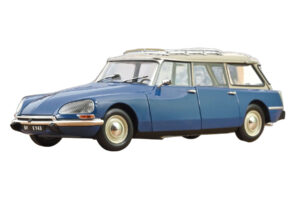
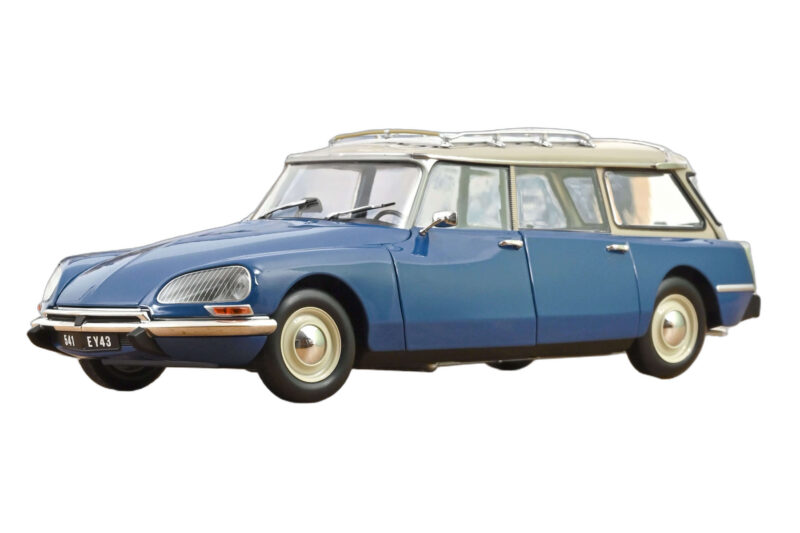
TL;DR: Norev's 1:18 Citroen DS 21 Break reproduces the 1970 estate version of Citroen's landmark DS in Danube Blue diecast. Doors, bonnet and tailgate open, giving genuine access to the cabin and load bay. Built on the hydropneumatic suspension platform that stunned the industry at its 1955 launch, this DS21 estate represents a rarer body style than the familiar saloon.
Flaminio Bertoni's aerodynamic shape looked like nothing else on the road when the DS appeared at the 1955 Paris show, and the estate version, the Break, stretched that same silhouette to carry genuine load-hauling duty for French families and tradespeople. Norev's Danube Blue diecast opens where it should, doors swinging to reveal the cabin, bonnet lifting over the engine bay, and the tailgate rising to expose the load area, letting a collector examine the DS from angles a sealed model simply cannot offer.
Unlike many diecast subjects at this scale, Norev builds this DS21 Break with doors, bonnet and tailgate that genuinely open, a meaningful commitment given how unusual the DS's structure was in the first place. The doors swing on hinges set well back from the wheel arches, matching the real car's distinctive proportions, and lifting the bonnet reveals an engine bay laid out for the DS's own straight-four rather than a generic placeholder. The tailgate rises to expose the estate's load area, the whole point of the Break body style existing at all. Each panel settles with a deliberate, weighted action rather than swinging loosely, which matters on a model built to be handled and shown off.
Danube Blue sits somewhere between a period-correct French shade and a slightly deeper modern reading of it, and it works particularly well across the DS's compound-curved bonnet and roofline, surfaces that most contemporary saloons of the mid-1950s never attempted. Under direct light, the finish should hold consistent depth from the sweeping front wings back through the Break's extended roofline to the tailgate, with no dulling where the panel curvature changes most dramatically. Zinc alloy construction gives the model real heft, weight that suits a car whose original engineering ambition was every bit as serious as its unconventional looks.
The DS's hydropneumatic suspension system was, and remains, one of the genuine engineering breakthroughs of post-war car design, using pressurised fluid rather than conventional springs to maintain a level ride regardless of load. That system let the DS glide over poor road surfaces in a way contemporary saloons simply could not match, and it caused a sensation at the car's 1955 Paris launch, drawing crowds and orders that reportedly outstripped anything the industry had previously seen in a single day. The DS21 designation refers to the later 2.1-litre engine fitted as the range matured through the 1960s and into the early 1970s.
The Break version put that suspension system to genuinely practical use, since a self-levelling ride mattered even more with a boot full of cargo than it did with an empty saloon. Sold to French families, tradespeople and even some official services who needed both comfort and load capacity, the Break carried the DS's design language into a role the elegant saloon was never quite built for. That dual identity, cutting-edge suspension engineering wrapped around genuinely useful load space, is part of what makes the estate variant such an interesting counterpoint to the saloon most collectors reach for first.
A DS is a car that rewards close inspection more than most, precisely because so much of its innovation sits in details a sealed model would hide entirely. Opening the bonnet on Norev's diecast reveals an engine bay shaped around the DS's actual mechanical layout, while the tailgate's action shows how the Break's load area was genuinely designed for use rather than styled as an afterthought. For a collector who wants to understand the DS rather than simply display it, that level of access changes the experience considerably, turning the model from a static shape into something closer to a working demonstration of the real car's engineering.
At 1:18, the Break's extended roofline and load area give it a noticeably different footprint from the saloon, stretching the model's overall length and giving it real presence on a shelf even before any panel is opened. Displayed with doors ajar or the tailgate raised, it takes up more space than a sealed model of the same scale would, so a buyer planning a themed DS display should account for that extra room, particularly if pairing this Break with a saloon or the earlier DS19 from the same broader family.
Most DS collections lean toward the saloon, simply because it is the body style most people picture when the model comes up in conversation. This Break offers a genuinely different, arguably more interesting story: the same revolutionary engineering applied to a shape built for work rather than elegance alone.
Norev's opening panels make the most of that story, letting a collector explore the DS's mechanical layout and load bay in a way a sealed model never could. For anyone already building a Citroen shelf, or simply drawn to one of the most significant car designs of the twentieth century, this estate variant deserves consideration on its own terms rather than as a mere footnote to the saloon.