Used

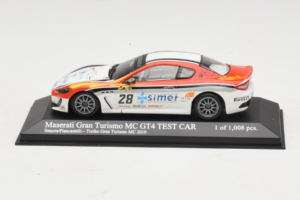
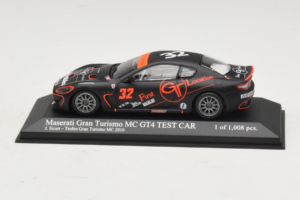
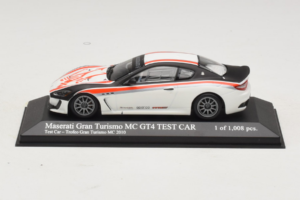
Maserati GranTurismo MC GT4 #6 Goldstein / Sumberg Trofeo GranTurismo 2010 Minichamps 1:43
Only 2 left
Price:
£32.00
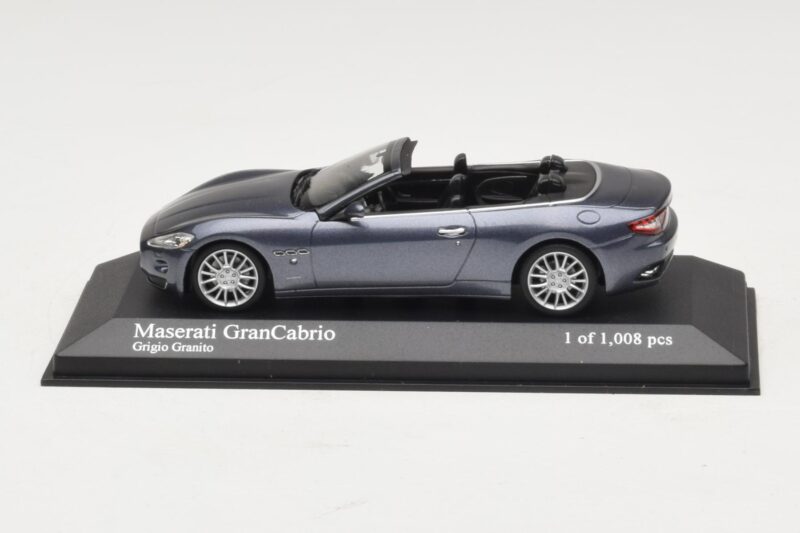
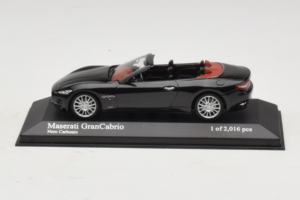
TL;DR: Minichamps' 1:43 Maserati GranCabrio Grey Metallic reproduces the marque's first four-seat convertible grand tourer, launched in 2010 on the GranTurismo platform. Cast as a sealed one-piece diecast body, it shows the open cabin the folding roof exposes, finished in a restrained grey metallic that suits Pininfarina's flowing lines. A mid-tier display piece for modern Maserati collectors.
Maserati built its reputation on closed grand tourers, so the GranCabrio's arrival in 2010 as a genuine four-seat convertible marked a shift in the catalogue. Minichamps' 1:43 rendering captures that shift in grey metallic, a colour that lets the Pininfarina-influenced surfacing speak for itself rather than competing with a louder shade. The open-top body means the cabin is visible by design, not by any moving panel.
The GranCabrio shares its underpinnings with the GranTurismo coupé, stretching the same platform to accommodate a folding soft top and genuine rear seats rather than the occasional two-plus-two layout many convertibles settle for. Pininfarina's design work carries over from the coupé too, most visibly in the long bonnet and the low, wide grille Maserati has used since the 1950s. A naturally aspirated V8 sits ahead of the cabin, its length dictating the proportions Minichamps has to get right at 1:43: a long nose, a short rear deck, and a windscreen set well back from the front axle.
Where earlier Maserati convertibles often traded rear-seat space for style, the GranCabrio was built from the outset as a proper four-seater, a decision that shaped the roofline and the rear deck once the top folds away. That practicality matters for the model too: because the body is open, the cast interior sits in full view rather than hidden behind a bonnet or boot lid. Minichamps has to finish the dashboard, the seat backs and the transmission tunnel to the same standard as the exterior, since there is nowhere for a soft-top model to hide a shortcut.
Lift this GranCabrio from its stand and the zinc alloy body announces itself immediately; the weight sits well beyond what a resin casting of the same size would carry. That density is diecast's trade-off: broader casting tolerances than resin allows, but a structural strength that keeps the body true over years of handling. On a car defined by long, uninterrupted surfaces like the GranCabrio's flanks, that strength lets Minichamps hold a consistent line from the front wing to the rear haunch without the body flexing or the paint cracking along a seam.
Because the body is sealed, with no bonnet, boot or door that opens, every line the eye follows has to be right first time, with no hinge gap to disguise a slightly soft edge. That discipline shows in how the windscreen surround meets the scuttle, and in how the waistline runs unbroken from the front wing through the door skin to the rear quarter. The open cockpit design gives the finish nowhere to hide either, since the seats and dashboard are cast in as part of that same one-piece shell. Fine tampo work picks out the dashboard dials and the stitching lines across the seat bolsters, detail that a hidden interior would never need to carry.
Grey metallic is not the obvious choice for a Maserati, a marque whose colour charts run heavily toward red, blue and black, but it is a shade the GranCabrio wears well. Under a display lamp the metallic flake sits deep in the clear coat rather than sparkling on the surface, a finish that reads as understated rather than flat. That restraint works in the model's favour: with no bright colour competing for attention, the eye goes straight to the surfacing Pininfarina drew, the way the front wing rises into the door and the way the rear haunch tucks in above the wheel arch. At 1:43, a GranCabrio measures roughly eleven centimetres nose to tail, small enough to sit three or four abreast on a single cabinet shelf without crowding. Grouped with darker or brighter Maseratis, the grey becomes a visual pause between louder colours, useful for anyone building a themed run of the marque's convertibles rather than chasing every shade in one hue. Diecast holds that grey evenly across every panel, with none of the colour drift that can appear where a casting changes thickness.
The GranCabrio sits at an interesting point in Maserati's story: a genuinely usable four-seat convertible built by a marque that spent decades prioritising style over space. For a collector assembling a modern Maserati shelf, alongside GranTurismo coupés or older Ghibli and Khamsin-era cars, it fills a gap those earlier convertibles left, since Maserati offered relatively few open cars through the 1970s and 1980s. Minichamps' 1:43 diecast keeps that story affordable and compact, a sensible entry point before committing to a 1:18 hero piece of the same car. The sealed body means this is a display model rather than an interactive one, and buyers who want to inspect an engine bay or fold a soft top by hand should look toward a larger scale with moving parts instead. For everyone else, the finish and the proportions do the work a real GranCabrio can't do on a bookshelf: sit still long enough to be studied properly.


Save £33.00


Save £14.00