


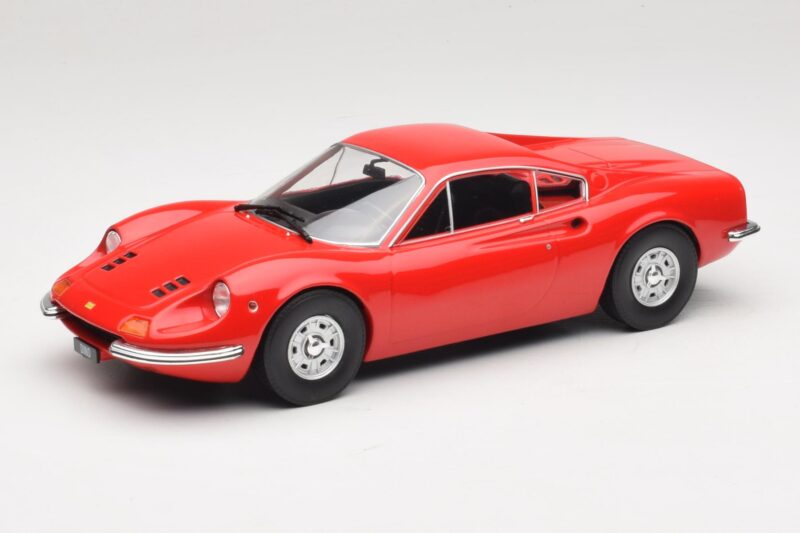
Ferrari Dino 246 GT Red MCG 1:18
1
/
6
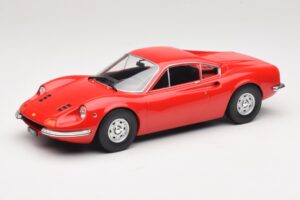
MCG's 1:18 diecast Ferrari Dino 246 GT reproduces the 1969 Pininfarina coupe in red, cast as a sealed zinc alloy body with no opening doors, bonnet or boot. The Dino carried no Ferrari badge despite its now-classic red finish, powered by a transverse V6 rather than a V12, and this mid-tier diecast holds tight, consistent shut lines and real paint depth under cabinet lighting. A fitting choice for collectors drawn to Ferrari's badge-less experiment or building a Dino colour set alongside the yellow variant.
1 / 6
[{"index":0,"id":"1656295","thumb":"https:\/\/models118.co.uk\/wp-content\/uploads\/2026\/08\/ferrari-dino-246-gt-red-mcg-1-18-mcg18359-1-1-300x200.jpg","medium":"https:\/\/models118.co.uk\/wp-content\/uploads\/2026\/08\/ferrari-dino-246-gt-red-mcg-1-18-mcg18359-1-1-800x533.jpg","full":"https:\/\/models118.co.uk\/wp-content\/uploads\/2026\/08\/ferrari-dino-246-gt-red-mcg-1-18-mcg18359-1-1.jpg","srcset":"https:\/\/models118.co.uk\/wp-content\/uploads\/2026\/08\/ferrari-dino-246-gt-red-mcg-1-18-mcg18359-1-1-800x533.jpg 800w, https:\/\/models118.co.uk\/wp-content\/uploads\/2026\/08\/ferrari-dino-246-gt-red-mcg-1-18-mcg18359-1-1-300x200.jpg 300w, https:\/\/models118.co.uk\/wp-content\/uploads\/2026\/08\/ferrari-dino-246-gt-red-mcg-1-18-mcg18359-1-1-64x43.jpg 64w, https:\/\/models118.co.uk\/wp-content\/uploads\/2026\/08\/ferrari-dino-246-gt-red-mcg-1-18-mcg18359-1-1.jpg 1800w","sizes":"(max-width: 1023px) 400px, 640px","srcsetAvif":"https:\/\/models118.co.uk\/wp-content\/uploads\/2026\/08\/ferrari-dino-246-gt-red-mcg-1-18-mcg18359-1-1-800x533.jpg.avif 800w, https:\/\/models118.co.uk\/wp-content\/uploads\/2026\/08\/ferrari-dino-246-gt-red-mcg-1-18-mcg18359-1-1-300x200.jpg.avif 300w, https:\/\/models118.co.uk\/wp-content\/uploads\/2026\/08\/ferrari-dino-246-gt-red-mcg-1-18-mcg18359-1-1-64x43.jpg.avif 64w, https:\/\/models118.co.uk\/wp-content\/uploads\/2026\/08\/ferrari-dino-246-gt-red-mcg-1-18-mcg18359-1-1.jpg.avif 1800w","srcsetWebp":"https:\/\/models118.co.uk\/wp-content\/uploads\/2026\/08\/ferrari-dino-246-gt-red-mcg-1-18-mcg18359-1-1-800x533.jpg.webp 800w, https:\/\/models118.co.uk\/wp-content\/uploads\/2026\/08\/ferrari-dino-246-gt-red-mcg-1-18-mcg18359-1-1-300x200.jpg.webp 300w, https:\/\/models118.co.uk\/wp-content\/uploads\/2026\/08\/ferrari-dino-246-gt-red-mcg-1-18-mcg18359-1-1-64x43.jpg.webp 64w, https:\/\/models118.co.uk\/wp-content\/uploads\/2026\/08\/ferrari-dino-246-gt-red-mcg-1-18-mcg18359-1-1.jpg.webp 1800w","alt":"Ferrari Dino 246 GT Red MCG 1:18 MCG18359 Diecast"},{"index":1,"id":1656296,"thumb":"https:\/\/models118.co.uk\/wp-content\/uploads\/2026\/08\/ferrari-dino-246-gt-red-mcg-1-18-mcg18359-1-300x200.jpg","medium":"https:\/\/models118.co.uk\/wp-content\/uploads\/2026\/08\/ferrari-dino-246-gt-red-mcg-1-18-mcg18359-1-800x533.jpg","full":"https:\/\/models118.co.uk\/wp-content\/uploads\/2026\/08\/ferrari-dino-246-gt-red-mcg-1-18-mcg18359-1.jpg","srcset":"https:\/\/models118.co.uk\/wp-content\/uploads\/2026\/08\/ferrari-dino-246-gt-red-mcg-1-18-mcg18359-1-800x533.jpg 800w, https:\/\/models118.co.uk\/wp-content\/uploads\/2026\/08\/ferrari-dino-246-gt-red-mcg-1-18-mcg18359-1-300x200.jpg 300w, https:\/\/models118.co.uk\/wp-content\/uploads\/2026\/08\/ferrari-dino-246-gt-red-mcg-1-18-mcg18359-1-64x43.jpg 64w, https:\/\/models118.co.uk\/wp-content\/uploads\/2026\/08\/ferrari-dino-246-gt-red-mcg-1-18-mcg18359-1.jpg 1800w","sizes":"(max-width: 1023px) 400px, 640px","srcsetAvif":"https:\/\/models118.co.uk\/wp-content\/uploads\/2026\/08\/ferrari-dino-246-gt-red-mcg-1-18-mcg18359-1-800x533.jpg.avif 800w, https:\/\/models118.co.uk\/wp-content\/uploads\/2026\/08\/ferrari-dino-246-gt-red-mcg-1-18-mcg18359-1-300x200.jpg.avif 300w, https:\/\/models118.co.uk\/wp-content\/uploads\/2026\/08\/ferrari-dino-246-gt-red-mcg-1-18-mcg18359-1-64x43.jpg.avif 64w, https:\/\/models118.co.uk\/wp-content\/uploads\/2026\/08\/ferrari-dino-246-gt-red-mcg-1-18-mcg18359-1.jpg.avif 1800w","srcsetWebp":"https:\/\/models118.co.uk\/wp-content\/uploads\/2026\/08\/ferrari-dino-246-gt-red-mcg-1-18-mcg18359-1-800x533.jpg.webp 800w, https:\/\/models118.co.uk\/wp-content\/uploads\/2026\/08\/ferrari-dino-246-gt-red-mcg-1-18-mcg18359-1-300x200.jpg.webp 300w, https:\/\/models118.co.uk\/wp-content\/uploads\/2026\/08\/ferrari-dino-246-gt-red-mcg-1-18-mcg18359-1-64x43.jpg.webp 64w, https:\/\/models118.co.uk\/wp-content\/uploads\/2026\/08\/ferrari-dino-246-gt-red-mcg-1-18-mcg18359-1.jpg.webp 1800w","alt":"Ferrari Dino 246 GT Red MCG 1:18 MCG18359 Diecast \u2014 photo 2 of 6"},{"index":2,"id":1656299,"thumb":"https:\/\/models118.co.uk\/wp-content\/uploads\/2026\/08\/ferrari-dino-246-gt-red-mcg-1-18-mcg18359-2-300x200.jpg","medium":"https:\/\/models118.co.uk\/wp-content\/uploads\/2026\/08\/ferrari-dino-246-gt-red-mcg-1-18-mcg18359-2-800x533.jpg","full":"https:\/\/models118.co.uk\/wp-content\/uploads\/2026\/08\/ferrari-dino-246-gt-red-mcg-1-18-mcg18359-2.jpg","srcset":"https:\/\/models118.co.uk\/wp-content\/uploads\/2026\/08\/ferrari-dino-246-gt-red-mcg-1-18-mcg18359-2-800x533.jpg 800w, https:\/\/models118.co.uk\/wp-content\/uploads\/2026\/08\/ferrari-dino-246-gt-red-mcg-1-18-mcg18359-2-300x200.jpg 300w, https:\/\/models118.co.uk\/wp-content\/uploads\/2026\/08\/ferrari-dino-246-gt-red-mcg-1-18-mcg18359-2-64x43.jpg 64w, https:\/\/models118.co.uk\/wp-content\/uploads\/2026\/08\/ferrari-dino-246-gt-red-mcg-1-18-mcg18359-2.jpg 1800w","sizes":"(max-width: 1023px) 400px, 640px","srcsetAvif":"https:\/\/models118.co.uk\/wp-content\/uploads\/2026\/08\/ferrari-dino-246-gt-red-mcg-1-18-mcg18359-2-800x533.jpg.avif 800w, https:\/\/models118.co.uk\/wp-content\/uploads\/2026\/08\/ferrari-dino-246-gt-red-mcg-1-18-mcg18359-2-300x200.jpg.avif 300w, https:\/\/models118.co.uk\/wp-content\/uploads\/2026\/08\/ferrari-dino-246-gt-red-mcg-1-18-mcg18359-2-64x43.jpg.avif 64w, https:\/\/models118.co.uk\/wp-content\/uploads\/2026\/08\/ferrari-dino-246-gt-red-mcg-1-18-mcg18359-2.jpg.avif 1800w","srcsetWebp":"https:\/\/models118.co.uk\/wp-content\/uploads\/2026\/08\/ferrari-dino-246-gt-red-mcg-1-18-mcg18359-2-800x533.jpg.webp 800w, https:\/\/models118.co.uk\/wp-content\/uploads\/2026\/08\/ferrari-dino-246-gt-red-mcg-1-18-mcg18359-2-300x200.jpg.webp 300w, https:\/\/models118.co.uk\/wp-content\/uploads\/2026\/08\/ferrari-dino-246-gt-red-mcg-1-18-mcg18359-2-64x43.jpg.webp 64w, https:\/\/models118.co.uk\/wp-content\/uploads\/2026\/08\/ferrari-dino-246-gt-red-mcg-1-18-mcg18359-2.jpg.webp 1800w","alt":"Ferrari Dino 246 GT Red MCG 1:18 MCG18359 Diecast \u2014 photo 3 of 6"},{"index":3,"id":1656301,"thumb":"https:\/\/models118.co.uk\/wp-content\/uploads\/2026\/08\/ferrari-dino-246-gt-red-mcg-1-18-mcg18359-3-300x200.jpg","medium":"https:\/\/models118.co.uk\/wp-content\/uploads\/2026\/08\/ferrari-dino-246-gt-red-mcg-1-18-mcg18359-3-800x533.jpg","full":"https:\/\/models118.co.uk\/wp-content\/uploads\/2026\/08\/ferrari-dino-246-gt-red-mcg-1-18-mcg18359-3.jpg","srcset":"https:\/\/models118.co.uk\/wp-content\/uploads\/2026\/08\/ferrari-dino-246-gt-red-mcg-1-18-mcg18359-3-800x533.jpg 800w, https:\/\/models118.co.uk\/wp-content\/uploads\/2026\/08\/ferrari-dino-246-gt-red-mcg-1-18-mcg18359-3-300x200.jpg 300w, https:\/\/models118.co.uk\/wp-content\/uploads\/2026\/08\/ferrari-dino-246-gt-red-mcg-1-18-mcg18359-3-64x43.jpg 64w, https:\/\/models118.co.uk\/wp-content\/uploads\/2026\/08\/ferrari-dino-246-gt-red-mcg-1-18-mcg18359-3.jpg 1800w","sizes":"(max-width: 1023px) 400px, 640px","srcsetAvif":"https:\/\/models118.co.uk\/wp-content\/uploads\/2026\/08\/ferrari-dino-246-gt-red-mcg-1-18-mcg18359-3-800x533.jpg.avif 800w, https:\/\/models118.co.uk\/wp-content\/uploads\/2026\/08\/ferrari-dino-246-gt-red-mcg-1-18-mcg18359-3-300x200.jpg.avif 300w, https:\/\/models118.co.uk\/wp-content\/uploads\/2026\/08\/ferrari-dino-246-gt-red-mcg-1-18-mcg18359-3-64x43.jpg.avif 64w, https:\/\/models118.co.uk\/wp-content\/uploads\/2026\/08\/ferrari-dino-246-gt-red-mcg-1-18-mcg18359-3.jpg.avif 1800w","srcsetWebp":"https:\/\/models118.co.uk\/wp-content\/uploads\/2026\/08\/ferrari-dino-246-gt-red-mcg-1-18-mcg18359-3-800x533.jpg.webp 800w, https:\/\/models118.co.uk\/wp-content\/uploads\/2026\/08\/ferrari-dino-246-gt-red-mcg-1-18-mcg18359-3-300x200.jpg.webp 300w, https:\/\/models118.co.uk\/wp-content\/uploads\/2026\/08\/ferrari-dino-246-gt-red-mcg-1-18-mcg18359-3-64x43.jpg.webp 64w, https:\/\/models118.co.uk\/wp-content\/uploads\/2026\/08\/ferrari-dino-246-gt-red-mcg-1-18-mcg18359-3.jpg.webp 1800w","alt":"Ferrari Dino 246 GT Red MCG 1:18 MCG18359 Diecast \u2014 photo 4 of 6"},{"index":4,"id":1656303,"thumb":"https:\/\/models118.co.uk\/wp-content\/uploads\/2026\/08\/ferrari-dino-246-gt-red-mcg-1-18-mcg18359-4-300x200.jpg","medium":"https:\/\/models118.co.uk\/wp-content\/uploads\/2026\/08\/ferrari-dino-246-gt-red-mcg-1-18-mcg18359-4-800x533.jpg","full":"https:\/\/models118.co.uk\/wp-content\/uploads\/2026\/08\/ferrari-dino-246-gt-red-mcg-1-18-mcg18359-4.jpg","srcset":"https:\/\/models118.co.uk\/wp-content\/uploads\/2026\/08\/ferrari-dino-246-gt-red-mcg-1-18-mcg18359-4-800x533.jpg 800w, https:\/\/models118.co.uk\/wp-content\/uploads\/2026\/08\/ferrari-dino-246-gt-red-mcg-1-18-mcg18359-4-300x200.jpg 300w, https:\/\/models118.co.uk\/wp-content\/uploads\/2026\/08\/ferrari-dino-246-gt-red-mcg-1-18-mcg18359-4-64x43.jpg 64w, https:\/\/models118.co.uk\/wp-content\/uploads\/2026\/08\/ferrari-dino-246-gt-red-mcg-1-18-mcg18359-4.jpg 1800w","sizes":"(max-width: 1023px) 400px, 640px","srcsetAvif":"https:\/\/models118.co.uk\/wp-content\/uploads\/2026\/08\/ferrari-dino-246-gt-red-mcg-1-18-mcg18359-4-800x533.jpg.avif 800w, https:\/\/models118.co.uk\/wp-content\/uploads\/2026\/08\/ferrari-dino-246-gt-red-mcg-1-18-mcg18359-4-300x200.jpg.avif 300w, https:\/\/models118.co.uk\/wp-content\/uploads\/2026\/08\/ferrari-dino-246-gt-red-mcg-1-18-mcg18359-4-64x43.jpg.avif 64w, https:\/\/models118.co.uk\/wp-content\/uploads\/2026\/08\/ferrari-dino-246-gt-red-mcg-1-18-mcg18359-4.jpg.avif 1800w","srcsetWebp":"https:\/\/models118.co.uk\/wp-content\/uploads\/2026\/08\/ferrari-dino-246-gt-red-mcg-1-18-mcg18359-4-800x533.jpg.webp 800w, https:\/\/models118.co.uk\/wp-content\/uploads\/2026\/08\/ferrari-dino-246-gt-red-mcg-1-18-mcg18359-4-300x200.jpg.webp 300w, https:\/\/models118.co.uk\/wp-content\/uploads\/2026\/08\/ferrari-dino-246-gt-red-mcg-1-18-mcg18359-4-64x43.jpg.webp 64w, https:\/\/models118.co.uk\/wp-content\/uploads\/2026\/08\/ferrari-dino-246-gt-red-mcg-1-18-mcg18359-4.jpg.webp 1800w","alt":"Ferrari Dino 246 GT Red MCG 1:18 MCG18359 Diecast \u2014 photo 5 of 6"},{"index":5,"id":1656304,"thumb":"https:\/\/models118.co.uk\/wp-content\/uploads\/2026\/08\/ferrari-dino-246-gt-red-mcg-1-18-mcg18359-5-300x200.jpg","medium":"https:\/\/models118.co.uk\/wp-content\/uploads\/2026\/08\/ferrari-dino-246-gt-red-mcg-1-18-mcg18359-5-800x533.jpg","full":"https:\/\/models118.co.uk\/wp-content\/uploads\/2026\/08\/ferrari-dino-246-gt-red-mcg-1-18-mcg18359-5.jpg","srcset":"https:\/\/models118.co.uk\/wp-content\/uploads\/2026\/08\/ferrari-dino-246-gt-red-mcg-1-18-mcg18359-5-800x533.jpg 800w, https:\/\/models118.co.uk\/wp-content\/uploads\/2026\/08\/ferrari-dino-246-gt-red-mcg-1-18-mcg18359-5-300x200.jpg 300w, https:\/\/models118.co.uk\/wp-content\/uploads\/2026\/08\/ferrari-dino-246-gt-red-mcg-1-18-mcg18359-5-64x43.jpg 64w, https:\/\/models118.co.uk\/wp-content\/uploads\/2026\/08\/ferrari-dino-246-gt-red-mcg-1-18-mcg18359-5.jpg 1800w","sizes":"(max-width: 1023px) 400px, 640px","srcsetAvif":"https:\/\/models118.co.uk\/wp-content\/uploads\/2026\/08\/ferrari-dino-246-gt-red-mcg-1-18-mcg18359-5-800x533.jpg.avif 800w, https:\/\/models118.co.uk\/wp-content\/uploads\/2026\/08\/ferrari-dino-246-gt-red-mcg-1-18-mcg18359-5-300x200.jpg.avif 300w, https:\/\/models118.co.uk\/wp-content\/uploads\/2026\/08\/ferrari-dino-246-gt-red-mcg-1-18-mcg18359-5-64x43.jpg.avif 64w, https:\/\/models118.co.uk\/wp-content\/uploads\/2026\/08\/ferrari-dino-246-gt-red-mcg-1-18-mcg18359-5.jpg.avif 1800w","srcsetWebp":"https:\/\/models118.co.uk\/wp-content\/uploads\/2026\/08\/ferrari-dino-246-gt-red-mcg-1-18-mcg18359-5-800x533.jpg.webp 800w, https:\/\/models118.co.uk\/wp-content\/uploads\/2026\/08\/ferrari-dino-246-gt-red-mcg-1-18-mcg18359-5-300x200.jpg.webp 300w, https:\/\/models118.co.uk\/wp-content\/uploads\/2026\/08\/ferrari-dino-246-gt-red-mcg-1-18-mcg18359-5-64x43.jpg.webp 64w, https:\/\/models118.co.uk\/wp-content\/uploads\/2026\/08\/ferrari-dino-246-gt-red-mcg-1-18-mcg18359-5.jpg.webp 1800w","alt":"Ferrari Dino 246 GT Red MCG 1:18 MCG18359 Diecast \u2014 photo 6 of 6"}]
Ferrari Dino 246 GT Red MCG 1:18
Current price:
£54.00
Last one in stock
Estimated delivery: 29.09-01.10.2026
Delivery from £11.00
Tracked & insured
10% off your first order — create a free account
Genuine articles
Sourced from manufacturers
5-layer carton
Foam-filled interior
Hassle-free returns
14-day no-quibble returns
Secure payment
Bank-level encryption
About the Ferrari Dino 246 GT Red MCG 1:18
TL;DR: MCG's 1:18 diecast Ferrari Dino 246 GT reproduces the 1969 Pininfarina coupe in red, cast as a sealed zinc alloy body with no opening panels. Ironically finished in Ferrari's signature colour despite carrying no Ferrari badge, it suits collectors chasing the Dino's V6 lineage at a mid-tier price with sharp shut lines and deep paint.
Painting a badge-less Ferrari in the marque's most famous colour is a deliberate irony MCG leans into. Enzo Ferrari sold the 246 GT under the Dino name alone, keeping his V12 flagship's price separate from a smaller V6 coupe built on Formula 2 engineering. MCG casts that history into a sealed zinc alloy body finished in red.
A V6 Engine Line That Traced Back to Ferrari's Formula 2 Cars
From F2 Development to Road Car
Ferrari built the Dino's 2.4-litre V6 from experience gathered in Formula 2, where a smaller, lighter engine suited the category's rules better than anything derived from the V12 road cars. Fitting that engine transversely behind the cabin, rather than up front, let Pininfarina drop the nose and shorten the overhangs in a way no earlier road-going Ferrari had attempted. The 246 GT that resulted, launched in 1969, was in effect Ferrari's first mid-engined production coupe sold to the public, a layout the marque would keep returning to for its V8 line long after the Dino name itself was retired.
The Dino Name and Its Absent Badge
The Dino name existed precisely because Enzo Ferrari refused to put his badge on a car built around a V6 rather than a V12, a hierarchy he protected fiercely through the 1960s. Naming it after his son Alfredo, known within the family and the factory as Dino, who died young after championing the smaller-engine programme, gave the car its own identity rather than a diminished version of a Ferrari. Buyers at the time were sometimes disappointed not to get the prancing horse on the nose, but that badge-less status is exactly what collectors now single out. MCG's red example carries no cavallino on the bonnet, a detail as accurate to 1969 as the shape itself.
MCG's Sealed-Body Diecast Construction of the Dino 246 GT
This Dino is cast in zinc alloy, and MCG builds it as a single sealed body: no door, bonnet or boot opens, and every panel gap that exists is moulded rather than hinged. That construction choice trades interior access for consistency along the shut lines, which run tight and even along the sills, the wing edges and the tail without the small gaps an opening body has to leave for clearance. Diecast of this kind carries genuine weight, noticeably denser in the hand than a resin casting of the same size, and that mass is part of what gives it presence on a shelf rather than a slightly hollow feel some lighter models can have. Resin can still hold a sharper edge on tight compound curves, since it is cast rather than pressure-formed into a die, but it cannot match metal for long-term durability under repeated handling. MCG's positioning sits comfortably in the middle of the market: above mass-market toy-grade diecast, below the fully hand-assembled, multi-part metal builds that occupy investment-tier pricing. On red, that middle ground matters because red hides sloppy panel work far less forgivingly than darker colours, and a sealed body removes one whole category of tolerance stack-up that could otherwise show through the paint.
Red on a Car That Never Wore the Ferrari Script
The Expected Colour on an Unexpected Car
Red is the colour most people picture when they hear the word Ferrari, yet it sat on a car that officially was not one. That contrast is part of what makes this red Dino interesting rather than merely conventional: the shade signals Maranello at a glance, while the absent badge tells a more complicated story underneath it. Choosing red here is the safe option next to a shelf of similarly liveried GT cars, but it is also the choice most likely to be recognised instantly by a non-collector glancing at a cabinet, which matters if the display is meant to draw newcomers into the hobby rather than reward only specialists.
Paint Depth and Shelf Presence in Red
Under a single spotlight, MCG's red carries a slight depth of shade toward the edges of each panel, the kind of subtle graduation that separates a properly finished diecast from a flat, single-tone repaint. The colour also plays well against chrome trim and glazing, both of which read more crisply against red than against darker liveries where the metal-to-glass contrast can go muddy. Displayed beside the same casting finished in yellow, the red example is the one most collectors will place at the centre of a themed row, since it reads as the anchor colour a Ferrari-adjacent shelf is usually built around.
Pairing the Red Dino With Its Colour Siblings
At roughly 21 centimetres long, the 1:18 Dino occupies a modest footprint that suits a cabinet row of late-1960s coupes without dominating the shelf. MCG also finishes this casting in yellow, and the two together make a natural study in how one Pininfarina shape reads under different paint, one wearing the colour most people expect from Maranello, the other deliberately standing apart from it. Buyers weighing this against pricier hand-built alternatives should be clear about what a sealed zinc alloy body buys here: consistent shut lines, real weight, and a price well below investment-tier resin builds. It will not satisfy anyone who wants to lift a bonnet and study a transverse V6 up close, but for a collector assembling a Dino chronology, or simply after the shade that reads as Ferrari red on a car that never carried the badge, this is a sound, honestly priced place to start.
Same marque, same scale
Last one
Used
Last one
Used
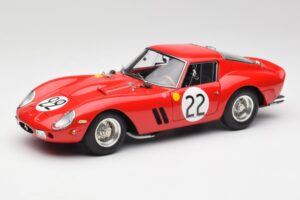
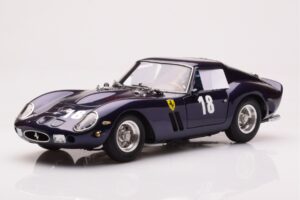
Ferrari 250 GTO #22 Beurlys / Elde / Mason 24 Hours of Le Mans 1962 CMC 1:18
Only 3 left
Price:
£448.33
Collectors also bought
Browse all 1:18
Last one
Last one
Last one
Last one
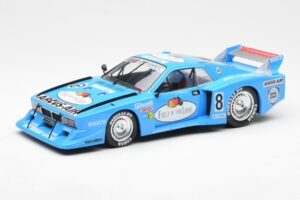
Lancia Beta Montecarlo Gr.5 #8 S. Muller Jr. DRM Nurburgring 1981 MCG 1:18
Only 2 left
Price:
£57.00
Recently viewed
{"id":1656243,"name":"Ferrari Dino 246 GT Red MCG 1:18","price":"£<\/span>54.00<\/bdi><\/span>","image":"https:\/\/models118.co.uk\/wp-content\/uploads\/2026\/08\/ferrari-dino-246-gt-red-mcg-1-18-mcg18359-1-1-400x400.jpg","permalink":"https:\/\/models118.co.uk\/ferrari-dino-246-gt-red-mcg-1-18-mcg18359\/","brand":"Ferrari"}