Last one
Used
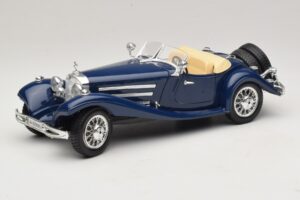
1:20 scale model cars fill a quieter corner of the collecting world, used by few manufacturers but valued for the detail they can carry without demanding full 1:18 shelf space. In this collection, Bburago’s diecast pre-war Mercedes pieces represent the format, offering vintage character at an accessible price point.
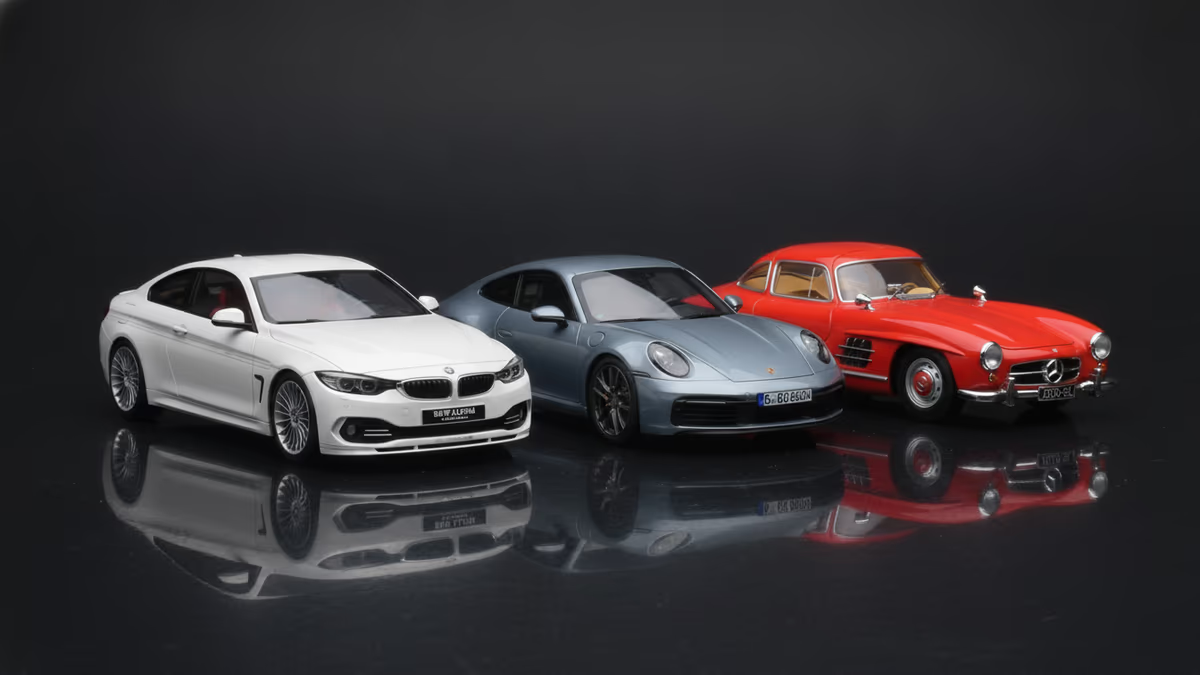
TL;DR: 1:20 scale model cars sit between 1:18 and 1:24, a niche format most collectors encounter occasionally rather than build around. In this collection, Bburago's diecast construction brings pre-war Mercedes classics to the scale, offering vintage character, respectable surface detail, and accessible entry-tier pricing rather than museum-grade precision.
Scale choice shapes a collection more than most buyers expect, and 1:20 occupies an unusual middle ground: large enough to carry real surface detail, compact enough to keep a shelf manageable. Few manufacturers commit to the format, which is exactly why a 1:20 piece often stands out rather than blending into a crowded 1:18 row. Bburago's pre-war Mercedes diecast gives this collection its anchor in the scale, pairing vintage design with everyday collectibility.
1:20 scale model cars occupy real estate between the flagship 1:18 format and the more compact 1:24 range, without matching the popularity of either. Few diecast manufacturers commit tooling budgets to a scale this specific, which means a 1:20 piece rarely competes directly against a dozen rival interpretations of the same subject the way 1:18 castings often do. That scarcity is part of the appeal: a 1:20 model tends to stand alone on a shelf rather than inviting constant side-by-side comparison.
In this collection, Bburago supplies the 1:20 presence, and its tier placement is easy to read from the construction itself. Bburago has built its reputation on accessible, mass-market diecast rather than hand-finished investment pieces, so a 1:20 Bburago casting favours everyday robustness and recognisable proportions over the razor panel lines a resin specialist might chase. That is not a weakness so much as a different promise: a model built for handling and display rather than close forensic inspection. Reading any unfamiliar manufacturer's 1:20 output the same way, by weight, paint finish, and panel tolerance rather than by name recognition, is the surest way to judge where a given piece actually sits.
Pre-war Mercedes cars carry a particular weight in automotive history: an era of coachbuilt elegance and engineering ambition before Mercedes built the touring and racing dominance collectors associate with later decades. Reproducing that era in 1:20 diecast demands long, flowing bonnet lines, exposed exhaust piping, and wire wheels, details that reward the extra few centimetres this scale offers over 1:24.
Bburago's approach to these vintage classics leans on zinc-alloy diecast construction, which brings real weight to the piece and a durability that survives years of handling far better than a delicate resin casting would. The paint sits on a hard metal shell, so gloss reads deep and even under display lighting, and the body shrugs off the occasional knock that would chip a lighter material. Panel tolerances run a touch broader than a hand-built specialist would allow, which is the honest trade for the price point: this is diecast built for genuine, repeated enjoyment rather than museum-case preservation. For a collector drawn to pre-war Mercedes design but unwilling to pay investment-tier prices, that combination of scale, weight, and accessible construction gives the era real presence on a shelf.
A 1:18 casting of a typical saloon runs close to 25cm, enough for separate door mirrors, deep interior detail, and a wheel arch that photographs well from a metre away. Stepping down to 1:20 trims that footprint modestly, but the difference rarely changes a display plan built around 1:18 shelving. What it does change is tooling cost and market depth, since fewer manufacturers bother with the intermediate scale.
Against 1:24, 1:20 offers a noticeably larger canvas for cast-in detail, badge crispness, and interior separation, at the cost of slightly more shelf depth per model. Collectors who already run a 1:18 heritage shelf often find 1:20 slots in without much friction, since the visual scale reads as a close cousin rather than an obvious step down. Treat 1:20 as a format for specific subjects worth the extra centimetre, not a wholesale alternative to either neighbouring scale.
A 1:20 pre-war Mercedes rewards the same care any diecast vintage piece needs, with a little extra attention to delicate exterior fittings such as wire wheels, running boards, and exposed headlamps, which sit further forward and more exposed than on a closed-bodied modern subject. Keep the model out of direct sunlight, since UV exposure fades paint and can dull chrome-effect trim over the years, and dust it with a soft brush rather than a cloth that might catch on protruding parts.
A glazed cabinet, or Vitrine in the European collecting tradition, protects the paintwork from handling marks and keeps dust out of the panel lines where it is hardest to remove. Shelf spacing matters more at this scale than collectors expect: allow a few extra centimetres of depth compared with a 1:24 arrangement, since the wider wheelbase and longer bonnet of a vintage Mercedes subject need genuine breathing room to photograph and display well. Original packaging is worth retaining, particularly for a scale with fewer manufacturers in circulation, since provenance and completeness carry real weight if the piece ever changes hands.
Tooling a new scale is expensive, and most manufacturers concentrate on the two most popular formats rather than splitting resources. 1:20 survives mainly through specific manufacturer traditions and particular subjects, such as vintage Mercedes, where the extra size over 1:24 suits the longer, flowing bodywork.
Generally, yes. The visual difference between 1:18 and 1:20 is modest, so a 1:20 piece reads as a close relative rather than an obvious mismatch. Spacing and shelf depth may need slight adjustment, but the two scales sit comfortably together on most display shelving.
Look at the wire wheel detailing, the crispness of the bonnet louvres, and paint depth across the long, curved bodywork. These vintage shapes have fewer flat panels than modern cars, so casting quality shows most clearly in how well the curves and separate fittings are rendered.
Yes, for collectors wanting accessible pre-war character rather than investment-grade precision. Bburago's zinc-alloy construction favours durability and recognisable proportions over razor-sharp panel lines, making it a sensible, affordable way to add 1:20 vintage Mercedes to a wider diecast collection.