Last one
Used
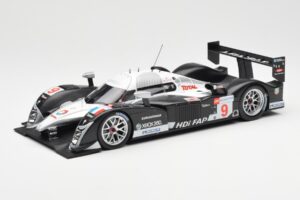
Peugeot 908 HDI FAP LMP1 #9 F. Montagny / R. Zonta / N. Kilen 3rd Place 24 Hours of Le Mans 2008 Minichamps 1:18
Only 1 left
Price:
£69.00
Save £3.00
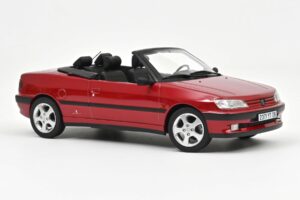
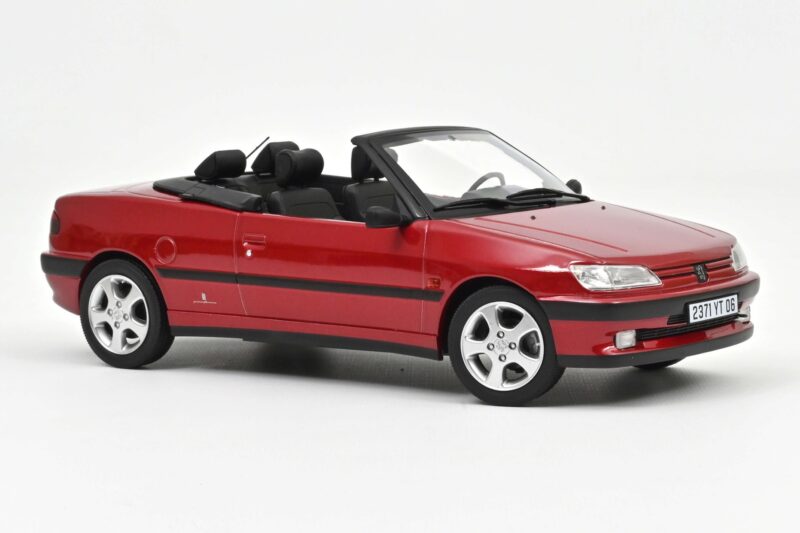
TL;DR: Norev's 1:18 diecast Peugeot 306 Cabriolet reproduces the 1994 convertible in Diablo Red, with opening doors, bonnet and boot on a diecast body styled by Pininfarina. A stylish, open-top counterpoint to the hatchback 306, it brings genuine 1990s French elegance to a convertible display shelf.
Pininfarina handled the styling and construction of the 306 Cabriolet, a detail that put proper Italian coachbuilding credentials behind an otherwise ordinary French family hatchback. The result was one of the more elegant affordable convertibles of the 1990s, and Norev's Diablo Red example captures that transformation well.
Norev builds this 306 Cabriolet with doors, bonnet and boot that all open, giving a collector a proper look at the cabin and the folded-roof arrangement that defined the car. Lifting the bonnet reveals a tidy engine bay, correctly proportioned for the 306's transverse layout, while the boot opens to show the shallower load space that came with housing a folding roof mechanism. That access also lets a collector display the car with the roof arrangement posed to suit their shelf, rather than locked into a single static configuration.
The Diablo Red finish sits deep and even across the body, with the kind of gloss that suits a car built to be seen with the roof down. Chrome window surrounds, a feature the Cabriolet needed since it lost the saloon's fixed door frames, are picked out cleanly, and the badge work on the boot lid holds sharp definition. The soft-top detailing, whether folded or raised, carries enough texture to read as fabric rather than a smooth, unconvincing moulding. Even the windscreen frame, a structural element the Cabriolet needed once the fixed roof was removed, holds its shape without looking bulkier than the real car's.
Peugeot sent the 306 to Pininfarina for the Cabriolet conversion, a common practice at the time when a mainstream manufacturer wanted a convertible without developing one entirely in-house. Pininfarina reworked the body for the necessary structural reinforcement a roofless car needs, while keeping enough of the 306's styling language that it read clearly as part of the same family. Few mainstream manufacturers bothered with that level of outside involvement, which is part of why the 306 Cabriolet still reads as a cut above an in-house conversion.
Through the 1990s, affordable convertibles were having something of a moment, and the 306 Cabriolet offered genuine Italian design credentials at a price well below what a dedicated sports car convertible would cost. It never chased outright performance, leaning instead on open-top style and everyday usability, a formula that made it a common sight on British roads through the decade. Finding well-kept originals has become harder over the years, which adds to the appeal of a faithfully detailed diecast replacement.
Diablo Red gives this 306 Cabriolet strong shelf presence next to the more commonly modelled hatchback version, and the opening panels make it a genuinely interactive piece rather than a static one. At 1:18, the Cabriolet's proportions sit comfortably alongside other 1990s convertibles, and it pairs naturally with a hatchback 306 to show both ends of the same model's range on one shelf. The Pininfarina connection also gives it a talking point beyond Peugeot's own badge, and it rewards being posed with the roof down as much as it does sealed behind glass.