{"ajaxurl":"https:\/\/models118.co.uk\/wp-admin\/admin-ajax.php?lang=en_GB","nonce":"d9bf684b57","homeUrl":"https:\/\/models118.co.uk\/","shopUrl":"https:\/\/models118.co.uk\/shop\/","cartUrl":"https:\/\/models118.co.uk\/cart-en-gb\/","checkoutUrl":"https:\/\/models118.co.uk\/checkout\/","skipCart":true,"collectionLimit":12,"i18n":{"addedToCart":"Added to basket","addToWishlist":"Add to wishlist","addedToWishlist":"Added to wishlist","removeFromWishlist":"Remove from wishlist","removedFromWishlist":"Removed from wishlist","undo":"Undo","error":"Something went wrong","loading":"Loading...","outOfStock":"Out of stock","viewCart":"View basket","proceedToCheckout":"Proceed to checkout","addedToCollection":"Added to your collection","reserved":"Reserved!","soldOut":"Sold out","invalidEmail":"Please enter a valid email address","connectionError":"Connection error. Please try again.","loginToSave":"Sign in to save this model","waitlistNotify":"Notify me","waitlistOnList":"On the waiting list \u2713","waitlistJoined":"You're on the waiting list. We'll email you the moment this model is available again.","waitlistRemoved":"Done \u2014 you're off the waiting list for this model.","waitlistRateLimit":"Too many attempts \u2014 please try again shortly","waitlistTurnstile":"We couldn't complete the check \u2014 please try again","waitlistError":"Sorry, something went wrong. Please try again in a moment."},"wishlist":{"loggedIn":false,"loginUrl":"https:\/\/models118.co.uk\/my-account\/","addAction":"models118_wishlist_add","removeAction":"models118_wishlist_remove"},"waitlist":{"loggedIn":false,"subscribeAction":"models118_waitlist_subscribe","toggleAction":"models118_waitlist_toggle","stateAction":"models118_waitlist_state"},"stats":{"models":2141,"brands":206,"manufacturers":127,"collectors":10000},"product":{"id":452558,"sku":"100920120","condition":"used","availability":"out_of_stock","name":"Benetton Ford B191B #20 M. Brundle F1 Early Season 1992 Minichamps 1:18","brand":"Benetton","manufacturer":"Minichamps","scale":"1:18","material":"Diecast","price":81,"regularPrice":81,"isOnSale":false,"savingsAmount":0,"stockQty":0,"stockStatus":"out_of_stock","isDiscontinued":true,"image":"https:\/\/models118.co.uk\/wp-content\/uploads\/2026\/06\/f1-benetton-ford-b191b-m-brundle-early-season-1992-minichamps-1-18-300x200.jpg","permalink":"https:\/\/models118.co.uk\/benetton-ford-b191b-20-m-brundle-f1-early-season-1992-minichamps-1-18-100920120\/"}}
Cookies on Models118
We use cookies to remember your preferences, understand how the shop is used and show you models and offers that suit your interests. What you allow is up to you, and you can change it at any time.
Always active
The technical storage or access is strictly necessary for the legitimate purpose of enabling the use of a specific service explicitly requested by the subscriber or user, or for the sole purpose of carrying out the transmission of a communication over an electronic communications network.
The technical storage or access is necessary for the legitimate purpose of storing preferences that are not requested by the subscriber or user.
The technical storage or access that is used exclusively for statistical purposes.
The technical storage or access is required to create user profiles to send advertising, or to track the user on a website or across several websites for similar marketing purposes.
Benetton Ford B191B #20 M. Brundle F1 Early Season 1992 Minichamps 1:18
Sold out
1/6
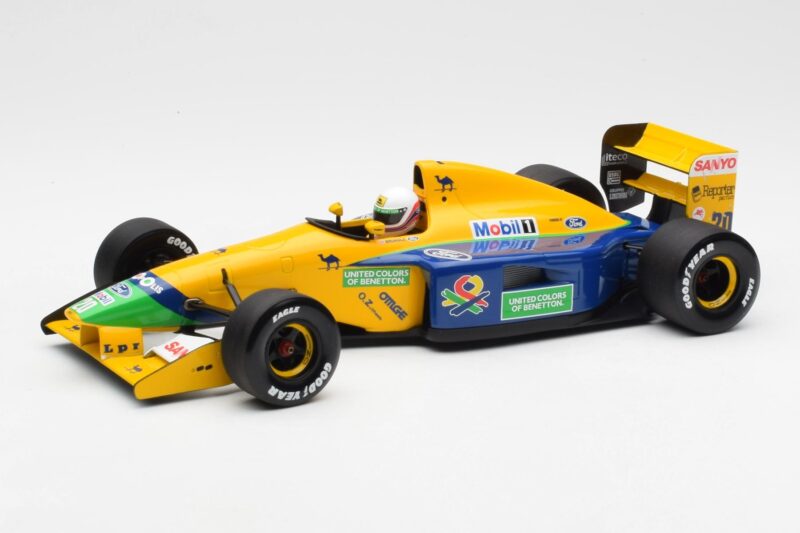
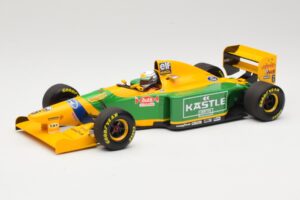
Minichamps' 1:18 diecast Benetton Ford B191B recreates Martin Brundle's early-1992 Formula 1 entry, the interim chassis Benetton ran in Camel livery before the B192 arrived mid-season. Car number 20 carries sharp sponsor graphics and a detailed cockpit, a considered pick for Benetton or Brundle collectors tracing the marque's early-1990s development rather than chasing only headline race winners. Diecast construction keeps the nose, sidepods and rear wing crisp at 1:18 scale.
1 / 6
[{"index":0,"id":"447315","thumb":"https:\/\/models118.co.uk\/wp-content\/uploads\/2026\/06\/f1-benetton-ford-b191b-m-brundle-early-season-1992-minichamps-1-18-300x200.jpg","medium":"https:\/\/models118.co.uk\/wp-content\/uploads\/2026\/06\/f1-benetton-ford-b191b-m-brundle-early-season-1992-minichamps-1-18-800x533.jpg","full":"https:\/\/models118.co.uk\/wp-content\/uploads\/2026\/06\/f1-benetton-ford-b191b-m-brundle-early-season-1992-minichamps-1-18.jpg","srcset":"https:\/\/models118.co.uk\/wp-content\/uploads\/2026\/06\/f1-benetton-ford-b191b-m-brundle-early-season-1992-minichamps-1-18-800x533.jpg 800w, https:\/\/models118.co.uk\/wp-content\/uploads\/2026\/06\/f1-benetton-ford-b191b-m-brundle-early-season-1992-minichamps-1-18-64x43.jpg 64w, https:\/\/models118.co.uk\/wp-content\/uploads\/2026\/06\/f1-benetton-ford-b191b-m-brundle-early-season-1992-minichamps-1-18-300x200.jpg 300w, https:\/\/models118.co.uk\/wp-content\/uploads\/2026\/06\/f1-benetton-ford-b191b-m-brundle-early-season-1992-minichamps-1-18.jpg 1800w","sizes":"(max-width: 1023px) 400px, 640px","srcsetAvif":"https:\/\/models118.co.uk\/wp-content\/uploads\/2026\/06\/f1-benetton-ford-b191b-m-brundle-early-season-1992-minichamps-1-18-800x533.jpg.avif 800w, https:\/\/models118.co.uk\/wp-content\/uploads\/2026\/06\/f1-benetton-ford-b191b-m-brundle-early-season-1992-minichamps-1-18-64x43.jpg.avif 64w, https:\/\/models118.co.uk\/wp-content\/uploads\/2026\/06\/f1-benetton-ford-b191b-m-brundle-early-season-1992-minichamps-1-18-300x200.jpg.avif 300w, https:\/\/models118.co.uk\/wp-content\/uploads\/2026\/06\/f1-benetton-ford-b191b-m-brundle-early-season-1992-minichamps-1-18.jpg.avif 1800w","srcsetWebp":"https:\/\/models118.co.uk\/wp-content\/uploads\/2026\/06\/f1-benetton-ford-b191b-m-brundle-early-season-1992-minichamps-1-18-800x533.jpg.webp 800w, https:\/\/models118.co.uk\/wp-content\/uploads\/2026\/06\/f1-benetton-ford-b191b-m-brundle-early-season-1992-minichamps-1-18-64x43.jpg.webp 64w, https:\/\/models118.co.uk\/wp-content\/uploads\/2026\/06\/f1-benetton-ford-b191b-m-brundle-early-season-1992-minichamps-1-18-300x200.jpg.webp 300w, https:\/\/models118.co.uk\/wp-content\/uploads\/2026\/06\/f1-benetton-ford-b191b-m-brundle-early-season-1992-minichamps-1-18.jpg.webp 1800w","alt":"Benetton Ford B191B #20 M. Brundle F1 Early Season 1992 Minichamps 1:18 100920120 Diecast"},{"index":1,"id":447342,"thumb":"https:\/\/models118.co.uk\/wp-content\/uploads\/2026\/06\/f1-benetton-ford-b191b-m-brundle-early-season-1992-minichamps-1-18-1-300x200.jpg","medium":"https:\/\/models118.co.uk\/wp-content\/uploads\/2026\/06\/f1-benetton-ford-b191b-m-brundle-early-season-1992-minichamps-1-18-1-800x533.jpg","full":"https:\/\/models118.co.uk\/wp-content\/uploads\/2026\/06\/f1-benetton-ford-b191b-m-brundle-early-season-1992-minichamps-1-18-1.jpg","srcset":"https:\/\/models118.co.uk\/wp-content\/uploads\/2026\/06\/f1-benetton-ford-b191b-m-brundle-early-season-1992-minichamps-1-18-1-800x533.jpg 800w, https:\/\/models118.co.uk\/wp-content\/uploads\/2026\/06\/f1-benetton-ford-b191b-m-brundle-early-season-1992-minichamps-1-18-1-64x43.jpg 64w, https:\/\/models118.co.uk\/wp-content\/uploads\/2026\/06\/f1-benetton-ford-b191b-m-brundle-early-season-1992-minichamps-1-18-1-300x200.jpg 300w, https:\/\/models118.co.uk\/wp-content\/uploads\/2026\/06\/f1-benetton-ford-b191b-m-brundle-early-season-1992-minichamps-1-18-1.jpg 1800w","sizes":"(max-width: 1023px) 400px, 640px","srcsetAvif":"https:\/\/models118.co.uk\/wp-content\/uploads\/2026\/06\/f1-benetton-ford-b191b-m-brundle-early-season-1992-minichamps-1-18-1-800x533.jpg.avif 800w, https:\/\/models118.co.uk\/wp-content\/uploads\/2026\/06\/f1-benetton-ford-b191b-m-brundle-early-season-1992-minichamps-1-18-1-64x43.jpg.avif 64w, https:\/\/models118.co.uk\/wp-content\/uploads\/2026\/06\/f1-benetton-ford-b191b-m-brundle-early-season-1992-minichamps-1-18-1-300x200.jpg.avif 300w, https:\/\/models118.co.uk\/wp-content\/uploads\/2026\/06\/f1-benetton-ford-b191b-m-brundle-early-season-1992-minichamps-1-18-1.jpg.avif 1800w","srcsetWebp":"https:\/\/models118.co.uk\/wp-content\/uploads\/2026\/06\/f1-benetton-ford-b191b-m-brundle-early-season-1992-minichamps-1-18-1-800x533.jpg.webp 800w, https:\/\/models118.co.uk\/wp-content\/uploads\/2026\/06\/f1-benetton-ford-b191b-m-brundle-early-season-1992-minichamps-1-18-1-64x43.jpg.webp 64w, https:\/\/models118.co.uk\/wp-content\/uploads\/2026\/06\/f1-benetton-ford-b191b-m-brundle-early-season-1992-minichamps-1-18-1-300x200.jpg.webp 300w, https:\/\/models118.co.uk\/wp-content\/uploads\/2026\/06\/f1-benetton-ford-b191b-m-brundle-early-season-1992-minichamps-1-18-1.jpg.webp 1800w","alt":"Benetton Ford B191B #20 M. Brundle F1 Early Season 1992 Minichamps 1:18 100920120 Diecast \u2014 photo 2 of 6"},{"index":2,"id":447369,"thumb":"https:\/\/models118.co.uk\/wp-content\/uploads\/2026\/06\/f1-benetton-ford-b191b-m-brundle-early-season-1992-minichamps-1-18-2-300x200.jpg","medium":"https:\/\/models118.co.uk\/wp-content\/uploads\/2026\/06\/f1-benetton-ford-b191b-m-brundle-early-season-1992-minichamps-1-18-2-800x533.jpg","full":"https:\/\/models118.co.uk\/wp-content\/uploads\/2026\/06\/f1-benetton-ford-b191b-m-brundle-early-season-1992-minichamps-1-18-2.jpg","srcset":"https:\/\/models118.co.uk\/wp-content\/uploads\/2026\/06\/f1-benetton-ford-b191b-m-brundle-early-season-1992-minichamps-1-18-2-800x533.jpg 800w, https:\/\/models118.co.uk\/wp-content\/uploads\/2026\/06\/f1-benetton-ford-b191b-m-brundle-early-season-1992-minichamps-1-18-2-64x43.jpg 64w, https:\/\/models118.co.uk\/wp-content\/uploads\/2026\/06\/f1-benetton-ford-b191b-m-brundle-early-season-1992-minichamps-1-18-2-300x200.jpg 300w, https:\/\/models118.co.uk\/wp-content\/uploads\/2026\/06\/f1-benetton-ford-b191b-m-brundle-early-season-1992-minichamps-1-18-2.jpg 1800w","sizes":"(max-width: 1023px) 400px, 640px","srcsetAvif":"https:\/\/models118.co.uk\/wp-content\/uploads\/2026\/06\/f1-benetton-ford-b191b-m-brundle-early-season-1992-minichamps-1-18-2-800x533.jpg.avif 800w, https:\/\/models118.co.uk\/wp-content\/uploads\/2026\/06\/f1-benetton-ford-b191b-m-brundle-early-season-1992-minichamps-1-18-2-64x43.jpg.avif 64w, https:\/\/models118.co.uk\/wp-content\/uploads\/2026\/06\/f1-benetton-ford-b191b-m-brundle-early-season-1992-minichamps-1-18-2-300x200.jpg.avif 300w, https:\/\/models118.co.uk\/wp-content\/uploads\/2026\/06\/f1-benetton-ford-b191b-m-brundle-early-season-1992-minichamps-1-18-2.jpg.avif 1800w","srcsetWebp":"https:\/\/models118.co.uk\/wp-content\/uploads\/2026\/06\/f1-benetton-ford-b191b-m-brundle-early-season-1992-minichamps-1-18-2-800x533.jpg.webp 800w, https:\/\/models118.co.uk\/wp-content\/uploads\/2026\/06\/f1-benetton-ford-b191b-m-brundle-early-season-1992-minichamps-1-18-2-64x43.jpg.webp 64w, https:\/\/models118.co.uk\/wp-content\/uploads\/2026\/06\/f1-benetton-ford-b191b-m-brundle-early-season-1992-minichamps-1-18-2-300x200.jpg.webp 300w, https:\/\/models118.co.uk\/wp-content\/uploads\/2026\/06\/f1-benetton-ford-b191b-m-brundle-early-season-1992-minichamps-1-18-2.jpg.webp 1800w","alt":"Benetton Ford B191B #20 M. Brundle F1 Early Season 1992 Minichamps 1:18 100920120 Diecast \u2014 photo 3 of 6"},{"index":3,"id":447396,"thumb":"https:\/\/models118.co.uk\/wp-content\/uploads\/2026\/06\/f1-benetton-ford-b191b-m-brundle-early-season-1992-minichamps-1-18-3-300x200.jpg","medium":"https:\/\/models118.co.uk\/wp-content\/uploads\/2026\/06\/f1-benetton-ford-b191b-m-brundle-early-season-1992-minichamps-1-18-3-800x533.jpg","full":"https:\/\/models118.co.uk\/wp-content\/uploads\/2026\/06\/f1-benetton-ford-b191b-m-brundle-early-season-1992-minichamps-1-18-3.jpg","srcset":"https:\/\/models118.co.uk\/wp-content\/uploads\/2026\/06\/f1-benetton-ford-b191b-m-brundle-early-season-1992-minichamps-1-18-3-800x533.jpg 800w, https:\/\/models118.co.uk\/wp-content\/uploads\/2026\/06\/f1-benetton-ford-b191b-m-brundle-early-season-1992-minichamps-1-18-3-64x43.jpg 64w, https:\/\/models118.co.uk\/wp-content\/uploads\/2026\/06\/f1-benetton-ford-b191b-m-brundle-early-season-1992-minichamps-1-18-3-300x200.jpg 300w, https:\/\/models118.co.uk\/wp-content\/uploads\/2026\/06\/f1-benetton-ford-b191b-m-brundle-early-season-1992-minichamps-1-18-3.jpg 1800w","sizes":"(max-width: 1023px) 400px, 640px","srcsetAvif":"https:\/\/models118.co.uk\/wp-content\/uploads\/2026\/06\/f1-benetton-ford-b191b-m-brundle-early-season-1992-minichamps-1-18-3-800x533.jpg.avif 800w, https:\/\/models118.co.uk\/wp-content\/uploads\/2026\/06\/f1-benetton-ford-b191b-m-brundle-early-season-1992-minichamps-1-18-3-64x43.jpg.avif 64w, https:\/\/models118.co.uk\/wp-content\/uploads\/2026\/06\/f1-benetton-ford-b191b-m-brundle-early-season-1992-minichamps-1-18-3-300x200.jpg.avif 300w, https:\/\/models118.co.uk\/wp-content\/uploads\/2026\/06\/f1-benetton-ford-b191b-m-brundle-early-season-1992-minichamps-1-18-3.jpg.avif 1800w","srcsetWebp":"https:\/\/models118.co.uk\/wp-content\/uploads\/2026\/06\/f1-benetton-ford-b191b-m-brundle-early-season-1992-minichamps-1-18-3-800x533.jpg.webp 800w, https:\/\/models118.co.uk\/wp-content\/uploads\/2026\/06\/f1-benetton-ford-b191b-m-brundle-early-season-1992-minichamps-1-18-3-64x43.jpg.webp 64w, https:\/\/models118.co.uk\/wp-content\/uploads\/2026\/06\/f1-benetton-ford-b191b-m-brundle-early-season-1992-minichamps-1-18-3-300x200.jpg.webp 300w, https:\/\/models118.co.uk\/wp-content\/uploads\/2026\/06\/f1-benetton-ford-b191b-m-brundle-early-season-1992-minichamps-1-18-3.jpg.webp 1800w","alt":"Benetton Ford B191B #20 M. Brundle F1 Early Season 1992 Minichamps 1:18 100920120 Diecast \u2014 photo 4 of 6"},{"index":4,"id":447423,"thumb":"https:\/\/models118.co.uk\/wp-content\/uploads\/2026\/06\/f1-benetton-ford-b191b-m-brundle-early-season-1992-minichamps-1-18-4-300x200.jpg","medium":"https:\/\/models118.co.uk\/wp-content\/uploads\/2026\/06\/f1-benetton-ford-b191b-m-brundle-early-season-1992-minichamps-1-18-4-800x533.jpg","full":"https:\/\/models118.co.uk\/wp-content\/uploads\/2026\/06\/f1-benetton-ford-b191b-m-brundle-early-season-1992-minichamps-1-18-4.jpg","srcset":"https:\/\/models118.co.uk\/wp-content\/uploads\/2026\/06\/f1-benetton-ford-b191b-m-brundle-early-season-1992-minichamps-1-18-4-800x533.jpg 800w, https:\/\/models118.co.uk\/wp-content\/uploads\/2026\/06\/f1-benetton-ford-b191b-m-brundle-early-season-1992-minichamps-1-18-4-64x43.jpg 64w, https:\/\/models118.co.uk\/wp-content\/uploads\/2026\/06\/f1-benetton-ford-b191b-m-brundle-early-season-1992-minichamps-1-18-4-300x200.jpg 300w, https:\/\/models118.co.uk\/wp-content\/uploads\/2026\/06\/f1-benetton-ford-b191b-m-brundle-early-season-1992-minichamps-1-18-4.jpg 1800w","sizes":"(max-width: 1023px) 400px, 640px","srcsetAvif":"https:\/\/models118.co.uk\/wp-content\/uploads\/2026\/06\/f1-benetton-ford-b191b-m-brundle-early-season-1992-minichamps-1-18-4-800x533.jpg.avif 800w, https:\/\/models118.co.uk\/wp-content\/uploads\/2026\/06\/f1-benetton-ford-b191b-m-brundle-early-season-1992-minichamps-1-18-4-64x43.jpg.avif 64w, https:\/\/models118.co.uk\/wp-content\/uploads\/2026\/06\/f1-benetton-ford-b191b-m-brundle-early-season-1992-minichamps-1-18-4-300x200.jpg.avif 300w, https:\/\/models118.co.uk\/wp-content\/uploads\/2026\/06\/f1-benetton-ford-b191b-m-brundle-early-season-1992-minichamps-1-18-4.jpg.avif 1800w","srcsetWebp":"https:\/\/models118.co.uk\/wp-content\/uploads\/2026\/06\/f1-benetton-ford-b191b-m-brundle-early-season-1992-minichamps-1-18-4-800x533.jpg.webp 800w, https:\/\/models118.co.uk\/wp-content\/uploads\/2026\/06\/f1-benetton-ford-b191b-m-brundle-early-season-1992-minichamps-1-18-4-64x43.jpg.webp 64w, https:\/\/models118.co.uk\/wp-content\/uploads\/2026\/06\/f1-benetton-ford-b191b-m-brundle-early-season-1992-minichamps-1-18-4-300x200.jpg.webp 300w, https:\/\/models118.co.uk\/wp-content\/uploads\/2026\/06\/f1-benetton-ford-b191b-m-brundle-early-season-1992-minichamps-1-18-4.jpg.webp 1800w","alt":"Benetton Ford B191B #20 M. Brundle F1 Early Season 1992 Minichamps 1:18 100920120 Diecast \u2014 photo 5 of 6"},{"index":5,"id":447450,"thumb":"https:\/\/models118.co.uk\/wp-content\/uploads\/2026\/06\/f1-benetton-ford-b191b-m-brundle-early-season-1992-minichamps-1-18-5-300x200.jpg","medium":"https:\/\/models118.co.uk\/wp-content\/uploads\/2026\/06\/f1-benetton-ford-b191b-m-brundle-early-season-1992-minichamps-1-18-5-800x533.jpg","full":"https:\/\/models118.co.uk\/wp-content\/uploads\/2026\/06\/f1-benetton-ford-b191b-m-brundle-early-season-1992-minichamps-1-18-5.jpg","srcset":"https:\/\/models118.co.uk\/wp-content\/uploads\/2026\/06\/f1-benetton-ford-b191b-m-brundle-early-season-1992-minichamps-1-18-5-800x533.jpg 800w, https:\/\/models118.co.uk\/wp-content\/uploads\/2026\/06\/f1-benetton-ford-b191b-m-brundle-early-season-1992-minichamps-1-18-5-64x43.jpg 64w, https:\/\/models118.co.uk\/wp-content\/uploads\/2026\/06\/f1-benetton-ford-b191b-m-brundle-early-season-1992-minichamps-1-18-5-300x200.jpg 300w, https:\/\/models118.co.uk\/wp-content\/uploads\/2026\/06\/f1-benetton-ford-b191b-m-brundle-early-season-1992-minichamps-1-18-5.jpg 1800w","sizes":"(max-width: 1023px) 400px, 640px","srcsetAvif":"https:\/\/models118.co.uk\/wp-content\/uploads\/2026\/06\/f1-benetton-ford-b191b-m-brundle-early-season-1992-minichamps-1-18-5-800x533.jpg.avif 800w, https:\/\/models118.co.uk\/wp-content\/uploads\/2026\/06\/f1-benetton-ford-b191b-m-brundle-early-season-1992-minichamps-1-18-5-64x43.jpg.avif 64w, https:\/\/models118.co.uk\/wp-content\/uploads\/2026\/06\/f1-benetton-ford-b191b-m-brundle-early-season-1992-minichamps-1-18-5-300x200.jpg.avif 300w, https:\/\/models118.co.uk\/wp-content\/uploads\/2026\/06\/f1-benetton-ford-b191b-m-brundle-early-season-1992-minichamps-1-18-5.jpg.avif 1800w","srcsetWebp":"https:\/\/models118.co.uk\/wp-content\/uploads\/2026\/06\/f1-benetton-ford-b191b-m-brundle-early-season-1992-minichamps-1-18-5-800x533.jpg.webp 800w, https:\/\/models118.co.uk\/wp-content\/uploads\/2026\/06\/f1-benetton-ford-b191b-m-brundle-early-season-1992-minichamps-1-18-5-64x43.jpg.webp 64w, https:\/\/models118.co.uk\/wp-content\/uploads\/2026\/06\/f1-benetton-ford-b191b-m-brundle-early-season-1992-minichamps-1-18-5-300x200.jpg.webp 300w, https:\/\/models118.co.uk\/wp-content\/uploads\/2026\/06\/f1-benetton-ford-b191b-m-brundle-early-season-1992-minichamps-1-18-5.jpg.webp 1800w","alt":"Benetton Ford B191B #20 M. Brundle F1 Early Season 1992 Minichamps 1:18 100920120 Diecast \u2014 photo 6 of 6"}]
Benetton Ford B191B #20 M. Brundle F1 Early Season 1992 Minichamps 1:18
Current price:£81.00
Out of production
This model is currently sold out.Enter your email and we'll let you know when it's back in stock.
About the Benetton Ford B191B #20 M. Brundle F1 Early Season 1992 Minichamps 1:18
TL;DR: Minichamps' 1:18 diecast reproduces the Benetton Ford B191B driven by Martin Brundle at the start of the 1992 Formula 1 season, finished in Camel livery with car number 20. Built as an interim evolution of the 1991 chassis, it suits collectors tracing Benetton's early-1990s development or Brundle's career.
Early-season Formula 1 chassis rarely get the spotlight, overshadowed once a definitive update lands mid-year. Minichamps gives this stopgap Benetton its due, reproducing the specification that carried Martin Brundle through the opening rounds of 1992 before the B192 took over.
Minichamps' Benetton B191B in 1:18 Diecast
Camel Livery and Number 20 Detailing
Camel's blue, yellow and white scheme wraps the B191B in sharply registered graphics, with car number 20 placed correctly on the nose and sidepods for Brundle's 1992 entry. Minichamps keeps the sponsor decals clean at every panel line, the level of registration that separates a well-finished Formula 1 diecast from a blurred mass-market casting, and matches the printed detail across the rear wing endplates and airbox. That same registration extends to the smaller sponsor decals along the sidepod flanks, printed rather than simply implied, a detail easy to skip on lower-tier castings.
Multi-Part Build and Cockpit Finish
The body is cast in zinc alloy with the front wing, mirrors and aerial fitted as separate components rather than moulded into the main casting, an approach that keeps these thin aerodynamic elements from reading as oversized lumps at 1:18. The cockpit carries a modelled dashboard, harness and seat visible through the roll hoop opening, giving the model presence even without any doors or bonnet to lift. Lifted from its packaging, the casting carries a reassuring heft that plastic-bodied alternatives lack, and the paint holds an even depth under direct light, exactly where a livery built from flat sponsor panels benefits most from careful colour matching.
Brundle's Return and the B191B's Interim Role
An Evolution Car Ahead of the B192
Benetton opened 1992 with the B191B, a development of the previous year's Rory Byrne-designed chassis rather than an all-new car, run while the definitive B192 was finished. That timing is exactly what makes this livery specification distinct: teams often race an interim chassis for only a handful of rounds, and Minichamps chose to capture that specific, comparatively short-lived configuration rather than the more commonly reproduced full-season car. Few manufacturers bother with such a short-lived specification, which is part of what makes this particular casting worth seeking out.
Brundle's 1992 Season
Martin Brundle returned to Benetton for 1992 alongside Michael Schumacher, bringing experience from his years at Tyrrell and Jordan to a team building toward front-running form. Number 20 was his car for the season, and the B191B represents the specific early-race configuration before Benetton's development pace picked up through the year. For a Brundle collection, it marks the season that reintroduced him to a competitive midfield team.
Where This Fits a Benetton or Brundle Collection
At roughly 20 centimetres long, the model sits comfortably among other 1:18 Formula 1 diecast on a standard shelf, its narrow single-seater footprint taking less depth than a road car casting of the same scale, which matters when planning cabinet spacing for a full grid line-up. Against 1:43 alternatives, the larger scale earns its shelf space by carrying far more livery and cockpit detail, at the cost of needing roughly double the row length per car. It works best alongside other early-1990s Benetton liveries, where the interim B191B specification adds a genuine variant rather than duplicating a season already represented by the definitive B192. Collectors building a Brundle career line will find it a useful bridge piece between his Jordan years and Benetton's later championship form, while Benetton specialists get a chassis rarely reproduced in this much detail. Kept out of direct sunlight, the printed decals and paint should hold their colour for years, and a light dusting is normally all the upkeep a sealed cabinet display needs. It is not a headline race-winning car, and that honesty is part of its appeal.
Create a free account and claim 10% off your first order — from hundreds of collectible 1:18, 1:43 and 1:12 models by Porsche, Mercedes-Benz, BMW and more.
{"id":452558,"name":"Benetton Ford B191B #20 M. Brundle F1 Early Season 1992 Minichamps 1:18","price":"£<\/span>81.00<\/bdi><\/span>","image":"https:\/\/models118.co.uk\/wp-content\/uploads\/2026\/06\/f1-benetton-ford-b191b-m-brundle-early-season-1992-minichamps-1-18-400x400.jpg","permalink":"https:\/\/models118.co.uk\/benetton-ford-b191b-20-m-brundle-f1-early-season-1992-minichamps-1-18-100920120\/","brand":"Benetton"}