{"ajaxurl":"https:\/\/models118.co.uk\/wp-admin\/admin-ajax.php?lang=en_GB","nonce":"c34ded2387","homeUrl":"https:\/\/models118.co.uk\/","shopUrl":"https:\/\/models118.co.uk\/shop\/","cartUrl":"https:\/\/models118.co.uk\/cart-en-gb\/","checkoutUrl":"https:\/\/models118.co.uk\/checkout\/","skipCart":true,"collectionLimit":12,"i18n":{"addedToCart":"Added to basket","addToWishlist":"Add to wishlist","addedToWishlist":"Added to wishlist","removeFromWishlist":"Remove from wishlist","removedFromWishlist":"Removed from wishlist","undo":"Undo","error":"Something went wrong","loading":"Loading...","outOfStock":"Out of stock","viewCart":"View basket","proceedToCheckout":"Proceed to checkout","addedToCollection":"Added to your collection","reserved":"Reserved!","soldOut":"Sold out","invalidEmail":"Please enter a valid email address","connectionError":"Connection error. Please try again.","loginToSave":"Sign in to save this model","waitlistNotify":"Notify me","waitlistOnList":"On the waiting list \u2713","waitlistJoined":"You're on the waiting list. We'll email you the moment this model is available again.","waitlistRemoved":"Done \u2014 you're off the waiting list for this model.","waitlistRateLimit":"Too many attempts \u2014 please try again shortly","waitlistTurnstile":"We couldn't complete the check \u2014 please try again","waitlistError":"Sorry, something went wrong. Please try again in a moment."},"wishlist":{"loggedIn":false,"loginUrl":"https:\/\/models118.co.uk\/my-account\/","addAction":"models118_wishlist_add","removeAction":"models118_wishlist_remove"},"waitlist":{"loggedIn":false,"subscribeAction":"models118_waitlist_subscribe","toggleAction":"models118_waitlist_toggle","stateAction":"models118_waitlist_state"},"stats":{"models":2226,"brands":205,"manufacturers":127,"collectors":10000},"product":{"id":614514,"sku":"107116120","condition":"used","name":"Delahaye Type 145 V12 Coupe Mullin Museum Minichamps 1:18","brand":"Delahaye","manufacturer":"Minichamps","scale":"1:18","material":"Diecast","price":170,"regularPrice":170,"isOnSale":false,"savingsAmount":0,"stockQty":0,"stockStatus":"out_of_stock","isDiscontinued":true,"image":"https:\/\/models118.co.uk\/wp-content\/uploads\/2026\/06\/delahaye-type-145-v12-coupe-mullin-museum-minichamps-1-18-300x200.jpg","permalink":"https:\/\/models118.co.uk\/delahaye-type-145-v12-coupe-mullin-museum-minichamps-1-18-107116120\/"}}
Delahaye Type 145 V12 Coupe Mullin Museum Minichamps 1:18
Sold out
1/6
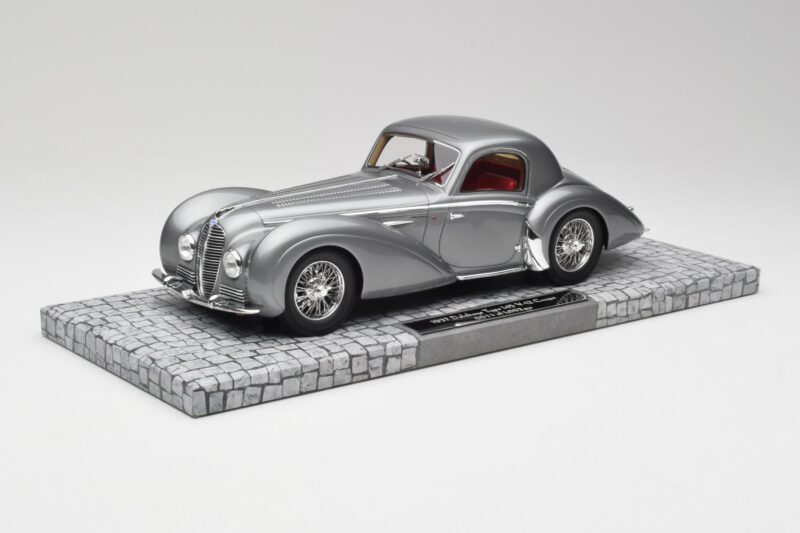
Minichamps' 1:18 diecast Delahaye Type 145 reproduces the 1937 V12 competition coupe linked to the Mullin Museum's collection of French pre-war cars, capturing its flowing coachbuilt lines and formal cabin. Tight shut lines hold against the body's compound curves. A distinctive centrepiece for a pre-war Grand Prix or French coachbuilding display.
1 / 6
[{"index":0,"id":"599358","thumb":"https:\/\/models118.co.uk\/wp-content\/uploads\/2026\/06\/delahaye-type-145-v12-coupe-mullin-museum-minichamps-1-18-300x200.jpg","medium":"https:\/\/models118.co.uk\/wp-content\/uploads\/2026\/06\/delahaye-type-145-v12-coupe-mullin-museum-minichamps-1-18-800x533.jpg","full":"https:\/\/models118.co.uk\/wp-content\/uploads\/2026\/06\/delahaye-type-145-v12-coupe-mullin-museum-minichamps-1-18.jpg","srcset":"https:\/\/models118.co.uk\/wp-content\/uploads\/2026\/06\/delahaye-type-145-v12-coupe-mullin-museum-minichamps-1-18-800x533.jpg 800w, https:\/\/models118.co.uk\/wp-content\/uploads\/2026\/06\/delahaye-type-145-v12-coupe-mullin-museum-minichamps-1-18-64x43.jpg 64w, https:\/\/models118.co.uk\/wp-content\/uploads\/2026\/06\/delahaye-type-145-v12-coupe-mullin-museum-minichamps-1-18-300x200.jpg 300w, https:\/\/models118.co.uk\/wp-content\/uploads\/2026\/06\/delahaye-type-145-v12-coupe-mullin-museum-minichamps-1-18.jpg 1800w","sizes":"(max-width: 1023px) 400px, 640px","srcsetAvif":"https:\/\/models118.co.uk\/wp-content\/uploads\/2026\/06\/delahaye-type-145-v12-coupe-mullin-museum-minichamps-1-18-800x533.jpg.avif 800w, https:\/\/models118.co.uk\/wp-content\/uploads\/2026\/06\/delahaye-type-145-v12-coupe-mullin-museum-minichamps-1-18-64x43.jpg.avif 64w, https:\/\/models118.co.uk\/wp-content\/uploads\/2026\/06\/delahaye-type-145-v12-coupe-mullin-museum-minichamps-1-18-300x200.jpg.avif 300w, https:\/\/models118.co.uk\/wp-content\/uploads\/2026\/06\/delahaye-type-145-v12-coupe-mullin-museum-minichamps-1-18.jpg.avif 1800w","srcsetWebp":"https:\/\/models118.co.uk\/wp-content\/uploads\/2026\/06\/delahaye-type-145-v12-coupe-mullin-museum-minichamps-1-18-800x533.jpg.webp 800w, https:\/\/models118.co.uk\/wp-content\/uploads\/2026\/06\/delahaye-type-145-v12-coupe-mullin-museum-minichamps-1-18-64x43.jpg.webp 64w, https:\/\/models118.co.uk\/wp-content\/uploads\/2026\/06\/delahaye-type-145-v12-coupe-mullin-museum-minichamps-1-18-300x200.jpg.webp 300w, https:\/\/models118.co.uk\/wp-content\/uploads\/2026\/06\/delahaye-type-145-v12-coupe-mullin-museum-minichamps-1-18.jpg.webp 1800w","alt":"Delahaye Type 145 V12 Coupe Mullin Museum Minichamps 1:18 107116120 Diecast"},{"index":1,"id":599487,"thumb":"https:\/\/models118.co.uk\/wp-content\/uploads\/2026\/06\/delahaye-type-145-v12-coupe-mullin-museum-minichamps-1-18-1-300x200.jpg","medium":"https:\/\/models118.co.uk\/wp-content\/uploads\/2026\/06\/delahaye-type-145-v12-coupe-mullin-museum-minichamps-1-18-1-800x533.jpg","full":"https:\/\/models118.co.uk\/wp-content\/uploads\/2026\/06\/delahaye-type-145-v12-coupe-mullin-museum-minichamps-1-18-1.jpg","srcset":"https:\/\/models118.co.uk\/wp-content\/uploads\/2026\/06\/delahaye-type-145-v12-coupe-mullin-museum-minichamps-1-18-1-800x533.jpg 800w, https:\/\/models118.co.uk\/wp-content\/uploads\/2026\/06\/delahaye-type-145-v12-coupe-mullin-museum-minichamps-1-18-1-64x43.jpg 64w, https:\/\/models118.co.uk\/wp-content\/uploads\/2026\/06\/delahaye-type-145-v12-coupe-mullin-museum-minichamps-1-18-1-300x200.jpg 300w, https:\/\/models118.co.uk\/wp-content\/uploads\/2026\/06\/delahaye-type-145-v12-coupe-mullin-museum-minichamps-1-18-1.jpg 1800w","sizes":"(max-width: 1023px) 400px, 640px","srcsetAvif":"https:\/\/models118.co.uk\/wp-content\/uploads\/2026\/06\/delahaye-type-145-v12-coupe-mullin-museum-minichamps-1-18-1-800x533.jpg.avif 800w, https:\/\/models118.co.uk\/wp-content\/uploads\/2026\/06\/delahaye-type-145-v12-coupe-mullin-museum-minichamps-1-18-1-64x43.jpg.avif 64w, https:\/\/models118.co.uk\/wp-content\/uploads\/2026\/06\/delahaye-type-145-v12-coupe-mullin-museum-minichamps-1-18-1-300x200.jpg.avif 300w, https:\/\/models118.co.uk\/wp-content\/uploads\/2026\/06\/delahaye-type-145-v12-coupe-mullin-museum-minichamps-1-18-1.jpg.avif 1800w","srcsetWebp":"https:\/\/models118.co.uk\/wp-content\/uploads\/2026\/06\/delahaye-type-145-v12-coupe-mullin-museum-minichamps-1-18-1-800x533.jpg.webp 800w, https:\/\/models118.co.uk\/wp-content\/uploads\/2026\/06\/delahaye-type-145-v12-coupe-mullin-museum-minichamps-1-18-1-64x43.jpg.webp 64w, https:\/\/models118.co.uk\/wp-content\/uploads\/2026\/06\/delahaye-type-145-v12-coupe-mullin-museum-minichamps-1-18-1-300x200.jpg.webp 300w, https:\/\/models118.co.uk\/wp-content\/uploads\/2026\/06\/delahaye-type-145-v12-coupe-mullin-museum-minichamps-1-18-1.jpg.webp 1800w","alt":"Delahaye Type 145 V12 Coupe Mullin Museum Minichamps 1:18 107116120 Diecast \u2014 photo 2 of 6"},{"index":2,"id":599611,"thumb":"https:\/\/models118.co.uk\/wp-content\/uploads\/2026\/06\/delahaye-type-145-v12-coupe-mullin-museum-minichamps-1-18-2-300x200.jpg","medium":"https:\/\/models118.co.uk\/wp-content\/uploads\/2026\/06\/delahaye-type-145-v12-coupe-mullin-museum-minichamps-1-18-2-800x533.jpg","full":"https:\/\/models118.co.uk\/wp-content\/uploads\/2026\/06\/delahaye-type-145-v12-coupe-mullin-museum-minichamps-1-18-2.jpg","srcset":"https:\/\/models118.co.uk\/wp-content\/uploads\/2026\/06\/delahaye-type-145-v12-coupe-mullin-museum-minichamps-1-18-2-800x533.jpg 800w, https:\/\/models118.co.uk\/wp-content\/uploads\/2026\/06\/delahaye-type-145-v12-coupe-mullin-museum-minichamps-1-18-2-64x43.jpg 64w, https:\/\/models118.co.uk\/wp-content\/uploads\/2026\/06\/delahaye-type-145-v12-coupe-mullin-museum-minichamps-1-18-2-300x200.jpg 300w, https:\/\/models118.co.uk\/wp-content\/uploads\/2026\/06\/delahaye-type-145-v12-coupe-mullin-museum-minichamps-1-18-2.jpg 1800w","sizes":"(max-width: 1023px) 400px, 640px","srcsetAvif":"https:\/\/models118.co.uk\/wp-content\/uploads\/2026\/06\/delahaye-type-145-v12-coupe-mullin-museum-minichamps-1-18-2-800x533.jpg.avif 800w, https:\/\/models118.co.uk\/wp-content\/uploads\/2026\/06\/delahaye-type-145-v12-coupe-mullin-museum-minichamps-1-18-2-64x43.jpg.avif 64w, https:\/\/models118.co.uk\/wp-content\/uploads\/2026\/06\/delahaye-type-145-v12-coupe-mullin-museum-minichamps-1-18-2-300x200.jpg.avif 300w, https:\/\/models118.co.uk\/wp-content\/uploads\/2026\/06\/delahaye-type-145-v12-coupe-mullin-museum-minichamps-1-18-2.jpg.avif 1800w","srcsetWebp":"https:\/\/models118.co.uk\/wp-content\/uploads\/2026\/06\/delahaye-type-145-v12-coupe-mullin-museum-minichamps-1-18-2-800x533.jpg.webp 800w, https:\/\/models118.co.uk\/wp-content\/uploads\/2026\/06\/delahaye-type-145-v12-coupe-mullin-museum-minichamps-1-18-2-64x43.jpg.webp 64w, https:\/\/models118.co.uk\/wp-content\/uploads\/2026\/06\/delahaye-type-145-v12-coupe-mullin-museum-minichamps-1-18-2-300x200.jpg.webp 300w, https:\/\/models118.co.uk\/wp-content\/uploads\/2026\/06\/delahaye-type-145-v12-coupe-mullin-museum-minichamps-1-18-2.jpg.webp 1800w","alt":"Delahaye Type 145 V12 Coupe Mullin Museum Minichamps 1:18 107116120 Diecast \u2014 photo 3 of 6"},{"index":3,"id":599732,"thumb":"https:\/\/models118.co.uk\/wp-content\/uploads\/2026\/06\/delahaye-type-145-v12-coupe-mullin-museum-minichamps-1-18-3-300x200.jpg","medium":"https:\/\/models118.co.uk\/wp-content\/uploads\/2026\/06\/delahaye-type-145-v12-coupe-mullin-museum-minichamps-1-18-3-800x533.jpg","full":"https:\/\/models118.co.uk\/wp-content\/uploads\/2026\/06\/delahaye-type-145-v12-coupe-mullin-museum-minichamps-1-18-3.jpg","srcset":"https:\/\/models118.co.uk\/wp-content\/uploads\/2026\/06\/delahaye-type-145-v12-coupe-mullin-museum-minichamps-1-18-3-800x533.jpg 800w, https:\/\/models118.co.uk\/wp-content\/uploads\/2026\/06\/delahaye-type-145-v12-coupe-mullin-museum-minichamps-1-18-3-64x43.jpg 64w, https:\/\/models118.co.uk\/wp-content\/uploads\/2026\/06\/delahaye-type-145-v12-coupe-mullin-museum-minichamps-1-18-3-300x200.jpg 300w, https:\/\/models118.co.uk\/wp-content\/uploads\/2026\/06\/delahaye-type-145-v12-coupe-mullin-museum-minichamps-1-18-3.jpg 1800w","sizes":"(max-width: 1023px) 400px, 640px","srcsetAvif":"https:\/\/models118.co.uk\/wp-content\/uploads\/2026\/06\/delahaye-type-145-v12-coupe-mullin-museum-minichamps-1-18-3-800x533.jpg.avif 800w, https:\/\/models118.co.uk\/wp-content\/uploads\/2026\/06\/delahaye-type-145-v12-coupe-mullin-museum-minichamps-1-18-3-64x43.jpg.avif 64w, https:\/\/models118.co.uk\/wp-content\/uploads\/2026\/06\/delahaye-type-145-v12-coupe-mullin-museum-minichamps-1-18-3-300x200.jpg.avif 300w, https:\/\/models118.co.uk\/wp-content\/uploads\/2026\/06\/delahaye-type-145-v12-coupe-mullin-museum-minichamps-1-18-3.jpg.avif 1800w","srcsetWebp":"https:\/\/models118.co.uk\/wp-content\/uploads\/2026\/06\/delahaye-type-145-v12-coupe-mullin-museum-minichamps-1-18-3-800x533.jpg.webp 800w, https:\/\/models118.co.uk\/wp-content\/uploads\/2026\/06\/delahaye-type-145-v12-coupe-mullin-museum-minichamps-1-18-3-64x43.jpg.webp 64w, https:\/\/models118.co.uk\/wp-content\/uploads\/2026\/06\/delahaye-type-145-v12-coupe-mullin-museum-minichamps-1-18-3-300x200.jpg.webp 300w, https:\/\/models118.co.uk\/wp-content\/uploads\/2026\/06\/delahaye-type-145-v12-coupe-mullin-museum-minichamps-1-18-3.jpg.webp 1800w","alt":"Delahaye Type 145 V12 Coupe Mullin Museum Minichamps 1:18 107116120 Diecast \u2014 photo 4 of 6"},{"index":4,"id":599865,"thumb":"https:\/\/models118.co.uk\/wp-content\/uploads\/2026\/06\/delahaye-type-145-v12-coupe-mullin-museum-minichamps-1-18-4-300x200.jpg","medium":"https:\/\/models118.co.uk\/wp-content\/uploads\/2026\/06\/delahaye-type-145-v12-coupe-mullin-museum-minichamps-1-18-4-800x533.jpg","full":"https:\/\/models118.co.uk\/wp-content\/uploads\/2026\/06\/delahaye-type-145-v12-coupe-mullin-museum-minichamps-1-18-4.jpg","srcset":"https:\/\/models118.co.uk\/wp-content\/uploads\/2026\/06\/delahaye-type-145-v12-coupe-mullin-museum-minichamps-1-18-4-800x533.jpg 800w, https:\/\/models118.co.uk\/wp-content\/uploads\/2026\/06\/delahaye-type-145-v12-coupe-mullin-museum-minichamps-1-18-4-64x43.jpg 64w, https:\/\/models118.co.uk\/wp-content\/uploads\/2026\/06\/delahaye-type-145-v12-coupe-mullin-museum-minichamps-1-18-4-300x200.jpg 300w, https:\/\/models118.co.uk\/wp-content\/uploads\/2026\/06\/delahaye-type-145-v12-coupe-mullin-museum-minichamps-1-18-4.jpg 1800w","sizes":"(max-width: 1023px) 400px, 640px","srcsetAvif":"https:\/\/models118.co.uk\/wp-content\/uploads\/2026\/06\/delahaye-type-145-v12-coupe-mullin-museum-minichamps-1-18-4-800x533.jpg.avif 800w, https:\/\/models118.co.uk\/wp-content\/uploads\/2026\/06\/delahaye-type-145-v12-coupe-mullin-museum-minichamps-1-18-4-64x43.jpg.avif 64w, https:\/\/models118.co.uk\/wp-content\/uploads\/2026\/06\/delahaye-type-145-v12-coupe-mullin-museum-minichamps-1-18-4-300x200.jpg.avif 300w, https:\/\/models118.co.uk\/wp-content\/uploads\/2026\/06\/delahaye-type-145-v12-coupe-mullin-museum-minichamps-1-18-4.jpg.avif 1800w","srcsetWebp":"https:\/\/models118.co.uk\/wp-content\/uploads\/2026\/06\/delahaye-type-145-v12-coupe-mullin-museum-minichamps-1-18-4-800x533.jpg.webp 800w, https:\/\/models118.co.uk\/wp-content\/uploads\/2026\/06\/delahaye-type-145-v12-coupe-mullin-museum-minichamps-1-18-4-64x43.jpg.webp 64w, https:\/\/models118.co.uk\/wp-content\/uploads\/2026\/06\/delahaye-type-145-v12-coupe-mullin-museum-minichamps-1-18-4-300x200.jpg.webp 300w, https:\/\/models118.co.uk\/wp-content\/uploads\/2026\/06\/delahaye-type-145-v12-coupe-mullin-museum-minichamps-1-18-4.jpg.webp 1800w","alt":"Delahaye Type 145 V12 Coupe Mullin Museum Minichamps 1:18 107116120 Diecast \u2014 photo 5 of 6"},{"index":5,"id":600003,"thumb":"https:\/\/models118.co.uk\/wp-content\/uploads\/2026\/06\/delahaye-type-145-v12-coupe-mullin-museum-minichamps-1-18-5-300x200.jpg","medium":"https:\/\/models118.co.uk\/wp-content\/uploads\/2026\/06\/delahaye-type-145-v12-coupe-mullin-museum-minichamps-1-18-5-800x533.jpg","full":"https:\/\/models118.co.uk\/wp-content\/uploads\/2026\/06\/delahaye-type-145-v12-coupe-mullin-museum-minichamps-1-18-5.jpg","srcset":"https:\/\/models118.co.uk\/wp-content\/uploads\/2026\/06\/delahaye-type-145-v12-coupe-mullin-museum-minichamps-1-18-5-800x533.jpg 800w, https:\/\/models118.co.uk\/wp-content\/uploads\/2026\/06\/delahaye-type-145-v12-coupe-mullin-museum-minichamps-1-18-5-64x43.jpg 64w, https:\/\/models118.co.uk\/wp-content\/uploads\/2026\/06\/delahaye-type-145-v12-coupe-mullin-museum-minichamps-1-18-5-300x200.jpg 300w, https:\/\/models118.co.uk\/wp-content\/uploads\/2026\/06\/delahaye-type-145-v12-coupe-mullin-museum-minichamps-1-18-5.jpg 1800w","sizes":"(max-width: 1023px) 400px, 640px","srcsetAvif":"https:\/\/models118.co.uk\/wp-content\/uploads\/2026\/06\/delahaye-type-145-v12-coupe-mullin-museum-minichamps-1-18-5-800x533.jpg.avif 800w, https:\/\/models118.co.uk\/wp-content\/uploads\/2026\/06\/delahaye-type-145-v12-coupe-mullin-museum-minichamps-1-18-5-64x43.jpg.avif 64w, https:\/\/models118.co.uk\/wp-content\/uploads\/2026\/06\/delahaye-type-145-v12-coupe-mullin-museum-minichamps-1-18-5-300x200.jpg.avif 300w, https:\/\/models118.co.uk\/wp-content\/uploads\/2026\/06\/delahaye-type-145-v12-coupe-mullin-museum-minichamps-1-18-5.jpg.avif 1800w","srcsetWebp":"https:\/\/models118.co.uk\/wp-content\/uploads\/2026\/06\/delahaye-type-145-v12-coupe-mullin-museum-minichamps-1-18-5-800x533.jpg.webp 800w, https:\/\/models118.co.uk\/wp-content\/uploads\/2026\/06\/delahaye-type-145-v12-coupe-mullin-museum-minichamps-1-18-5-64x43.jpg.webp 64w, https:\/\/models118.co.uk\/wp-content\/uploads\/2026\/06\/delahaye-type-145-v12-coupe-mullin-museum-minichamps-1-18-5-300x200.jpg.webp 300w, https:\/\/models118.co.uk\/wp-content\/uploads\/2026\/06\/delahaye-type-145-v12-coupe-mullin-museum-minichamps-1-18-5.jpg.webp 1800w","alt":"Delahaye Type 145 V12 Coupe Mullin Museum Minichamps 1:18 107116120 Diecast \u2014 photo 6 of 6"}]
Delahaye Type 145 V12 Coupe Mullin Museum Minichamps 1:18
Current price:£170.00
Price shown excluding UK VAT. Import VAT and the courier's customs clearance fee are collected on delivery.
Out of production
This model is currently sold out.Enter your email and we'll let you know when it's back in stock.
About the Delahaye Type 145 V12 Coupe Mullin Museum Minichamps 1:18
TL;DR: Minichamps' 1:18 diecast Delahaye Type 145 reproduces the 1937 V12 competition coupe associated with the Mullin Museum's collection of French pre-war cars, capturing its flowing coachbuilt lines and formal cabin. A distinctive centrepiece for a pre-war Grand Prix or French coachbuilding display.
France answered German dominance of late-1930s Grand Prix racing with cars like the Delahaye 145, a V12-powered response built to the unsupercharged 4.5-litre formula. Minichamps renders this coupe body in diecast, a shape whose flowing curves owe more to coachbuilding tradition than to pure aerodynamics.
A V12 Answer to German Grand Prix Dominance
The 4.5-Litre Formula and France's Response
Through the mid-1930s, Mercedes-Benz and Auto Union's supercharged Grand Prix cars had left French manufacturers looking outmatched, and Delahaye's response was the Type 145, built around a V12 engine to compete under the period's unsupercharged 4.5-litre category rather than chase the German cars' supercharged power directly. The approach paid off when a Delahaye 145 won the 1937 Million Franc race, a result that restored some French pride at a moment when it was badly needed. Minichamps' model documents that competition lineage in coupe form.
Coachbuilt Curves in Diecast
The Type 145's coachbuilt body carries the flowing wheel arches and long, tapering bonnet typical of high-end 1930s French coachwork, curves that are genuinely difficult to render cleanly in diecast because of how they compound across multiple directions at once. Minichamps' casting holds those lines without the flattening that lesser tooling introduces, though a resin equivalent would likely resolve the tightest curves with even sharper edges, a trade-off inherent to diecast's opening-panel construction on a body this complex.
The Model in Context of the Mullin Collection
French Pre-War Preservation
The Mullin Museum in California has built its reputation on preserving exactly this era of French coachbuilt engineering, and a Delahaye 145 sits comfortably within that focus on pre-war Gallic style and competition history. Minichamps' choice of subject reflects the same appreciation, treating a car that might otherwise be overshadowed by better-known German rivals as worthy of the same careful diecast attention.
Cabin Detail and Formal Coupe Character
Inside, the model carries the formal, upright seating position and simple instrumentation typical of a 1930s competition coupe, a cabin built for a driver rather than a passenger. The bonnet opens to reveal the V12 layout beneath, a genuine point of interest given how unusual a twelve-cylinder engine was among period French manufacturers, most of whom built straight-sixes or smaller units, and the doors close with tight, even shut lines against the flowing wheel arches, no small achievement on a shape this curved.
Scale and the Weight of Pre-War Engineering
At 1:18, the Type 145's long-bonneted proportions stretch the model toward 24 centimetres, with a narrower cabin and longer nose than a contemporary saloon of similar length. The zinc alloy body carries genuine weight, appropriate for a car whose V12 and substantial chassis made it heavier than its sleek profile suggests. On a shelf, the coupe's flowing lines stand in deliberate contrast to the boxier saloons of the same decade, a reminder that coachbuilt competition cars and everyday saloons pursued very different design goals even when built in the same years. That contrast is part of what makes a pre-war shelf interesting to build in the first place.
Collection Context
This Delahaye suits a pre-war French motoring or Grand Prix-era theme rather than a general vintage shelf, and it rewards a collector who values the story behind French coachbuilding's response to German dominance as much as the shape itself. At a standard diecast price point, it offers access to a subject rarely covered as thoroughly as the German marques of the same period, filling a genuine gap for anyone building a 1930s European competition display.
Create a free account and claim 10% off your first order — from hundreds of collectible 1:18, 1:43 and 1:12 models by Porsche, Mercedes-Benz, BMW and more.
{"id":614514,"name":"Delahaye Type 145 V12 Coupe Mullin Museum Minichamps 1:18","price":"£<\/span>170.00<\/bdi><\/span>","image":"https:\/\/models118.co.uk\/wp-content\/uploads\/2026\/06\/delahaye-type-145-v12-coupe-mullin-museum-minichamps-1-18-400x400.jpg","permalink":"https:\/\/models118.co.uk\/delahaye-type-145-v12-coupe-mullin-museum-minichamps-1-18-107116120\/","brand":"Delahaye"}
Need a hand finding a model?
Models118 Assistant
0
Expand chatCollapse chat
Start a new chat
1
0:00
Basket
Your basket is empty.
Cookies on Models118
We use cookies to remember your preferences, understand how the shop is used and show you models and offers that suit your interests. What you allow is up to you, and you can change it at any time.
Functional
Always active
The technical storage or access is strictly necessary for the legitimate purpose of enabling the use of a specific service explicitly requested by the subscriber or user, or for the sole purpose of carrying out the transmission of a communication over an electronic communications network.
Preferences
The technical storage or access is necessary for the legitimate purpose of storing preferences that are not requested by the subscriber or user.
Statistics
The technical storage or access that is used exclusively for statistical purposes.The technical storage or access that is used exclusively for anonymous statistical purposes. Without a subpoena, voluntary compliance on the part of your Internet Service Provider, or additional records from a third party, information stored or retrieved for this purpose alone cannot usually be used to identify you.
Marketing
The technical storage or access is required to create user profiles to send advertising, or to track the user on a website or across several websites for similar marketing purposes.
We use cookies to remember your preferences, understand how the shop is used and show you models and offers that suit your interests. What you allow is up to you, and you can change it at any time.
Functional
Always active
The technical storage or access is strictly necessary for the legitimate purpose of enabling the use of a specific service explicitly requested by the subscriber or user, or for the sole purpose of carrying out the transmission of a communication over an electronic communications network.
Preferences
The technical storage or access is necessary for the legitimate purpose of storing preferences that are not requested by the subscriber or user.
Statistics
The technical storage or access that is used exclusively for statistical purposes.The technical storage or access that is used exclusively for anonymous statistical purposes. Without a subpoena, voluntary compliance on the part of your Internet Service Provider, or additional records from a third party, information stored or retrieved for this purpose alone cannot usually be used to identify you.
Marketing
The technical storage or access is required to create user profiles to send advertising, or to track the user on a website or across several websites for similar marketing purposes.