Used
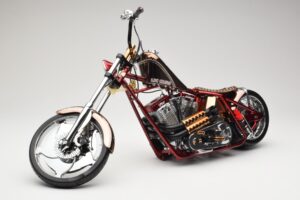
1:5 sits at the far large end of scale model collecting, where chrome, engine, and switchgear detail reach a resolution few other formats attempt. This range currently centres on Minichamps’ Harley-Davidson diecast.
TL;DR: 1:5 scale models sit at the extreme large end of collecting, currently represented here by Minichamps diecast Harley-Davidson cruisers and touring bikes from the 2000s. The format prioritises component-level detail over shelf density, suiting one or two hero pieces rather than a broad collection.
Most scale model collecting happens between 1:12 and 1:64, which makes 1:5 a genuine outlier, a format chosen specifically because the subject's mechanical detail justifies the space it demands.
At 1:5, an object is one-fifth the size of the real thing, roughly five times larger in linear dimension than the common 1:24 scale and more than double the size of 1:12. For a motorcycle, that translates into individually visible cable routing, engine cooling fins, and switchgear detail that no smaller scale can physically reproduce, at the cost of a display footprint closer to a small sculpture than a typical diecast piece.
This is a scale chosen for what it reveals, not for how many pieces fit on a shelf.
Motorcycles work particularly well at 1:5 because so much of their mechanical structure sits exposed rather than hidden under bodywork, unlike a car where an engine bay only opens on request. A cruiser or touring bike's long, visible frame and chrome-heavy finishing give the format genuine material to work with, which is exactly why this range currently centres on that subject.
Given the size involved, a 1:5 piece needs to be planned for rather than simply added to an existing shelf; open space and a stable, dust-protected surface matter more here than with almost any smaller format. Treat it as a deliberate centrepiece purchase, and the scale rewards that commitment with detail no smaller collection can match.