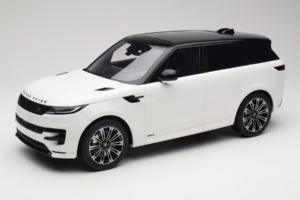
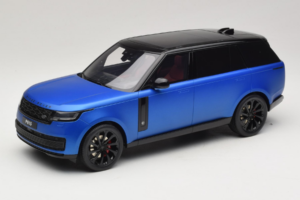
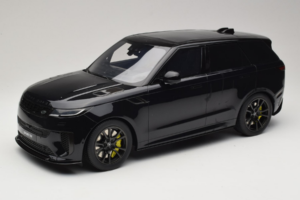
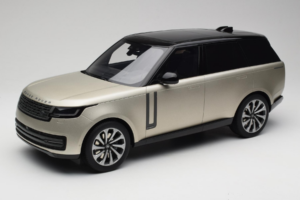
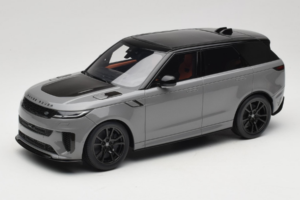
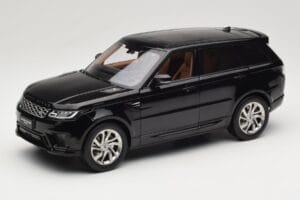
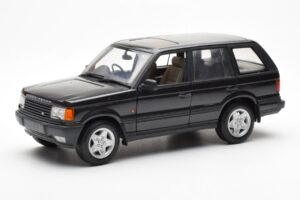
TL;DR: Range Rover scale models span 1:18 and 1:12 in resin and diecast from GT Spirit, AUTOart, and Wheelart. Luxury and Performance SUVs from the 1990s through the 2020s trace the marque's evolution from rugged off-roader to status-symbol icon.
An SUV's bulk actually suits scale modelling well, since the tall proportions and imposing stance that define a Range Rover on the road translate directly into shelf presence.
Range Rover Diecast Models Across Three Manufacturers
GT Spirit's sealed resin approach delivers the sharp panel lines that suit a modern Range Rover's crisp bodywork, trading opening doors for a cleaner overall surface. AUTOart brings its detail-dense diecast construction to the same subjects, typically with opening features that resin cannot offer. Wheelart occupies its own space in the range, often associated with aftermarket-style detailing on SUV subjects, adding a further point of comparison for collectors weighing material and finish against each other.
From Off-Road Original to Luxury Icon
The 1990s models in this category represent Range Rover before it fully committed to the luxury positioning it holds today, when genuine off-road capability still led the brief. The 2010s and 2020s subjects show the opposite end of that journey: SUVs built primarily for comfort and presence, with off-road ability retained more as a badge of credibility than a daily necessity.
- Scale: 1:18 for detailed display, 1:12 for larger-format presence.
- Material: resin for sharp sealed bodywork, diecast for opening features.
- Vehicle types: Luxury SUVs and Performance SUVs.
Displaying Range Rover Models by Generation
Because the SUV's silhouette has changed markedly across generations, grouping models by decade rather than by manufacturer tends to tell the clearer story on a shelf. A 1990s original next to a current-generation model shows just how far the marque's design language has travelled while keeping its core identity intact.