Used
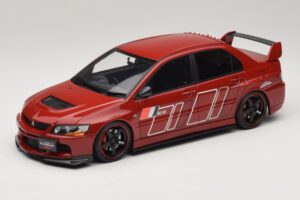
Ignition Model works the JDM performance segment in 1:18 resin, giving Japanese sports subjects like the Mitsubishi Lancer Evolution the surface precision resin construction allows. The catalogue favours enthusiast-driven performance icons over volume-market saloons, aimed at collectors who want a specific homologation special or tuner-era subject rendered with sharp panel lines and factory-depth paint.
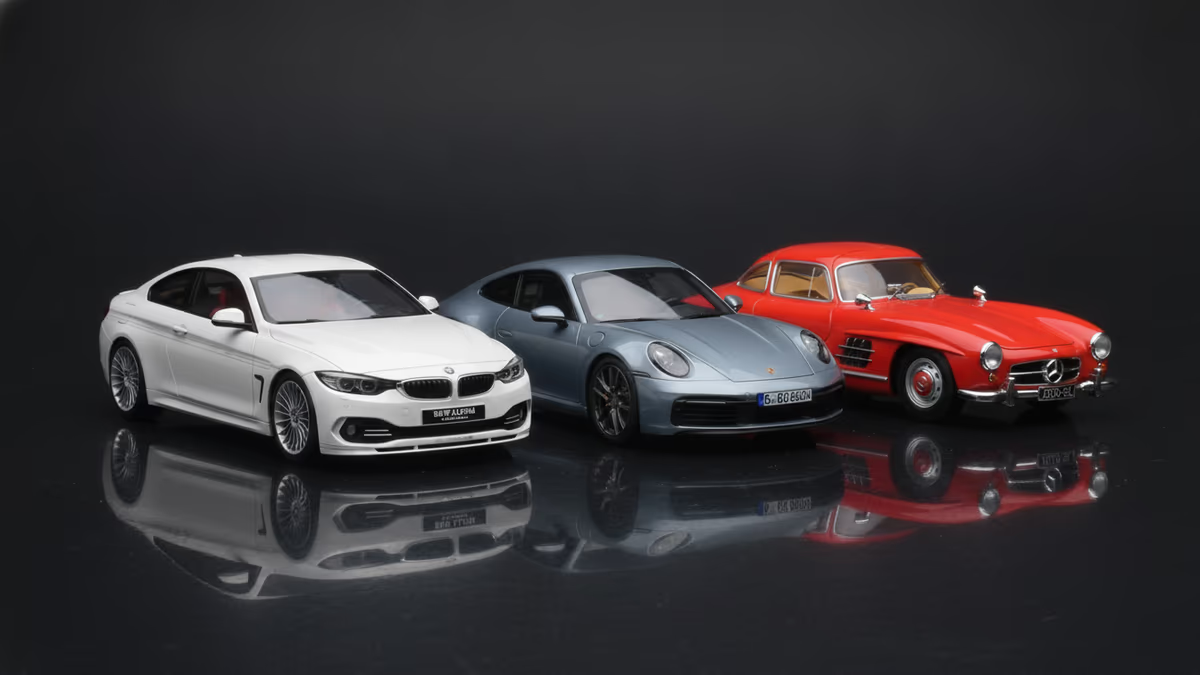
TL;DR: Ignition Model produces 1:18 resin replicas of Japanese performance cars, with Mitsubishi Lancer Evolution generations anchoring the JDM sports segment in this collection. Resin construction favours sharp body lines and factory-depth paint over the durability of diecast, suiting collectors who prize surface fidelity on homologation-era Japanese performance subjects.
JDM performance cars occupy a specific corner of scale model collecting, prized less for luxury cachet than for the engineering story behind a turbocharged four-cylinder or a homologation special built purely to satisfy rally regulations. Ignition Model works that corner in resin, and the Mitsubishi Lancer Evolution generations in this collection show why the format suits the subject: crisp intake scoops, correctly proportioned wheel arches, and the aggressive stance that defines the breed.
Ignition Model builds its catalogue around Japanese performance cars rather than the wider volume market, and the Mitsubishi Lancer Evolution lineage represented here sits at the centre of that approach. These are homologation-driven machines, developed to satisfy rally regulations before reaching road-going form, which gives each generation a distinct aerodynamic signature, wider arches, larger intercoolers, aggressive wings, that resin casting reproduces with sharper edges than a diecast tool typically allows. The segment as a whole draws a specific type of collector: enthusiasts who followed World Rally Championship coverage through the 1990s and 2000s and want the road car that made the rally programme possible, rather than the rally car itself. Because the subject matter favours engineering distinctiveness over brand prestige, Ignition Model's resin approach reads as a deliberate fit rather than a cost-saving shortcut, since the fine intake ducting and vented panels these cars carry benefit directly from the tighter tolerances resin construction allows.
Resin construction on a performance-focused subject like this rewards close inspection rather than casual handling. When comparing releases, check for:
Because Ignition Model's output sits in a specialist niche rather than a mass-market lane, pricing tracks tooling complexity and subject rarity more than brand recognition, so a particularly detailed generation or rare factory colour commands a premium over a more common variant.
A themed JDM shelf built around Ignition Model's output works well organised by generation rather than by colour or trim, since each Lancer Evolution iteration carries a distinct aerodynamic language that tells its own engineering story. Collectors often pair road car versions with era-appropriate rally liveries from other manufacturers to show the connection between motorsport homologation rules and the production car they produced, a link that defines the entire JDM performance category. Because these subjects sit at 1:18, display footprint runs comparable to other performance and sports subjects at the same scale, so a JDM section slots naturally alongside European sports car resin without any scale mismatch on the shelf.
Resin JDM subjects with vented panels and slim spoilers need more careful handling than a sealed diecast body. Lift by the chassis rather than by the wing or bonnet vents, since these are the most fragile points on the casting. A dust-free cabinet matters more here than with a plain sedan shape, since intake grilles and vented arches collect dust readily and are awkward to clean without disturbing fine mesh detail. Keep direct sunlight off metallic paint finishes, which can dull faster than a solid colour. Original packaging retains real value for a specialist subject like this, since Ignition Model works in relatively small production runs compared with volume diecast manufacturers, and provenance matters more when a rarer colour or generation changes hands.
Ignition Model focuses on Japanese performance subjects in resin rather than a broad diecast catalogue, prioritising surface fidelity and fine vented detail over the durability and lower cost of tooled diecast. That specialisation suits enthusiasts seeking a specific JDM generation rather than general availability.
These cars carry vented bonnets, wide arches, and aggressive spoilers that resin's tighter casting tolerances render more sharply than diecast tooling typically allows. The material trade-off, lighter weight and more careful handling, suits a subject collected for engineering detail rather than everyday durability.
There is no single correct starting point, but many collectors begin with the generation tied to their own rally-era memories or a factory colour they find visually striking, then build outward by generation to track how the aerodynamic design evolved.
Keep it in a dust-free cabinet away from direct sunlight, and lift the model by its chassis rather than by vented panels or wing elements, which are the most fragile points on a performance-focused resin casting.