Back in stock

Founded by a driver-turned-constructor, Brabham won championships across two very different eras of Formula 1. MCG and Minichamps cover both in 1:18 and 1:43 diecast.
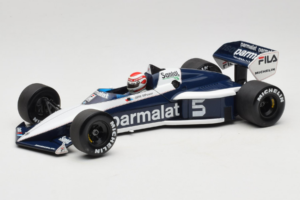

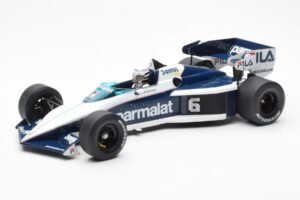
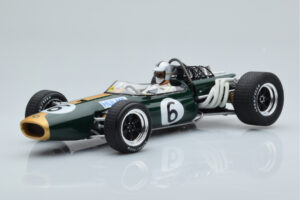
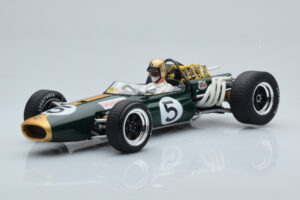

TL;DR: Brabham F1 diecast models in 1:18 and 1:43 scale from MCG and Minichamps cover the 1960s and 1980s, two of the team's most successful periods. A constructor built on engineering ambition, spanning naturally aspirated grids and the turbocharged era that followed.
Few constructors span as wide a technical gulf as Brabham does between its 1960s cars and its 1980s turbo-era machinery, and that contrast is part of what makes the marque worth collecting across both decades.
MCG's coverage tends toward accessible, well-detailed diecast suited to building out a season-by-season collection, while Minichamps applies its broader construction standard across both 1:18 and 1:43, useful where a collector wants the flexibility to mix hero pieces with a more compact run. Both manufacturers work from the same source material, so the choice between them often comes down to scale preference and construction style rather than one being definitively superior.
The 1960s cars represent Formula 1 in its more mechanically straightforward form, naturally aspirated engines and comparatively simple aerodynamics. The 1980s machinery that follows tells a completely different story, one of turbocharged power and the technical arms race that defined the decade. Displayed together, the two eras show just how radically the sport transformed within a single constructor's lifespan.
A collection spanning both decades benefits from a clear split on the shelf, keeping the 1960s naturally aspirated cars visually distinct from the 1980s turbo machinery rather than blending them chronologically. That separation lets the engineering contrast do the storytelling without needing extra explanation.