{"ajaxurl":"https:\/\/models118.co.uk\/wp-admin\/admin-ajax.php?lang=en_GB","nonce":"eae0a53e66","homeUrl":"https:\/\/models118.co.uk\/","shopUrl":"https:\/\/models118.co.uk\/shop\/","cartUrl":"https:\/\/models118.co.uk\/cart-en-gb\/","checkoutUrl":"https:\/\/models118.co.uk\/checkout\/","skipCart":true,"collectionLimit":12,"i18n":{"addedToCart":"Added to basket","addToWishlist":"Add to wishlist","addedToWishlist":"Added to wishlist","removeFromWishlist":"Remove from wishlist","removedFromWishlist":"Removed from wishlist","undo":"Undo","error":"Something went wrong","loading":"Loading...","outOfStock":"Out of stock","viewCart":"View basket","proceedToCheckout":"Proceed to checkout","addedToCollection":"Added to your collection","reserved":"Added to your collection","soldOut":"Sold out","invalidEmail":"Please enter a valid email address","connectionError":"Connection error. Please try again.","tocToggle":"On this page","close":"Close","inCartTooltip":"Already in your basket \u2013 open your basket to check out","loginToSave":"Sign in to save this model","waitlistNotify":"Notify me","waitlistOnList":"On the waiting list \u2713","waitlistJoined":"You're on the waiting list. We'll email you the moment this model is available again.","waitlistRemoved":"Done \u2014 you're off the waiting list for this model.","waitlistRateLimit":"Too many attempts \u2014 please try again shortly","waitlistTurnstile":"We couldn't complete the check \u2014 please try again","waitlistError":"Sorry, something went wrong. Please try again in a moment."},"wishlist":{"loggedIn":false,"loginUrl":"https:\/\/models118.co.uk\/my-account\/","addAction":"models118_wishlist_add","removeAction":"models118_wishlist_remove"},"waitlist":{"loggedIn":false,"subscribeAction":"models118_waitlist_subscribe","toggleAction":"models118_waitlist_toggle","stateAction":"models118_waitlist_state"},"stats":{"models":2350,"brands":213,"manufacturers":128,"collectors":10000},"product":{"id":962734,"sku":"110891504","condition":"used","availability":"in_stock","name":"Tyrrell Ford 018 #4 J. Alesi Japanese GP 1989 Minichamps 1:18","brand":"Tyrrell","manufacturer":"Minichamps","scale":"1:18","material":"Diecast","price":121,"regularPrice":121,"isOnSale":false,"savingsAmount":0,"stockQty":1,"stockStatus":"very_low","isDiscontinued":false,"image":"https:\/\/models118.co.uk\/wp-content\/uploads\/2026\/06\/tyrrell-ford-018-4-j-alesi-japanese-gp-1989-minichamps-1-18-300x200.jpg","permalink":"https:\/\/models118.co.uk\/tyrrell-ford-018-4-j-alesi-japanese-gp-1989-minichamps-1-18-110891504\/"}}
Cookies on Models118
We use cookies to remember your preferences, understand how the shop is used and show you models and offers that suit your interests. What you allow is up to you, and you can change it at any time.
Always active
The technical storage or access is strictly necessary for the legitimate purpose of enabling the use of a specific service explicitly requested by the subscriber or user, or for the sole purpose of carrying out the transmission of a communication over an electronic communications network.
The technical storage or access is necessary for the legitimate purpose of storing preferences that are not requested by the subscriber or user.
The technical storage or access that is used exclusively for statistical purposes.
The technical storage or access is required to create user profiles to send advertising, or to track the user on a website or across several websites for similar marketing purposes.
Tyrrell Ford 018 #4 J. Alesi Japanese GP 1989 Minichamps 1:18
1/6
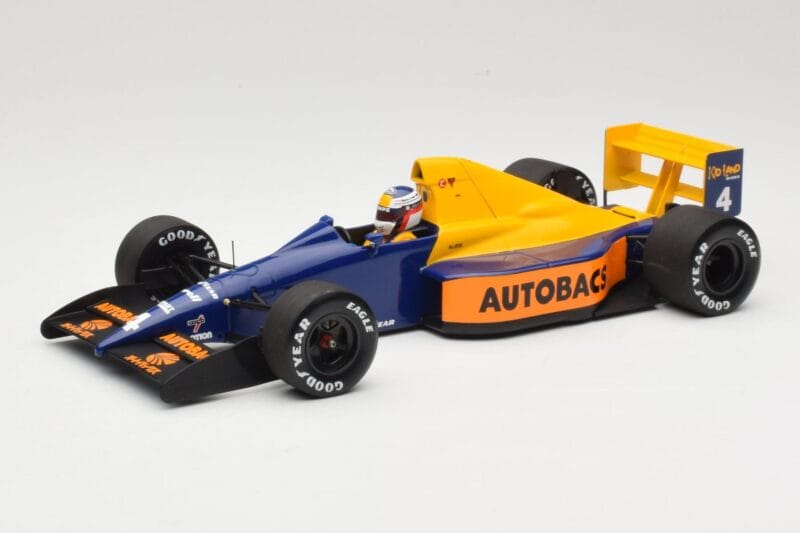
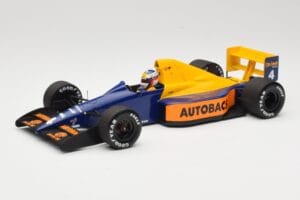
Minichamps' 1:18 diecast Tyrrell Ford 018 reproduces Jean Alesi's number 4 car from the 1989 Japanese Grand Prix, run during the rookie season that first announced him to Formula 1. Correctly finished period livery and a compact open-wheel casting make this a strong piece for a late-1980s F1 shelf.
1 / 6
[{"index":0,"id":"925069","thumb":"https:\/\/models118.co.uk\/wp-content\/uploads\/2026\/06\/tyrrell-ford-018-4-j-alesi-japanese-gp-1989-minichamps-1-18-300x200.jpg","medium":"https:\/\/models118.co.uk\/wp-content\/uploads\/2026\/06\/tyrrell-ford-018-4-j-alesi-japanese-gp-1989-minichamps-1-18-800x533.jpg","full":"https:\/\/models118.co.uk\/wp-content\/uploads\/2026\/06\/tyrrell-ford-018-4-j-alesi-japanese-gp-1989-minichamps-1-18.jpg","srcset":"https:\/\/models118.co.uk\/wp-content\/uploads\/2026\/06\/tyrrell-ford-018-4-j-alesi-japanese-gp-1989-minichamps-1-18-800x533.jpg 800w, https:\/\/models118.co.uk\/wp-content\/uploads\/2026\/06\/tyrrell-ford-018-4-j-alesi-japanese-gp-1989-minichamps-1-18-64x43.jpg 64w, https:\/\/models118.co.uk\/wp-content\/uploads\/2026\/06\/tyrrell-ford-018-4-j-alesi-japanese-gp-1989-minichamps-1-18-300x200.jpg 300w, https:\/\/models118.co.uk\/wp-content\/uploads\/2026\/06\/tyrrell-ford-018-4-j-alesi-japanese-gp-1989-minichamps-1-18.jpg 1800w","sizes":"(max-width: 1023px) 400px, 640px","srcsetAvif":"https:\/\/models118.co.uk\/wp-content\/uploads\/2026\/06\/tyrrell-ford-018-4-j-alesi-japanese-gp-1989-minichamps-1-18-800x533.jpg.avif 800w, https:\/\/models118.co.uk\/wp-content\/uploads\/2026\/06\/tyrrell-ford-018-4-j-alesi-japanese-gp-1989-minichamps-1-18-64x43.jpg.avif 64w, https:\/\/models118.co.uk\/wp-content\/uploads\/2026\/06\/tyrrell-ford-018-4-j-alesi-japanese-gp-1989-minichamps-1-18-300x200.jpg.avif 300w, https:\/\/models118.co.uk\/wp-content\/uploads\/2026\/06\/tyrrell-ford-018-4-j-alesi-japanese-gp-1989-minichamps-1-18.jpg.avif 1800w","srcsetWebp":"https:\/\/models118.co.uk\/wp-content\/uploads\/2026\/06\/tyrrell-ford-018-4-j-alesi-japanese-gp-1989-minichamps-1-18-800x533.jpg.webp 800w, https:\/\/models118.co.uk\/wp-content\/uploads\/2026\/06\/tyrrell-ford-018-4-j-alesi-japanese-gp-1989-minichamps-1-18-64x43.jpg.webp 64w, https:\/\/models118.co.uk\/wp-content\/uploads\/2026\/06\/tyrrell-ford-018-4-j-alesi-japanese-gp-1989-minichamps-1-18-300x200.jpg.webp 300w, https:\/\/models118.co.uk\/wp-content\/uploads\/2026\/06\/tyrrell-ford-018-4-j-alesi-japanese-gp-1989-minichamps-1-18.jpg.webp 1800w","alt":"Tyrrell Ford 018 #4 J. Alesi Japanese GP 1989 Minichamps 1:18 110891504 Diecast"},{"index":1,"id":925195,"thumb":"https:\/\/models118.co.uk\/wp-content\/uploads\/2026\/06\/tyrrell-ford-018-4-j-alesi-japanese-gp-1989-minichamps-1-18-1-300x200.jpg","medium":"https:\/\/models118.co.uk\/wp-content\/uploads\/2026\/06\/tyrrell-ford-018-4-j-alesi-japanese-gp-1989-minichamps-1-18-1-800x533.jpg","full":"https:\/\/models118.co.uk\/wp-content\/uploads\/2026\/06\/tyrrell-ford-018-4-j-alesi-japanese-gp-1989-minichamps-1-18-1.jpg","srcset":"https:\/\/models118.co.uk\/wp-content\/uploads\/2026\/06\/tyrrell-ford-018-4-j-alesi-japanese-gp-1989-minichamps-1-18-1-800x533.jpg 800w, https:\/\/models118.co.uk\/wp-content\/uploads\/2026\/06\/tyrrell-ford-018-4-j-alesi-japanese-gp-1989-minichamps-1-18-1-64x43.jpg 64w, https:\/\/models118.co.uk\/wp-content\/uploads\/2026\/06\/tyrrell-ford-018-4-j-alesi-japanese-gp-1989-minichamps-1-18-1-300x200.jpg 300w, https:\/\/models118.co.uk\/wp-content\/uploads\/2026\/06\/tyrrell-ford-018-4-j-alesi-japanese-gp-1989-minichamps-1-18-1.jpg 1800w","sizes":"(max-width: 1023px) 400px, 640px","srcsetAvif":"https:\/\/models118.co.uk\/wp-content\/uploads\/2026\/06\/tyrrell-ford-018-4-j-alesi-japanese-gp-1989-minichamps-1-18-1-800x533.jpg.avif 800w, https:\/\/models118.co.uk\/wp-content\/uploads\/2026\/06\/tyrrell-ford-018-4-j-alesi-japanese-gp-1989-minichamps-1-18-1-64x43.jpg.avif 64w, https:\/\/models118.co.uk\/wp-content\/uploads\/2026\/06\/tyrrell-ford-018-4-j-alesi-japanese-gp-1989-minichamps-1-18-1-300x200.jpg.avif 300w, https:\/\/models118.co.uk\/wp-content\/uploads\/2026\/06\/tyrrell-ford-018-4-j-alesi-japanese-gp-1989-minichamps-1-18-1.jpg.avif 1800w","srcsetWebp":"https:\/\/models118.co.uk\/wp-content\/uploads\/2026\/06\/tyrrell-ford-018-4-j-alesi-japanese-gp-1989-minichamps-1-18-1-800x533.jpg.webp 800w, https:\/\/models118.co.uk\/wp-content\/uploads\/2026\/06\/tyrrell-ford-018-4-j-alesi-japanese-gp-1989-minichamps-1-18-1-64x43.jpg.webp 64w, https:\/\/models118.co.uk\/wp-content\/uploads\/2026\/06\/tyrrell-ford-018-4-j-alesi-japanese-gp-1989-minichamps-1-18-1-300x200.jpg.webp 300w, https:\/\/models118.co.uk\/wp-content\/uploads\/2026\/06\/tyrrell-ford-018-4-j-alesi-japanese-gp-1989-minichamps-1-18-1.jpg.webp 1800w","alt":"Tyrrell Ford 018 #4 J. Alesi Japanese GP 1989 Minichamps 1:18 110891504 Diecast \u2014 photo 2 of 6"},{"index":2,"id":925319,"thumb":"https:\/\/models118.co.uk\/wp-content\/uploads\/2026\/06\/tyrrell-ford-018-4-j-alesi-japanese-gp-1989-minichamps-1-18-2-300x200.jpg","medium":"https:\/\/models118.co.uk\/wp-content\/uploads\/2026\/06\/tyrrell-ford-018-4-j-alesi-japanese-gp-1989-minichamps-1-18-2-800x533.jpg","full":"https:\/\/models118.co.uk\/wp-content\/uploads\/2026\/06\/tyrrell-ford-018-4-j-alesi-japanese-gp-1989-minichamps-1-18-2.jpg","srcset":"https:\/\/models118.co.uk\/wp-content\/uploads\/2026\/06\/tyrrell-ford-018-4-j-alesi-japanese-gp-1989-minichamps-1-18-2-800x533.jpg 800w, https:\/\/models118.co.uk\/wp-content\/uploads\/2026\/06\/tyrrell-ford-018-4-j-alesi-japanese-gp-1989-minichamps-1-18-2-64x43.jpg 64w, https:\/\/models118.co.uk\/wp-content\/uploads\/2026\/06\/tyrrell-ford-018-4-j-alesi-japanese-gp-1989-minichamps-1-18-2-300x200.jpg 300w, https:\/\/models118.co.uk\/wp-content\/uploads\/2026\/06\/tyrrell-ford-018-4-j-alesi-japanese-gp-1989-minichamps-1-18-2.jpg 1800w","sizes":"(max-width: 1023px) 400px, 640px","srcsetAvif":"https:\/\/models118.co.uk\/wp-content\/uploads\/2026\/06\/tyrrell-ford-018-4-j-alesi-japanese-gp-1989-minichamps-1-18-2-800x533.jpg.avif 800w, https:\/\/models118.co.uk\/wp-content\/uploads\/2026\/06\/tyrrell-ford-018-4-j-alesi-japanese-gp-1989-minichamps-1-18-2-64x43.jpg.avif 64w, https:\/\/models118.co.uk\/wp-content\/uploads\/2026\/06\/tyrrell-ford-018-4-j-alesi-japanese-gp-1989-minichamps-1-18-2-300x200.jpg.avif 300w, https:\/\/models118.co.uk\/wp-content\/uploads\/2026\/06\/tyrrell-ford-018-4-j-alesi-japanese-gp-1989-minichamps-1-18-2.jpg.avif 1800w","srcsetWebp":"https:\/\/models118.co.uk\/wp-content\/uploads\/2026\/06\/tyrrell-ford-018-4-j-alesi-japanese-gp-1989-minichamps-1-18-2-800x533.jpg.webp 800w, https:\/\/models118.co.uk\/wp-content\/uploads\/2026\/06\/tyrrell-ford-018-4-j-alesi-japanese-gp-1989-minichamps-1-18-2-64x43.jpg.webp 64w, https:\/\/models118.co.uk\/wp-content\/uploads\/2026\/06\/tyrrell-ford-018-4-j-alesi-japanese-gp-1989-minichamps-1-18-2-300x200.jpg.webp 300w, https:\/\/models118.co.uk\/wp-content\/uploads\/2026\/06\/tyrrell-ford-018-4-j-alesi-japanese-gp-1989-minichamps-1-18-2.jpg.webp 1800w","alt":"Tyrrell Ford 018 #4 J. Alesi Japanese GP 1989 Minichamps 1:18 110891504 Diecast \u2014 photo 3 of 6"},{"index":3,"id":925450,"thumb":"https:\/\/models118.co.uk\/wp-content\/uploads\/2026\/06\/tyrrell-ford-018-4-j-alesi-japanese-gp-1989-minichamps-1-18-3-300x200.jpg","medium":"https:\/\/models118.co.uk\/wp-content\/uploads\/2026\/06\/tyrrell-ford-018-4-j-alesi-japanese-gp-1989-minichamps-1-18-3-800x533.jpg","full":"https:\/\/models118.co.uk\/wp-content\/uploads\/2026\/06\/tyrrell-ford-018-4-j-alesi-japanese-gp-1989-minichamps-1-18-3.jpg","srcset":"https:\/\/models118.co.uk\/wp-content\/uploads\/2026\/06\/tyrrell-ford-018-4-j-alesi-japanese-gp-1989-minichamps-1-18-3-800x533.jpg 800w, https:\/\/models118.co.uk\/wp-content\/uploads\/2026\/06\/tyrrell-ford-018-4-j-alesi-japanese-gp-1989-minichamps-1-18-3-64x43.jpg 64w, https:\/\/models118.co.uk\/wp-content\/uploads\/2026\/06\/tyrrell-ford-018-4-j-alesi-japanese-gp-1989-minichamps-1-18-3-300x200.jpg 300w, https:\/\/models118.co.uk\/wp-content\/uploads\/2026\/06\/tyrrell-ford-018-4-j-alesi-japanese-gp-1989-minichamps-1-18-3.jpg 1800w","sizes":"(max-width: 1023px) 400px, 640px","srcsetAvif":"https:\/\/models118.co.uk\/wp-content\/uploads\/2026\/06\/tyrrell-ford-018-4-j-alesi-japanese-gp-1989-minichamps-1-18-3-800x533.jpg.avif 800w, https:\/\/models118.co.uk\/wp-content\/uploads\/2026\/06\/tyrrell-ford-018-4-j-alesi-japanese-gp-1989-minichamps-1-18-3-64x43.jpg.avif 64w, https:\/\/models118.co.uk\/wp-content\/uploads\/2026\/06\/tyrrell-ford-018-4-j-alesi-japanese-gp-1989-minichamps-1-18-3-300x200.jpg.avif 300w, https:\/\/models118.co.uk\/wp-content\/uploads\/2026\/06\/tyrrell-ford-018-4-j-alesi-japanese-gp-1989-minichamps-1-18-3.jpg.avif 1800w","srcsetWebp":"https:\/\/models118.co.uk\/wp-content\/uploads\/2026\/06\/tyrrell-ford-018-4-j-alesi-japanese-gp-1989-minichamps-1-18-3-800x533.jpg.webp 800w, https:\/\/models118.co.uk\/wp-content\/uploads\/2026\/06\/tyrrell-ford-018-4-j-alesi-japanese-gp-1989-minichamps-1-18-3-64x43.jpg.webp 64w, https:\/\/models118.co.uk\/wp-content\/uploads\/2026\/06\/tyrrell-ford-018-4-j-alesi-japanese-gp-1989-minichamps-1-18-3-300x200.jpg.webp 300w, https:\/\/models118.co.uk\/wp-content\/uploads\/2026\/06\/tyrrell-ford-018-4-j-alesi-japanese-gp-1989-minichamps-1-18-3.jpg.webp 1800w","alt":"Tyrrell Ford 018 #4 J. Alesi Japanese GP 1989 Minichamps 1:18 110891504 Diecast \u2014 photo 4 of 6"},{"index":4,"id":925564,"thumb":"https:\/\/models118.co.uk\/wp-content\/uploads\/2026\/06\/tyrrell-ford-018-4-j-alesi-japanese-gp-1989-minichamps-1-18-4-300x200.jpg","medium":"https:\/\/models118.co.uk\/wp-content\/uploads\/2026\/06\/tyrrell-ford-018-4-j-alesi-japanese-gp-1989-minichamps-1-18-4-800x533.jpg","full":"https:\/\/models118.co.uk\/wp-content\/uploads\/2026\/06\/tyrrell-ford-018-4-j-alesi-japanese-gp-1989-minichamps-1-18-4.jpg","srcset":"https:\/\/models118.co.uk\/wp-content\/uploads\/2026\/06\/tyrrell-ford-018-4-j-alesi-japanese-gp-1989-minichamps-1-18-4-800x533.jpg 800w, https:\/\/models118.co.uk\/wp-content\/uploads\/2026\/06\/tyrrell-ford-018-4-j-alesi-japanese-gp-1989-minichamps-1-18-4-64x43.jpg 64w, https:\/\/models118.co.uk\/wp-content\/uploads\/2026\/06\/tyrrell-ford-018-4-j-alesi-japanese-gp-1989-minichamps-1-18-4-300x200.jpg 300w, https:\/\/models118.co.uk\/wp-content\/uploads\/2026\/06\/tyrrell-ford-018-4-j-alesi-japanese-gp-1989-minichamps-1-18-4.jpg 1800w","sizes":"(max-width: 1023px) 400px, 640px","srcsetAvif":"https:\/\/models118.co.uk\/wp-content\/uploads\/2026\/06\/tyrrell-ford-018-4-j-alesi-japanese-gp-1989-minichamps-1-18-4-800x533.jpg.avif 800w, https:\/\/models118.co.uk\/wp-content\/uploads\/2026\/06\/tyrrell-ford-018-4-j-alesi-japanese-gp-1989-minichamps-1-18-4-64x43.jpg.avif 64w, https:\/\/models118.co.uk\/wp-content\/uploads\/2026\/06\/tyrrell-ford-018-4-j-alesi-japanese-gp-1989-minichamps-1-18-4-300x200.jpg.avif 300w, https:\/\/models118.co.uk\/wp-content\/uploads\/2026\/06\/tyrrell-ford-018-4-j-alesi-japanese-gp-1989-minichamps-1-18-4.jpg.avif 1800w","srcsetWebp":"https:\/\/models118.co.uk\/wp-content\/uploads\/2026\/06\/tyrrell-ford-018-4-j-alesi-japanese-gp-1989-minichamps-1-18-4-800x533.jpg.webp 800w, https:\/\/models118.co.uk\/wp-content\/uploads\/2026\/06\/tyrrell-ford-018-4-j-alesi-japanese-gp-1989-minichamps-1-18-4-64x43.jpg.webp 64w, https:\/\/models118.co.uk\/wp-content\/uploads\/2026\/06\/tyrrell-ford-018-4-j-alesi-japanese-gp-1989-minichamps-1-18-4-300x200.jpg.webp 300w, https:\/\/models118.co.uk\/wp-content\/uploads\/2026\/06\/tyrrell-ford-018-4-j-alesi-japanese-gp-1989-minichamps-1-18-4.jpg.webp 1800w","alt":"Tyrrell Ford 018 #4 J. Alesi Japanese GP 1989 Minichamps 1:18 110891504 Diecast \u2014 photo 5 of 6"},{"index":5,"id":925691,"thumb":"https:\/\/models118.co.uk\/wp-content\/uploads\/2026\/06\/tyrrell-ford-018-4-j-alesi-japanese-gp-1989-minichamps-1-18-5-300x200.jpg","medium":"https:\/\/models118.co.uk\/wp-content\/uploads\/2026\/06\/tyrrell-ford-018-4-j-alesi-japanese-gp-1989-minichamps-1-18-5-800x533.jpg","full":"https:\/\/models118.co.uk\/wp-content\/uploads\/2026\/06\/tyrrell-ford-018-4-j-alesi-japanese-gp-1989-minichamps-1-18-5.jpg","srcset":"https:\/\/models118.co.uk\/wp-content\/uploads\/2026\/06\/tyrrell-ford-018-4-j-alesi-japanese-gp-1989-minichamps-1-18-5-800x533.jpg 800w, https:\/\/models118.co.uk\/wp-content\/uploads\/2026\/06\/tyrrell-ford-018-4-j-alesi-japanese-gp-1989-minichamps-1-18-5-64x43.jpg 64w, https:\/\/models118.co.uk\/wp-content\/uploads\/2026\/06\/tyrrell-ford-018-4-j-alesi-japanese-gp-1989-minichamps-1-18-5-300x200.jpg 300w, https:\/\/models118.co.uk\/wp-content\/uploads\/2026\/06\/tyrrell-ford-018-4-j-alesi-japanese-gp-1989-minichamps-1-18-5.jpg 1800w","sizes":"(max-width: 1023px) 400px, 640px","srcsetAvif":"https:\/\/models118.co.uk\/wp-content\/uploads\/2026\/06\/tyrrell-ford-018-4-j-alesi-japanese-gp-1989-minichamps-1-18-5-800x533.jpg.avif 800w, https:\/\/models118.co.uk\/wp-content\/uploads\/2026\/06\/tyrrell-ford-018-4-j-alesi-japanese-gp-1989-minichamps-1-18-5-64x43.jpg.avif 64w, https:\/\/models118.co.uk\/wp-content\/uploads\/2026\/06\/tyrrell-ford-018-4-j-alesi-japanese-gp-1989-minichamps-1-18-5-300x200.jpg.avif 300w, https:\/\/models118.co.uk\/wp-content\/uploads\/2026\/06\/tyrrell-ford-018-4-j-alesi-japanese-gp-1989-minichamps-1-18-5.jpg.avif 1800w","srcsetWebp":"https:\/\/models118.co.uk\/wp-content\/uploads\/2026\/06\/tyrrell-ford-018-4-j-alesi-japanese-gp-1989-minichamps-1-18-5-800x533.jpg.webp 800w, https:\/\/models118.co.uk\/wp-content\/uploads\/2026\/06\/tyrrell-ford-018-4-j-alesi-japanese-gp-1989-minichamps-1-18-5-64x43.jpg.webp 64w, https:\/\/models118.co.uk\/wp-content\/uploads\/2026\/06\/tyrrell-ford-018-4-j-alesi-japanese-gp-1989-minichamps-1-18-5-300x200.jpg.webp 300w, https:\/\/models118.co.uk\/wp-content\/uploads\/2026\/06\/tyrrell-ford-018-4-j-alesi-japanese-gp-1989-minichamps-1-18-5.jpg.webp 1800w","alt":"Tyrrell Ford 018 #4 J. Alesi Japanese GP 1989 Minichamps 1:18 110891504 Diecast \u2014 photo 6 of 6"}]
Tyrrell Ford 018 #4 J. Alesi Japanese GP 1989 Minichamps 1:18
About the Tyrrell Ford 018 #4 J. Alesi Japanese GP 1989 Minichamps 1:18
TL;DR: Minichamps' 1:18 diecast Tyrrell Ford 018 reproduces Jean Alesi's number 4 car from the 1989 Japanese Grand Prix, run during the rookie season that first put him on the F1 map. Livery and cockpit detail are diecast-rendered on a compact late-1980s open-wheel body. A period piece for early Alesi collectors.
Jean Alesi's F1 story began mid-season in 1989, and by the time the championship reached Japan that October he'd already shown enough to make Tyrrell's decision to keep him look obvious in hindsight. It rewards the Tyrrell fan willing to look past the obvious podium finishers of that era.
Minichamps' 018 Casting and Late-1980s Tyrrell Livery
Number 4 Graphics and Cockpit Detail
The Tyrrell 018 carried a livery built around Camel's yellow and white branding, a scheme Minichamps reproduces with clean, correctly placed decal work along the sidepods and nose. The number 4 sits prominently on the airbox and nose cone in period-correct lettering, and the cockpit surround shows the era's simpler roll hoop and lower windscreen, a useful visual marker of how quickly F1 safety design would change over the following decade. That decal precision matters particularly on a Tyrrell of this era, since the sponsor branding covers a larger proportion of the bodywork than the more minimal liveries common on today's grid.
Diecast Weight and Panel Lines on a Compact F1 Body
Late-1980s F1 cars were narrower and simpler in profile than anything racing today, and the 018's slender nose and modest rear wing translate well into a diecast casting at this scale. The model carries real heft for its size, and the moulded Ford V8 detail visible through the rear bodywork gives the casting something to reward a closer look beyond the livery alone. Regular handling is fine given the diecast's robustness, though keeping the nose cone away from repeated knocks preserves its fine tapered profile over years of display.
Alesi's Breakthrough Season with Tyrrell
Japan as a Season-Ending Test
Alesi joined Tyrrell partway through the 1989 season, stepping into a seat that gave him a genuine chance to prove himself against established drivers in one of the grid's smaller, independent teams. By the time the calendar reached Suzuka for the Japanese Grand Prix, a race remembered above all for the title-deciding collision between Ayrton Senna and Alain Prost further up the field, Alesi was already firmly established as a driver Tyrrell intended to build around for the following year.
Diecast Value for a Period Subject
This sits at a standard diecast tier for period F1 subjects, a fair trade for collectors who want a tactile, opening-panel-free single-seater casting without paying the premium a hand-built resin specialist would charge for the same livery.
A Late-1980s F1 Anchor for a Diecast Collection
A 1989 Tyrrell makes an unusual but rewarding choice next to the more obvious McLarens and Ferraris of that era, a reminder that the midfield had its own compelling stories that season.
1:18 Scale Among Period Rivals
Placed beside a same-era McLaren MP4/5 or Ferrari 640, the 018's narrower proportions and simpler aerodynamic surfaces show how quickly F1 design moved even within a single season, since 1989 marked the sport's return to naturally aspirated engines after years of turbo dominance. At roughly 20 centimetres, the casting sits comfortably among other late-1980s single-seaters on a standard shelf, and the era's simpler bodywork means less fragile detail to protect during handling than a modern F1 casting demands.
Create a free account and claim 10% off your first order — from hundreds of collectible 1:18, 1:43 and 1:12 models by Porsche, Mercedes-Benz, BMW and more.
{"id":962734,"name":"Tyrrell Ford 018 #4 J. Alesi Japanese GP 1989 Minichamps 1:18","price":"£<\/span>121.00<\/bdi><\/span>","image":"https:\/\/models118.co.uk\/wp-content\/uploads\/2026\/06\/tyrrell-ford-018-4-j-alesi-japanese-gp-1989-minichamps-1-18-400x400.jpg","permalink":"https:\/\/models118.co.uk\/tyrrell-ford-018-4-j-alesi-japanese-gp-1989-minichamps-1-18-110891504\/","brand":"Tyrrell"}