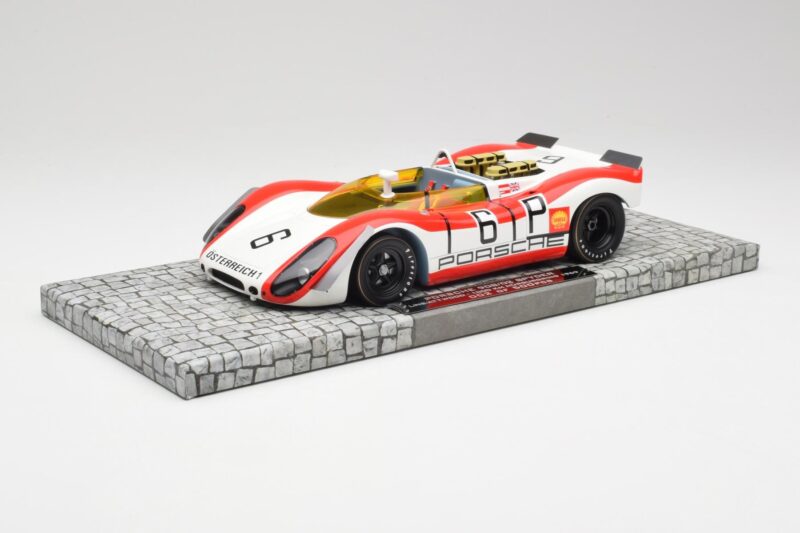
Porsche 908/02 Spyder #6 K. Lins / R. Attwood Nürburgring 1000km 1969 Minichamps 1:18
Sold out
1
/
6
Minichamps' 1:18 diecast Porsche 908/02 Spyder reproduces car number 6, driven by K. Lins and Richard Attwood at the 1969 Nurburgring 1000km, with the open-cockpit body and lightweight racing stance in period livery. Mapped roll hoop and harness detail reward close inspection. A key piece for a Porsche endurance racing lineage leading toward the 917.
1 / 6
[{"index":0,"id":"603132","thumb":"https:\/\/models118.co.uk\/wp-content\/uploads\/2026\/06\/porsche-908-02-spyder-n6-klins-rattwood-1000km-nuerburgring-1969-minichamps-1-18-300x200.jpg","medium":"https:\/\/models118.co.uk\/wp-content\/uploads\/2026\/06\/porsche-908-02-spyder-n6-klins-rattwood-1000km-nuerburgring-1969-minichamps-1-18-800x533.jpg","full":"https:\/\/models118.co.uk\/wp-content\/uploads\/2026\/06\/porsche-908-02-spyder-n6-klins-rattwood-1000km-nuerburgring-1969-minichamps-1-18.jpg","srcset":"https:\/\/models118.co.uk\/wp-content\/uploads\/2026\/06\/porsche-908-02-spyder-n6-klins-rattwood-1000km-nuerburgring-1969-minichamps-1-18-800x533.jpg 800w, https:\/\/models118.co.uk\/wp-content\/uploads\/2026\/06\/porsche-908-02-spyder-n6-klins-rattwood-1000km-nuerburgring-1969-minichamps-1-18-64x43.jpg 64w, https:\/\/models118.co.uk\/wp-content\/uploads\/2026\/06\/porsche-908-02-spyder-n6-klins-rattwood-1000km-nuerburgring-1969-minichamps-1-18-300x200.jpg 300w, https:\/\/models118.co.uk\/wp-content\/uploads\/2026\/06\/porsche-908-02-spyder-n6-klins-rattwood-1000km-nuerburgring-1969-minichamps-1-18.jpg 1800w","sizes":"(max-width: 1023px) 400px, 640px","srcsetAvif":"https:\/\/models118.co.uk\/wp-content\/uploads\/2026\/06\/porsche-908-02-spyder-n6-klins-rattwood-1000km-nuerburgring-1969-minichamps-1-18-800x533.jpg.avif 800w, https:\/\/models118.co.uk\/wp-content\/uploads\/2026\/06\/porsche-908-02-spyder-n6-klins-rattwood-1000km-nuerburgring-1969-minichamps-1-18-64x43.jpg.avif 64w, https:\/\/models118.co.uk\/wp-content\/uploads\/2026\/06\/porsche-908-02-spyder-n6-klins-rattwood-1000km-nuerburgring-1969-minichamps-1-18-300x200.jpg.avif 300w, https:\/\/models118.co.uk\/wp-content\/uploads\/2026\/06\/porsche-908-02-spyder-n6-klins-rattwood-1000km-nuerburgring-1969-minichamps-1-18.jpg.avif 1800w","srcsetWebp":"https:\/\/models118.co.uk\/wp-content\/uploads\/2026\/06\/porsche-908-02-spyder-n6-klins-rattwood-1000km-nuerburgring-1969-minichamps-1-18-800x533.jpg.webp 800w, https:\/\/models118.co.uk\/wp-content\/uploads\/2026\/06\/porsche-908-02-spyder-n6-klins-rattwood-1000km-nuerburgring-1969-minichamps-1-18-64x43.jpg.webp 64w, https:\/\/models118.co.uk\/wp-content\/uploads\/2026\/06\/porsche-908-02-spyder-n6-klins-rattwood-1000km-nuerburgring-1969-minichamps-1-18-300x200.jpg.webp 300w, https:\/\/models118.co.uk\/wp-content\/uploads\/2026\/06\/porsche-908-02-spyder-n6-klins-rattwood-1000km-nuerburgring-1969-minichamps-1-18.jpg.webp 1800w","alt":"Porsche 908\/02 Spyder #6 K. Lins \/ R. Attwood N\u00fcrburgring 1000km 1969 Minichamps 1:18 107692006 Diecast"},{"index":1,"id":603234,"thumb":"https:\/\/models118.co.uk\/wp-content\/uploads\/2026\/06\/porsche-908-02-spyder-n6-klins-rattwood-1000km-nuerburgring-1969-minichamps-1-18-1-300x200.jpg","medium":"https:\/\/models118.co.uk\/wp-content\/uploads\/2026\/06\/porsche-908-02-spyder-n6-klins-rattwood-1000km-nuerburgring-1969-minichamps-1-18-1-800x533.jpg","full":"https:\/\/models118.co.uk\/wp-content\/uploads\/2026\/06\/porsche-908-02-spyder-n6-klins-rattwood-1000km-nuerburgring-1969-minichamps-1-18-1.jpg","srcset":"https:\/\/models118.co.uk\/wp-content\/uploads\/2026\/06\/porsche-908-02-spyder-n6-klins-rattwood-1000km-nuerburgring-1969-minichamps-1-18-1-800x533.jpg 800w, https:\/\/models118.co.uk\/wp-content\/uploads\/2026\/06\/porsche-908-02-spyder-n6-klins-rattwood-1000km-nuerburgring-1969-minichamps-1-18-1-64x43.jpg 64w, https:\/\/models118.co.uk\/wp-content\/uploads\/2026\/06\/porsche-908-02-spyder-n6-klins-rattwood-1000km-nuerburgring-1969-minichamps-1-18-1-300x200.jpg 300w, https:\/\/models118.co.uk\/wp-content\/uploads\/2026\/06\/porsche-908-02-spyder-n6-klins-rattwood-1000km-nuerburgring-1969-minichamps-1-18-1.jpg 1800w","sizes":"(max-width: 1023px) 400px, 640px","srcsetAvif":"https:\/\/models118.co.uk\/wp-content\/uploads\/2026\/06\/porsche-908-02-spyder-n6-klins-rattwood-1000km-nuerburgring-1969-minichamps-1-18-1-800x533.jpg.avif 800w, https:\/\/models118.co.uk\/wp-content\/uploads\/2026\/06\/porsche-908-02-spyder-n6-klins-rattwood-1000km-nuerburgring-1969-minichamps-1-18-1-64x43.jpg.avif 64w, https:\/\/models118.co.uk\/wp-content\/uploads\/2026\/06\/porsche-908-02-spyder-n6-klins-rattwood-1000km-nuerburgring-1969-minichamps-1-18-1-300x200.jpg.avif 300w, https:\/\/models118.co.uk\/wp-content\/uploads\/2026\/06\/porsche-908-02-spyder-n6-klins-rattwood-1000km-nuerburgring-1969-minichamps-1-18-1.jpg.avif 1800w","srcsetWebp":"https:\/\/models118.co.uk\/wp-content\/uploads\/2026\/06\/porsche-908-02-spyder-n6-klins-rattwood-1000km-nuerburgring-1969-minichamps-1-18-1-800x533.jpg.webp 800w, https:\/\/models118.co.uk\/wp-content\/uploads\/2026\/06\/porsche-908-02-spyder-n6-klins-rattwood-1000km-nuerburgring-1969-minichamps-1-18-1-64x43.jpg.webp 64w, https:\/\/models118.co.uk\/wp-content\/uploads\/2026\/06\/porsche-908-02-spyder-n6-klins-rattwood-1000km-nuerburgring-1969-minichamps-1-18-1-300x200.jpg.webp 300w, https:\/\/models118.co.uk\/wp-content\/uploads\/2026\/06\/porsche-908-02-spyder-n6-klins-rattwood-1000km-nuerburgring-1969-minichamps-1-18-1.jpg.webp 1800w","alt":"Porsche 908\/02 Spyder #6 K. Lins \/ R. Attwood N\u00fcrburgring 1000km 1969 Minichamps 1:18 107692006 Diecast \u2014 photo 2 of 6"},{"index":2,"id":603295,"thumb":"https:\/\/models118.co.uk\/wp-content\/uploads\/2026\/06\/porsche-908-02-spyder-n6-klins-rattwood-1000km-nuerburgring-1969-minichamps-1-18-2-300x200.jpg","medium":"https:\/\/models118.co.uk\/wp-content\/uploads\/2026\/06\/porsche-908-02-spyder-n6-klins-rattwood-1000km-nuerburgring-1969-minichamps-1-18-2-800x533.jpg","full":"https:\/\/models118.co.uk\/wp-content\/uploads\/2026\/06\/porsche-908-02-spyder-n6-klins-rattwood-1000km-nuerburgring-1969-minichamps-1-18-2.jpg","srcset":"https:\/\/models118.co.uk\/wp-content\/uploads\/2026\/06\/porsche-908-02-spyder-n6-klins-rattwood-1000km-nuerburgring-1969-minichamps-1-18-2-800x533.jpg 800w, https:\/\/models118.co.uk\/wp-content\/uploads\/2026\/06\/porsche-908-02-spyder-n6-klins-rattwood-1000km-nuerburgring-1969-minichamps-1-18-2-64x43.jpg 64w, https:\/\/models118.co.uk\/wp-content\/uploads\/2026\/06\/porsche-908-02-spyder-n6-klins-rattwood-1000km-nuerburgring-1969-minichamps-1-18-2-300x200.jpg 300w, https:\/\/models118.co.uk\/wp-content\/uploads\/2026\/06\/porsche-908-02-spyder-n6-klins-rattwood-1000km-nuerburgring-1969-minichamps-1-18-2.jpg 1800w","sizes":"(max-width: 1023px) 400px, 640px","srcsetAvif":"https:\/\/models118.co.uk\/wp-content\/uploads\/2026\/06\/porsche-908-02-spyder-n6-klins-rattwood-1000km-nuerburgring-1969-minichamps-1-18-2-800x533.jpg.avif 800w, https:\/\/models118.co.uk\/wp-content\/uploads\/2026\/06\/porsche-908-02-spyder-n6-klins-rattwood-1000km-nuerburgring-1969-minichamps-1-18-2-64x43.jpg.avif 64w, https:\/\/models118.co.uk\/wp-content\/uploads\/2026\/06\/porsche-908-02-spyder-n6-klins-rattwood-1000km-nuerburgring-1969-minichamps-1-18-2-300x200.jpg.avif 300w, https:\/\/models118.co.uk\/wp-content\/uploads\/2026\/06\/porsche-908-02-spyder-n6-klins-rattwood-1000km-nuerburgring-1969-minichamps-1-18-2.jpg.avif 1800w","srcsetWebp":"https:\/\/models118.co.uk\/wp-content\/uploads\/2026\/06\/porsche-908-02-spyder-n6-klins-rattwood-1000km-nuerburgring-1969-minichamps-1-18-2-800x533.jpg.webp 800w, https:\/\/models118.co.uk\/wp-content\/uploads\/2026\/06\/porsche-908-02-spyder-n6-klins-rattwood-1000km-nuerburgring-1969-minichamps-1-18-2-64x43.jpg.webp 64w, https:\/\/models118.co.uk\/wp-content\/uploads\/2026\/06\/porsche-908-02-spyder-n6-klins-rattwood-1000km-nuerburgring-1969-minichamps-1-18-2-300x200.jpg.webp 300w, https:\/\/models118.co.uk\/wp-content\/uploads\/2026\/06\/porsche-908-02-spyder-n6-klins-rattwood-1000km-nuerburgring-1969-minichamps-1-18-2.jpg.webp 1800w","alt":"Porsche 908\/02 Spyder #6 K. Lins \/ R. Attwood N\u00fcrburgring 1000km 1969 Minichamps 1:18 107692006 Diecast \u2014 photo 3 of 6"},{"index":3,"id":603375,"thumb":"https:\/\/models118.co.uk\/wp-content\/uploads\/2026\/06\/porsche-908-02-spyder-n6-klins-rattwood-1000km-nuerburgring-1969-minichamps-1-18-3-300x200.jpg","medium":"https:\/\/models118.co.uk\/wp-content\/uploads\/2026\/06\/porsche-908-02-spyder-n6-klins-rattwood-1000km-nuerburgring-1969-minichamps-1-18-3-800x533.jpg","full":"https:\/\/models118.co.uk\/wp-content\/uploads\/2026\/06\/porsche-908-02-spyder-n6-klins-rattwood-1000km-nuerburgring-1969-minichamps-1-18-3.jpg","srcset":"https:\/\/models118.co.uk\/wp-content\/uploads\/2026\/06\/porsche-908-02-spyder-n6-klins-rattwood-1000km-nuerburgring-1969-minichamps-1-18-3-800x533.jpg 800w, https:\/\/models118.co.uk\/wp-content\/uploads\/2026\/06\/porsche-908-02-spyder-n6-klins-rattwood-1000km-nuerburgring-1969-minichamps-1-18-3-64x43.jpg 64w, https:\/\/models118.co.uk\/wp-content\/uploads\/2026\/06\/porsche-908-02-spyder-n6-klins-rattwood-1000km-nuerburgring-1969-minichamps-1-18-3-300x200.jpg 300w, https:\/\/models118.co.uk\/wp-content\/uploads\/2026\/06\/porsche-908-02-spyder-n6-klins-rattwood-1000km-nuerburgring-1969-minichamps-1-18-3.jpg 1800w","sizes":"(max-width: 1023px) 400px, 640px","srcsetAvif":"https:\/\/models118.co.uk\/wp-content\/uploads\/2026\/06\/porsche-908-02-spyder-n6-klins-rattwood-1000km-nuerburgring-1969-minichamps-1-18-3-800x533.jpg.avif 800w, https:\/\/models118.co.uk\/wp-content\/uploads\/2026\/06\/porsche-908-02-spyder-n6-klins-rattwood-1000km-nuerburgring-1969-minichamps-1-18-3-64x43.jpg.avif 64w, https:\/\/models118.co.uk\/wp-content\/uploads\/2026\/06\/porsche-908-02-spyder-n6-klins-rattwood-1000km-nuerburgring-1969-minichamps-1-18-3-300x200.jpg.avif 300w, https:\/\/models118.co.uk\/wp-content\/uploads\/2026\/06\/porsche-908-02-spyder-n6-klins-rattwood-1000km-nuerburgring-1969-minichamps-1-18-3.jpg.avif 1800w","srcsetWebp":"https:\/\/models118.co.uk\/wp-content\/uploads\/2026\/06\/porsche-908-02-spyder-n6-klins-rattwood-1000km-nuerburgring-1969-minichamps-1-18-3-800x533.jpg.webp 800w, https:\/\/models118.co.uk\/wp-content\/uploads\/2026\/06\/porsche-908-02-spyder-n6-klins-rattwood-1000km-nuerburgring-1969-minichamps-1-18-3-64x43.jpg.webp 64w, https:\/\/models118.co.uk\/wp-content\/uploads\/2026\/06\/porsche-908-02-spyder-n6-klins-rattwood-1000km-nuerburgring-1969-minichamps-1-18-3-300x200.jpg.webp 300w, https:\/\/models118.co.uk\/wp-content\/uploads\/2026\/06\/porsche-908-02-spyder-n6-klins-rattwood-1000km-nuerburgring-1969-minichamps-1-18-3.jpg.webp 1800w","alt":"Porsche 908\/02 Spyder #6 K. Lins \/ R. Attwood N\u00fcrburgring 1000km 1969 Minichamps 1:18 107692006 Diecast \u2014 photo 4 of 6"},{"index":4,"id":603481,"thumb":"https:\/\/models118.co.uk\/wp-content\/uploads\/2026\/06\/porsche-908-02-spyder-n6-klins-rattwood-1000km-nuerburgring-1969-minichamps-1-18-4-300x200.jpg","medium":"https:\/\/models118.co.uk\/wp-content\/uploads\/2026\/06\/porsche-908-02-spyder-n6-klins-rattwood-1000km-nuerburgring-1969-minichamps-1-18-4-800x533.jpg","full":"https:\/\/models118.co.uk\/wp-content\/uploads\/2026\/06\/porsche-908-02-spyder-n6-klins-rattwood-1000km-nuerburgring-1969-minichamps-1-18-4.jpg","srcset":"https:\/\/models118.co.uk\/wp-content\/uploads\/2026\/06\/porsche-908-02-spyder-n6-klins-rattwood-1000km-nuerburgring-1969-minichamps-1-18-4-800x533.jpg 800w, https:\/\/models118.co.uk\/wp-content\/uploads\/2026\/06\/porsche-908-02-spyder-n6-klins-rattwood-1000km-nuerburgring-1969-minichamps-1-18-4-64x43.jpg 64w, https:\/\/models118.co.uk\/wp-content\/uploads\/2026\/06\/porsche-908-02-spyder-n6-klins-rattwood-1000km-nuerburgring-1969-minichamps-1-18-4-300x200.jpg 300w, https:\/\/models118.co.uk\/wp-content\/uploads\/2026\/06\/porsche-908-02-spyder-n6-klins-rattwood-1000km-nuerburgring-1969-minichamps-1-18-4.jpg 1800w","sizes":"(max-width: 1023px) 400px, 640px","srcsetAvif":"https:\/\/models118.co.uk\/wp-content\/uploads\/2026\/06\/porsche-908-02-spyder-n6-klins-rattwood-1000km-nuerburgring-1969-minichamps-1-18-4-800x533.jpg.avif 800w, https:\/\/models118.co.uk\/wp-content\/uploads\/2026\/06\/porsche-908-02-spyder-n6-klins-rattwood-1000km-nuerburgring-1969-minichamps-1-18-4-64x43.jpg.avif 64w, https:\/\/models118.co.uk\/wp-content\/uploads\/2026\/06\/porsche-908-02-spyder-n6-klins-rattwood-1000km-nuerburgring-1969-minichamps-1-18-4-300x200.jpg.avif 300w, https:\/\/models118.co.uk\/wp-content\/uploads\/2026\/06\/porsche-908-02-spyder-n6-klins-rattwood-1000km-nuerburgring-1969-minichamps-1-18-4.jpg.avif 1800w","srcsetWebp":"https:\/\/models118.co.uk\/wp-content\/uploads\/2026\/06\/porsche-908-02-spyder-n6-klins-rattwood-1000km-nuerburgring-1969-minichamps-1-18-4-800x533.jpg.webp 800w, https:\/\/models118.co.uk\/wp-content\/uploads\/2026\/06\/porsche-908-02-spyder-n6-klins-rattwood-1000km-nuerburgring-1969-minichamps-1-18-4-64x43.jpg.webp 64w, https:\/\/models118.co.uk\/wp-content\/uploads\/2026\/06\/porsche-908-02-spyder-n6-klins-rattwood-1000km-nuerburgring-1969-minichamps-1-18-4-300x200.jpg.webp 300w, https:\/\/models118.co.uk\/wp-content\/uploads\/2026\/06\/porsche-908-02-spyder-n6-klins-rattwood-1000km-nuerburgring-1969-minichamps-1-18-4.jpg.webp 1800w","alt":"Porsche 908\/02 Spyder #6 K. Lins \/ R. Attwood N\u00fcrburgring 1000km 1969 Minichamps 1:18 107692006 Diecast \u2014 photo 5 of 6"},{"index":5,"id":603586,"thumb":"https:\/\/models118.co.uk\/wp-content\/uploads\/2026\/06\/porsche-908-02-spyder-n6-klins-rattwood-1000km-nuerburgring-1969-minichamps-1-18-5-300x200.jpg","medium":"https:\/\/models118.co.uk\/wp-content\/uploads\/2026\/06\/porsche-908-02-spyder-n6-klins-rattwood-1000km-nuerburgring-1969-minichamps-1-18-5-800x533.jpg","full":"https:\/\/models118.co.uk\/wp-content\/uploads\/2026\/06\/porsche-908-02-spyder-n6-klins-rattwood-1000km-nuerburgring-1969-minichamps-1-18-5.jpg","srcset":"https:\/\/models118.co.uk\/wp-content\/uploads\/2026\/06\/porsche-908-02-spyder-n6-klins-rattwood-1000km-nuerburgring-1969-minichamps-1-18-5-800x533.jpg 800w, https:\/\/models118.co.uk\/wp-content\/uploads\/2026\/06\/porsche-908-02-spyder-n6-klins-rattwood-1000km-nuerburgring-1969-minichamps-1-18-5-64x43.jpg 64w, https:\/\/models118.co.uk\/wp-content\/uploads\/2026\/06\/porsche-908-02-spyder-n6-klins-rattwood-1000km-nuerburgring-1969-minichamps-1-18-5-300x200.jpg 300w, https:\/\/models118.co.uk\/wp-content\/uploads\/2026\/06\/porsche-908-02-spyder-n6-klins-rattwood-1000km-nuerburgring-1969-minichamps-1-18-5.jpg 1800w","sizes":"(max-width: 1023px) 400px, 640px","srcsetAvif":"https:\/\/models118.co.uk\/wp-content\/uploads\/2026\/06\/porsche-908-02-spyder-n6-klins-rattwood-1000km-nuerburgring-1969-minichamps-1-18-5-800x533.jpg.avif 800w, https:\/\/models118.co.uk\/wp-content\/uploads\/2026\/06\/porsche-908-02-spyder-n6-klins-rattwood-1000km-nuerburgring-1969-minichamps-1-18-5-64x43.jpg.avif 64w, https:\/\/models118.co.uk\/wp-content\/uploads\/2026\/06\/porsche-908-02-spyder-n6-klins-rattwood-1000km-nuerburgring-1969-minichamps-1-18-5-300x200.jpg.avif 300w, https:\/\/models118.co.uk\/wp-content\/uploads\/2026\/06\/porsche-908-02-spyder-n6-klins-rattwood-1000km-nuerburgring-1969-minichamps-1-18-5.jpg.avif 1800w","srcsetWebp":"https:\/\/models118.co.uk\/wp-content\/uploads\/2026\/06\/porsche-908-02-spyder-n6-klins-rattwood-1000km-nuerburgring-1969-minichamps-1-18-5-800x533.jpg.webp 800w, https:\/\/models118.co.uk\/wp-content\/uploads\/2026\/06\/porsche-908-02-spyder-n6-klins-rattwood-1000km-nuerburgring-1969-minichamps-1-18-5-64x43.jpg.webp 64w, https:\/\/models118.co.uk\/wp-content\/uploads\/2026\/06\/porsche-908-02-spyder-n6-klins-rattwood-1000km-nuerburgring-1969-minichamps-1-18-5-300x200.jpg.webp 300w, https:\/\/models118.co.uk\/wp-content\/uploads\/2026\/06\/porsche-908-02-spyder-n6-klins-rattwood-1000km-nuerburgring-1969-minichamps-1-18-5.jpg.webp 1800w","alt":"Porsche 908\/02 Spyder #6 K. Lins \/ R. Attwood N\u00fcrburgring 1000km 1969 Minichamps 1:18 107692006 Diecast \u2014 photo 6 of 6"}]
Porsche 908/02 Spyder #6 K. Lins / R. Attwood Nürburgring 1000km 1969 Minichamps 1:18
Current price:
£195.00
Out of production
This model is currently sold out. Enter your email and we'll let you know when it's back in stock.
Specifications
- Car Brand
- Porsche
- Model Manufacturer
- Minichamps
- Scale
- 1:18
- Material
- Diecast
- Model Condition
- Used Model
- SKU
- 107692006
- Year
- 1969
- Era
- 1960s
- Body Type
- Prototype Models
- Vehicle Class
- Endurance Racing Specials
- Openable Parts
- No
- Packaging Condition
- Traces of Storage
- Model Type
- Race Models
- EAN / GTIN
- 4012138132672
Genuine articles
5-layer carton
Foam-filled interior
Hassle-free returns
14-day no-quibble returns
Secure payment
Bank-level encryption
About the Porsche 908/02 Spyder #6 K. Lins / R. Attwood Nürburgring 1000km 1969 Minichamps 1:18
TL;DR: Minichamps' 1:18 diecast Porsche 908/02 Spyder reproduces car number 6, driven by K. Lins and Richard Attwood at the 1969 Nurburgring 1000km, with the open-cockpit body and lightweight racing stance rendered in period livery. A key piece for a Porsche endurance racing lineage.
The 908/02 stripped Porsche's endurance racing philosophy back to its essentials: an open cockpit, a lightweight tube frame and just enough bodywork to manage airflow. Minichamps' diecast captures that spartan approach at the Nurburgring, one of the toughest circuits the car ever faced.
Porsche's Lightweight Path to the 917
The 908 Family and Open-Cockpit Racing
The 908/02 was the open-top spyder version of Porsche's 908 endurance racer, built with a tube-frame chassis and an air-cooled flat-eight engine at a time when Porsche was still refining the formula that would soon produce the far more powerful 917. Stripping away the closed coupe bodywork saved weight and simplified cooling, a trade Porsche judged worthwhile on circuits where handling mattered as much as top speed. Minichamps' casting reflects that minimalist open-cockpit layout rather than dressing the car up with bodywork it never carried.
Attwood, Lins and the Nurburgring 1000km
Richard Attwood, who would go on to win Le Mans outright the following year in a 917, shared this car with co-driver Lins at the 1969 Nurburgring 1000km, a circuit whose length and unpredictable weather punished any car with a weakness in handling or reliability. Minichamps applies the number 6 and accompanying livery cleanly across the spyder's exposed bodywork, with registration that holds up under close inspection around the car's curved nose section.
Open-Cockpit Diecast Construction
Cockpit Detail Without a Roof to Hide It
With no roof or side glazing to obscure it, the 908/02's cockpit is fully on display, and Minichamps maps the exposed roll hoop, instrument cluster and seat harness in genuine detail rather than leaving them as a vague moulded shape. This level of cockpit visibility is exactly what an open racing spyder rewards, since there is nowhere for simplified detail to hide the way it might beneath a closed coupe's bodywork.
Diecast's Advantage on an Exposed Chassis
Diecast construction suits this kind of exposed, mechanically legible subject particularly well, since the metal body holds the lightweight chassis's proportions accurately while allowing the bonnet section ahead of the cockpit to open and reveal the flat-eight's front-mounted radiator. A sealed resin equivalent would preserve the bodywork's surface just as sharply but would close off that mechanical access entirely, a genuine trade-off between two legitimate approaches to the same subject.
Scale and the Spyder's Purposeful Proportions
At 1:18, the 908/02's open-top spyder shape runs to roughly 24 centimetres, with a noticeably lower, wider stance than a closed coupe of similar length, a difference that comes through clearly once the model sits beside a 917 or 911 on the same shelf. The lightweight tube-frame original's minimal bodywork translates into a model with fewer large flat surfaces and more visible mechanical structure than a typical road car casting, which rewards close inspection rather than distant shelf viewing alone. Set against a 1:43 equivalent, the larger scale is what actually makes the exposed roll hoop and harness legible as separate components rather than a single moulded lump.
Collection Context
This 908/02 suits a Porsche endurance racing theme that traces the marque's development from the 906 and 908 family through to the 917, showing the lightweight engineering lineage that made those later victories possible. At a standard diecast price point for a documented works entry, it rewards a collector building that developmental story rather than chasing only the most famous outright winners. It also pairs naturally with a 917 model from the same maker, letting a shelf show the direct mechanical relationship between the two designs rather than presenting them as unrelated racers.
Same marque, same scale
Last one
Used
Last one
Used
Porsche 956L Spirit of America #8 G. Follmer / J. Morton / K. Miller 24 Hours of Le Mans 1986 Minichamps 1:18
Only 1 left
Price:
£101.00
Used
Porsche 956K Warsteiner #1 B. Wollek / S. Johansson DRM Zolder Winner 1983 Minichamps 1:18
Only 2 left
Price:
£77.00
Last one
Used
Porsche 911 991.2 GT2 RS Light Green With Black Magnesium Wheels Minichamps 1:18
Only 1 left
Price:
£137.00
Last one
Used
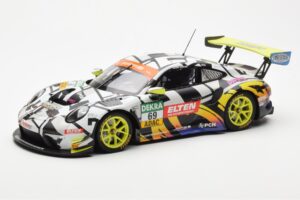
Porsche 911 991.2 GT3 R #69 Team Iron Force Racing Ring Police L. Luhr / M. Holzer ADAC GT Masters 2019 Minichamps 1:18
Only 1 left
Price:
£96.00
Collectors also bought
Browse all 1:18
Used
Used
Last one
Used
Used
Ford Fiesta RS WRC Ford Abu Dhabi #3 M. Hirvonen / J. Lehtinen Winner Rally Australia 2011 Minichamps 1:18
Only 3 left
Price:
£105.00
Last one
Used
Mercedes SLS AMG GT3 Munnich Motorsport #38 M. Basseng / M. Winkelhock Champions FIA GT1 World Championship 2012 Minichamps 1:18
Only 1 left
Price:
£71.00
Last one
Used
Mercedes SLS AMG GT3 HTP Motorsport Persson #84 B. Schneider / M. Buhk / M. Gotz Winners 24 Hours of Spa-Francorchamps 2013 Minichamps 1:18
Only 1 left
Price:
£94.00
Last one
Used
Opel Commodore A Steinmetz #11 E. von Bayern / Johansson 24 Hours of Spa 1970 Minichamps 1:18
Only 1 left
Price:
£93.00
Last one
Mercedes 190E 2.5-16 W201 EVO 1 Jet #16 F. Biela Team Ms-Jet Racing DTM 1990 Minichamps 1:18
Only 1 left
Price:
£75.00
Recently viewed
{"id":614658,"name":"Porsche 908\/02 Spyder #6 K. Lins \/ R. Attwood N\u00fcrburgring 1000km 1969 Minichamps 1:18","price":"£<\/span>195.00<\/bdi><\/span>","image":"https:\/\/models118.co.uk\/wp-content\/uploads\/2026\/06\/porsche-908-02-spyder-n6-klins-rattwood-1000km-nuerburgring-1969-minichamps-1-18-400x400.jpg","permalink":"https:\/\/models118.co.uk\/porsche-908-02-spyder-6-k-lins-r-attwood-nurburgring-1000km-1969-minichamps-1-18-107692006\/","brand":"Porsche"}