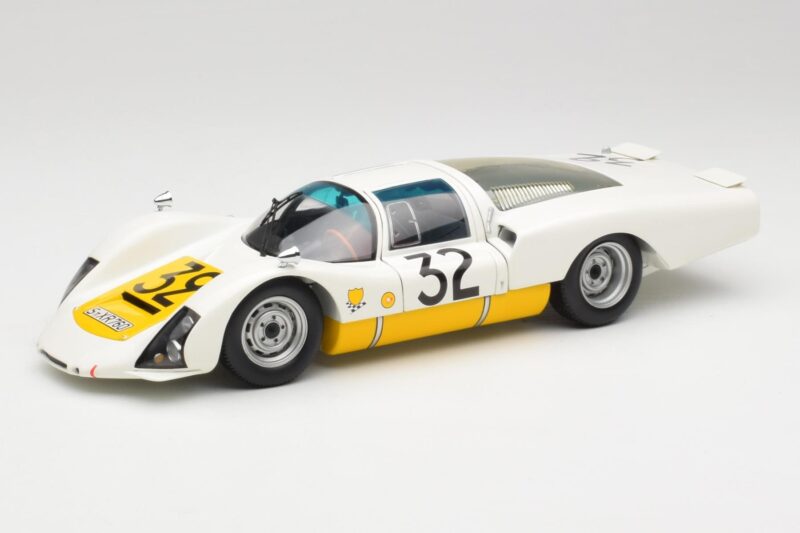
Porsche 906LH #32 Porsche System Engineering G. Schutz / P. De Klerk 24 Hours of Le Mans 1966 Minichamps 1:18
Sold out
1
/
8
Minichamps' 1:18 diecast Porsche 906 LH reproduces the long-tail Le Mans version of Porsche's 1966 sports prototype, campaigned by Porsche System Engineering for drivers G. Schütz and P. de Klerk. The 906 paired a lightweight fibreglass body with a 2.0-litre flat-six borrowed from Porsche's road-going range, and this diecast captures its low, elongated tail and factory racing livery. A focused piece for anyone building a 1960s Porsche endurance racing shelf.
1 / 8
[{"index":0,"id":"577810","thumb":"https:\/\/models118.co.uk\/wp-content\/uploads\/2026\/06\/porsche-906lh-porsche-system-engineering-n32-gschutz-pde-klerk-24h-lm-1966-minichamps-1-18-300x200.jpg","medium":"https:\/\/models118.co.uk\/wp-content\/uploads\/2026\/06\/porsche-906lh-porsche-system-engineering-n32-gschutz-pde-klerk-24h-lm-1966-minichamps-1-18-800x533.jpg","full":"https:\/\/models118.co.uk\/wp-content\/uploads\/2026\/06\/porsche-906lh-porsche-system-engineering-n32-gschutz-pde-klerk-24h-lm-1966-minichamps-1-18.jpg","srcset":"https:\/\/models118.co.uk\/wp-content\/uploads\/2026\/06\/porsche-906lh-porsche-system-engineering-n32-gschutz-pde-klerk-24h-lm-1966-minichamps-1-18-800x533.jpg 800w, https:\/\/models118.co.uk\/wp-content\/uploads\/2026\/06\/porsche-906lh-porsche-system-engineering-n32-gschutz-pde-klerk-24h-lm-1966-minichamps-1-18-64x43.jpg 64w, https:\/\/models118.co.uk\/wp-content\/uploads\/2026\/06\/porsche-906lh-porsche-system-engineering-n32-gschutz-pde-klerk-24h-lm-1966-minichamps-1-18-300x200.jpg 300w, https:\/\/models118.co.uk\/wp-content\/uploads\/2026\/06\/porsche-906lh-porsche-system-engineering-n32-gschutz-pde-klerk-24h-lm-1966-minichamps-1-18.jpg 1800w","sizes":"(max-width: 1023px) 400px, 640px","srcsetAvif":"https:\/\/models118.co.uk\/wp-content\/uploads\/2026\/06\/porsche-906lh-porsche-system-engineering-n32-gschutz-pde-klerk-24h-lm-1966-minichamps-1-18-800x533.jpg.avif 800w, https:\/\/models118.co.uk\/wp-content\/uploads\/2026\/06\/porsche-906lh-porsche-system-engineering-n32-gschutz-pde-klerk-24h-lm-1966-minichamps-1-18-64x43.jpg.avif 64w, https:\/\/models118.co.uk\/wp-content\/uploads\/2026\/06\/porsche-906lh-porsche-system-engineering-n32-gschutz-pde-klerk-24h-lm-1966-minichamps-1-18-300x200.jpg.avif 300w, https:\/\/models118.co.uk\/wp-content\/uploads\/2026\/06\/porsche-906lh-porsche-system-engineering-n32-gschutz-pde-klerk-24h-lm-1966-minichamps-1-18.jpg.avif 1800w","srcsetWebp":"https:\/\/models118.co.uk\/wp-content\/uploads\/2026\/06\/porsche-906lh-porsche-system-engineering-n32-gschutz-pde-klerk-24h-lm-1966-minichamps-1-18-800x533.jpg.webp 800w, https:\/\/models118.co.uk\/wp-content\/uploads\/2026\/06\/porsche-906lh-porsche-system-engineering-n32-gschutz-pde-klerk-24h-lm-1966-minichamps-1-18-64x43.jpg.webp 64w, https:\/\/models118.co.uk\/wp-content\/uploads\/2026\/06\/porsche-906lh-porsche-system-engineering-n32-gschutz-pde-klerk-24h-lm-1966-minichamps-1-18-300x200.jpg.webp 300w, https:\/\/models118.co.uk\/wp-content\/uploads\/2026\/06\/porsche-906lh-porsche-system-engineering-n32-gschutz-pde-klerk-24h-lm-1966-minichamps-1-18.jpg.webp 1800w","alt":"Porsche 906LH #32 Porsche System Engineering G. Schutz \/ P. De Klerk 24 Hours of Le Mans 1966 Minichamps 1:18 100666132 Dieca"},{"index":1,"id":577970,"thumb":"https:\/\/models118.co.uk\/wp-content\/uploads\/2026\/06\/porsche-906lh-porsche-system-engineering-n32-gschutz-pde-klerk-24h-lm-1966-minichamps-1-18-1-300x200.jpg","medium":"https:\/\/models118.co.uk\/wp-content\/uploads\/2026\/06\/porsche-906lh-porsche-system-engineering-n32-gschutz-pde-klerk-24h-lm-1966-minichamps-1-18-1-800x533.jpg","full":"https:\/\/models118.co.uk\/wp-content\/uploads\/2026\/06\/porsche-906lh-porsche-system-engineering-n32-gschutz-pde-klerk-24h-lm-1966-minichamps-1-18-1.jpg","srcset":"https:\/\/models118.co.uk\/wp-content\/uploads\/2026\/06\/porsche-906lh-porsche-system-engineering-n32-gschutz-pde-klerk-24h-lm-1966-minichamps-1-18-1-800x533.jpg 800w, https:\/\/models118.co.uk\/wp-content\/uploads\/2026\/06\/porsche-906lh-porsche-system-engineering-n32-gschutz-pde-klerk-24h-lm-1966-minichamps-1-18-1-64x43.jpg 64w, https:\/\/models118.co.uk\/wp-content\/uploads\/2026\/06\/porsche-906lh-porsche-system-engineering-n32-gschutz-pde-klerk-24h-lm-1966-minichamps-1-18-1-300x200.jpg 300w, https:\/\/models118.co.uk\/wp-content\/uploads\/2026\/06\/porsche-906lh-porsche-system-engineering-n32-gschutz-pde-klerk-24h-lm-1966-minichamps-1-18-1.jpg 1800w","sizes":"(max-width: 1023px) 400px, 640px","srcsetAvif":"https:\/\/models118.co.uk\/wp-content\/uploads\/2026\/06\/porsche-906lh-porsche-system-engineering-n32-gschutz-pde-klerk-24h-lm-1966-minichamps-1-18-1-800x533.jpg.avif 800w, https:\/\/models118.co.uk\/wp-content\/uploads\/2026\/06\/porsche-906lh-porsche-system-engineering-n32-gschutz-pde-klerk-24h-lm-1966-minichamps-1-18-1-64x43.jpg.avif 64w, https:\/\/models118.co.uk\/wp-content\/uploads\/2026\/06\/porsche-906lh-porsche-system-engineering-n32-gschutz-pde-klerk-24h-lm-1966-minichamps-1-18-1-300x200.jpg.avif 300w, https:\/\/models118.co.uk\/wp-content\/uploads\/2026\/06\/porsche-906lh-porsche-system-engineering-n32-gschutz-pde-klerk-24h-lm-1966-minichamps-1-18-1.jpg.avif 1800w","srcsetWebp":"https:\/\/models118.co.uk\/wp-content\/uploads\/2026\/06\/porsche-906lh-porsche-system-engineering-n32-gschutz-pde-klerk-24h-lm-1966-minichamps-1-18-1-800x533.jpg.webp 800w, https:\/\/models118.co.uk\/wp-content\/uploads\/2026\/06\/porsche-906lh-porsche-system-engineering-n32-gschutz-pde-klerk-24h-lm-1966-minichamps-1-18-1-64x43.jpg.webp 64w, https:\/\/models118.co.uk\/wp-content\/uploads\/2026\/06\/porsche-906lh-porsche-system-engineering-n32-gschutz-pde-klerk-24h-lm-1966-minichamps-1-18-1-300x200.jpg.webp 300w, https:\/\/models118.co.uk\/wp-content\/uploads\/2026\/06\/porsche-906lh-porsche-system-engineering-n32-gschutz-pde-klerk-24h-lm-1966-minichamps-1-18-1.jpg.webp 1800w","alt":"Porsche 906LH #32 Porsche System Engineering G. Schutz \/ P. De Klerk 24 Hours of Le Mans 1966 Minichamps 1:18 100666132 Dieca \u2014 photo 2 of 8"},{"index":2,"id":578128,"thumb":"https:\/\/models118.co.uk\/wp-content\/uploads\/2026\/06\/porsche-906lh-porsche-system-engineering-n32-gschutz-pde-klerk-24h-lm-1966-minichamps-1-18-2-300x200.jpg","medium":"https:\/\/models118.co.uk\/wp-content\/uploads\/2026\/06\/porsche-906lh-porsche-system-engineering-n32-gschutz-pde-klerk-24h-lm-1966-minichamps-1-18-2-800x533.jpg","full":"https:\/\/models118.co.uk\/wp-content\/uploads\/2026\/06\/porsche-906lh-porsche-system-engineering-n32-gschutz-pde-klerk-24h-lm-1966-minichamps-1-18-2.jpg","srcset":"https:\/\/models118.co.uk\/wp-content\/uploads\/2026\/06\/porsche-906lh-porsche-system-engineering-n32-gschutz-pde-klerk-24h-lm-1966-minichamps-1-18-2-800x533.jpg 800w, https:\/\/models118.co.uk\/wp-content\/uploads\/2026\/06\/porsche-906lh-porsche-system-engineering-n32-gschutz-pde-klerk-24h-lm-1966-minichamps-1-18-2-64x43.jpg 64w, https:\/\/models118.co.uk\/wp-content\/uploads\/2026\/06\/porsche-906lh-porsche-system-engineering-n32-gschutz-pde-klerk-24h-lm-1966-minichamps-1-18-2-300x200.jpg 300w, https:\/\/models118.co.uk\/wp-content\/uploads\/2026\/06\/porsche-906lh-porsche-system-engineering-n32-gschutz-pde-klerk-24h-lm-1966-minichamps-1-18-2.jpg 1800w","sizes":"(max-width: 1023px) 400px, 640px","srcsetAvif":"https:\/\/models118.co.uk\/wp-content\/uploads\/2026\/06\/porsche-906lh-porsche-system-engineering-n32-gschutz-pde-klerk-24h-lm-1966-minichamps-1-18-2-800x533.jpg.avif 800w, https:\/\/models118.co.uk\/wp-content\/uploads\/2026\/06\/porsche-906lh-porsche-system-engineering-n32-gschutz-pde-klerk-24h-lm-1966-minichamps-1-18-2-64x43.jpg.avif 64w, https:\/\/models118.co.uk\/wp-content\/uploads\/2026\/06\/porsche-906lh-porsche-system-engineering-n32-gschutz-pde-klerk-24h-lm-1966-minichamps-1-18-2-300x200.jpg.avif 300w, https:\/\/models118.co.uk\/wp-content\/uploads\/2026\/06\/porsche-906lh-porsche-system-engineering-n32-gschutz-pde-klerk-24h-lm-1966-minichamps-1-18-2.jpg.avif 1800w","srcsetWebp":"https:\/\/models118.co.uk\/wp-content\/uploads\/2026\/06\/porsche-906lh-porsche-system-engineering-n32-gschutz-pde-klerk-24h-lm-1966-minichamps-1-18-2-800x533.jpg.webp 800w, https:\/\/models118.co.uk\/wp-content\/uploads\/2026\/06\/porsche-906lh-porsche-system-engineering-n32-gschutz-pde-klerk-24h-lm-1966-minichamps-1-18-2-64x43.jpg.webp 64w, https:\/\/models118.co.uk\/wp-content\/uploads\/2026\/06\/porsche-906lh-porsche-system-engineering-n32-gschutz-pde-klerk-24h-lm-1966-minichamps-1-18-2-300x200.jpg.webp 300w, https:\/\/models118.co.uk\/wp-content\/uploads\/2026\/06\/porsche-906lh-porsche-system-engineering-n32-gschutz-pde-klerk-24h-lm-1966-minichamps-1-18-2.jpg.webp 1800w","alt":"Porsche 906LH #32 Porsche System Engineering G. Schutz \/ P. De Klerk 24 Hours of Le Mans 1966 Minichamps 1:18 100666132 Dieca \u2014 photo 3 of 8"},{"index":3,"id":578263,"thumb":"https:\/\/models118.co.uk\/wp-content\/uploads\/2026\/06\/porsche-906lh-porsche-system-engineering-n32-gschutz-pde-klerk-24h-lm-1966-minichamps-1-18-3-300x200.jpg","medium":"https:\/\/models118.co.uk\/wp-content\/uploads\/2026\/06\/porsche-906lh-porsche-system-engineering-n32-gschutz-pde-klerk-24h-lm-1966-minichamps-1-18-3-800x533.jpg","full":"https:\/\/models118.co.uk\/wp-content\/uploads\/2026\/06\/porsche-906lh-porsche-system-engineering-n32-gschutz-pde-klerk-24h-lm-1966-minichamps-1-18-3.jpg","srcset":"https:\/\/models118.co.uk\/wp-content\/uploads\/2026\/06\/porsche-906lh-porsche-system-engineering-n32-gschutz-pde-klerk-24h-lm-1966-minichamps-1-18-3-800x533.jpg 800w, https:\/\/models118.co.uk\/wp-content\/uploads\/2026\/06\/porsche-906lh-porsche-system-engineering-n32-gschutz-pde-klerk-24h-lm-1966-minichamps-1-18-3-64x43.jpg 64w, https:\/\/models118.co.uk\/wp-content\/uploads\/2026\/06\/porsche-906lh-porsche-system-engineering-n32-gschutz-pde-klerk-24h-lm-1966-minichamps-1-18-3-300x200.jpg 300w, https:\/\/models118.co.uk\/wp-content\/uploads\/2026\/06\/porsche-906lh-porsche-system-engineering-n32-gschutz-pde-klerk-24h-lm-1966-minichamps-1-18-3.jpg 1800w","sizes":"(max-width: 1023px) 400px, 640px","srcsetAvif":"https:\/\/models118.co.uk\/wp-content\/uploads\/2026\/06\/porsche-906lh-porsche-system-engineering-n32-gschutz-pde-klerk-24h-lm-1966-minichamps-1-18-3-800x533.jpg.avif 800w, https:\/\/models118.co.uk\/wp-content\/uploads\/2026\/06\/porsche-906lh-porsche-system-engineering-n32-gschutz-pde-klerk-24h-lm-1966-minichamps-1-18-3-64x43.jpg.avif 64w, https:\/\/models118.co.uk\/wp-content\/uploads\/2026\/06\/porsche-906lh-porsche-system-engineering-n32-gschutz-pde-klerk-24h-lm-1966-minichamps-1-18-3-300x200.jpg.avif 300w, https:\/\/models118.co.uk\/wp-content\/uploads\/2026\/06\/porsche-906lh-porsche-system-engineering-n32-gschutz-pde-klerk-24h-lm-1966-minichamps-1-18-3.jpg.avif 1800w","srcsetWebp":"https:\/\/models118.co.uk\/wp-content\/uploads\/2026\/06\/porsche-906lh-porsche-system-engineering-n32-gschutz-pde-klerk-24h-lm-1966-minichamps-1-18-3-800x533.jpg.webp 800w, https:\/\/models118.co.uk\/wp-content\/uploads\/2026\/06\/porsche-906lh-porsche-system-engineering-n32-gschutz-pde-klerk-24h-lm-1966-minichamps-1-18-3-64x43.jpg.webp 64w, https:\/\/models118.co.uk\/wp-content\/uploads\/2026\/06\/porsche-906lh-porsche-system-engineering-n32-gschutz-pde-klerk-24h-lm-1966-minichamps-1-18-3-300x200.jpg.webp 300w, https:\/\/models118.co.uk\/wp-content\/uploads\/2026\/06\/porsche-906lh-porsche-system-engineering-n32-gschutz-pde-klerk-24h-lm-1966-minichamps-1-18-3.jpg.webp 1800w","alt":"Porsche 906LH #32 Porsche System Engineering G. Schutz \/ P. De Klerk 24 Hours of Le Mans 1966 Minichamps 1:18 100666132 Dieca \u2014 photo 4 of 8"},{"index":4,"id":578404,"thumb":"https:\/\/models118.co.uk\/wp-content\/uploads\/2026\/06\/porsche-906lh-porsche-system-engineering-n32-gschutz-pde-klerk-24h-lm-1966-minichamps-1-18-4-300x200.jpg","medium":"https:\/\/models118.co.uk\/wp-content\/uploads\/2026\/06\/porsche-906lh-porsche-system-engineering-n32-gschutz-pde-klerk-24h-lm-1966-minichamps-1-18-4-800x533.jpg","full":"https:\/\/models118.co.uk\/wp-content\/uploads\/2026\/06\/porsche-906lh-porsche-system-engineering-n32-gschutz-pde-klerk-24h-lm-1966-minichamps-1-18-4.jpg","srcset":"https:\/\/models118.co.uk\/wp-content\/uploads\/2026\/06\/porsche-906lh-porsche-system-engineering-n32-gschutz-pde-klerk-24h-lm-1966-minichamps-1-18-4-800x533.jpg 800w, https:\/\/models118.co.uk\/wp-content\/uploads\/2026\/06\/porsche-906lh-porsche-system-engineering-n32-gschutz-pde-klerk-24h-lm-1966-minichamps-1-18-4-64x43.jpg 64w, https:\/\/models118.co.uk\/wp-content\/uploads\/2026\/06\/porsche-906lh-porsche-system-engineering-n32-gschutz-pde-klerk-24h-lm-1966-minichamps-1-18-4-300x200.jpg 300w, https:\/\/models118.co.uk\/wp-content\/uploads\/2026\/06\/porsche-906lh-porsche-system-engineering-n32-gschutz-pde-klerk-24h-lm-1966-minichamps-1-18-4.jpg 1800w","sizes":"(max-width: 1023px) 400px, 640px","srcsetAvif":"https:\/\/models118.co.uk\/wp-content\/uploads\/2026\/06\/porsche-906lh-porsche-system-engineering-n32-gschutz-pde-klerk-24h-lm-1966-minichamps-1-18-4-800x533.jpg.avif 800w, https:\/\/models118.co.uk\/wp-content\/uploads\/2026\/06\/porsche-906lh-porsche-system-engineering-n32-gschutz-pde-klerk-24h-lm-1966-minichamps-1-18-4-64x43.jpg.avif 64w, https:\/\/models118.co.uk\/wp-content\/uploads\/2026\/06\/porsche-906lh-porsche-system-engineering-n32-gschutz-pde-klerk-24h-lm-1966-minichamps-1-18-4-300x200.jpg.avif 300w, https:\/\/models118.co.uk\/wp-content\/uploads\/2026\/06\/porsche-906lh-porsche-system-engineering-n32-gschutz-pde-klerk-24h-lm-1966-minichamps-1-18-4.jpg.avif 1800w","srcsetWebp":"https:\/\/models118.co.uk\/wp-content\/uploads\/2026\/06\/porsche-906lh-porsche-system-engineering-n32-gschutz-pde-klerk-24h-lm-1966-minichamps-1-18-4-800x533.jpg.webp 800w, https:\/\/models118.co.uk\/wp-content\/uploads\/2026\/06\/porsche-906lh-porsche-system-engineering-n32-gschutz-pde-klerk-24h-lm-1966-minichamps-1-18-4-64x43.jpg.webp 64w, https:\/\/models118.co.uk\/wp-content\/uploads\/2026\/06\/porsche-906lh-porsche-system-engineering-n32-gschutz-pde-klerk-24h-lm-1966-minichamps-1-18-4-300x200.jpg.webp 300w, https:\/\/models118.co.uk\/wp-content\/uploads\/2026\/06\/porsche-906lh-porsche-system-engineering-n32-gschutz-pde-klerk-24h-lm-1966-minichamps-1-18-4.jpg.webp 1800w","alt":"Porsche 906LH #32 Porsche System Engineering G. Schutz \/ P. De Klerk 24 Hours of Le Mans 1966 Minichamps 1:18 100666132 Dieca \u2014 photo 5 of 8"},{"index":5,"id":578482,"thumb":"https:\/\/models118.co.uk\/wp-content\/uploads\/2026\/06\/porsche-906lh-porsche-system-engineering-n32-gschutz-pde-klerk-24h-lm-1966-minichamps-1-18-5-300x200.jpg","medium":"https:\/\/models118.co.uk\/wp-content\/uploads\/2026\/06\/porsche-906lh-porsche-system-engineering-n32-gschutz-pde-klerk-24h-lm-1966-minichamps-1-18-5-800x533.jpg","full":"https:\/\/models118.co.uk\/wp-content\/uploads\/2026\/06\/porsche-906lh-porsche-system-engineering-n32-gschutz-pde-klerk-24h-lm-1966-minichamps-1-18-5.jpg","srcset":"https:\/\/models118.co.uk\/wp-content\/uploads\/2026\/06\/porsche-906lh-porsche-system-engineering-n32-gschutz-pde-klerk-24h-lm-1966-minichamps-1-18-5-800x533.jpg 800w, https:\/\/models118.co.uk\/wp-content\/uploads\/2026\/06\/porsche-906lh-porsche-system-engineering-n32-gschutz-pde-klerk-24h-lm-1966-minichamps-1-18-5-64x43.jpg 64w, https:\/\/models118.co.uk\/wp-content\/uploads\/2026\/06\/porsche-906lh-porsche-system-engineering-n32-gschutz-pde-klerk-24h-lm-1966-minichamps-1-18-5-300x200.jpg 300w, https:\/\/models118.co.uk\/wp-content\/uploads\/2026\/06\/porsche-906lh-porsche-system-engineering-n32-gschutz-pde-klerk-24h-lm-1966-minichamps-1-18-5.jpg 1800w","sizes":"(max-width: 1023px) 400px, 640px","srcsetAvif":"https:\/\/models118.co.uk\/wp-content\/uploads\/2026\/06\/porsche-906lh-porsche-system-engineering-n32-gschutz-pde-klerk-24h-lm-1966-minichamps-1-18-5-800x533.jpg.avif 800w, https:\/\/models118.co.uk\/wp-content\/uploads\/2026\/06\/porsche-906lh-porsche-system-engineering-n32-gschutz-pde-klerk-24h-lm-1966-minichamps-1-18-5-64x43.jpg.avif 64w, https:\/\/models118.co.uk\/wp-content\/uploads\/2026\/06\/porsche-906lh-porsche-system-engineering-n32-gschutz-pde-klerk-24h-lm-1966-minichamps-1-18-5-300x200.jpg.avif 300w, https:\/\/models118.co.uk\/wp-content\/uploads\/2026\/06\/porsche-906lh-porsche-system-engineering-n32-gschutz-pde-klerk-24h-lm-1966-minichamps-1-18-5.jpg.avif 1800w","srcsetWebp":"https:\/\/models118.co.uk\/wp-content\/uploads\/2026\/06\/porsche-906lh-porsche-system-engineering-n32-gschutz-pde-klerk-24h-lm-1966-minichamps-1-18-5-800x533.jpg.webp 800w, https:\/\/models118.co.uk\/wp-content\/uploads\/2026\/06\/porsche-906lh-porsche-system-engineering-n32-gschutz-pde-klerk-24h-lm-1966-minichamps-1-18-5-64x43.jpg.webp 64w, https:\/\/models118.co.uk\/wp-content\/uploads\/2026\/06\/porsche-906lh-porsche-system-engineering-n32-gschutz-pde-klerk-24h-lm-1966-minichamps-1-18-5-300x200.jpg.webp 300w, https:\/\/models118.co.uk\/wp-content\/uploads\/2026\/06\/porsche-906lh-porsche-system-engineering-n32-gschutz-pde-klerk-24h-lm-1966-minichamps-1-18-5.jpg.webp 1800w","alt":"Porsche 906LH #32 Porsche System Engineering G. Schutz \/ P. De Klerk 24 Hours of Le Mans 1966 Minichamps 1:18 100666132 Dieca \u2014 photo 6 of 8"},{"index":6,"id":578624,"thumb":"https:\/\/models118.co.uk\/wp-content\/uploads\/2026\/06\/porsche-906lh-porsche-system-engineering-n32-gschutz-pde-klerk-24h-lm-1966-minichamps-1-18-6-300x200.jpg","medium":"https:\/\/models118.co.uk\/wp-content\/uploads\/2026\/06\/porsche-906lh-porsche-system-engineering-n32-gschutz-pde-klerk-24h-lm-1966-minichamps-1-18-6-800x533.jpg","full":"https:\/\/models118.co.uk\/wp-content\/uploads\/2026\/06\/porsche-906lh-porsche-system-engineering-n32-gschutz-pde-klerk-24h-lm-1966-minichamps-1-18-6.jpg","srcset":"https:\/\/models118.co.uk\/wp-content\/uploads\/2026\/06\/porsche-906lh-porsche-system-engineering-n32-gschutz-pde-klerk-24h-lm-1966-minichamps-1-18-6-800x533.jpg 800w, https:\/\/models118.co.uk\/wp-content\/uploads\/2026\/06\/porsche-906lh-porsche-system-engineering-n32-gschutz-pde-klerk-24h-lm-1966-minichamps-1-18-6-64x43.jpg 64w, https:\/\/models118.co.uk\/wp-content\/uploads\/2026\/06\/porsche-906lh-porsche-system-engineering-n32-gschutz-pde-klerk-24h-lm-1966-minichamps-1-18-6-300x200.jpg 300w, https:\/\/models118.co.uk\/wp-content\/uploads\/2026\/06\/porsche-906lh-porsche-system-engineering-n32-gschutz-pde-klerk-24h-lm-1966-minichamps-1-18-6.jpg 1800w","sizes":"(max-width: 1023px) 400px, 640px","srcsetAvif":"https:\/\/models118.co.uk\/wp-content\/uploads\/2026\/06\/porsche-906lh-porsche-system-engineering-n32-gschutz-pde-klerk-24h-lm-1966-minichamps-1-18-6-800x533.jpg.avif 800w, https:\/\/models118.co.uk\/wp-content\/uploads\/2026\/06\/porsche-906lh-porsche-system-engineering-n32-gschutz-pde-klerk-24h-lm-1966-minichamps-1-18-6-64x43.jpg.avif 64w, https:\/\/models118.co.uk\/wp-content\/uploads\/2026\/06\/porsche-906lh-porsche-system-engineering-n32-gschutz-pde-klerk-24h-lm-1966-minichamps-1-18-6-300x200.jpg.avif 300w, https:\/\/models118.co.uk\/wp-content\/uploads\/2026\/06\/porsche-906lh-porsche-system-engineering-n32-gschutz-pde-klerk-24h-lm-1966-minichamps-1-18-6.jpg.avif 1800w","srcsetWebp":"https:\/\/models118.co.uk\/wp-content\/uploads\/2026\/06\/porsche-906lh-porsche-system-engineering-n32-gschutz-pde-klerk-24h-lm-1966-minichamps-1-18-6-800x533.jpg.webp 800w, https:\/\/models118.co.uk\/wp-content\/uploads\/2026\/06\/porsche-906lh-porsche-system-engineering-n32-gschutz-pde-klerk-24h-lm-1966-minichamps-1-18-6-64x43.jpg.webp 64w, https:\/\/models118.co.uk\/wp-content\/uploads\/2026\/06\/porsche-906lh-porsche-system-engineering-n32-gschutz-pde-klerk-24h-lm-1966-minichamps-1-18-6-300x200.jpg.webp 300w, https:\/\/models118.co.uk\/wp-content\/uploads\/2026\/06\/porsche-906lh-porsche-system-engineering-n32-gschutz-pde-klerk-24h-lm-1966-minichamps-1-18-6.jpg.webp 1800w","alt":"Porsche 906LH #32 Porsche System Engineering G. Schutz \/ P. De Klerk 24 Hours of Le Mans 1966 Minichamps 1:18 100666132 Dieca \u2014 photo 7 of 8"},{"index":7,"id":578767,"thumb":"https:\/\/models118.co.uk\/wp-content\/uploads\/2026\/06\/porsche-906lh-porsche-system-engineering-n32-gschutz-pde-klerk-24h-lm-1966-minichamps-1-18-7-300x200.jpg","medium":"https:\/\/models118.co.uk\/wp-content\/uploads\/2026\/06\/porsche-906lh-porsche-system-engineering-n32-gschutz-pde-klerk-24h-lm-1966-minichamps-1-18-7-800x533.jpg","full":"https:\/\/models118.co.uk\/wp-content\/uploads\/2026\/06\/porsche-906lh-porsche-system-engineering-n32-gschutz-pde-klerk-24h-lm-1966-minichamps-1-18-7.jpg","srcset":"https:\/\/models118.co.uk\/wp-content\/uploads\/2026\/06\/porsche-906lh-porsche-system-engineering-n32-gschutz-pde-klerk-24h-lm-1966-minichamps-1-18-7-800x533.jpg 800w, https:\/\/models118.co.uk\/wp-content\/uploads\/2026\/06\/porsche-906lh-porsche-system-engineering-n32-gschutz-pde-klerk-24h-lm-1966-minichamps-1-18-7-64x43.jpg 64w, https:\/\/models118.co.uk\/wp-content\/uploads\/2026\/06\/porsche-906lh-porsche-system-engineering-n32-gschutz-pde-klerk-24h-lm-1966-minichamps-1-18-7-300x200.jpg 300w, https:\/\/models118.co.uk\/wp-content\/uploads\/2026\/06\/porsche-906lh-porsche-system-engineering-n32-gschutz-pde-klerk-24h-lm-1966-minichamps-1-18-7.jpg 1800w","sizes":"(max-width: 1023px) 400px, 640px","srcsetAvif":"https:\/\/models118.co.uk\/wp-content\/uploads\/2026\/06\/porsche-906lh-porsche-system-engineering-n32-gschutz-pde-klerk-24h-lm-1966-minichamps-1-18-7-800x533.jpg.avif 800w, https:\/\/models118.co.uk\/wp-content\/uploads\/2026\/06\/porsche-906lh-porsche-system-engineering-n32-gschutz-pde-klerk-24h-lm-1966-minichamps-1-18-7-64x43.jpg.avif 64w, https:\/\/models118.co.uk\/wp-content\/uploads\/2026\/06\/porsche-906lh-porsche-system-engineering-n32-gschutz-pde-klerk-24h-lm-1966-minichamps-1-18-7-300x200.jpg.avif 300w, https:\/\/models118.co.uk\/wp-content\/uploads\/2026\/06\/porsche-906lh-porsche-system-engineering-n32-gschutz-pde-klerk-24h-lm-1966-minichamps-1-18-7.jpg.avif 1800w","srcsetWebp":"https:\/\/models118.co.uk\/wp-content\/uploads\/2026\/06\/porsche-906lh-porsche-system-engineering-n32-gschutz-pde-klerk-24h-lm-1966-minichamps-1-18-7-800x533.jpg.webp 800w, https:\/\/models118.co.uk\/wp-content\/uploads\/2026\/06\/porsche-906lh-porsche-system-engineering-n32-gschutz-pde-klerk-24h-lm-1966-minichamps-1-18-7-64x43.jpg.webp 64w, https:\/\/models118.co.uk\/wp-content\/uploads\/2026\/06\/porsche-906lh-porsche-system-engineering-n32-gschutz-pde-klerk-24h-lm-1966-minichamps-1-18-7-300x200.jpg.webp 300w, https:\/\/models118.co.uk\/wp-content\/uploads\/2026\/06\/porsche-906lh-porsche-system-engineering-n32-gschutz-pde-klerk-24h-lm-1966-minichamps-1-18-7.jpg.webp 1800w","alt":"Porsche 906LH #32 Porsche System Engineering G. Schutz \/ P. De Klerk 24 Hours of Le Mans 1966 Minichamps 1:18 100666132 Dieca \u2014 photo 8 of 8"}]
Porsche 906LH #32 Porsche System Engineering G. Schutz / P. De Klerk 24 Hours of Le Mans 1966 Minichamps 1:18
Current price:
£161.67
Out of production
This model is currently sold out. Enter your email and we'll let you know when it's back in stock.
Specifications
- Car Brand
- Porsche
- Model Manufacturer
- Minichamps
- Scale
- 1:18
- Material
- Diecast
- Model Condition
- Used Model
- SKU
- 100666132
- Year
- 1966
- Era
- 1960s
- Body Type
- Prototype Models
- Vehicle Class
- Le Mans Prototypes
- Openable Parts
- Yes
- Packaging Condition
- Traces of Storage
- Model Type
- Race Models
- EAN / GTIN
- 4012138106215
Genuine articles
5-layer carton
Foam-filled interior
Hassle-free returns
14-day no-quibble returns
Secure payment
Bank-level encryption
About the Porsche 906LH #32 Porsche System Engineering G. Schutz / P. De Klerk 24 Hours of Le Mans 1966 Minichamps 1:18
TL;DR: Minichamps' 1:18 diecast Porsche 906 LH reproduces the long-tail version of Porsche's 1966 sports prototype, raced at Le Mans by G. Schütz and P. de Klerk for Porsche System Engineering. Lightweight fibreglass bodywork and gull-wing doors mark this as a genuine 1960s works racer in miniature.
Long-tail and short-tail 906s ran side by side at Le Mans in 1966, Porsche hedging between raw top speed down the Mulsanne Straight and agility everywhere else on the circuit. This LH-bodied car represents that high-speed choice, and Minichamps renders its stretched tail in careful proportion.
The Porsche 906 and Its Long-Tail Le Mans Bodywork
A Homologated Racer Built in Small Numbers
The 906, known internally as the Carrera 6, was developed to satisfy FIA Group 4 rules requiring a minimum production run, and Porsche built the car around a lightweight tubular frame clothed in fibreglass panels. Gull-wing doors, a feature more associated with road cars, were fitted here purely to save weight and simplify the door mechanism within the car's low, narrow cabin. Power came from a 2.0-litre flat-six sharing its architecture with Porsche's road-going range, tuned for the sustained high revs endurance racing demanded.
The Langheck Body for High-Speed Circuits
The LH designation marks this as the long-tail, or Langheck, body, a low-drag tail extension Porsche fitted specifically for circuits with long straights, Le Mans chief among them in 1966. Where the short-tail 906K suited tighter tracks, the elongated rear bodywork on this version traded some agility for a measurable reduction in drag, a trade Porsche judged worthwhile for the Mulsanne Straight's sustained top-speed running. Minichamps captures that stretched profile accurately, the tail tapering to a point well beyond where the short-tail car's bodywork ends.
Minichamps' Diecast Build and Livery Detail
Bodywork, Doors and Factory Livery
Built in diecast, the model's gull-wing doors open on metal hinges that hold their raised position rather than settling shut, letting the model display with the distinctive door line exposed. The Porsche System Engineering livery, in the team's factory colours with race number 32 correctly placed, is applied with clean edges and accurate placement against the car's simple, functional bodywork, which carried little decoration beyond what sponsorship and regulation required. Lifting the model, the zinc alloy build gives it real heft for its compact size, denser than the fibreglass original ever was but true to the weight a diecast collectible of this scale should carry.
A Focused Piece for 1960s Endurance Collecting
This 906 LH suits a collector building a dedicated 1960s sports prototype shelf rather than a general Porsche display, since its appeal rests on the specific Le Mans entry and driver pairing rather than broad brand recognition. At around 20 centimetres long, the model's low, elongated stance sets it apart visually from the taller, more upright road cars typical of a wider Porsche collection, and it displays well alongside the era's other prototype racers from Ferrari and Ford. Paired with the short-tail 906K variants from the same season, it tells a fuller story of how one Porsche chassis was adapted for different circuits within a single year.
Diecast Detail Against Resin Alternatives
Diecast Versus Resin for Slab-Sided Prototypes
Sports prototypes from this era are produced by various manufacturers in both diecast and resin, and the choice matters more than it might for a modern supercar. Resin castings of the 906 can achieve marginally sharper body creases along its slab-sided flanks, since there are no opening panels to accommodate, but they sacrifice the tactile satisfaction of hinged gull-wing doors that a diecast build like this one delivers. At 1:18, the difference in shut-line precision is visible only under close inspection, while the doors remain a genuine functional feature rather than a cosmetic afterthought.
Long-Term Display Care
Kept out of direct sunlight on a dust-free shelf, the diecast paint on this model holds its factory-correct hue for years without the yellowing that afflicts poorly cured clear coats on cheaper castings. The metal hinges on the gull-wing doors also benefit from occasional gentle use rather than being left permanently open or shut, keeping the mechanism from stiffening over time.
Same marque, same scale
Last one
Used
Last one
Used
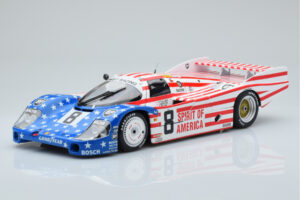
Porsche 956L Spirit of America #8 G. Follmer / J. Morton / K. Miller 24 Hours of Le Mans 1986 Minichamps 1:18
Only 1 left
Price:
£101.00
Used
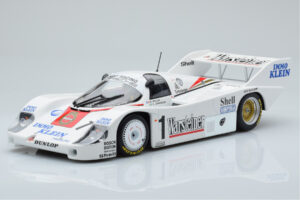
Porsche 956K Warsteiner #1 B. Wollek / S. Johansson DRM Zolder Winner 1983 Minichamps 1:18
Only 2 left
Price:
£77.00
Last one
Used

Porsche 911 991.2 GT2 RS Light Green With Black Magnesium Wheels Minichamps 1:18
Only 1 left
Price:
£137.00
Last one
Used
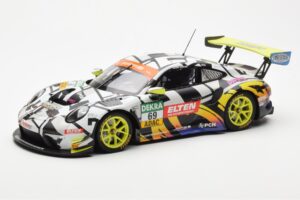
Porsche 911 991.2 GT3 R #69 Team Iron Force Racing Ring Police L. Luhr / M. Holzer ADAC GT Masters 2019 Minichamps 1:18
Only 1 left
Price:
£96.00
Collectors also bought
Browse all 1:18
Used
Used

Last one
Used
Used
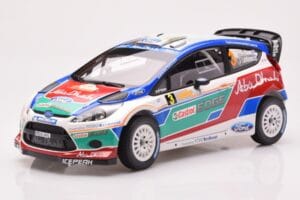
Ford Fiesta RS WRC Ford Abu Dhabi #3 M. Hirvonen / J. Lehtinen Winner Rally Australia 2011 Minichamps 1:18
Only 3 left
Price:
£105.00
Last one
Used

Mercedes SLS AMG GT3 Munnich Motorsport #38 M. Basseng / M. Winkelhock Champions FIA GT1 World Championship 2012 Minichamps 1:18
Only 1 left
Price:
£71.00
Last one
Used

Mercedes SLS AMG GT3 HTP Motorsport Persson #84 B. Schneider / M. Buhk / M. Gotz Winners 24 Hours of Spa-Francorchamps 2013 Minichamps 1:18
Only 1 left
Price:
£94.00
Last one
Used
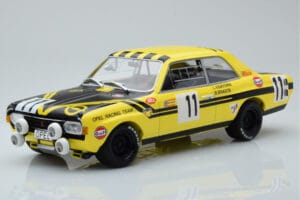
Opel Commodore A Steinmetz #11 E. von Bayern / Johansson 24 Hours of Spa 1970 Minichamps 1:18
Only 1 left
Price:
£93.00
Last one
Mercedes 190E 2.5-16 W201 EVO 1 Jet #16 F. Biela Team Ms-Jet Racing DTM 1990 Minichamps 1:18
Only 1 left
Price:
£75.00
Recently viewed
{"id":614247,"name":"Porsche 906LH #32 Porsche System Engineering G. Schutz \/ P. De Klerk 24 Hours of Le Mans 1966 Minichamps 1:18","price":"£<\/span>161.67<\/bdi><\/span>","image":"https:\/\/models118.co.uk\/wp-content\/uploads\/2026\/06\/porsche-906lh-porsche-system-engineering-n32-gschutz-pde-klerk-24h-lm-1966-minichamps-1-18-400x400.jpg","permalink":"https:\/\/models118.co.uk\/porsche-906lh-32-porsche-system-engineering-g-schutz-p-de-klerk-24-hours-of-le-mans-1966-minichamps-1-18-100666132\/","brand":"Porsche"}