New

We'll notify you once when this item is available. No spam.
You qualify for FREE shipping!
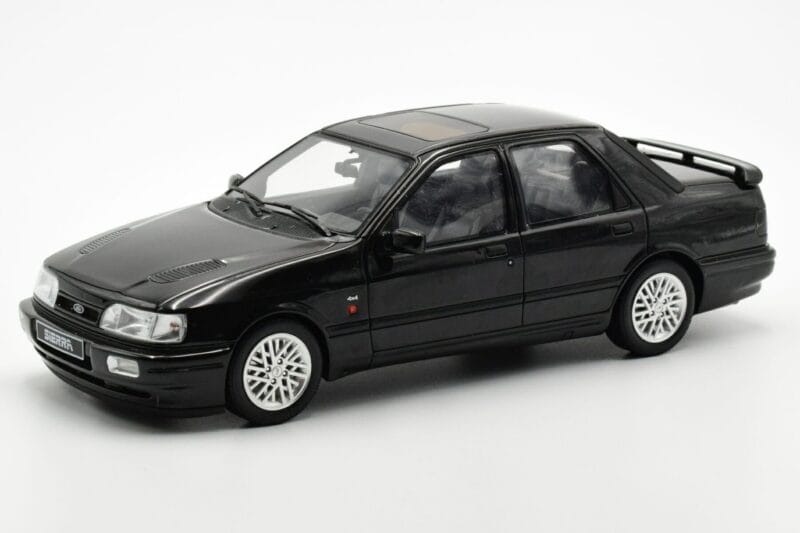
In a display full of flamboyant 1980s wings and rally box arches, the Ford Sierra Sapphire RS Cosworth 4x4 1:18 from Otto feels refreshingly understated. The Sapphire saloon body was the Sierra in its more formal suit, yet Cosworth turbo power and four-wheel drive turned it into a very British kind of performance car: quick across wet B-roads, usefully discreet in traffic, and now increasingly hard to ignore as a 1990s icon. Otto's resin model car is made for collectors who care about proportions and stance, giving the Sierra's clean three-box profile the presence it deserves at 1:18 scale.
By 1992, the Sierra Cosworth name had already earned its reputation through touring car headlines and the earlier three-door 'whale tail' shape, but the Sapphire version matters for a different reason. It packages the same Cosworth-developed turbocharged heart in a four-door body that looks almost ordinary at a glance. That combination is precisely what made the Sapphire RS Cosworth such a hero in the UK: a family-saloon silhouette with serious intent, the sort of car that could sit outside a semi-detached house and still feel like a weekend weapon. For collectors, it represents the moment fast Fords became both more mature and more usable, without losing their edge.
The 4x4 badge is not a styling flourish. In the early 1990s, rallying and road-car technology were moving decisively towards traction, and Ford responded with a four-wheel-drive Sierra that could put turbo torque down in poor conditions. In period, the Sapphire RS Cosworth 4x4 was admired for its all-weather pace and slightly left-field engineering, even if it never enjoyed the simple, rear-drive hooligan appeal of some earlier fast Fords. That contrast is part of the model's charm today: subtle boot spoiler and tidy saloon lines, but with a drivetrain brief that nods to the era's obsession with grip. It sits comfortably in any 1990s performance collection because it tells a real story, not just a nostalgic one.
It is also a useful reminder that the Sierra was not just a flamboyant special; it was a mainstream Ford platform that could be turned into something properly serious. The Sapphire's three-box rear and cleaner tail treatment make the Cosworth additions look more integrated: deeper bumpers, discreet badging, and a spoiler that hints at stability rather than theatrics. For many British enthusiasts, that is exactly why the Sapphire has aged so well. It looks like a car built for getting on with the job, which is why it resonates when displayed alongside more extrovert contemporaries. In miniature, the appeal is the same: the silhouette should read 'Sierra' immediately, before your eye catches the RS and Cosworth cues.
Otto Mobile has built a following by choosing subjects that enthusiasts talk about, rather than only the obvious poster cars. An Otto Sierra Sapphire Cosworth 4x4 in 1:18 feels like a deliberate nod to UK car culture: the Cosworth you might have actually seen on the road, not just in a museum. Resin construction suits that mission. Instead of chasing working openings, the emphasis is on getting the profile right - the way the Sapphire's roofline meets the boot, the stance over the arches, and the crispness of the body surfacing that defines a Sierra when you view it from three-quarter angles. For many collectors, that fidelity is the point of choosing Otto.
With a car as familiar as a Sierra, small proportional slips are obvious, so Otto's appeal is that the model looks right from the first glance. Collectors usually start with the stance: ride height, track width and how the wheels sit in the arches, because that is what makes a Sapphire RS Cosworth 4x4 look planted rather than perched. Then the eye goes to the glass and pillars; the Sierra's window shapes are distinctive, and crisp frames help the model avoid the 'generic saloon' look. Finally, the front and rear treatments matter: bumper depth, spoiler shape and badging placement are the cues that separate an ordinary Sapphire from the Cosworth flagship. At 1:18, those relationships are what make the model convincing.
The Sapphire's appeal is in its restraint: long, clean flanks, a simple glasshouse, and just enough RS Cosworth aggression in the bumpers and rear spoiler to signal intent. A good resin casting can hold those subtle curves and edges without the compromises that sometimes appear on cheaper metal-bodied models. On a shelf, what tends to stand out is how straight and even the shut-line detail looks under side lighting, and how the glazing sits flush against the pillars, keeping the saloon silhouette sharp rather than toy-like. As with most collector-grade resin model cars, the trade-off is that the focus stays on exterior accuracy and finish - ideal if you value the Sierra's shape above gimmicks.
At 1:18, the Sierra Sapphire has proper presence without demanding a huge footprint, and its four-door proportions make it an easy neighbour for other road cars of the period. This is the kind of Ford Sierra Cosworth 1:18 model car that looks best at eye level, where the roofline and shoulder crease read cleanly, and where you can appreciate how the 4x4 stance differs from the earlier three-door cars. Resin models reward a little care: a closed cabinet helps keep dust out of panel lines, and avoiding prolonged direct sunlight helps protect paint and printed markings over the long term. Treat it as a display piece rather than a toy and it will remain a tidy centrepiece for years.
For UK collectors, the Sapphire RS Cosworth 4x4 sits at a sweet spot between motorsport mythology and everyday nostalgia. It pairs naturally with other traction-era heroes - early Impreza and Lancer Evolution shapes, or the homologation-flavoured coupes and saloons that defined the decade - yet it also works in a purely Ford-led line-up alongside an Escort RS Cosworth or a later Focus RS. The saloon body adds welcome variety if your display is heavy on wedges and supercars, and it tells a distinctly British story of company-car silhouettes hiding serious performance. If your collection theme includes 'Fast Ford' magazine memories, touring car culture, or simply the cars you remember from rainy A-roads, this Otto model fits without trying too hard.
Collectors often chase the Sierra Cosworth in its loudest forms, but the Sapphire 4x4 is the connoisseur's choice: the one you notice twice, first as a sensible saloon and then as a Cosworth. Otto's 1:18 resin replica captures that dual character in miniature, making it an excellent option when you want a 1990s icon that feels authentically UK and genuinely displayable. Whether it anchors a Ford collection or adds variety to a broader 1990s shelf, it offers the right mix of understatement, history and presence.