New
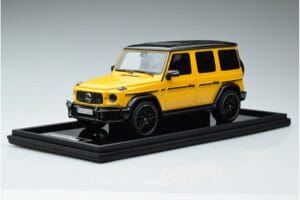
Mercedes AMG G63 W463 Yellow MotorHelix 1:18
Price:
£1,398.00
We'll notify you once when this item is available. No spam.
You qualify for FREE shipping!
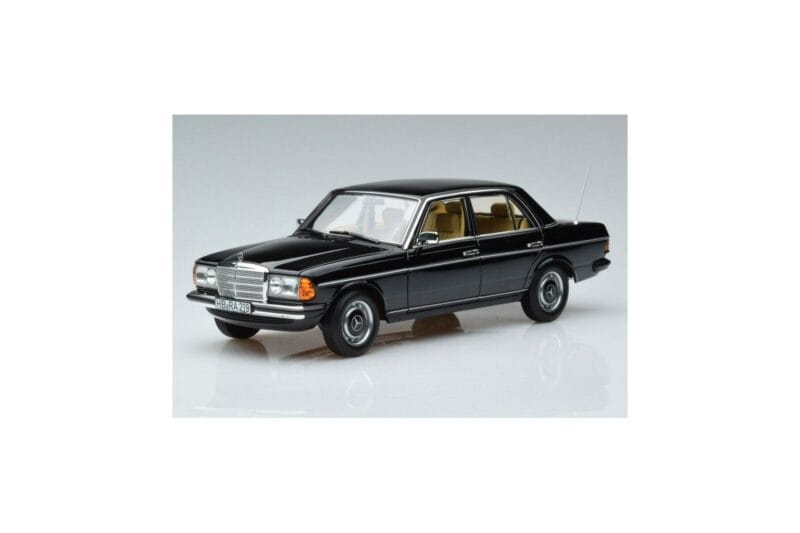
A Mercedes 230 E W123 1:18 model is a gratifying purchase for collectors who understand that the most important cars are not always the fastest. The W123 is a byword for durability and everyday competence, and in the UK it carries a particular nostalgia: the dependable executive saloon, the long-lived family car, the taxi that simply refused to die. Norev’s Limited Edition diecast brings that story into 1:18 scale, where the W123’s proportions and purposeful detailing can be appreciated without needing an exotic badge to justify the space in your cabinet.
Mercedes-Benz built its reputation on engineering integrity, and the W123 is one of the cars most responsible for turning that reputation into lived experience. It is the sort of model that became trusted rather than merely admired, and that trust is part of its collector appeal today. The 230 E badge adds another layer: it represents a well-specced, properly usable variant rather than an entry-level compromise, making it a particularly “complete” expression of the W123 idea. For a scale model collection, that matters because it gives the subject a clear identity—this is a W123 chosen with intent, not simply a generic old Mercedes.
Norev is a sensible choice for a car like this because the W123’s charm lies in accuracy and proportion, not in theatrical features. In diecast, the model has a satisfying weight and a sense of solidity that suits the W123’s real-world character. At this scale, the car’s upright glasshouse and clear three-box silhouette are immediately recognisable, and the restrained, period-correct detailing feels at home on a shelf of 1970s and 1980s street cars. The Limited Edition designation gives it a little extra collector appeal, particularly if you enjoy building a curated Mercedes line-up with models that feel deliberately chosen rather than random.
The W123 is all about the “right” look: the formal grille, the tidy bumpers, the clear beltline and the way the roof sits over the body. Those are the cues that separate a convincing replica from something merely W123-shaped. At 1:18, you can appreciate the car’s honest geometry—the way the front end is upright yet not heavy, and the way the cabin communicates visibility and practicality. A good miniature also captures the W123’s specific sense of sturdiness: it should look like a car designed to withstand real use, not a fragile styling exercise. That character is subtle, but it is exactly what makes the W123 such a compelling subject for collectors.
Smaller scales can be excellent for breadth, but the W123 benefits from the extra physical presence of 1:18. It is a car defined by proportion, and proportion becomes easier to read when the model has enough size to show the relationship between bonnet, cabin and boot clearly. The extra scale also helps with the W123’s design texture: the formal window line, the way the pillars frame the glass, and the subtle surfacing around the arches. Diecast construction further strengthens the impression; in hand, it feels like a miniature machine rather than a lightweight ornament, which aligns with how owners describe the real car.
For many collectors, the W123 is the natural anchor for a classic Mercedes saloon display. Earlier cars such as the /8 generation have a slightly more vintage formality; later models move into sharper, more modern lines. The W123 sits between them with an almost perfect balance of traditional Mercedes cues and modern usability. In a cabinet, that makes it a strong companion to a W115 or W114 on one side and a later saloon on the other, telling a clear story of evolution rather than a jumble of unrelated cars. It also makes a thoughtful counterpoint to contemporary British executive cars, highlighting the different design philosophies at play.
British collectors often build themes around “cars you saw on the road”, and the W123 excels there. It is recognisable in a way that transcends enthusiasts: even non-collectors often know what it is, or at least what it represents. It also fits neatly into themes such as “European executive saloons”, “taxi legends”, or “engineering icons”. Because it is not dependent on a motorsport story or a famous owner, it can act as a grounding piece in a display otherwise full of aspirational machinery. In other words, it helps your collection feel like a real-world garage rather than a fantasy showroom.
The W123’s styling is clean enough that it looks best with good, even lighting and a little space around it. A crowded shelf can hide the very qualities you are buying the model for: the calm lines and balanced stance. If you enjoy rotating models seasonally, this one is easy to bring forward because it pairs well with so many other cars—German, British, sporty, sensible—without clashing. It also rewards closer viewing: the kind of model you can glance at from across the room and still feel that it “belongs”, because the proportions and character are so familiar.
Norev’s Mercedes W123 saloon model car 1:18, in 230 E form, is a measured but deeply satisfying addition to an everyday-classics collection. It represents the kind of Mercedes that made the marque’s reputation on ordinary roads, and it does so in a scale and material that suit the subject’s solid, enduring appeal.